
See the math move
Small tools that show what a number is doing. Drag a line and watch its slope, open an angle past a square corner, split a fraction bar, bend a shape until it becomes a square. Then try the same idea on paper.
Angles and shapes
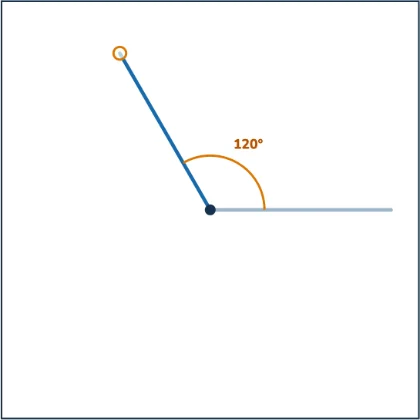 Acute, Right and Obtuse AnglesOpen an angle past a square corner and watch its name change.acute, right, and obtuse angles
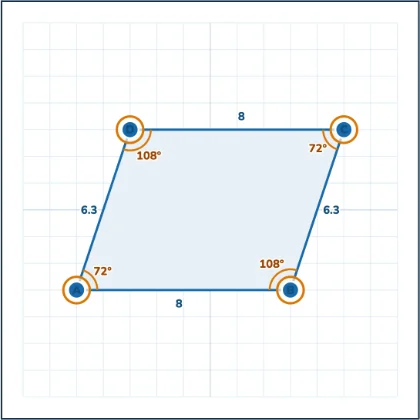 Types of QuadrilateralsDrag four corners into a square, rectangle, trapezoid or kite — and watch the angles always add to 360°.naming quadrilaterals and their 360° angle sum
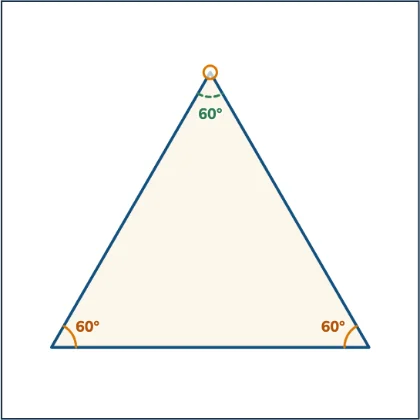 Angles in a TrianglePick two corners of a triangle — the third is not yours to choose, and the three make 180°.two angles decide the third
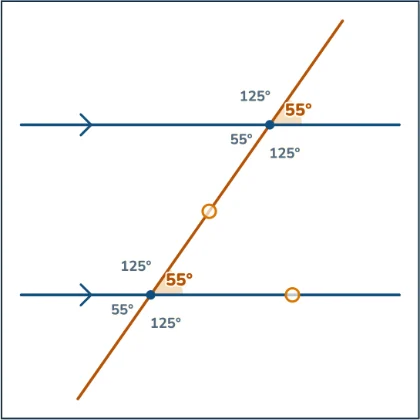 Angles in Parallel LinesTurn a line across two parallel ones — eight angles, two numbers, and one pair locked together.corresponding and alternate angles need the lines to be parallel
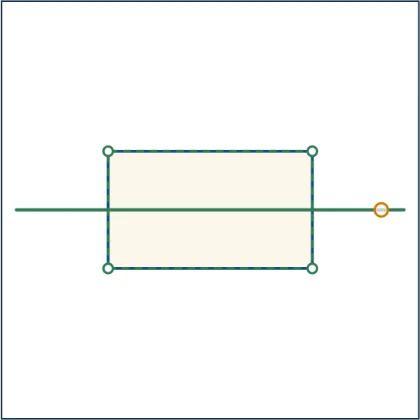 Lines of SymmetryTurn a mirror across a shape until the reflection comes home. Most lines miss, and some shapes have no line at all.a fold that lands one half on the other — and a parallelogram has none
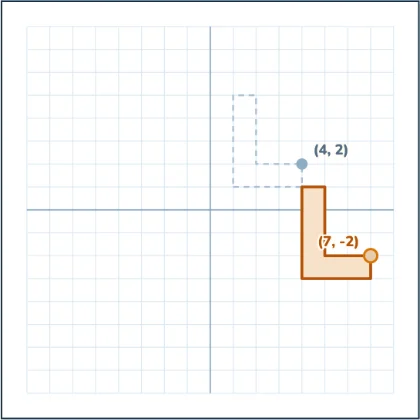 Translations, Rotations and ReflectionsSlide, turn or flip a shape on a grid — follow one corner's coordinates while every side and angle stays put.a move changes where a shape is, not what it is
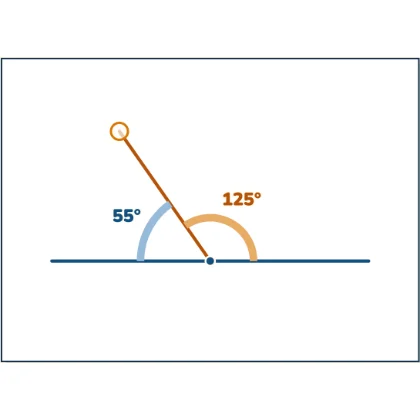 Angle Pairs That Add to 180°Swing one arm and watch both angles run through every value they can take — the total sits there not moving, which is the whole of why knowing one tells you the other.two angles at a point move in opposite directions while their total refuses to change
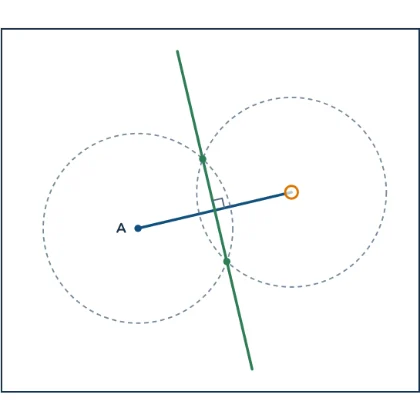 Compass and Straightedge ConstructionsSwing two equal arcs from two centers and see where they cross — bisecting a segment, bisecting an angle and dropping a perpendicular are the same crossing, opened to three different setups.why a compass construction works whatever the compass is opened to
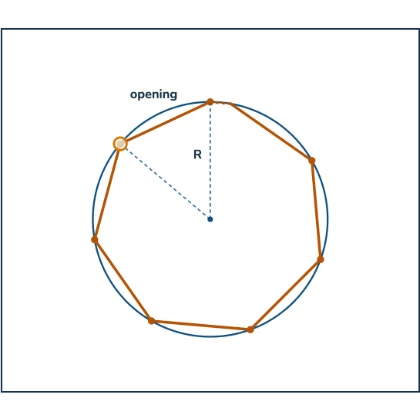 Angles and Regular PolygonsStep a compass around a circle at any angle — a triangle, a pentagon, an octagon all close exactly, and everything in between just misses, from one fact: angle × steps = 360°.an angle steps a circle into a regular polygon exactly when it divides 360° a whole number of times
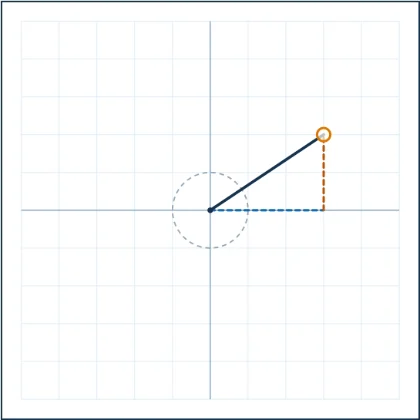 Sine, Cosine and Tangent RatiosDrag a point and a right triangle grows from the origin to it — move the radius slider without touching the angle, and watch sin, cos and tan hold perfectly still.sin, cos and tan are ratios rather than lengths, so rescaling a right triangle without changing its angle leaves all three exactly the same
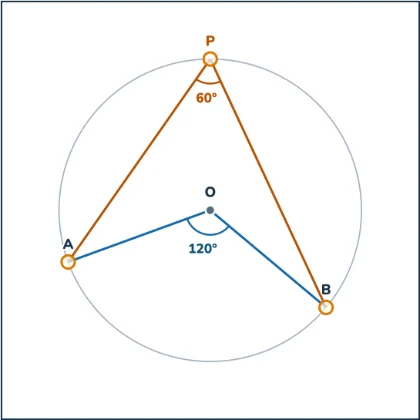 Inscribed Angle TheoremDrag any of three points anywhere on a circle and watch the angle two of them see at the third stay locked at half the angle those two make at the center.an inscribed angle stays exactly half the central angle over the same arc, however far around the circle its vertex moves
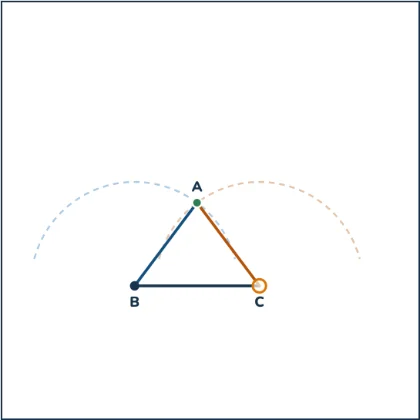 Triangle InequalityDrag the base out longer while two arcs mark exactly how far the other two sides reach — watch the arcs cross for a triangle and then, past a point, stop meeting at all.two sides can only close into a triangle with a third if that third side is shorter than their sum — drawn as two arcs that simply stop crossing past that length
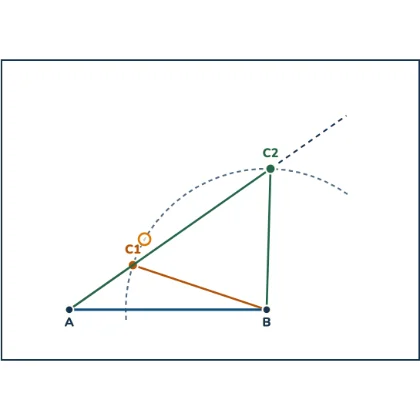 SSA Ambiguous CaseDrag one given side, drawn as a circle around its far endpoint, and watch how many points where it crosses the angle's other ray change — none, one, or two entirely different triangles, all matching the exact same measurements.two sides and a non-included angle can fit two completely different triangles at once, which is why SSA is not on the list of ways to prove triangles congruent
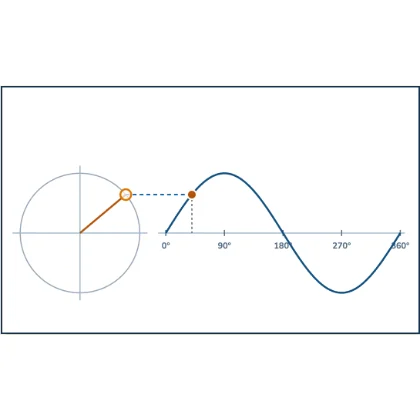 Unit Circle and the Sine CurveDrag a point all the way around a unit circle and watch a sine curve get traced out at the exact same height, live, connected by a line that is a proof, not a decoration.the sine curve's height at any angle is exactly the unit circle's own height at that angle — sin is not a looked-up number, it is a length read off the circle sideways
Area and size
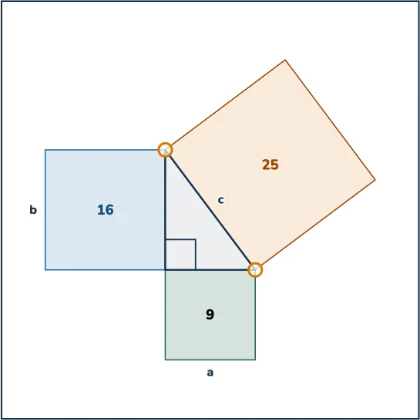 Pythagorean TheoremPut a square on each side of a right triangle and see the two small ones fill the big one.why a² + b² = c²
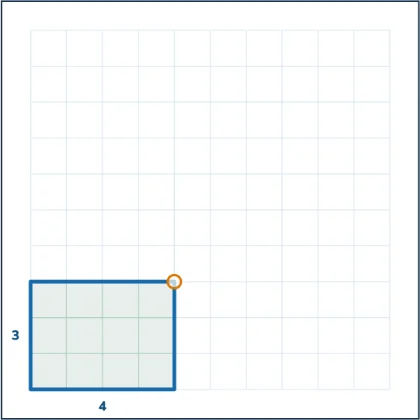 Area and Perimeter of a RectangleCount the squares inside and trace the border — two different measurements of one rectangle.area is not the same as perimeter
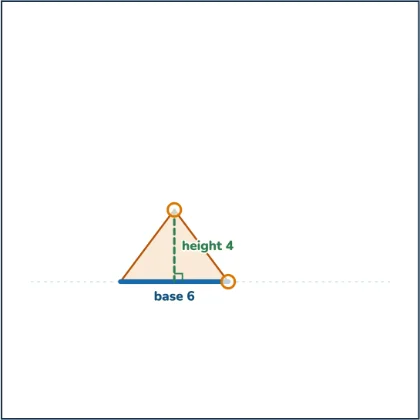 Area of a TriangleSlide the top corner sideways and watch the area stay exactly where it was.a triangle's area needs only base and height
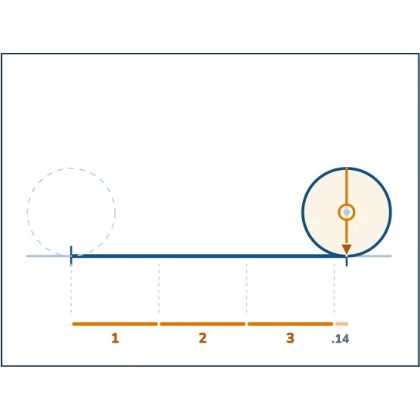 Circle Circumference and PiUnroll a circle and lay its own width along it — three fit, and a bit, at every size.the way around is always 3.14 diameters
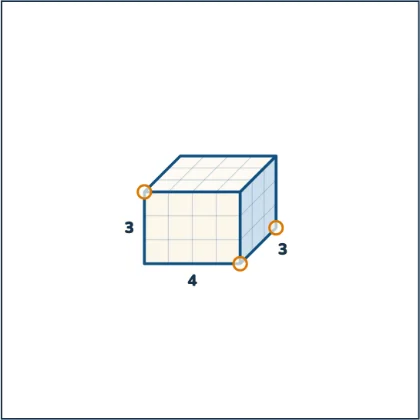 Volume and Surface Area of a BoxResize a box and watch what it holds and what it takes to wrap — three boxes hold eight cubes and need three different skins.volume and surface area are two measurements that do not keep step
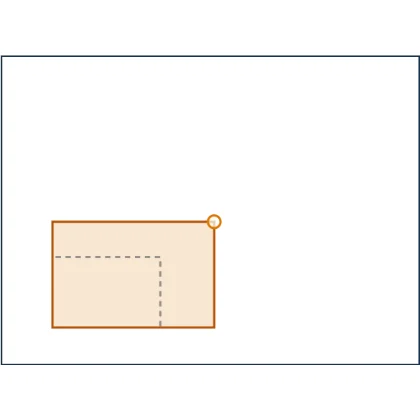 Scale Factor and AreaDrag a rectangle's corner to scale it up or down and watch its side length and its area change at two very different rates — double the side and the area always quadruples.scaling a figure's sides by k scales its area by k², because area is a product of two lengths and both of them were multiplied by k
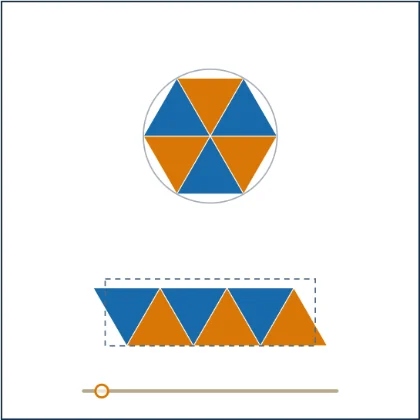 Area of a CircleThe same colored sectors are shown cut from a circle and laid out in a strip — drag the slider to cut more of them and watch the strip's wavy edges flatten toward a plain rectangle.a circle cut into sectors and alternated into a strip settles toward a rectangle of height r and width πr as the sectors get thinner, which is where πr² comes from
Fractions
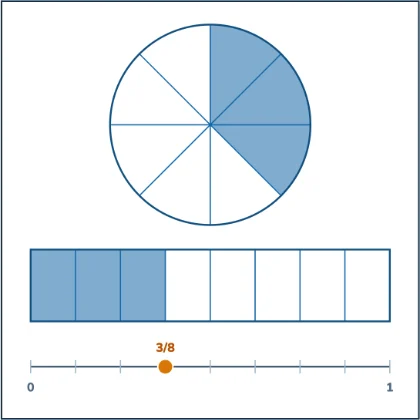 Fraction Bar ModelSplit a bar and shade some — see the same amount as a fraction, a point, a decimal and a percent.equivalent fractions
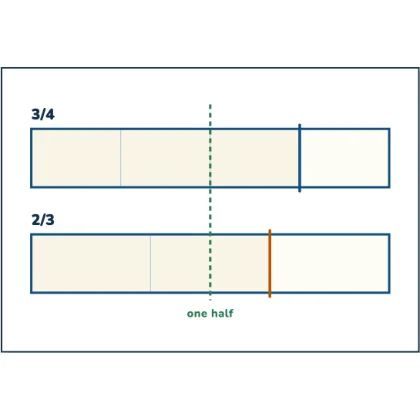 Comparing FractionsTwo bars the same length, one half already marked, and a button that cuts both into the same pieces without moving either amount.a bigger bottom number makes a smaller piece, not a bigger fraction
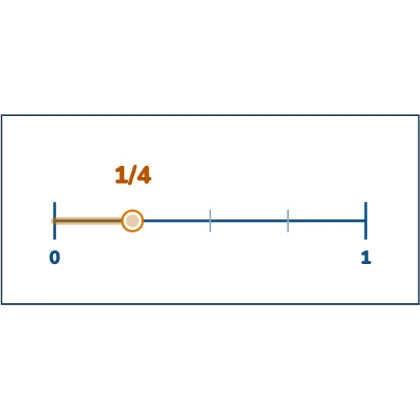 Equivalent Fractions on a Number LinePut a dot on a line from 0 to 1, then cut the line a different number of ways — the dot does not move, and that is all an equivalent fraction is.a fraction is a place on a number line, and the same place has several names
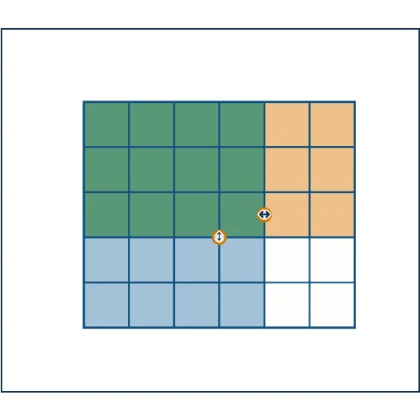 Multiplying Fractions with an Area ModelShade columns one color and rows another — the doubly-shaded cells are the product, and there are always fewer of them than either shading by itself.multiplying fractions is the overlap of two shadings, which is always a smaller share than either alone
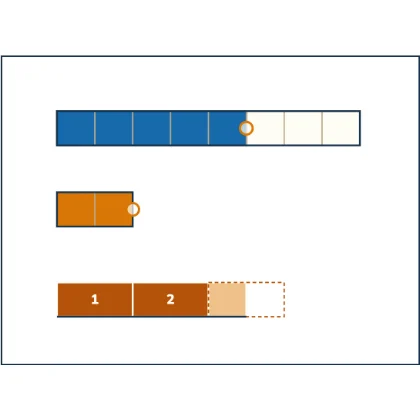 Dividing by a FractionDrag a dividend bar and a divisor stick, both in eighths — the stick is laid down repeatedly along the bar so the answer is measured, full copies and a leftover fraction, not found by flipping.dividing by a fraction is counting how many copies of it fit inside the dividend, which lands on the same answer the reciprocal-multiply rule gives without ever flipping anything
Numbers and proportion
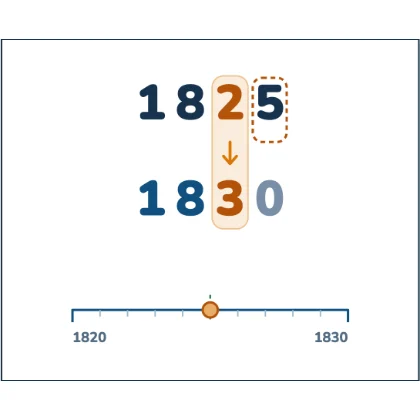 Rounding on a Number LineSlide a number between two tens and watch the two distances — the shorter one is the answer, and halfway is an agreement.rounding is which mark the number is nearer
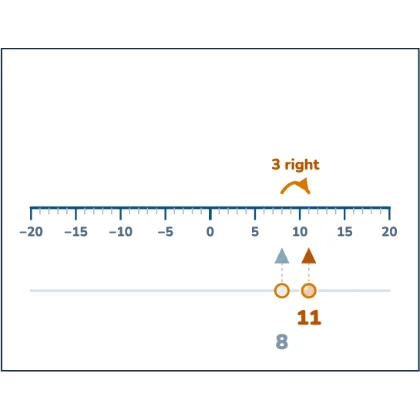 Adding and Subtracting Integers on a Number LineAdd and take away negative numbers as one jump — including 8 − (−3), the case no worksheet can print.the signs decide which way the jump faces
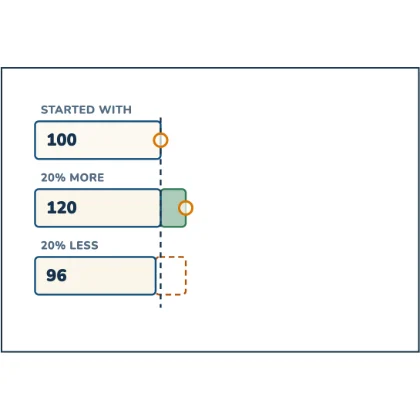 Percent of a NumberPut 20% on and take 20% off — the bars show why that does not bring you back to where you started.a percent is a share of whatever it is standing next to
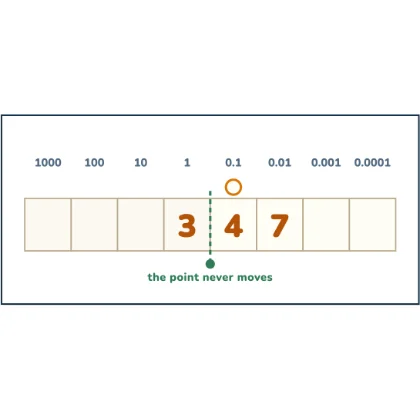 Multiplying and Dividing by Powers of TenMultiply and divide by ten on a place-value chart — the digits change columns and the point stays exactly where it was.multiplying by ten moves the digits, not the point
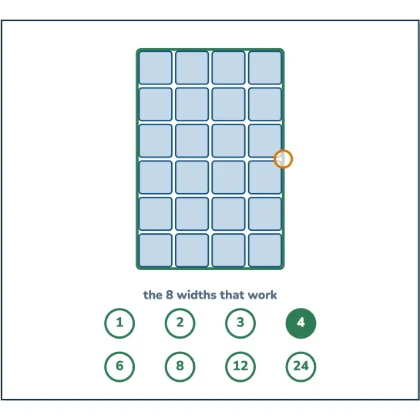 Factors and ArraysPull a block of squares wider and narrower — the widths that fill without a hole are the factors, and 15 turns out to make a perfectly good rectangle.a factor is a width that fills without a gap, and a prime has none but the line
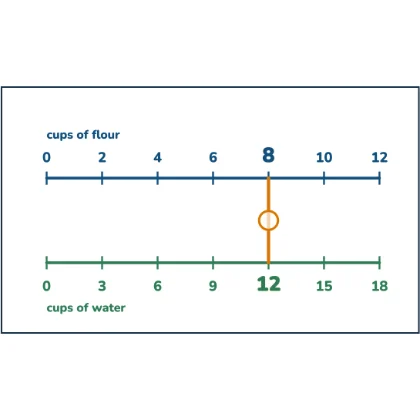 Equivalent RatiosOne slider through two number lines at once — 8 : 12 turns out to be the same place as 2 : 3, four steps along, with neither number ever gaining on the other.a ratio is what stays true while both quantities change, not a pair of numbers
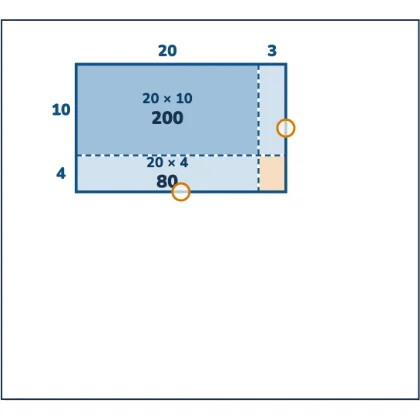 Area Model for MultiplicationPull the edges of a rectangle cut at each ten — the four patches are exactly the four numbers the written method has you find, and the big one is most of the answer.the numbers long multiplication makes you add are patches of one rectangle
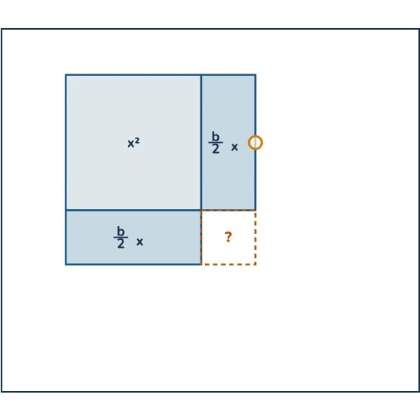 Completing the SquareDrag a strip wider or narrower and watch the corner it leaves open — fill it in and the whole thing becomes one square, no memorized number required.completing the square adds (b/2)² because that is the exact area of the corner two b/2-wide strips leave open
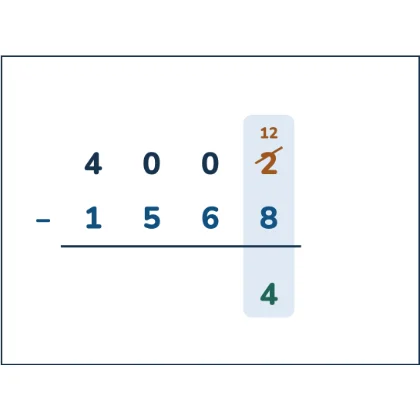 Regrouping in Addition and SubtractionClick a column, or drag the slider from ones to thousands, and step through column subtraction and addition one place at a time, watching exactly when and why a place borrows or carries.the little borrowed or carried number above a place is not a mark to copy — it is exactly what that place is worth by the moment the algorithm reaches it
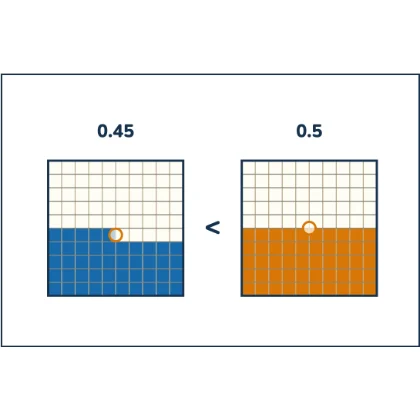 Comparing DecimalsDrag two hundredths grids to two decimals and compare how much of each is shaded — the fuller grid wins, whichever number was written with more digits.a decimal with more digits after the point is not automatically bigger — 0.5 shades more of its grid than 0.45 does, however many digits each is written with
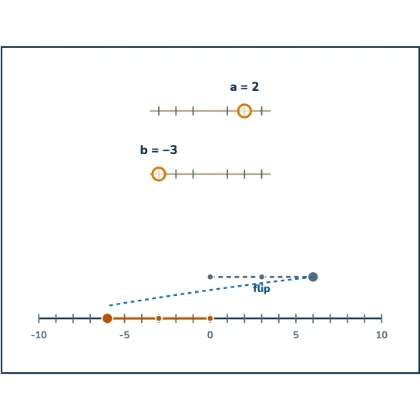 Multiplying Negative NumbersDrag two signed numbers and watch their product as a hop on a number line — a dashed unsigned version above it, a solid final one on it, mirrored once for every negative factor.multiplying by a negative mirrors a hop through zero, so two negative factors mirror it twice and land right back where the plain, unsigned hop already was
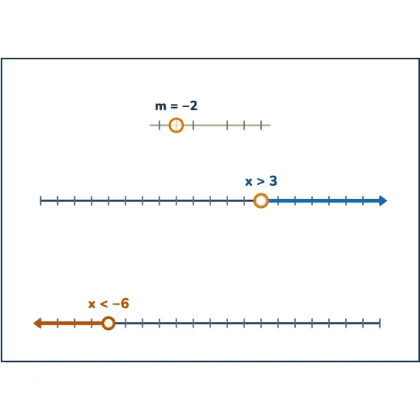 Flipping the Inequality SignDrag a boundary and a multiplier and watch the solution set itself get multiplied, point by point — the ray turns around exactly when the multiplier is negative, which is the whole reason the sign flips.multiplying an inequality's solution set by a negative number reverses the order of every point in it, which turns the ray around — the flipped symbol is only reporting which way it now faces
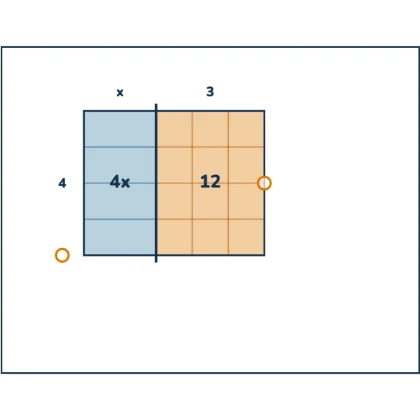 Distributive PropertyDrag a rectangle's height and width and watch it split into a plain strip and a grid of counted squares — the cut never changes the total, only how many passes it takes to count it.a(x + c) = ax + ac because cutting a rectangle's width and adding the two pieces' areas back together is not a special property of multiplication — it is what area already means
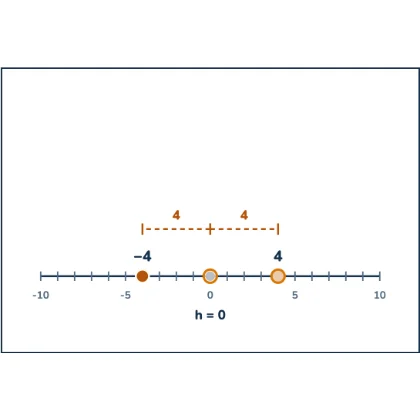 Absolute Value EquationsDrag one solution and watch the other mirror it automatically — both are exactly the same distance from the center, which is the whole reason there are two answers.an absolute value equation has two solutions because they are the two points at the same distance from the center, not a positive answer and a negative one
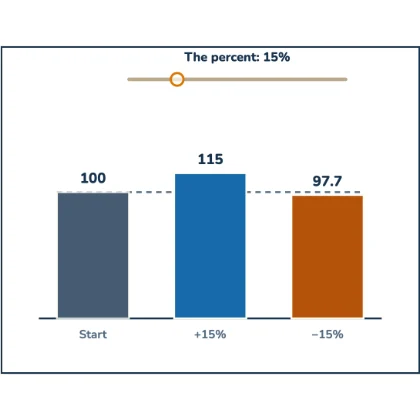 Percent Increase and DecreaseDrag a percent and watch a bar grow by it, then shrink by the same percent — or shrink first and grow back. It lands short of the start every time, and the gap grows the bigger the percent gets.increasing a value by a percent and then decreasing the result by the same percent never returns to the start, because the decrease is taken from a bigger number than the increase was — and going down first then up lands on exactly the same short value
Graphs and data
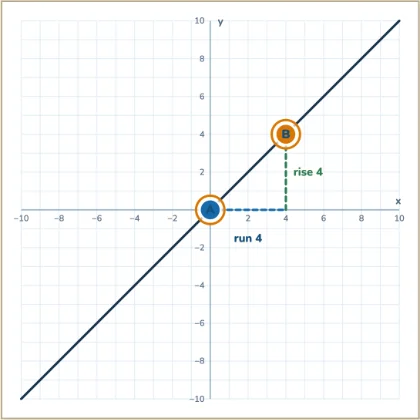 Slope of a LineDrag two points and watch the line's steepness — rise, run, and the equation — change together.slope as rise over run
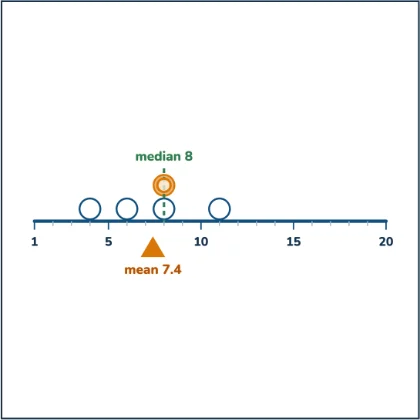 Mean and MedianSlide one number away from the rest — the balance point chases it, the middle one stays.one far-off value moves the mean and not the median
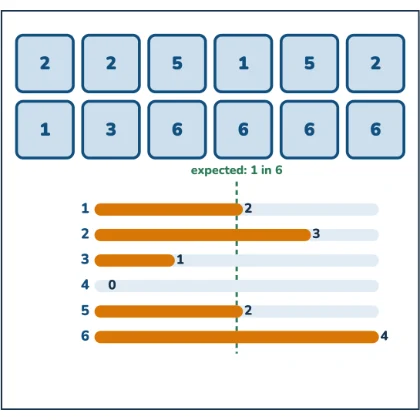 Experimental Probability SpinnerFlip a coin or roll a 4, 6 or 8-sided die as many times as you like — every face creeps toward its fair share, and ten throws is nowhere near enough to see it.a chance predicts the long run, not the next spin
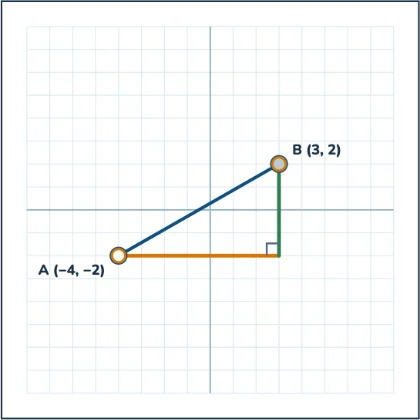 Distance Between Two PointsMove two points on a grid and watch the triangle draw itself — one leg across, one up, and the line between them.the right triangle hiding between any two points
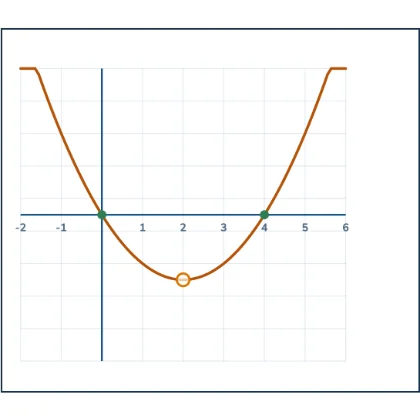 The DiscriminantDrag a parabola's lowest point up and down — two crossings become one, then none — while b² − 4ac changes sign at exactly the same moment.the sign of b² − 4ac is the sign of the parabola's own height above or below the x-axis
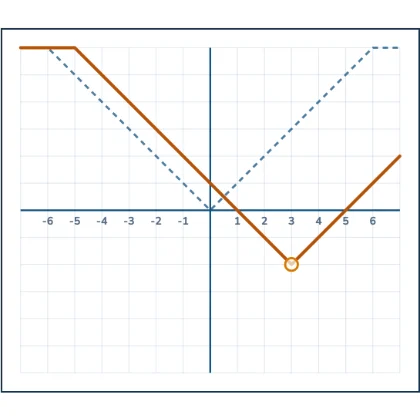 Horizontal and Vertical Function ShiftsDrag a graph's own corner anywhere on the grid — the equation's sign runs backwards from a sideways move and matches exactly for an up-and-down one.a horizontal shift's sign points the opposite way from the move
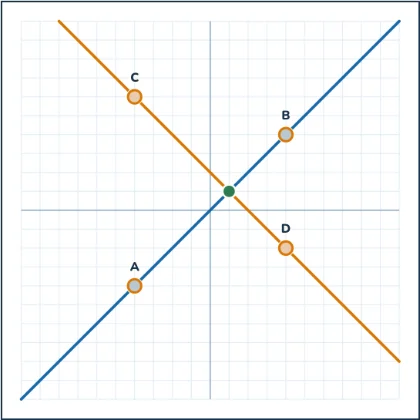 Systems of Linear EquationsDrag two lines by their own points and watch the count of solutions change with what the lines actually do — cross once, run side by side, or land exactly on top of each other.a system of two lines has one solution where they cross, none if they run parallel, or infinitely many if they are the same line twice
Everyday measures
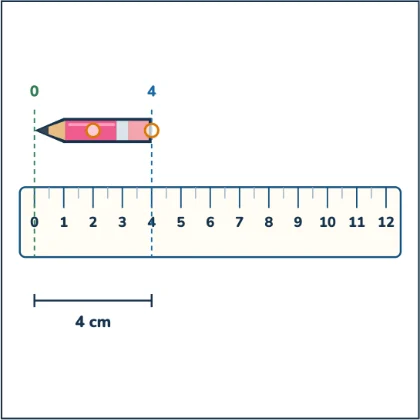 Reading a RulerSlide a pencil along a ruler — the number at its end moves, and its length does not.the end number is the length only from zero
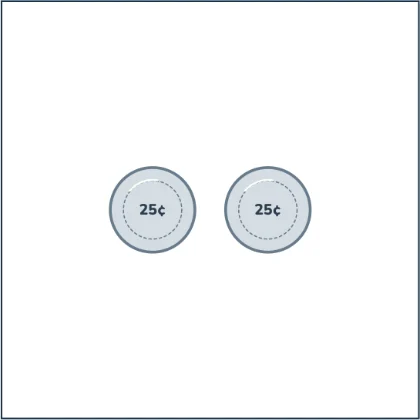 Counting CoinsBuild fifty cents out of two coins or out of ten — the pile changes and the total does not.the same amount can be made of different coins
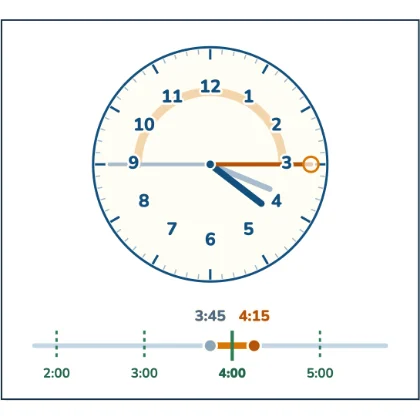 Elapsed Time on a ClockDrag the minute hand round a clock and watch the hour hand travel with it — then see the same interval laid out flat, with the o'clock you crossed marked on it.the hour hand moves the whole time, and that is where the hour is carried
51 tools. Each one ends at the worksheets for the same idea.