Nine coins, one of them slightly light, and a balance scale. Most people reach for two piles. Two weighings are enough — and the reason why is the whole question.
A balance says one of three things, not two: left is heavier, right is heavier, or they are level. Level is information too, and it is the outcome people forget. Once you count it, one weighing divides the suspects by three rather than by two — so nine coins take two weighings, twenty-seven take three, and halving the pile is throwing away a third of what the scale told you.
Why this sheet works
This is the only sheet in the Challenge tier with almost no arithmetic on it. What it asks for is a plan: split the pile in three, weigh two of the groups, and say what each outcome tells you. The ruled lines under each question are where that plan goes — the number of weighings is a summary, and across the whole family it is only ever 2, 3 or 4, so a bare number proves nothing.
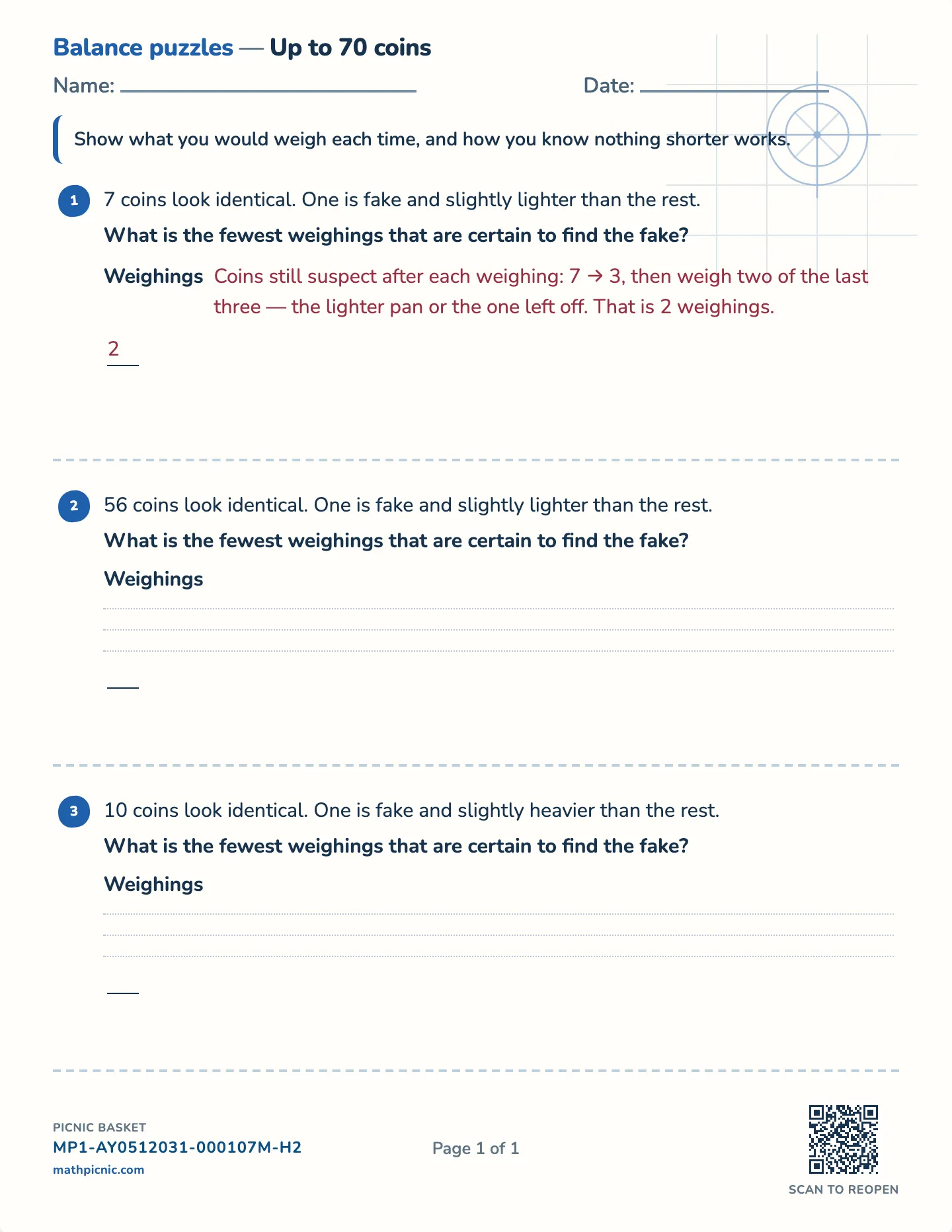
Show what you would weigh each time, and how you know nothing shorter works.
17 coins look identical. One is fake and slightly lighter than the rest.What is the fewest weighings that are certain to find the fake?Weighings
256 coins look identical. One is fake and slightly lighter than the rest.What is the fewest weighings that are certain to find the fake?Weighings
310 coins look identical. One is fake and slightly heavier than the rest.What is the fewest weighings that are certain to find the fake?Weighings
Balance puzzles · Up to 70 coinsAnswer key
1. Coins still suspect after each weighing: 7 → 3, then weigh two of the last three — the lighter pan or the one left off. That is 2 weighings.2. Coins still suspect after each weighing: 56 → 19 → 7 → 3, then weigh two of the last three — the lighter pan or the one left off. That is 4 weighings.3. Coins still suspect after each weighing: 10 → 4 → 2, then weigh the last two — the heavier one is fake. That is 3 weighings.