
Subtraction worksheets
Not sure what comes next? Start with the first sheet that feels comfortable.
Picture subtraction
Preschool–Kindergarten
Subtract by taking away countable pictures
Customize this sheet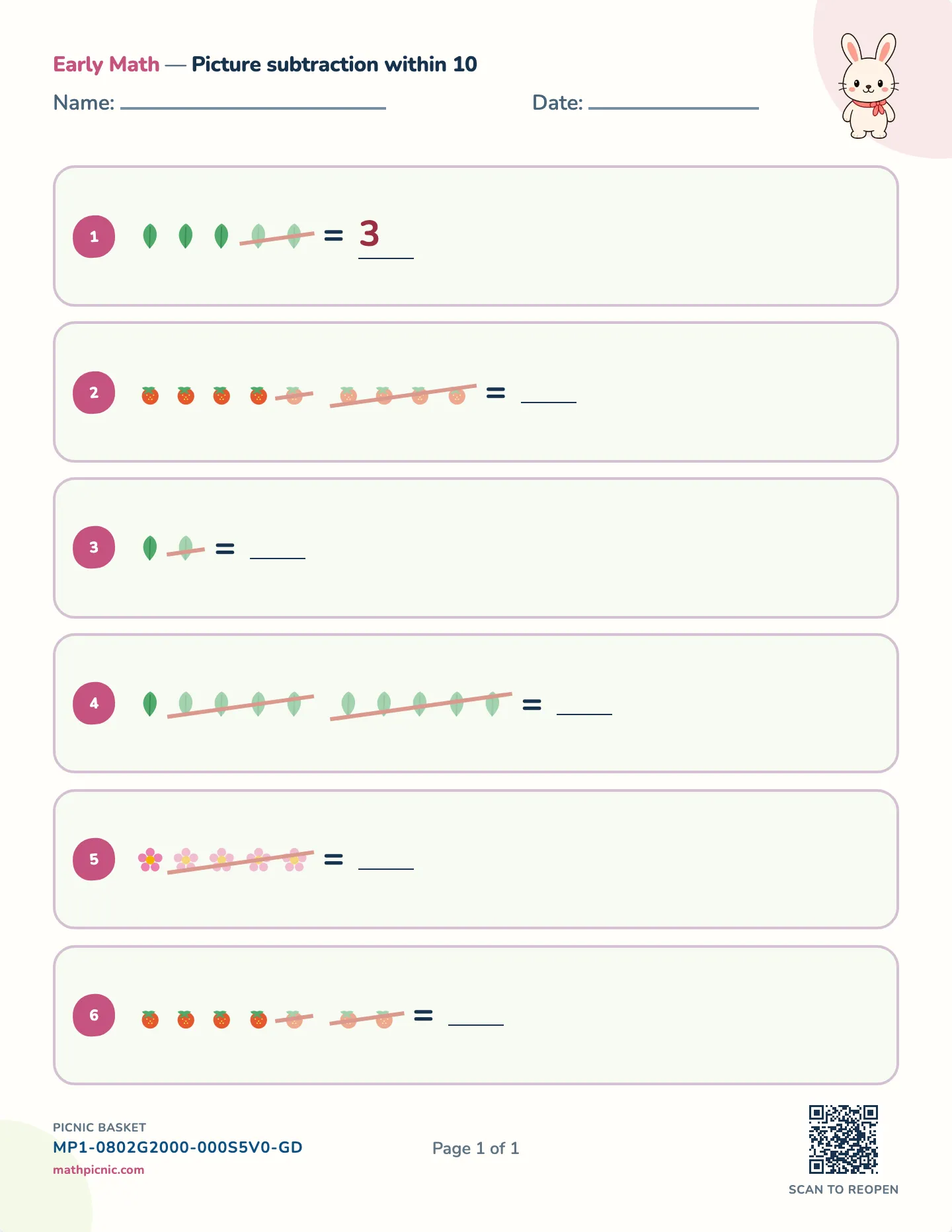
Nothing matches that. Try a skill, a number, or a grade.
In teaching order
Subtraction worksheets, easiest first
Each sheet assumes the one above it is comfortable. Start where your child is, not at the top.- Picture subtraction
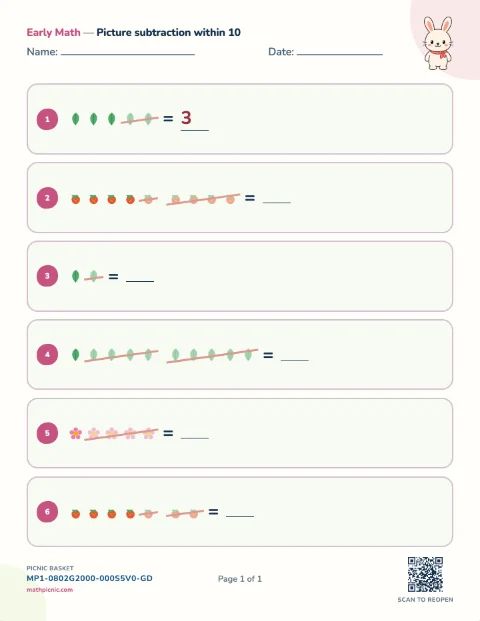 Print − 1 = __
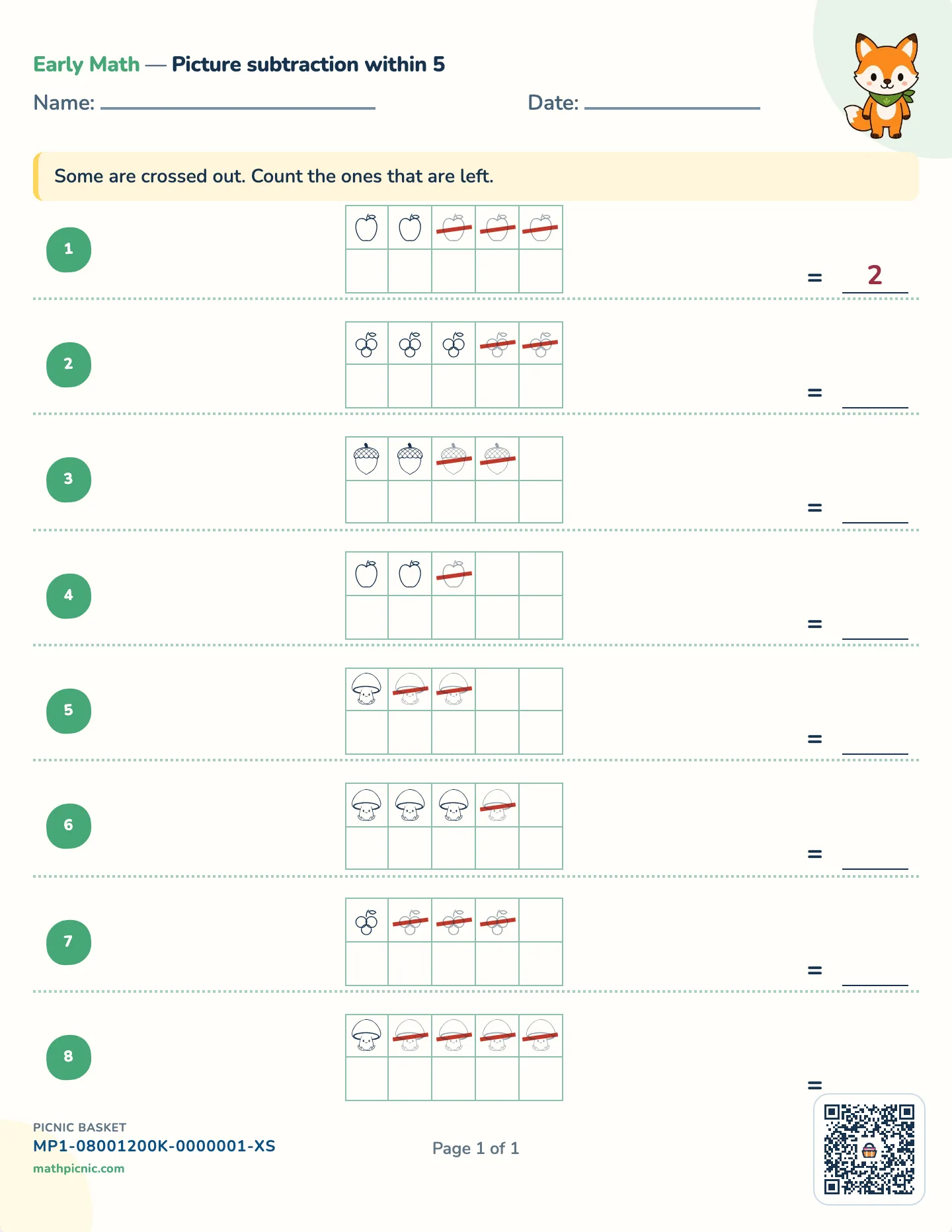
 - Subtracting within 5
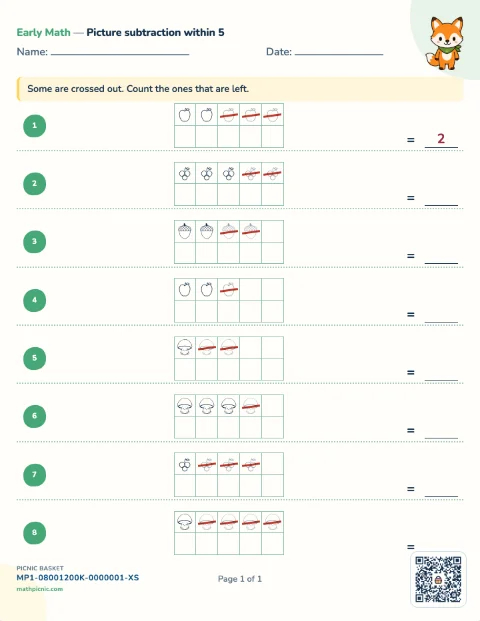 Print − = __
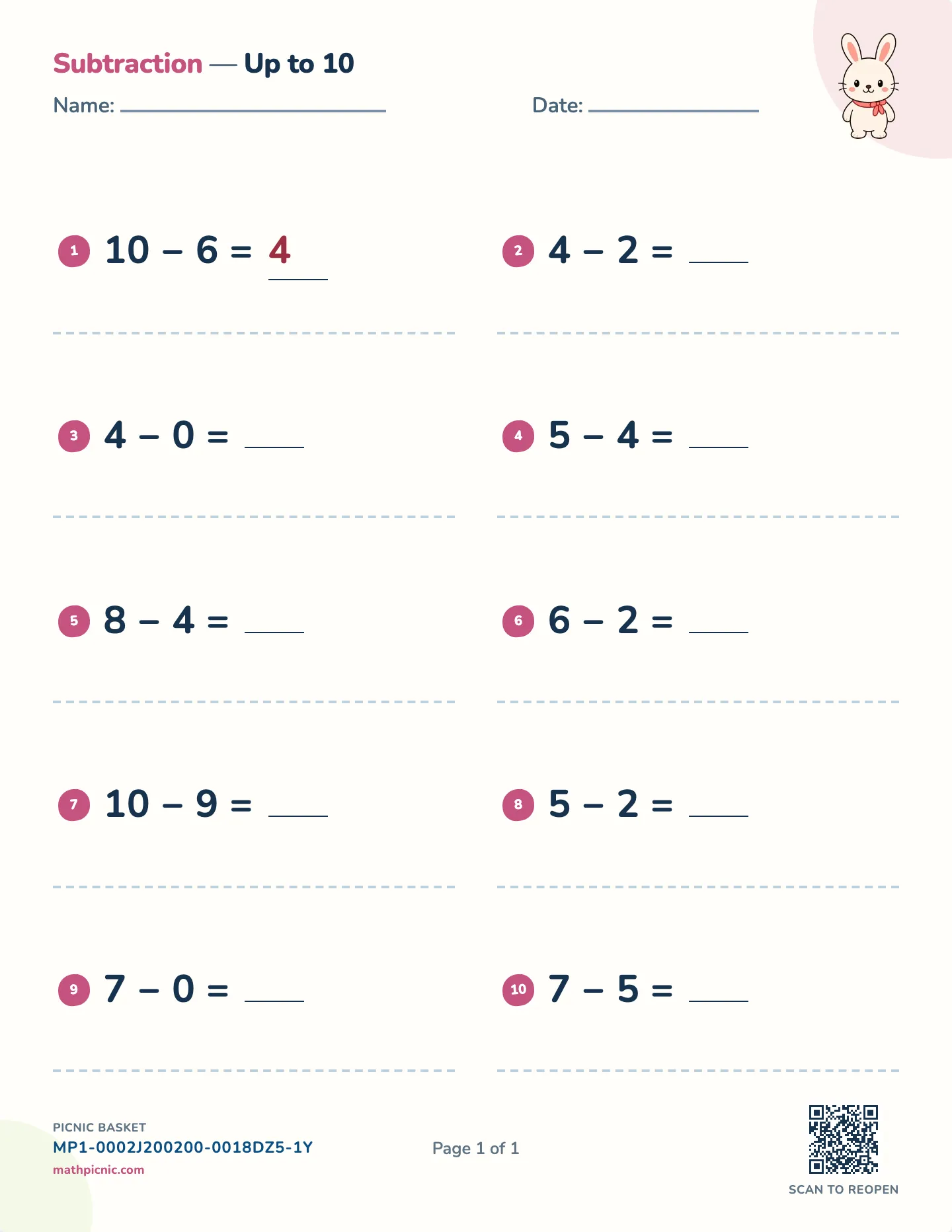
 - Subtraction within 10
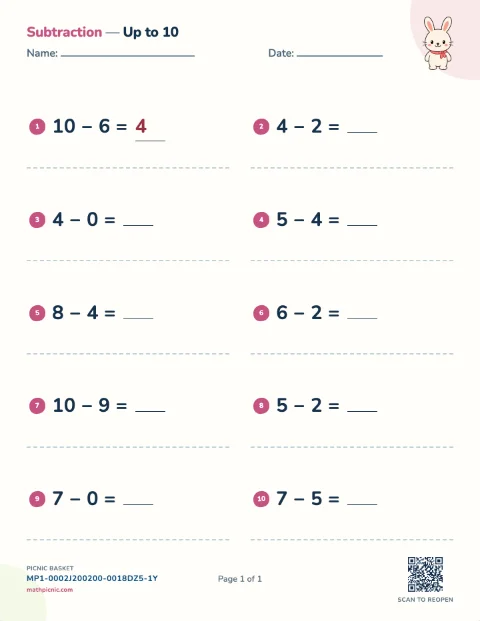 Print 9 − 4 = __
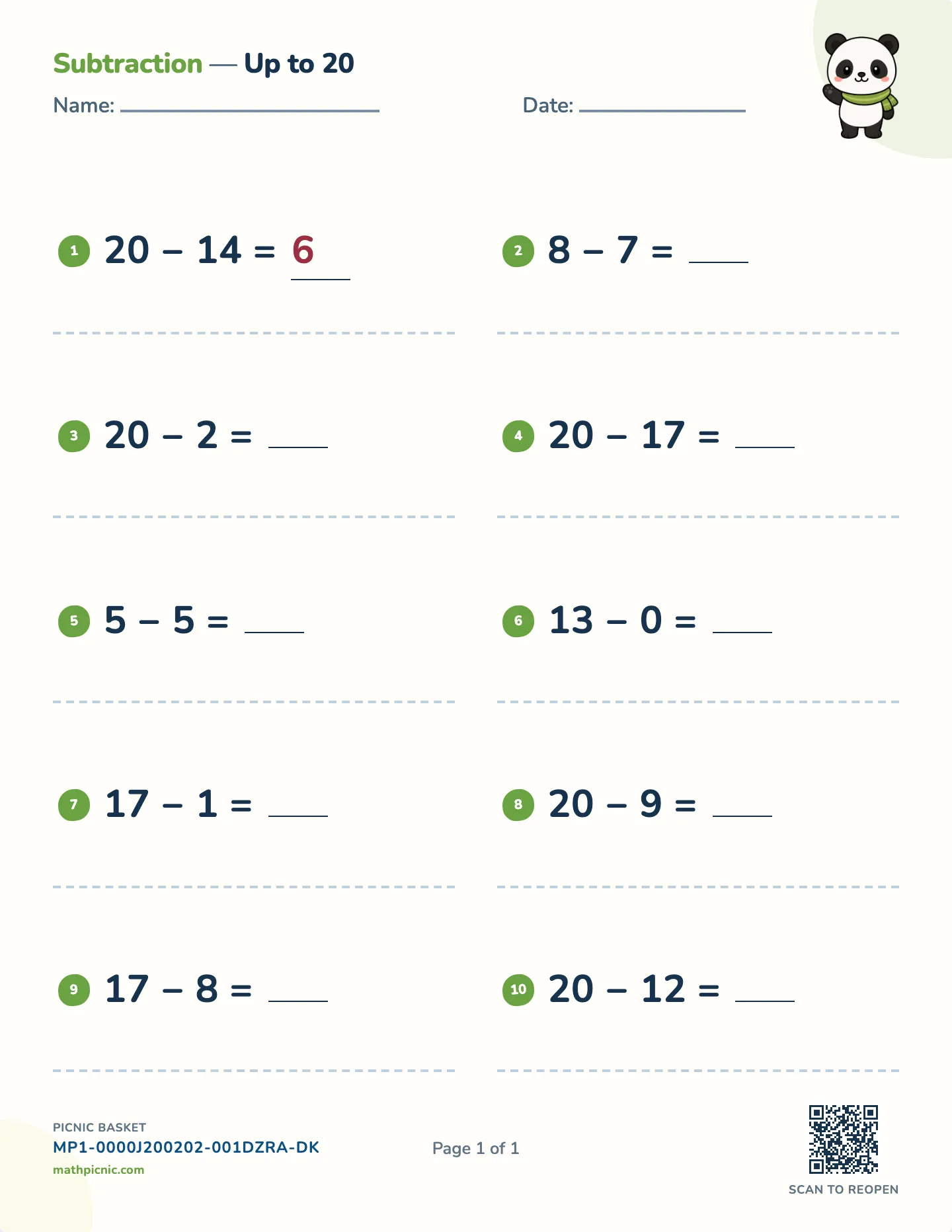
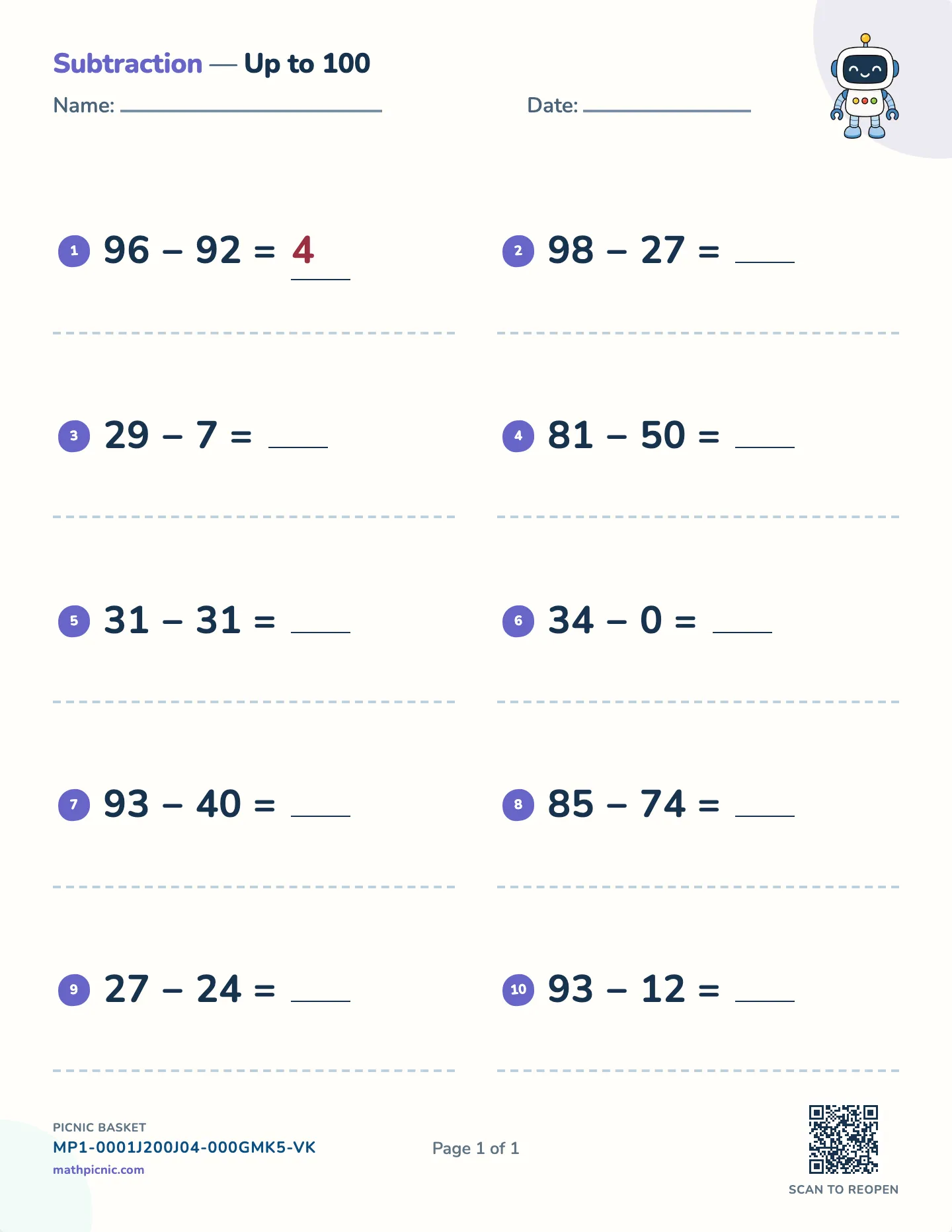
 - Subtraction within 20
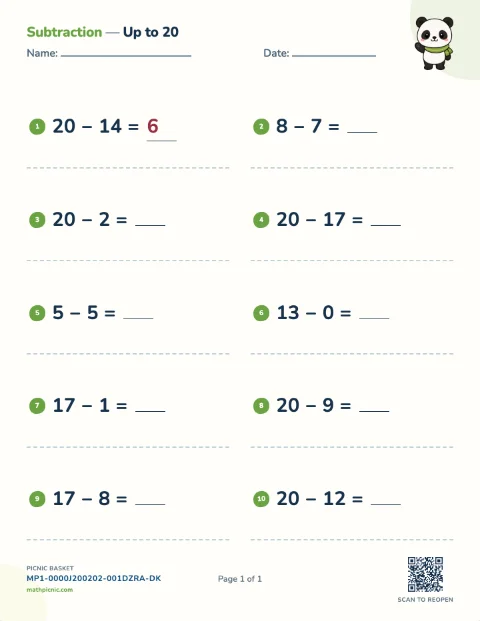 Print 15 − 7 = __
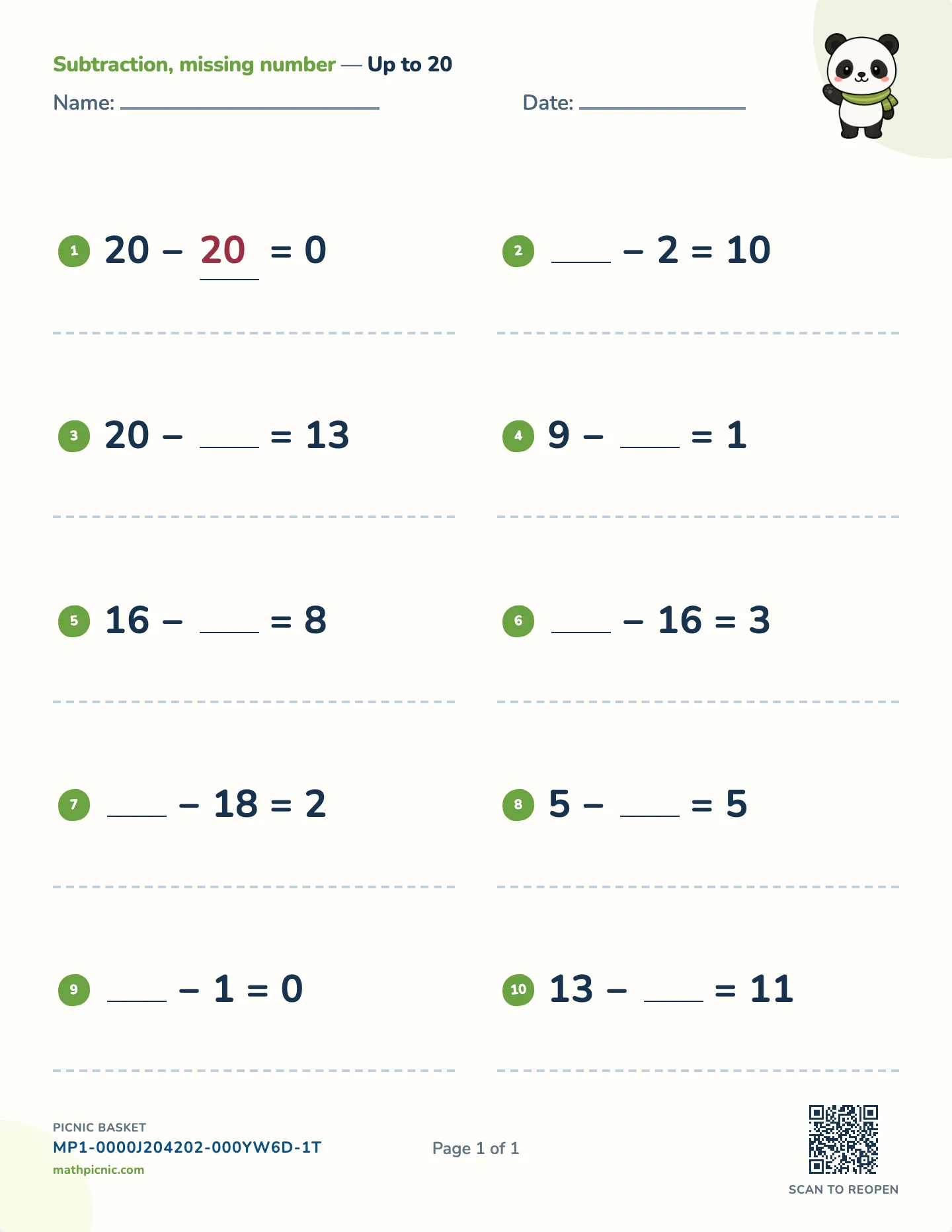
 - Missing number subtraction
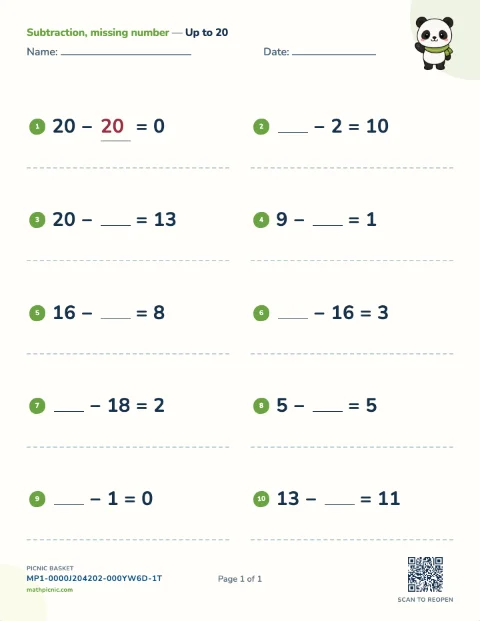 Print 15 − __ = 8
 - Subtraction without borrowing
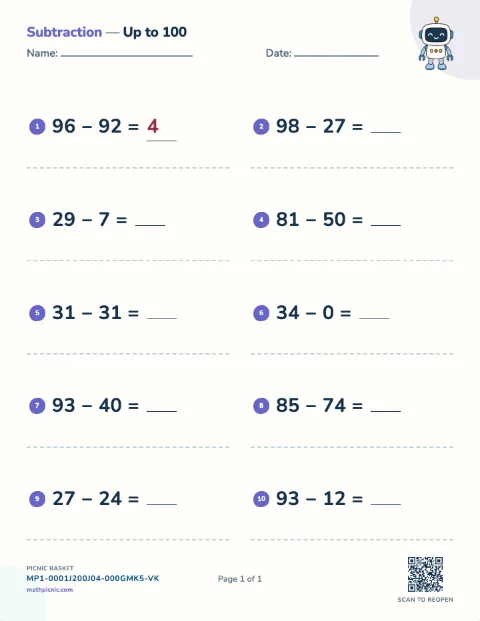 Print 46 − 23 stacked
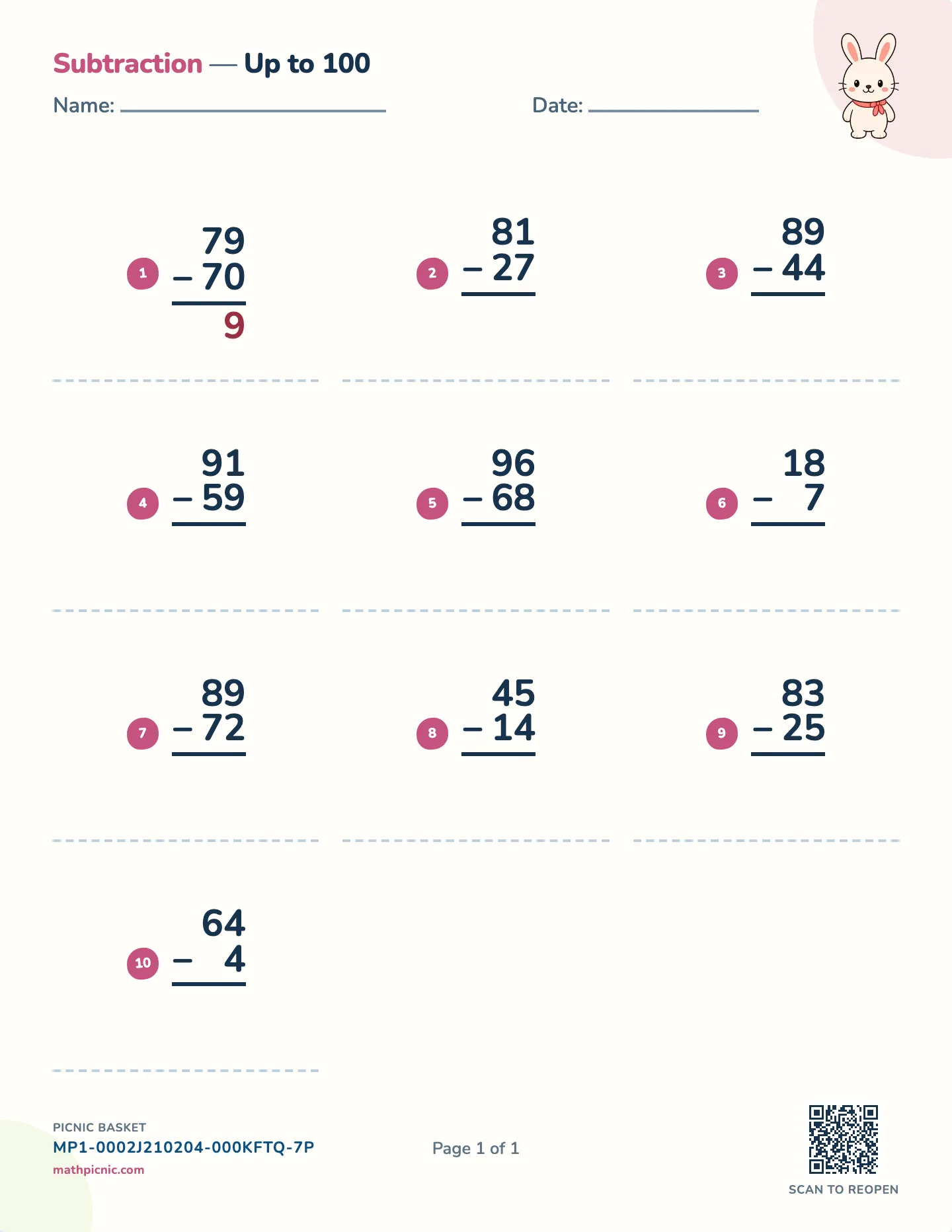
 - Vertical subtraction
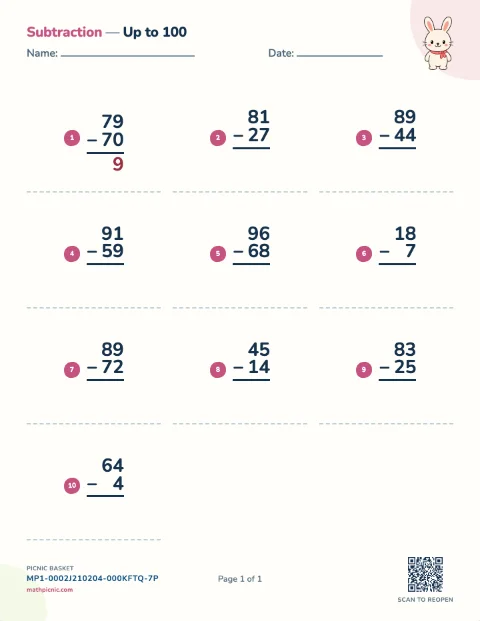 Print 83 − 25 stacked
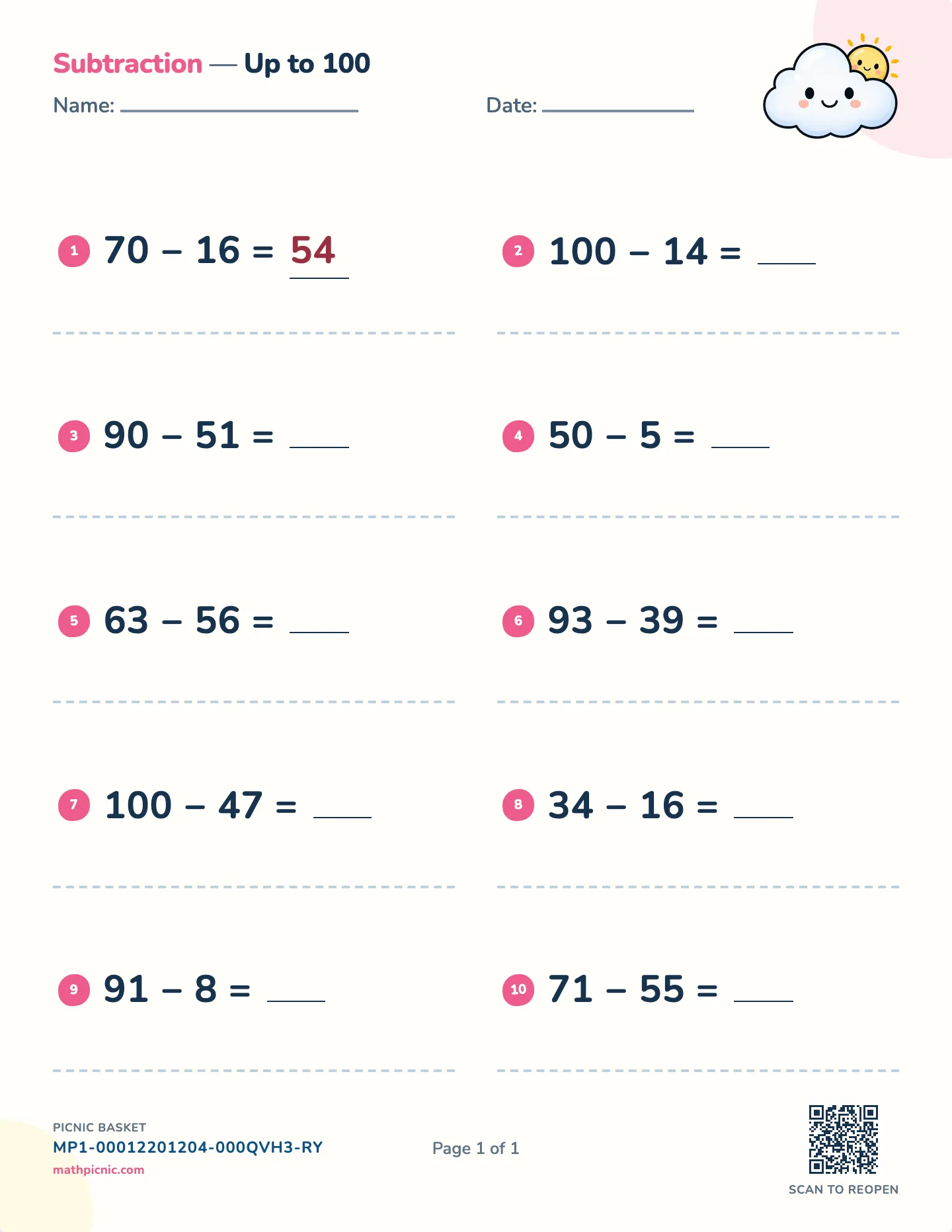
 - Subtraction with borrowing
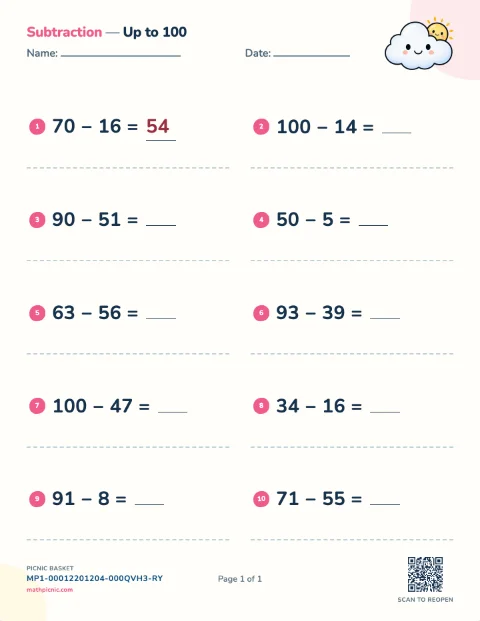 Print 42 − 17 stacked
A simple way through subtraction
Subtraction means two different things that look identical on paper. Taking away — I had eight, three are gone — is the version children meet first, and picture subtraction keeps it physical by letting a child cross out and count what remains. Difference — how much more is eight than three — is the same written problem asking a different question, and children who only ever meet take-away are the ones who freeze on word problems later.
Why this order works
Both counting back and counting up are legitimate. Counting back suits small takeaways like 9 − 2; counting up suits close pairs like 15 − 13, where counting back three times is slower and more error-prone than noticing the gap is two. Bridging through ten — 15 − 7 becomes 15 − 5 − 2 — is the counterpart of the make-ten move in addition, and it is what makes subtraction within 20 fast.