
Exponents worksheets
Not sure what comes next? Start with the first sheet that feels comfortable.
Or you can pick your level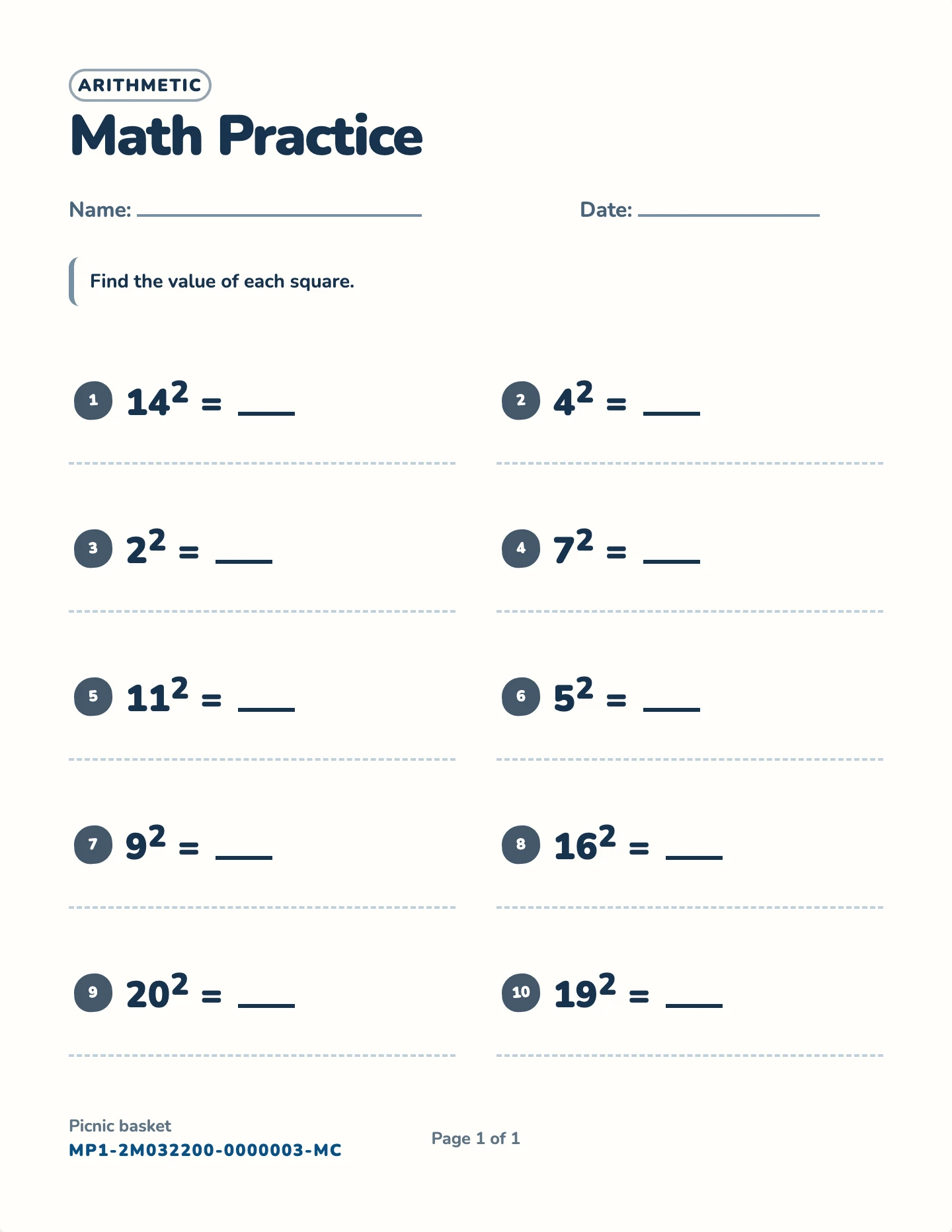
Nothing matches that. Try a skill, a number, or a grade.
In teaching order
Exponents worksheets, easiest first
Each sheet assumes the one above it is comfortable. Start where your child is, not at the top.- Squares and powers
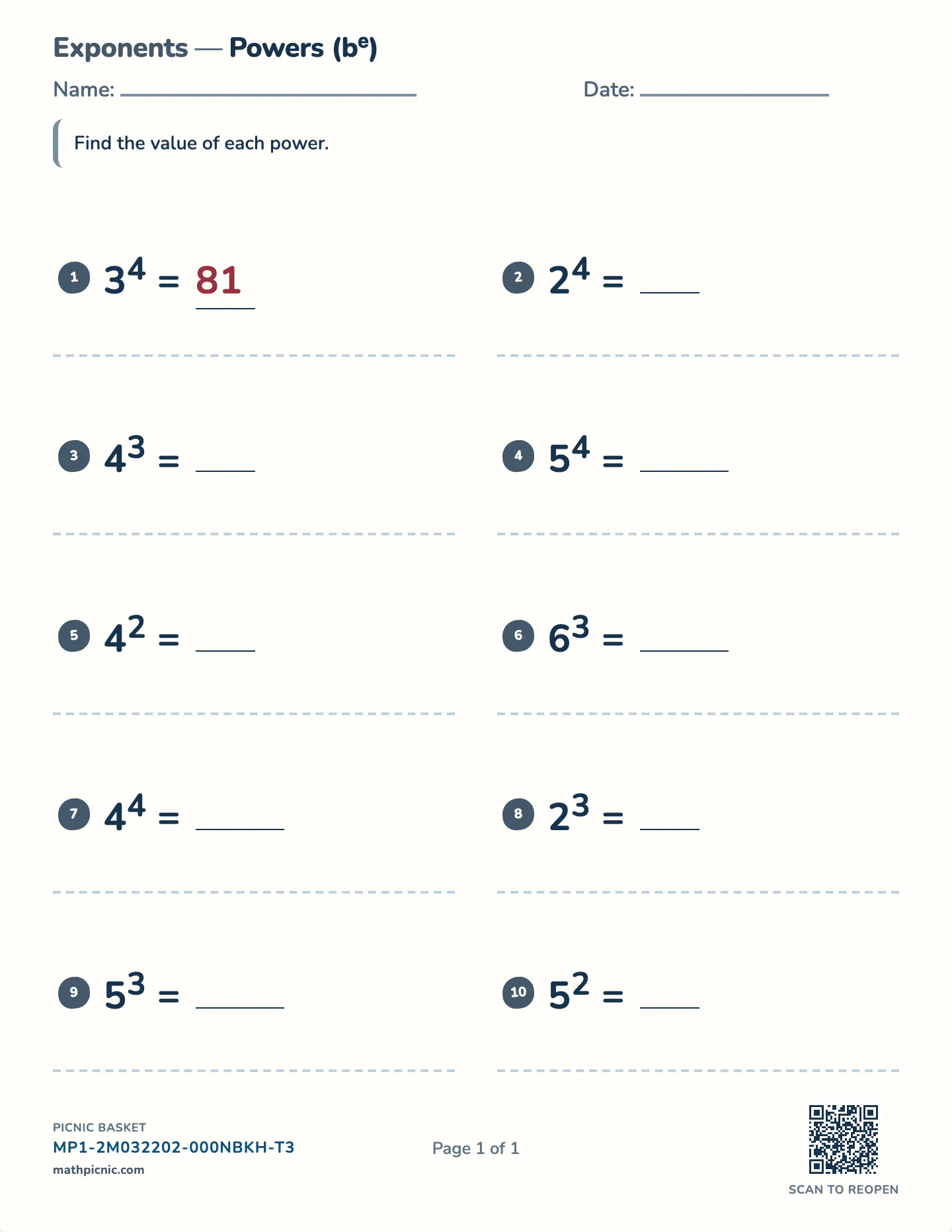
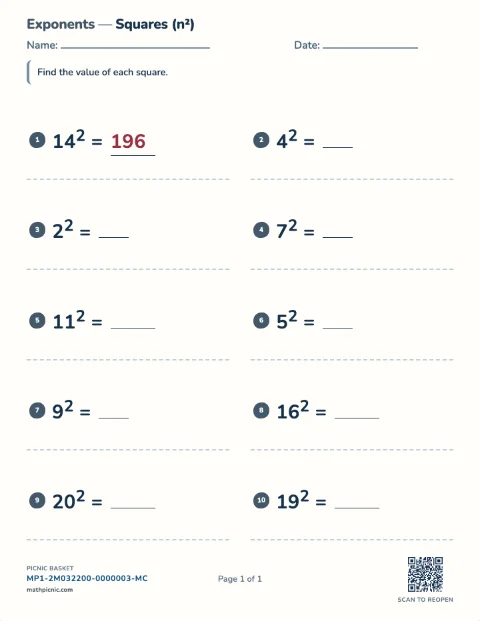 Print 3⁴ = ___
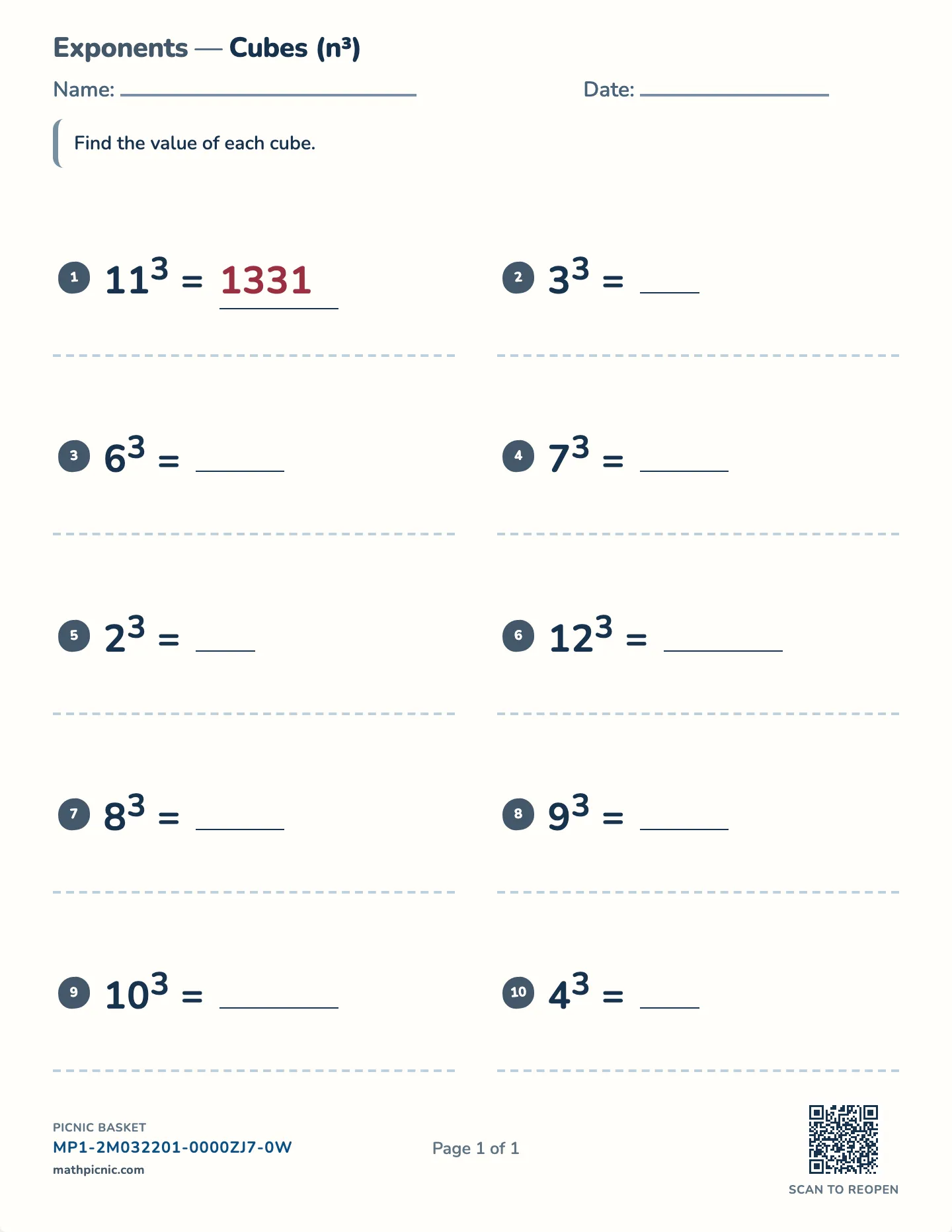
 - Cube numbers
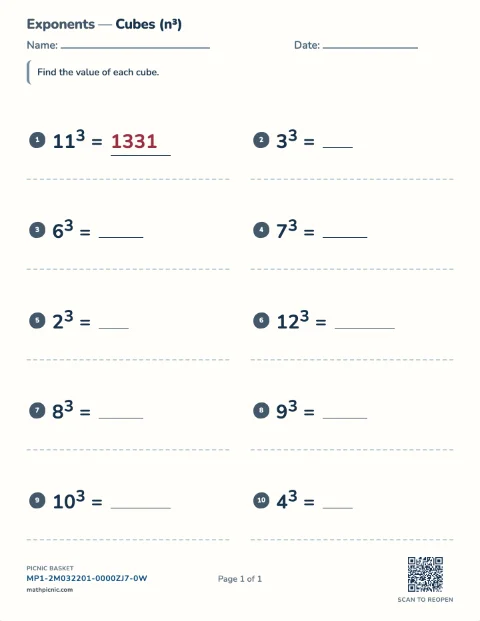 Print 11³ = __
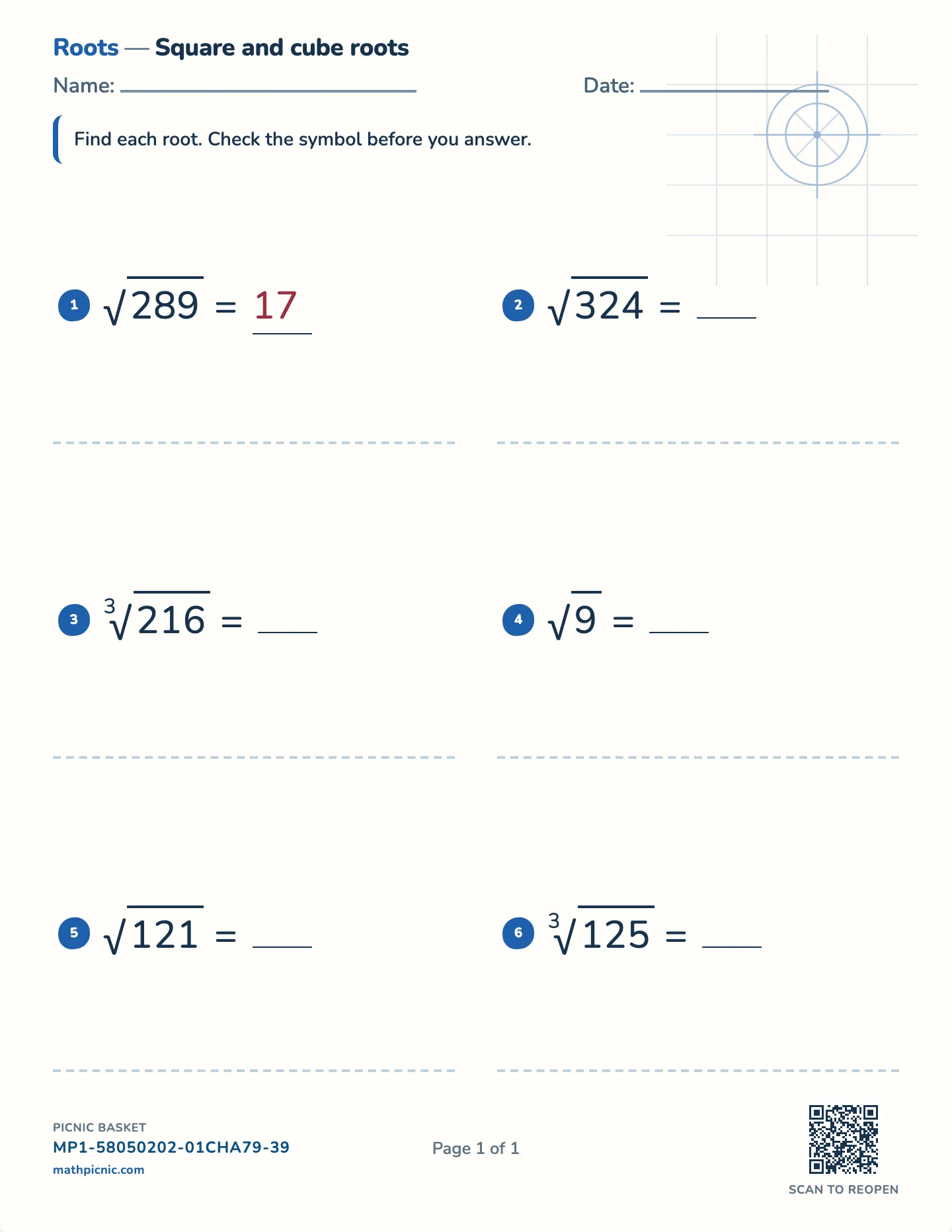
 - Square roots and cube roots
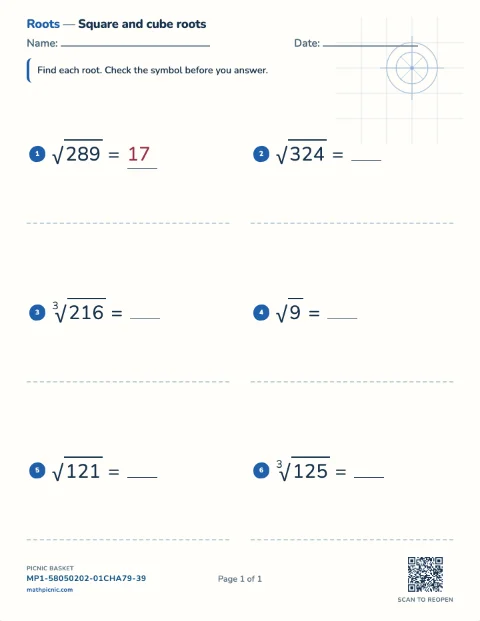 Print √196 = ___
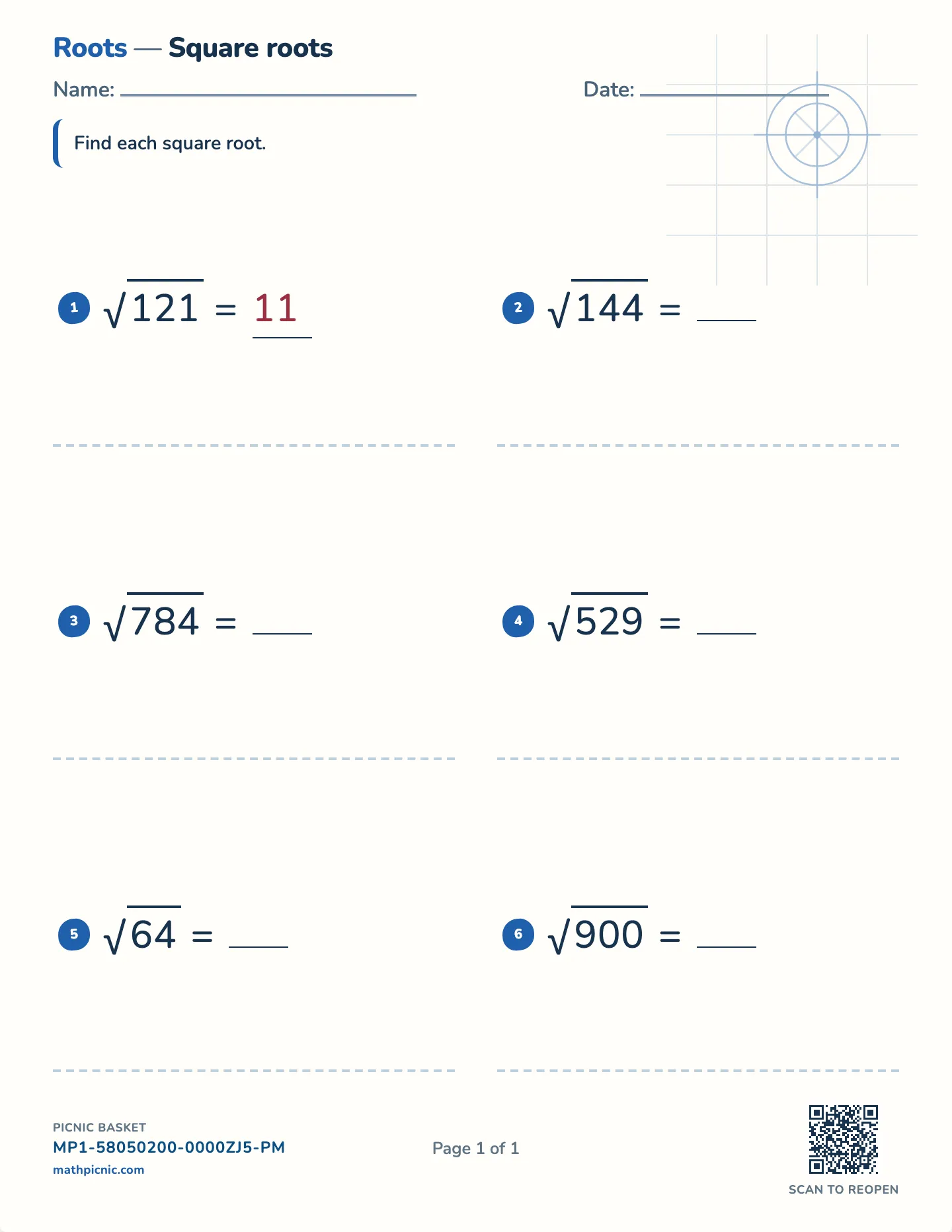
 - Square roots
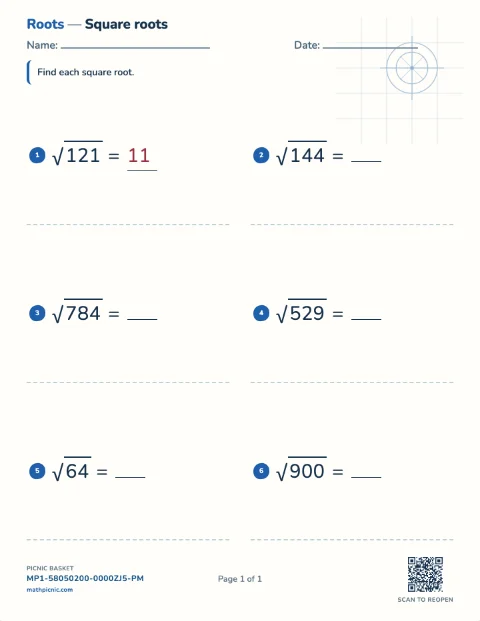 Print √144 = __
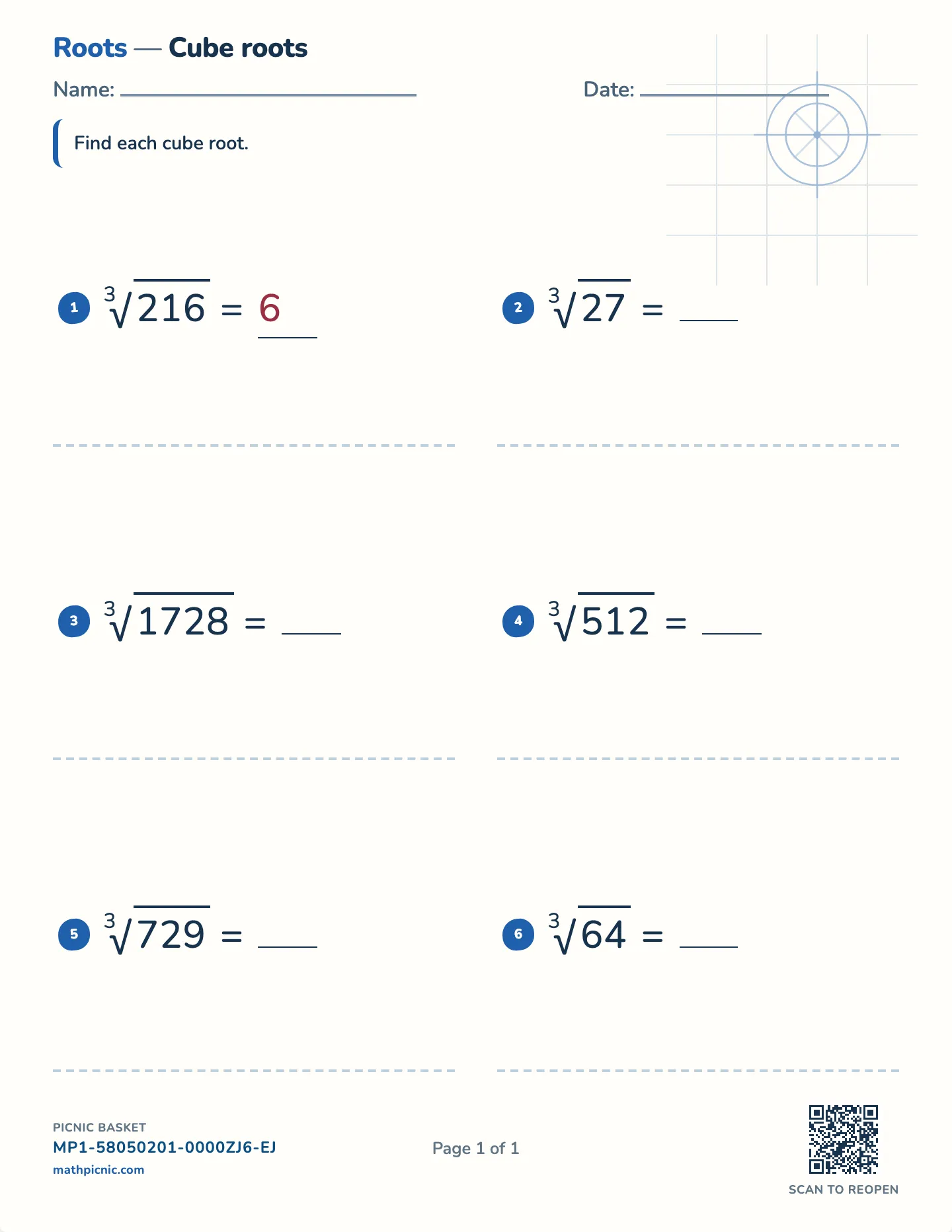
 - Cube roots
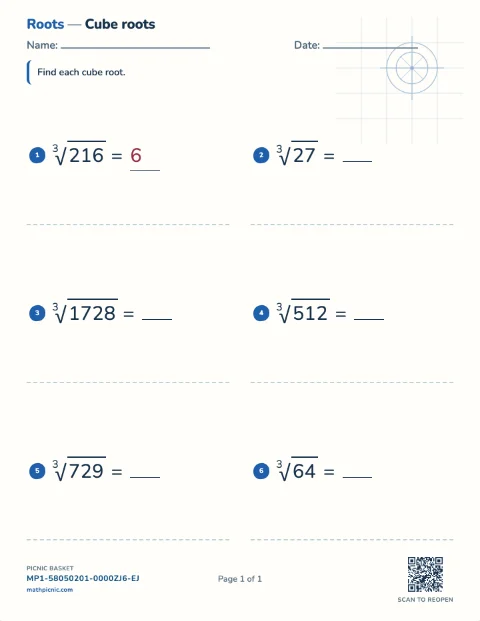 Print ∛216 = __
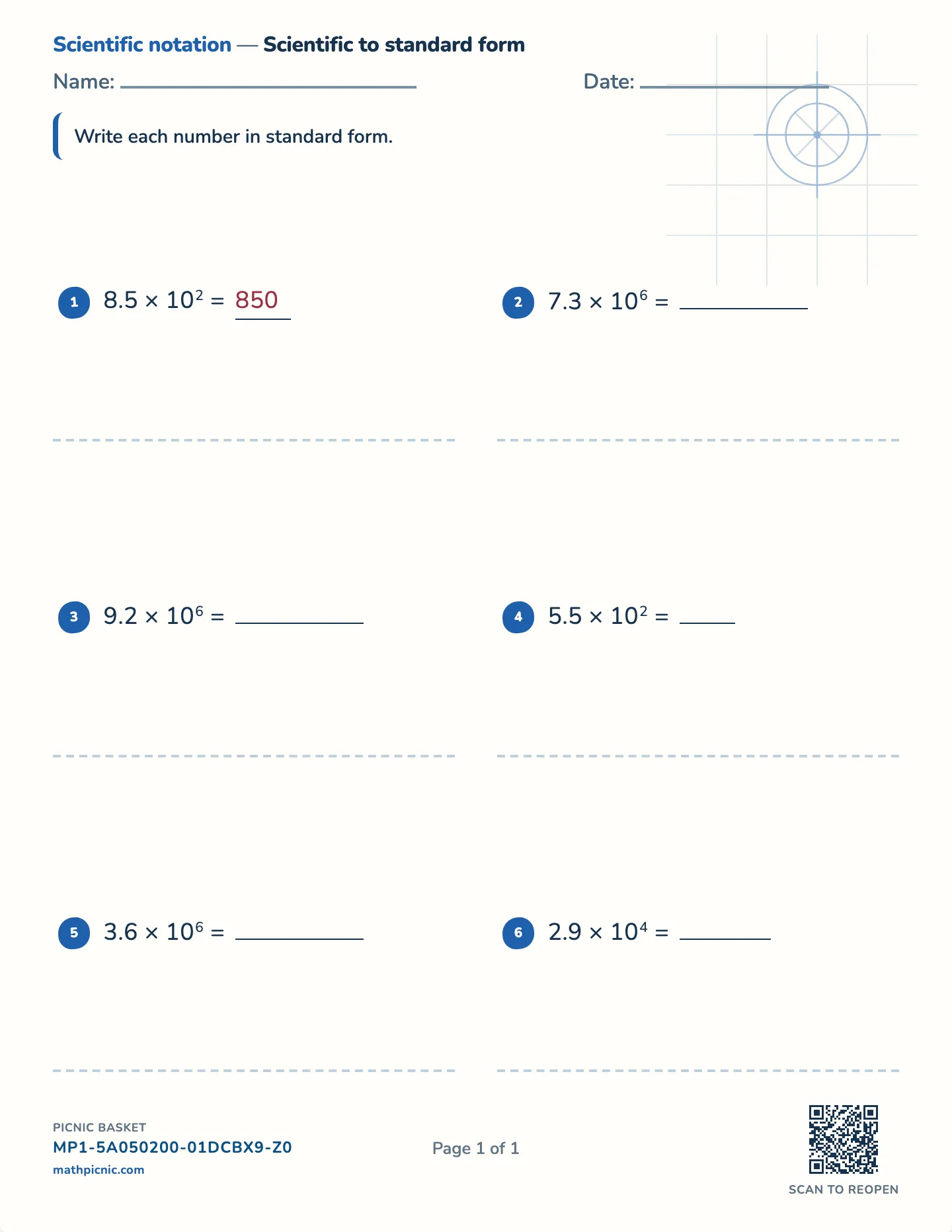
 - Scientific notation
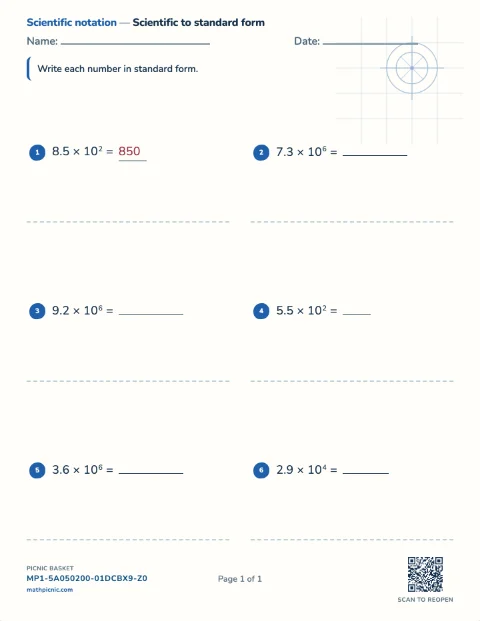 Print 3.5 × 10⁴ = ___
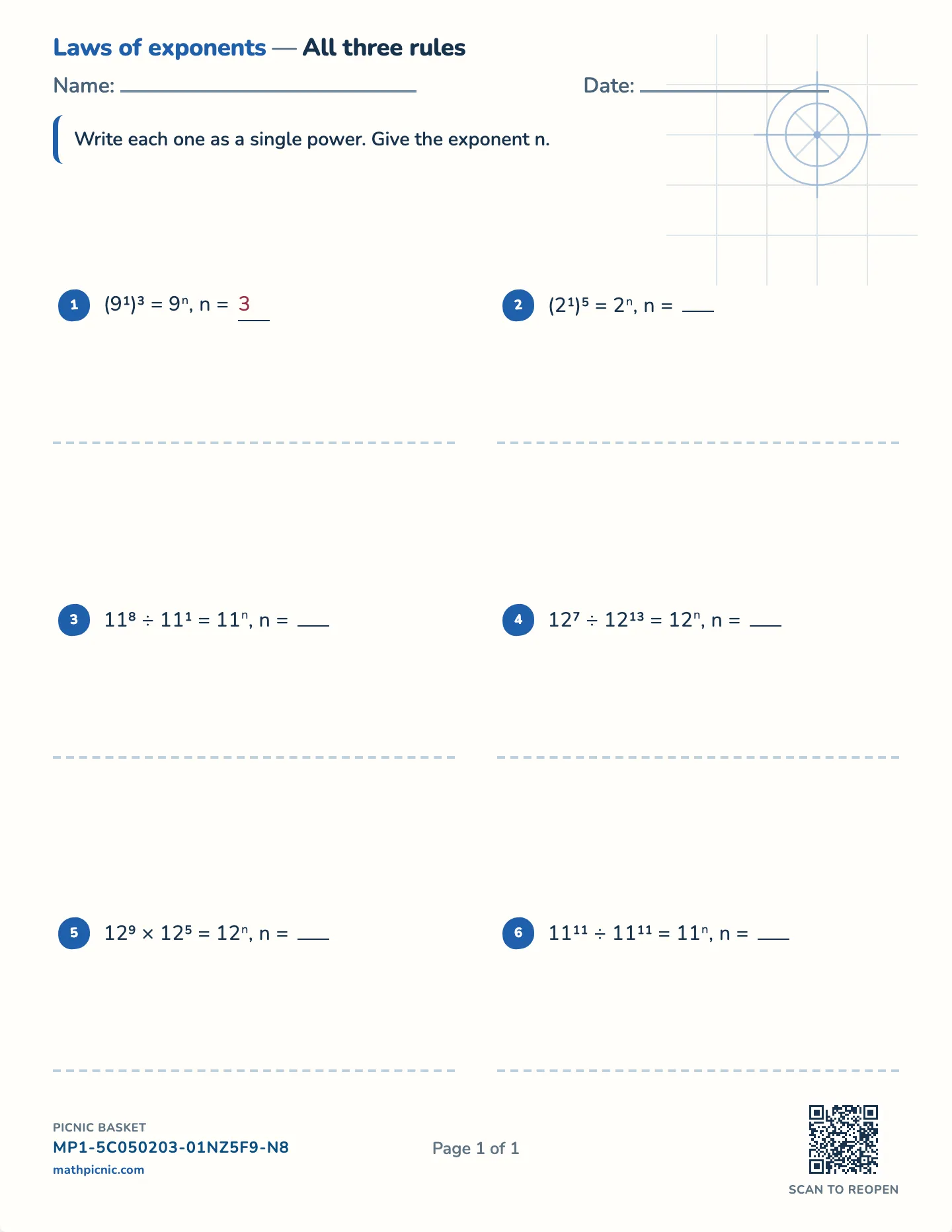
 - Laws of exponents
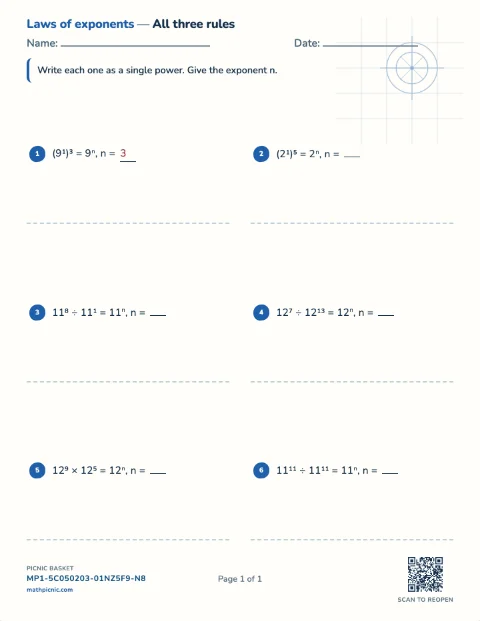 Print 3² × 3⁴ = 3ⁿ
 - Powers of a number
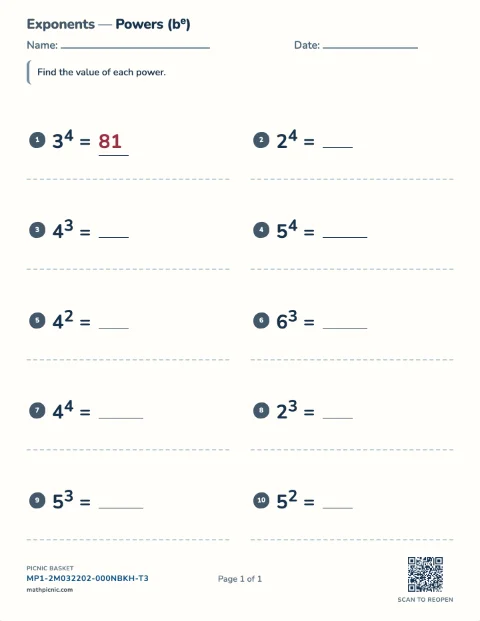 Print 2⁵ = ___
 - Product rule for exponents
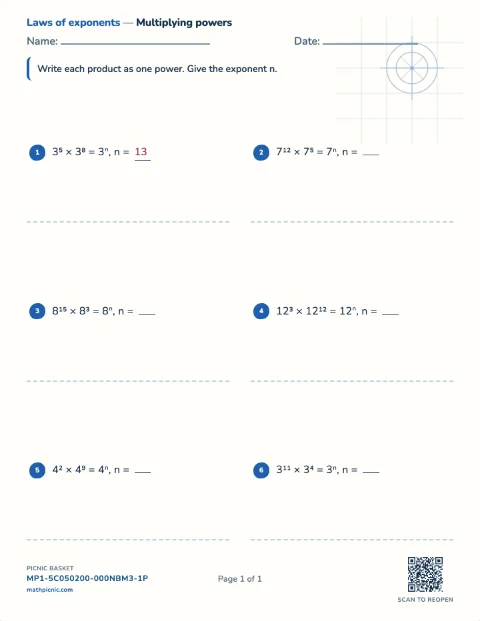 Print 2³ × 2⁵ = 2ⁿ
 - Quotient rule for exponents
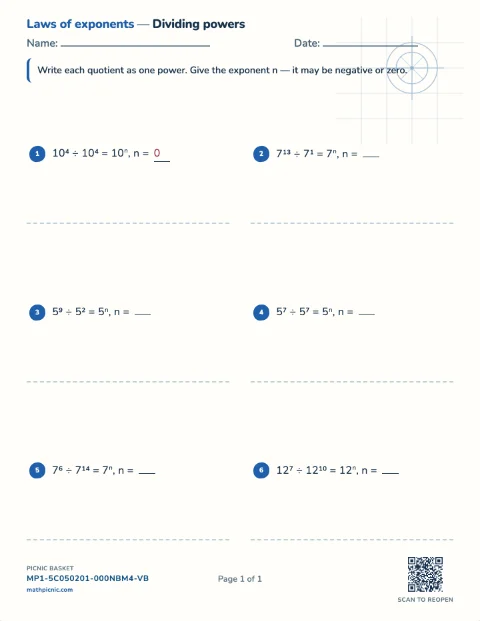 Print 5⁷ ÷ 5² = 5ⁿ
 - Power of a power
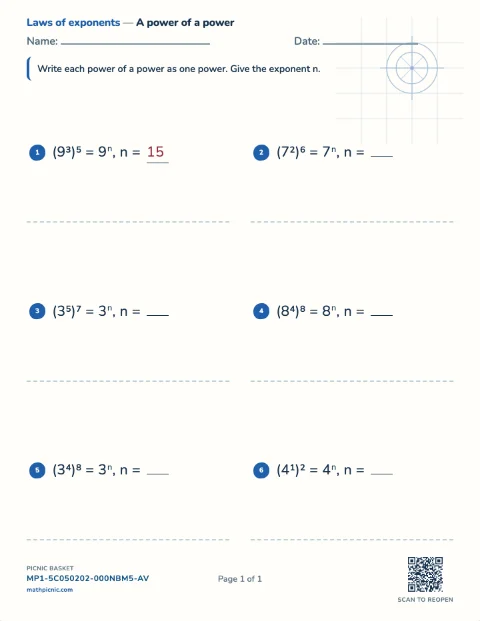 Print (2³)⁴ = 2ⁿ
 - Scientific notation: small numbers
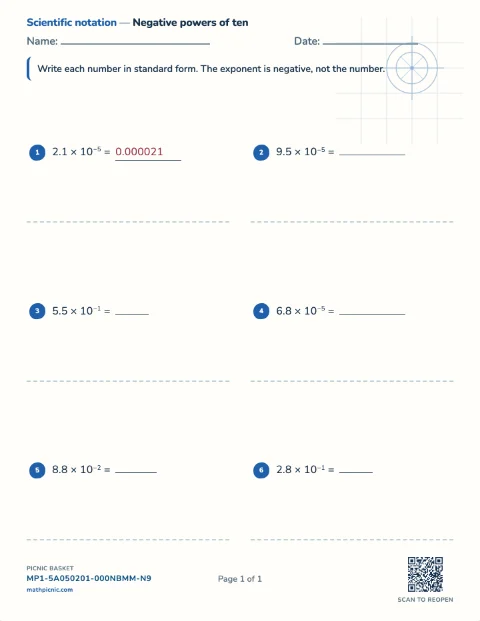 Print 6.2 × 10⁻⁴ = ___
 - Scientific notation: power of ten
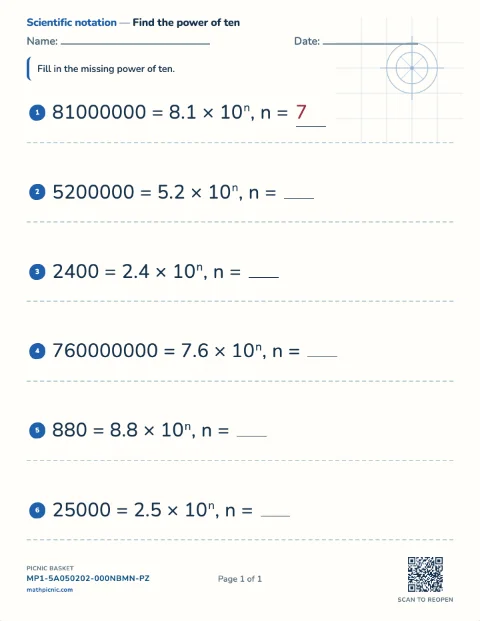 Print 48000 = 4.8 × 10ⁿ
 - Scientific notation: coefficient
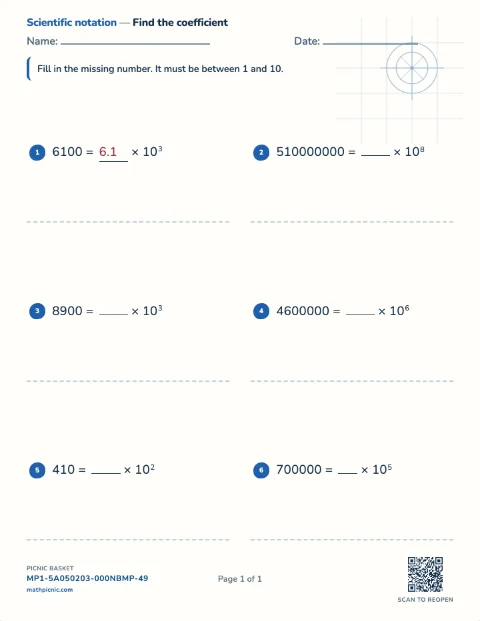 Print 48000 = ___ × 10⁴
A simple way through exponents
The one idea a child must get right is what the little raised number means. 3⁴ is not 3 × 4; it is 3 multiplied by itself four times — 3 × 3 × 3 × 3 = 81. Misreading it as multiplication is the classic first mistake, so the sheets keep bases and exponents small enough that a child can build every answer by repeated multiplication and see the pattern for themselves.
Why this order works
Squares and cubes come first because they are the powers a child meets and uses most — areas are squares, volumes are cubes. General powers put base and exponent together once those two feel automatic. Getting fluent here pays off immediately in order of operations, where powers are evaluated before multiplication and division.