ExponentsSquares (n²)
Name: Date:
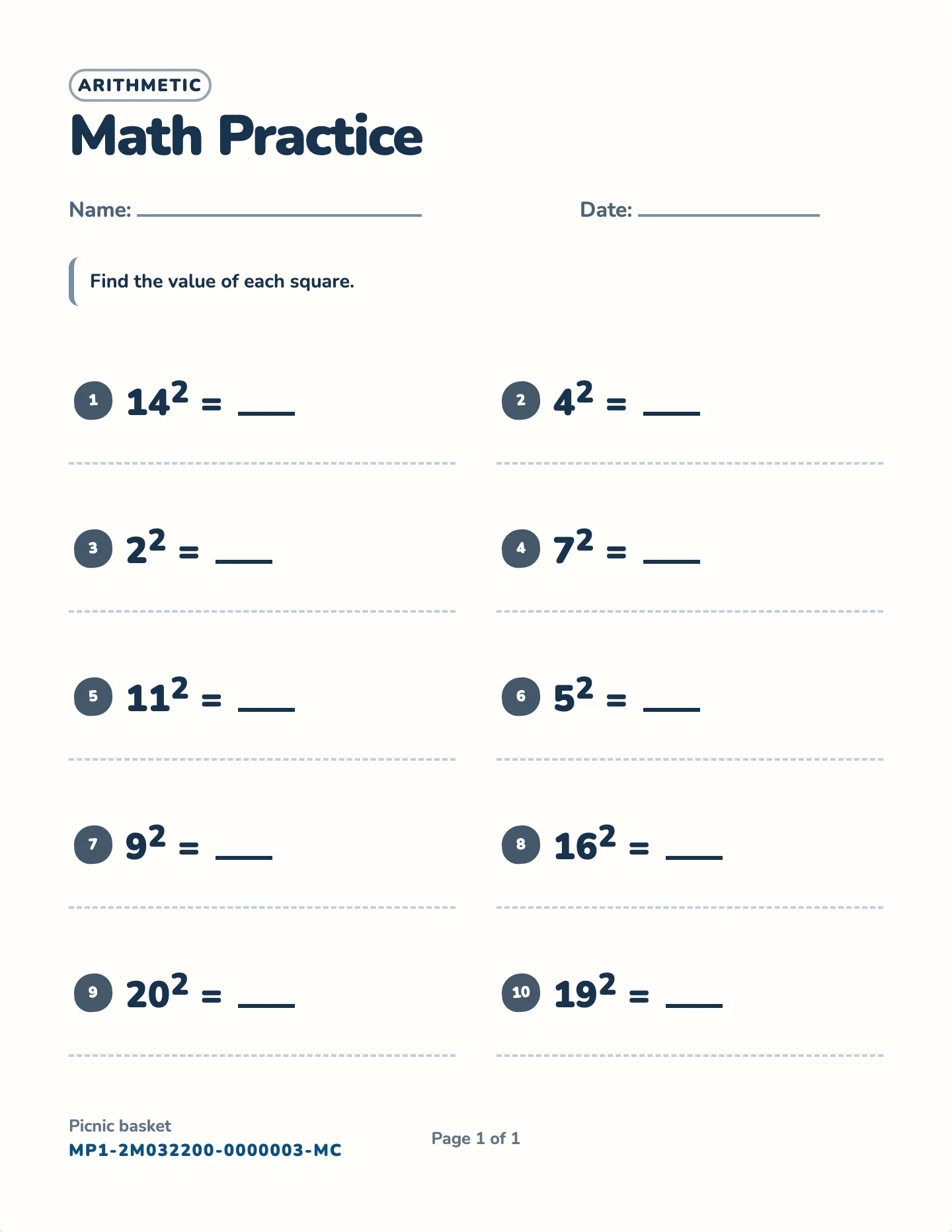
Find the value of each square.
1142 =
242 =
322 =
472 =
5112 =
652 =
792 =
8162 =
9202 =
10192 =

An exponent is a shorthand for repeated multiplication, and reading it correctly is the grade-six gateway to algebra and order of operations. These free printable worksheets practice evaluating squares, cubes, and small powers.
If they get stuck
The answer key prints on a separate page.
The one idea to get right is what the little raised number means: 3⁴ is not 3 × 4, it is 3 multiplied by itself four times — 3 × 3 × 3 × 3 = 81. Squares (n²) and cubes (n³) are the two a child meets first and uses most, so they get their own focus; general powers put base and exponent together once those feel solid.
Bases and exponents are kept small so every answer is a manageable whole number a child can build by repeated multiplication and check. Getting fluent here pays off immediately in order of operations, where powers are evaluated before multiplication and division.
One question from a sheet like this one, worked a step at a time — with a sentence saying what just happened and why.
Squares and powers, step by step