
Pre-Algebra worksheets
Not sure what comes next? Start with the first sheet that feels comfortable.
Column addition & subtraction
Grade 4
Add and subtract multi-digit whole numbers with regrouping
Customize this sheet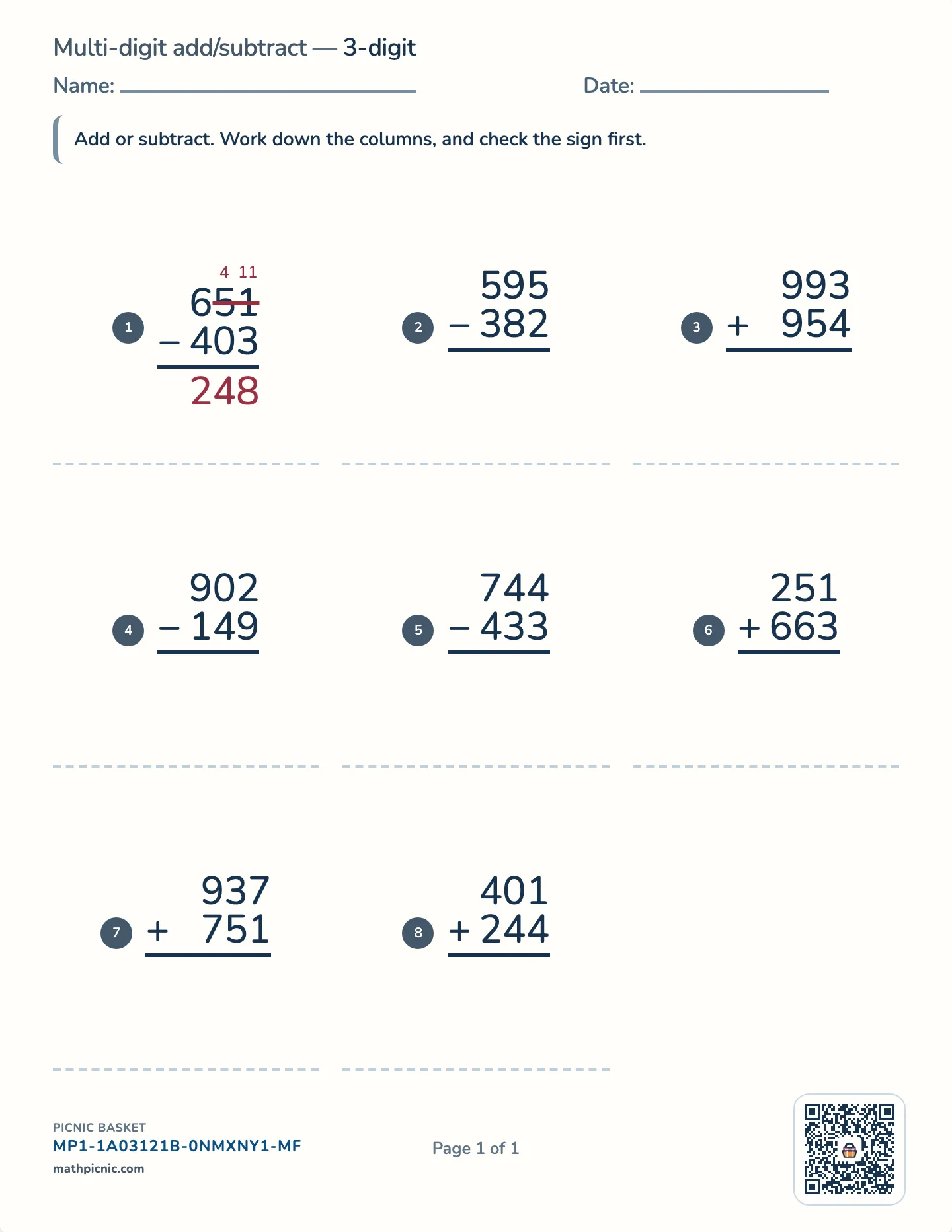
Nothing matches that. Try a skill, a number, or a grade.
In teaching order
Pre-Algebra worksheets, easiest first
Each sheet assumes the one above it is comfortable. Start where your child is, not at the top.- Column addition & subtraction
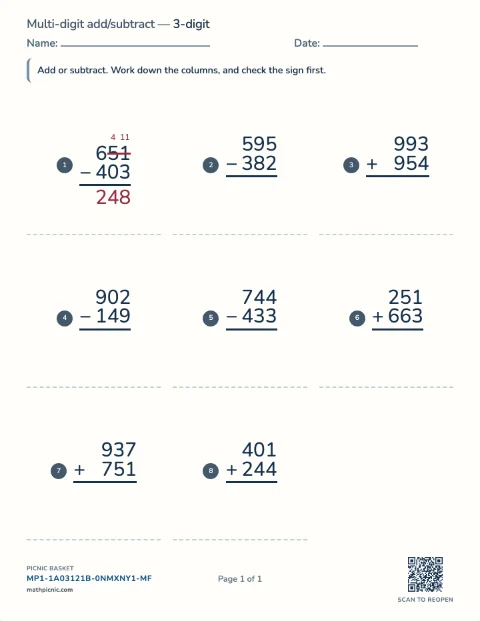 Print 364 + 285 = __
 - Multi-digit multiplication
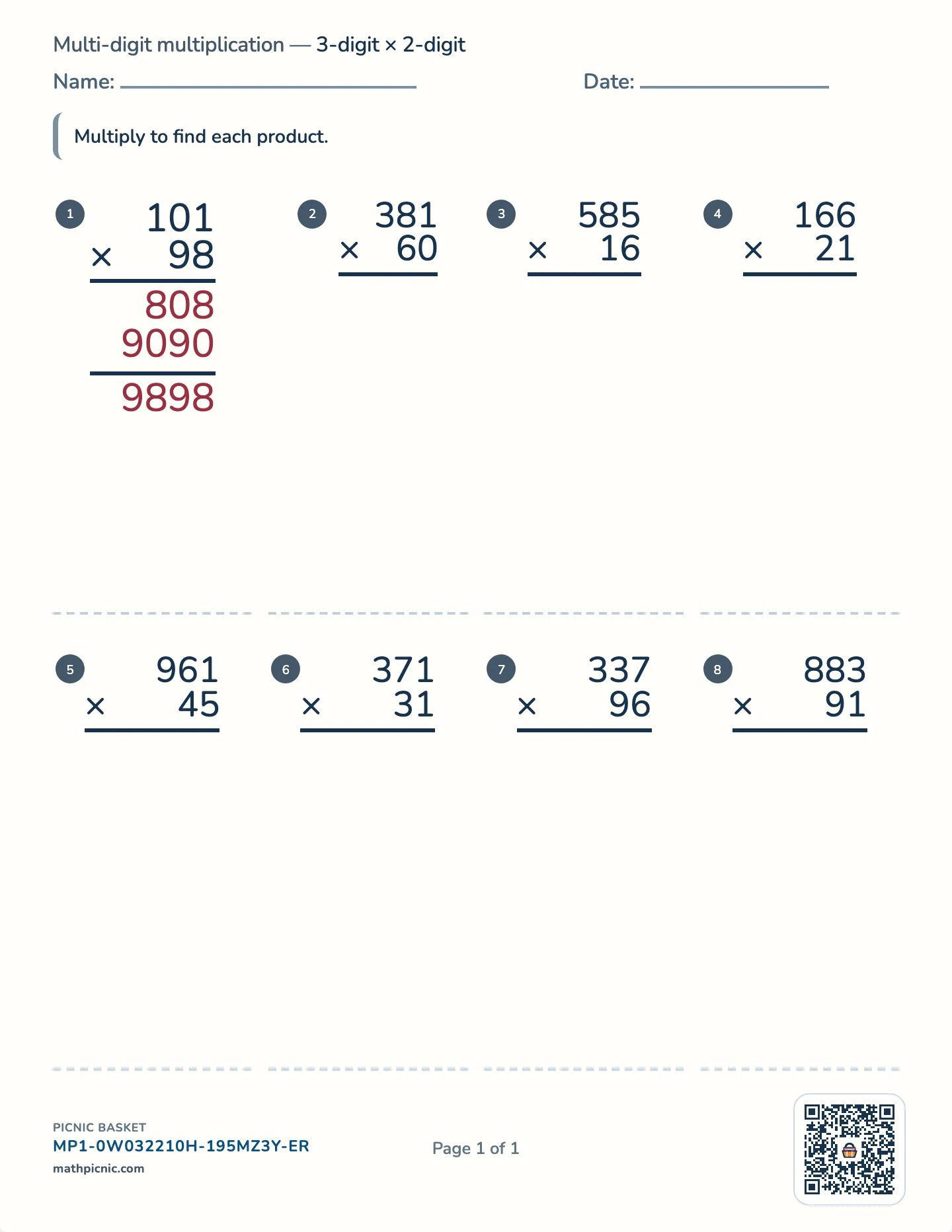
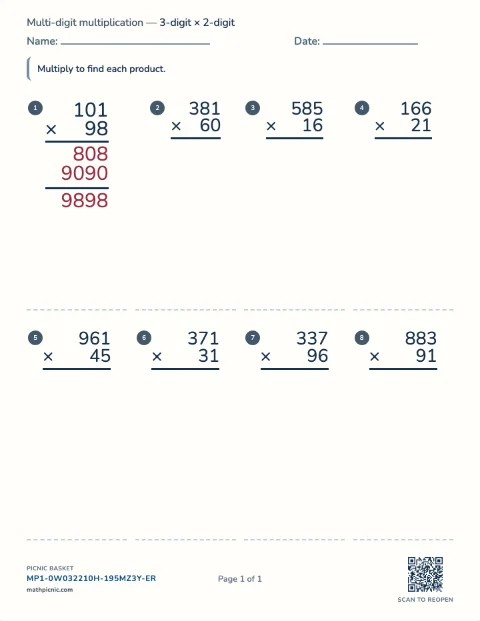 Print 234 × 56 = __
 - 2-digit by 1-digit multiplication
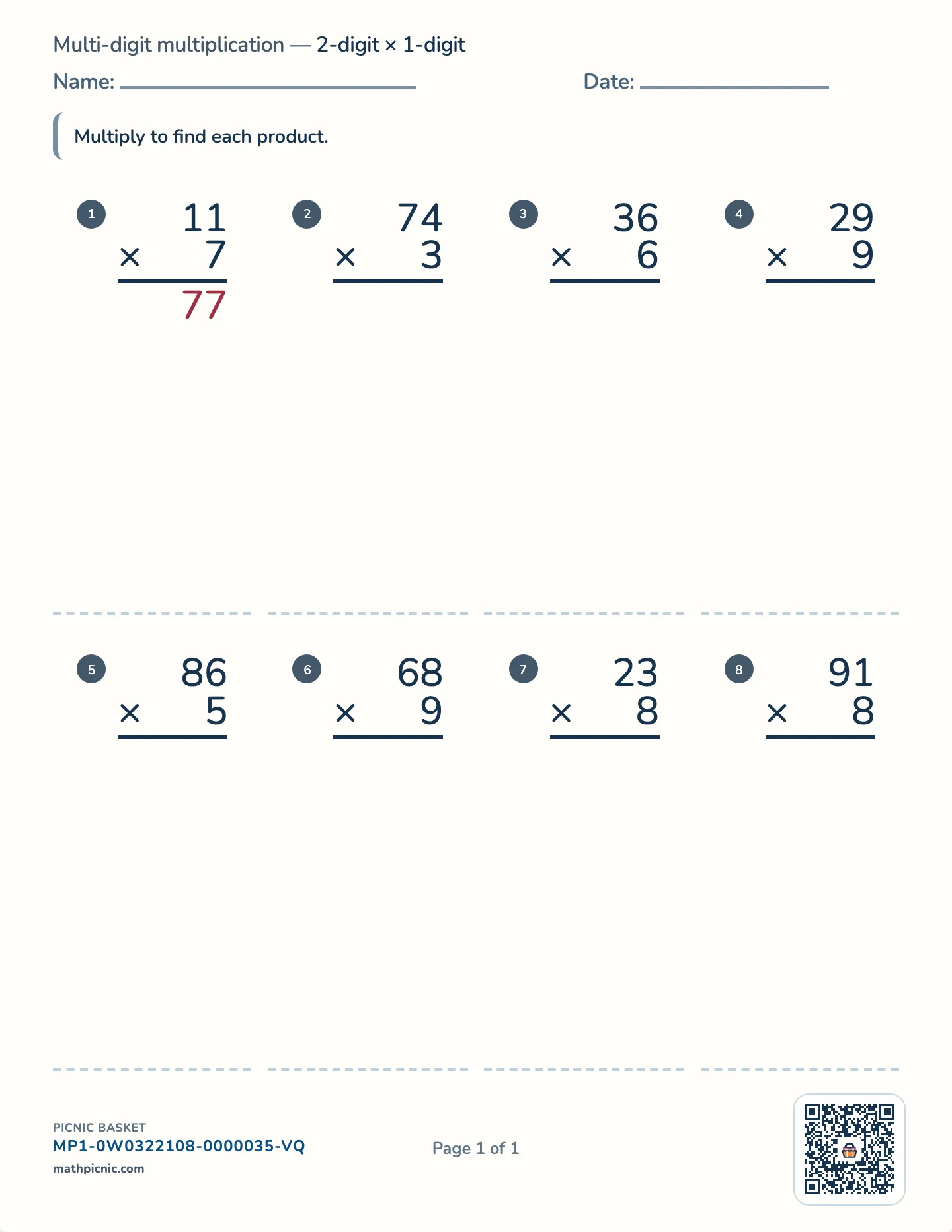
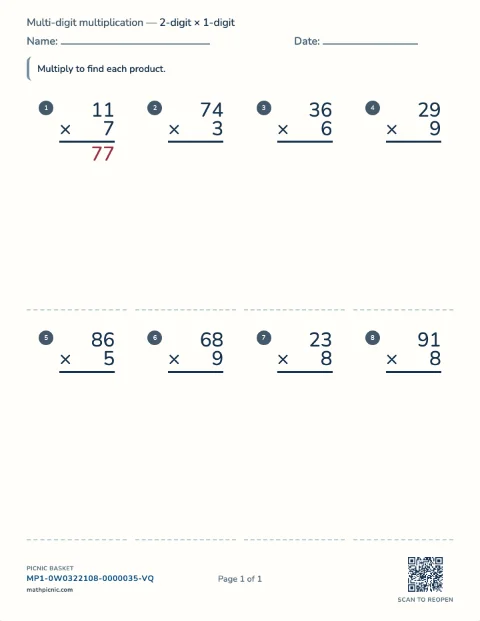 Print 47 × 6 = __
 - 3-digit by 1-digit multiplication
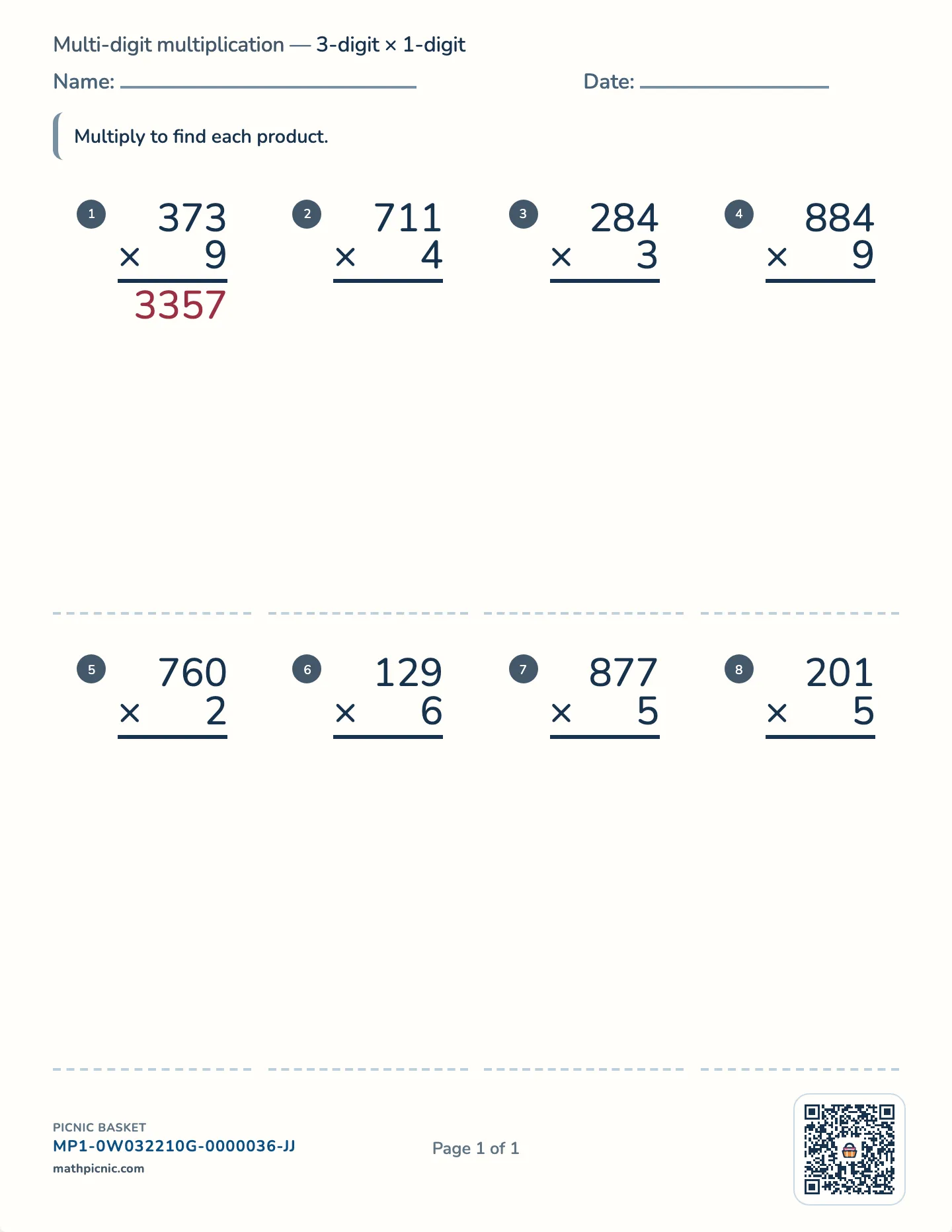
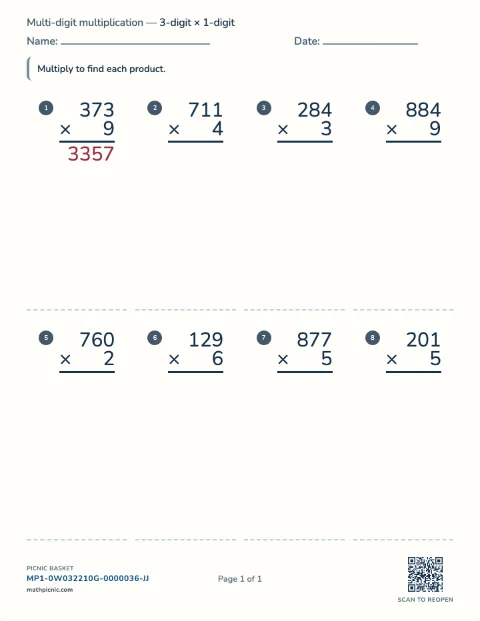 Print 316 × 8 = __
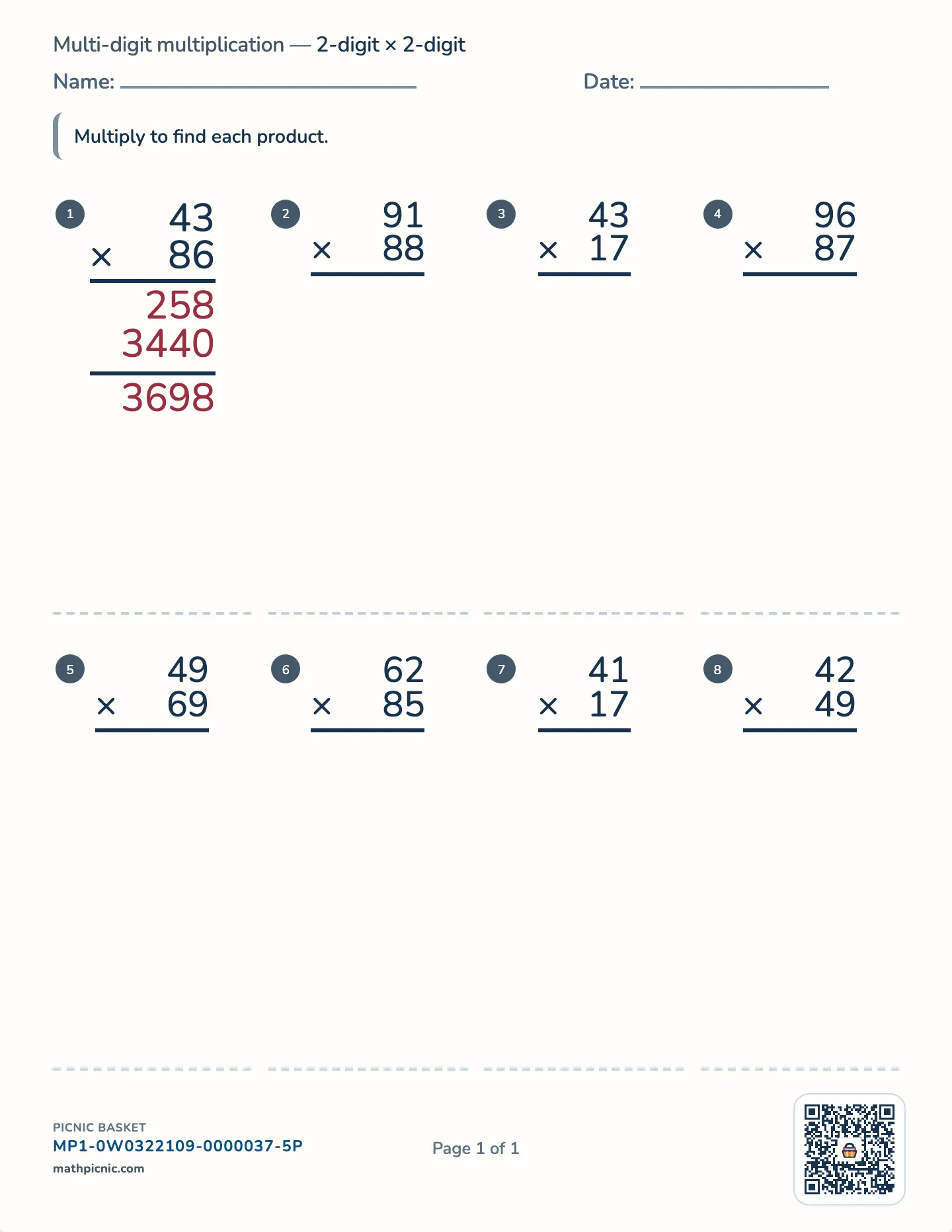
 - 2-digit by 2-digit multiplication
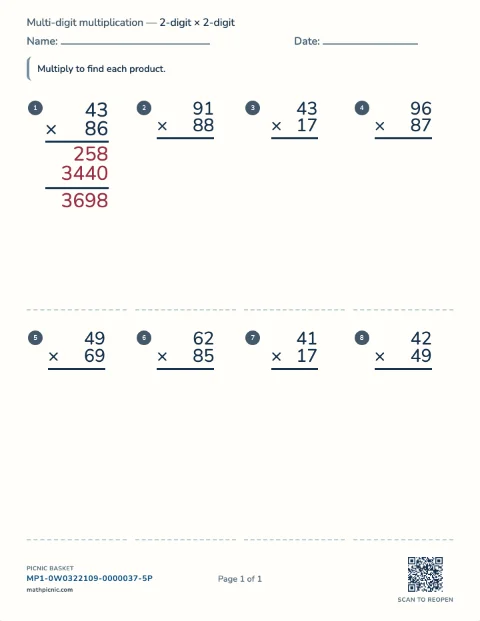 Print 34 × 26 = __
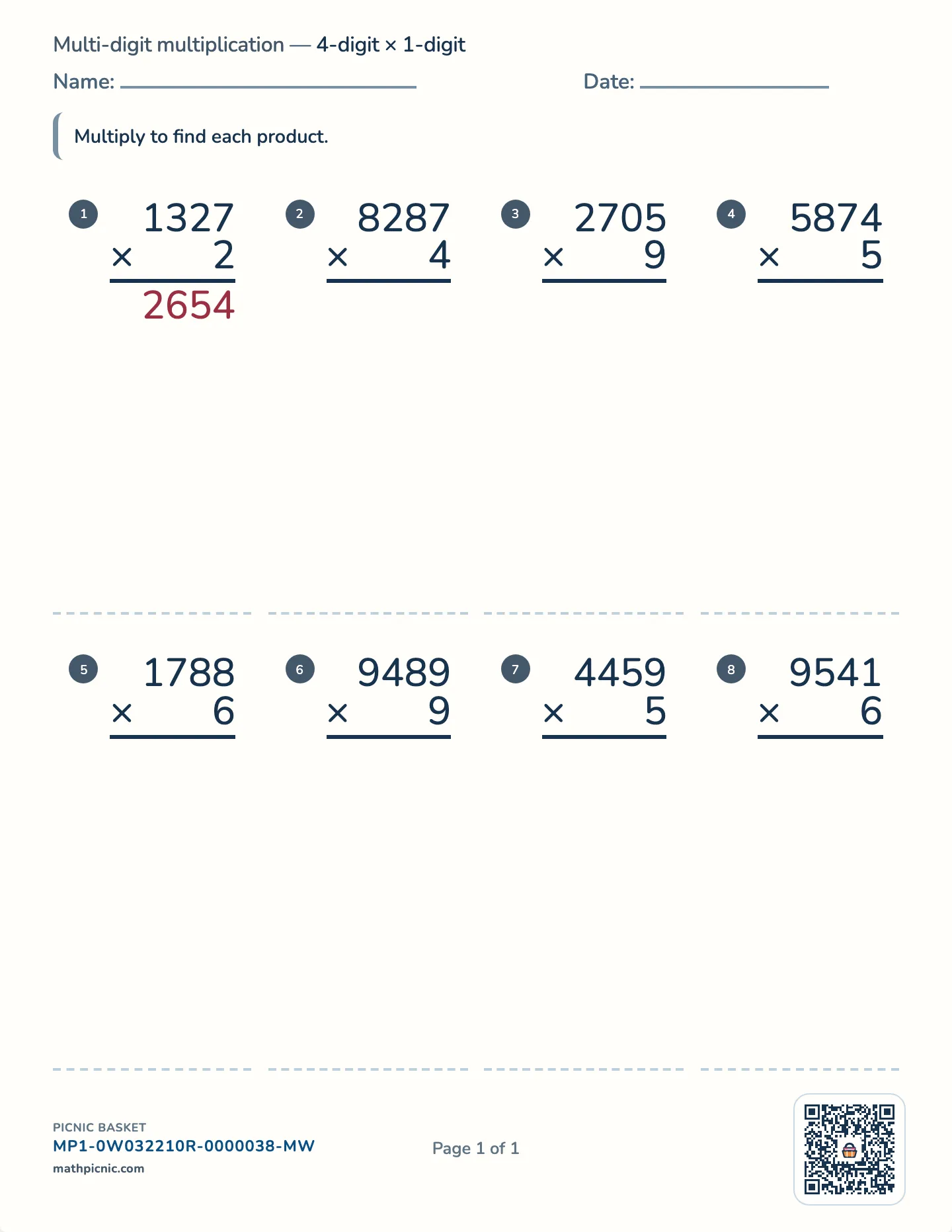
 - 4-digit by 1-digit multiplication
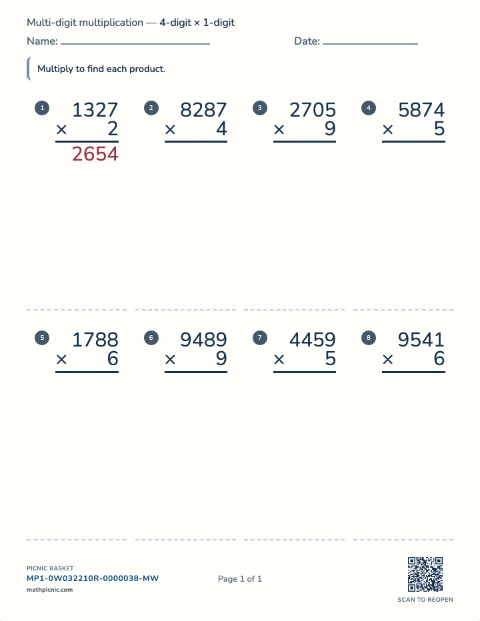 Print 2431 × 6 = __
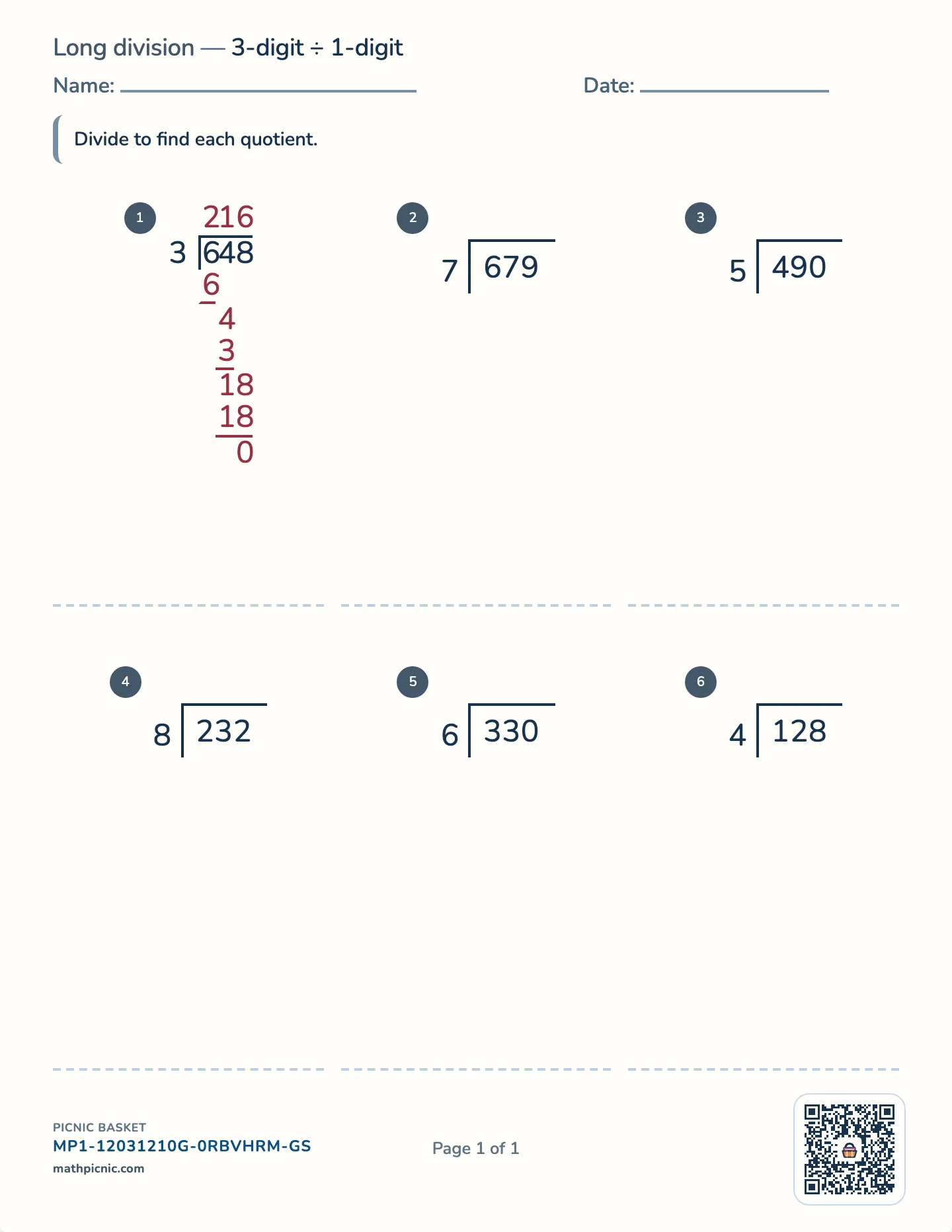
 - Long division
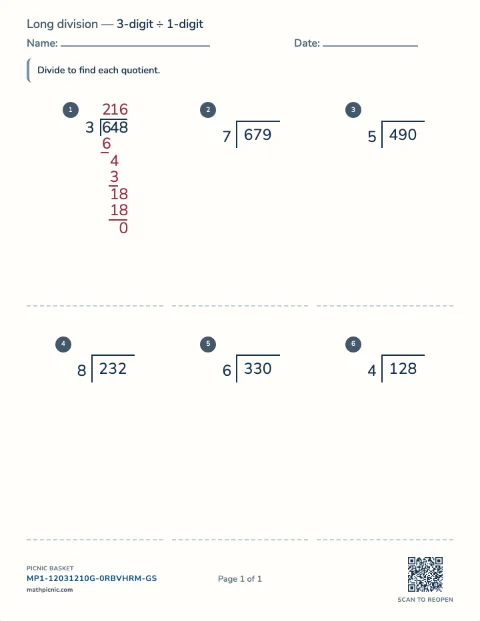 Print 576 ÷ 8 = __
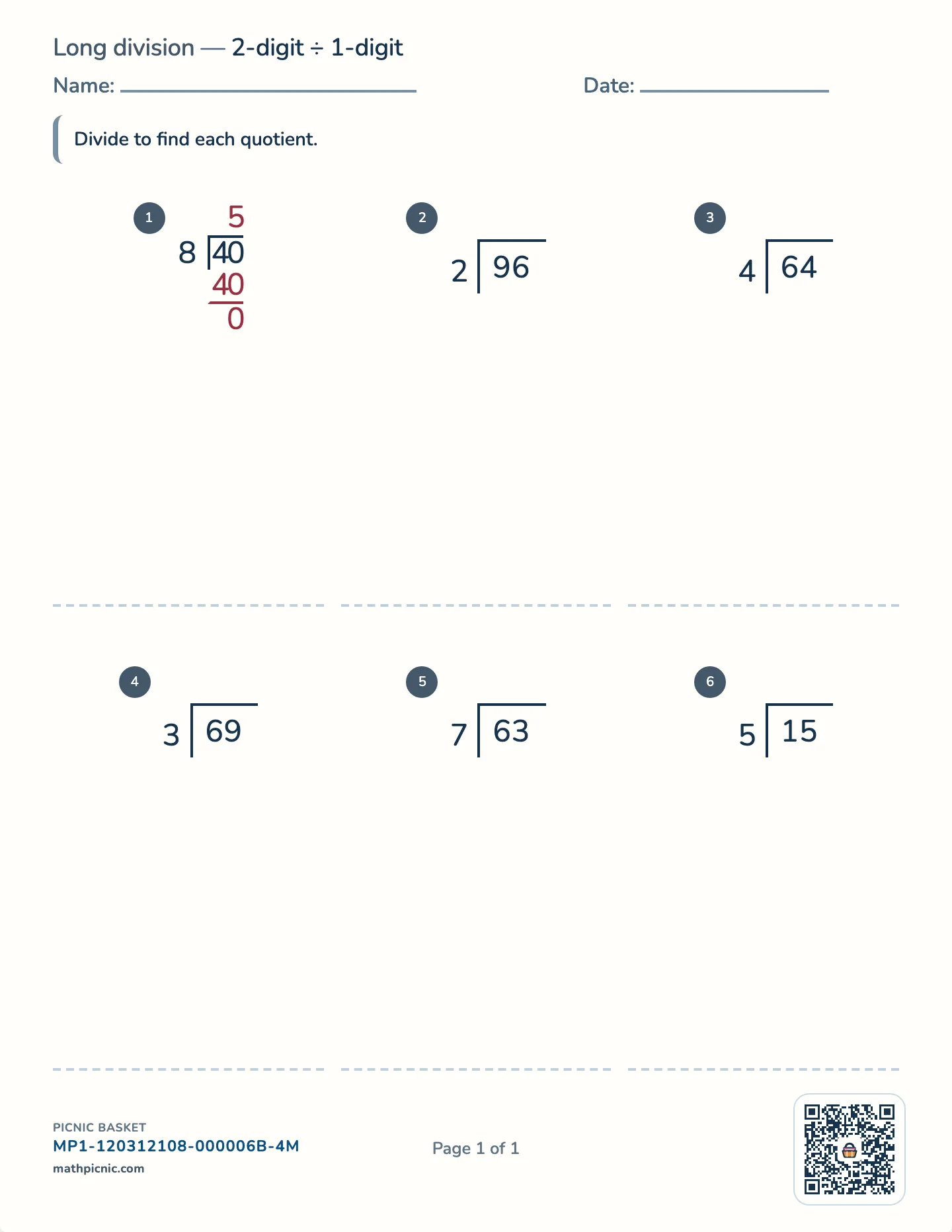
 - 2-digit by 1-digit long division
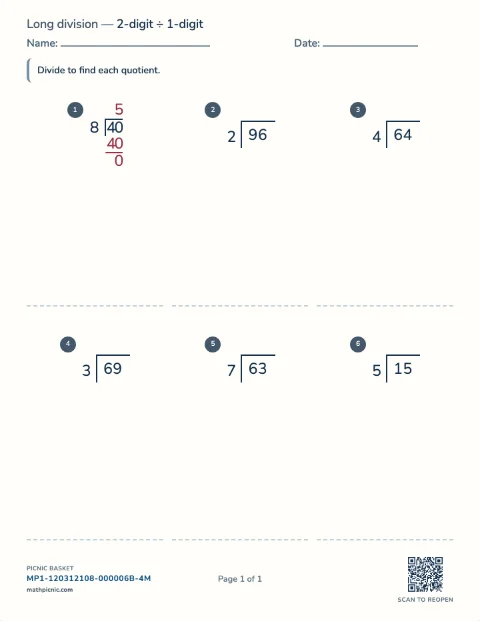 Print 84 ÷ 6 = __
 - 4-digit by 1-digit long division
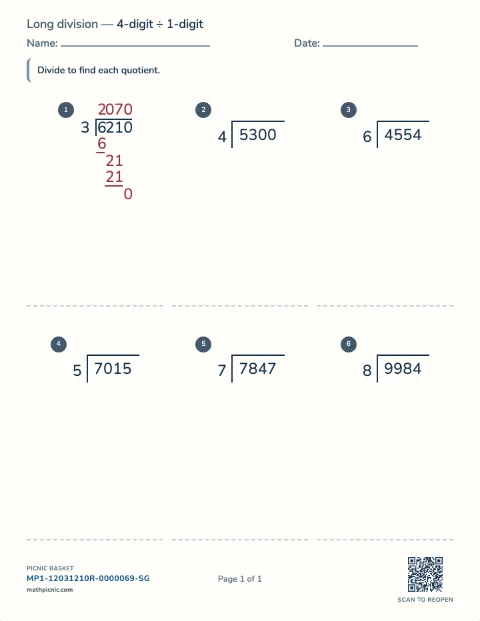 Print 3724 ÷ 4 = __
 - List the factors
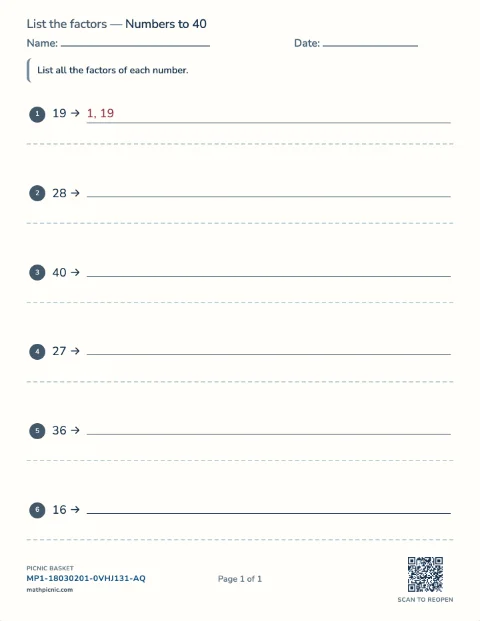 Print 24 → __
 - Prime or composite
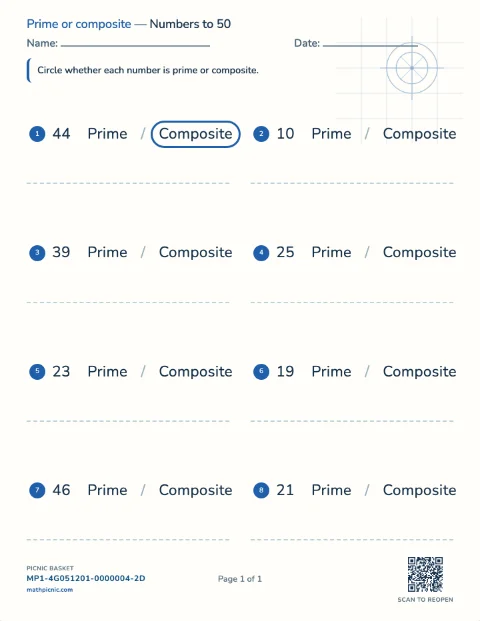 Print 21 → prime or composite?
 - Multiples
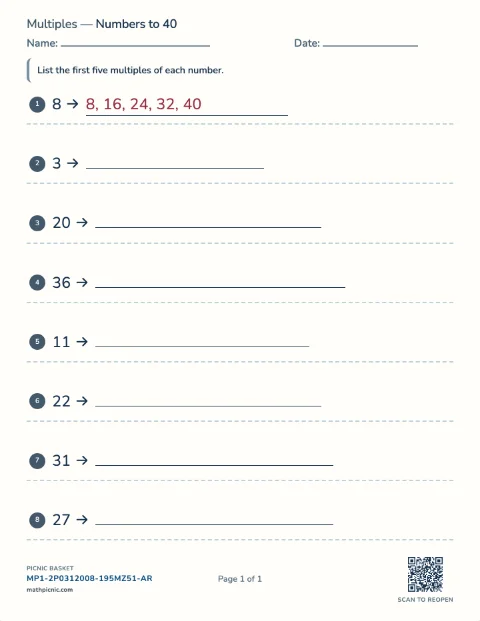 Print 8 → __
 - Order of operations
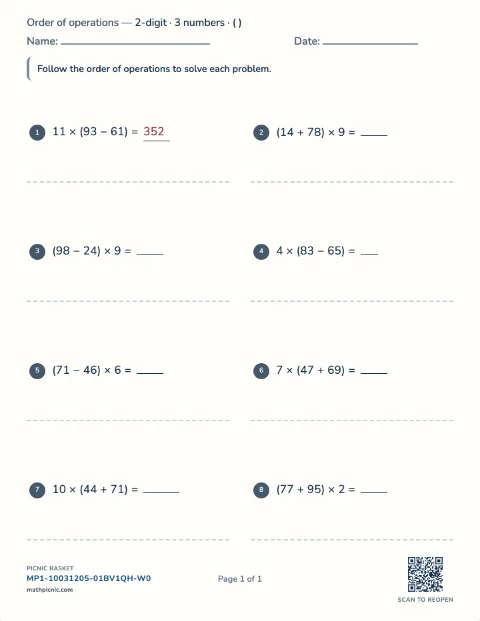 Print (3 + 4) × 2 = __
 - 4-digit by 2-digit long division
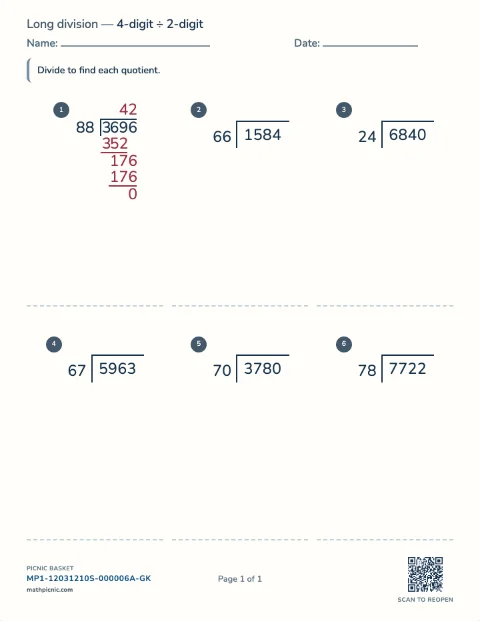 Print 4352 ÷ 16 = __
 - Greatest common factor
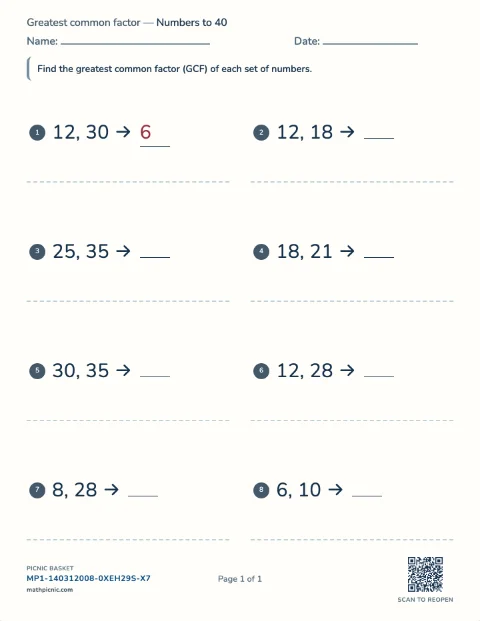 Print 42, 54 → GCF = __
 - Least common multiple
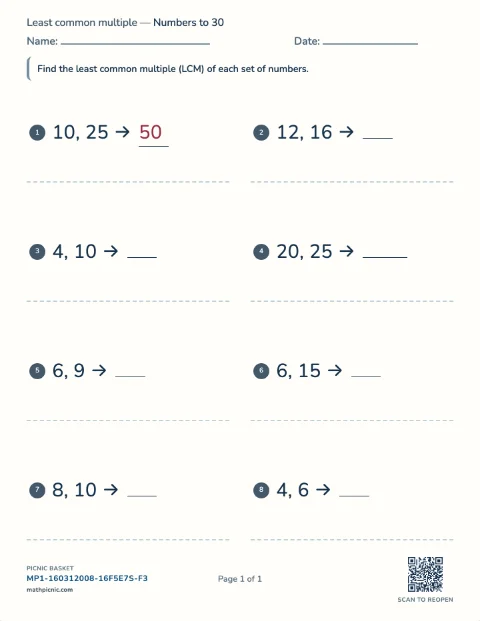 Print 4, 6 → LCM = __
 - GCF & LCM puzzles
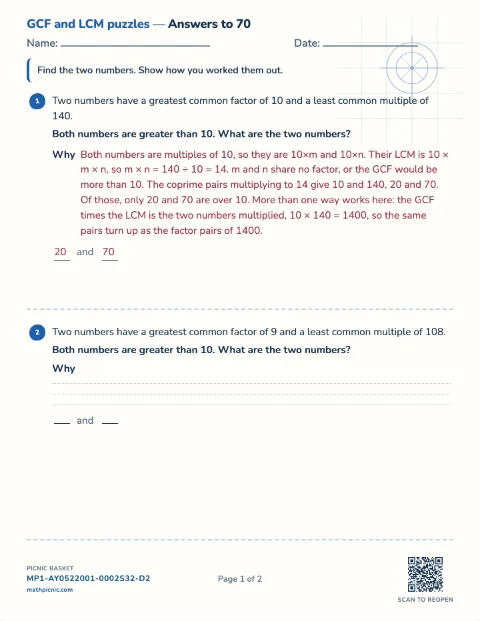 Print GCF 5, LCM 30, two digits → __ and __
 - Solving equations
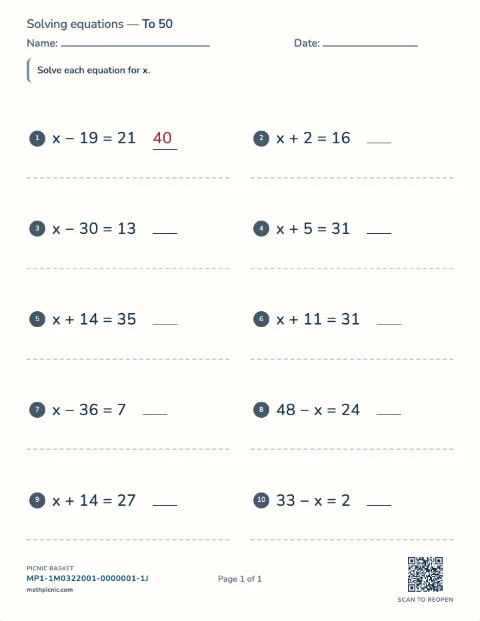 Print 3x + 5 = 20
 - Variables on both sides
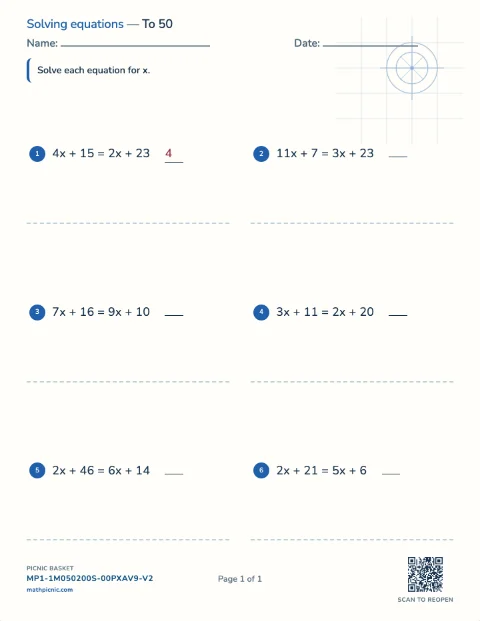 Print 5x + 3 = 2x + 18
 - Slope and y-intercept
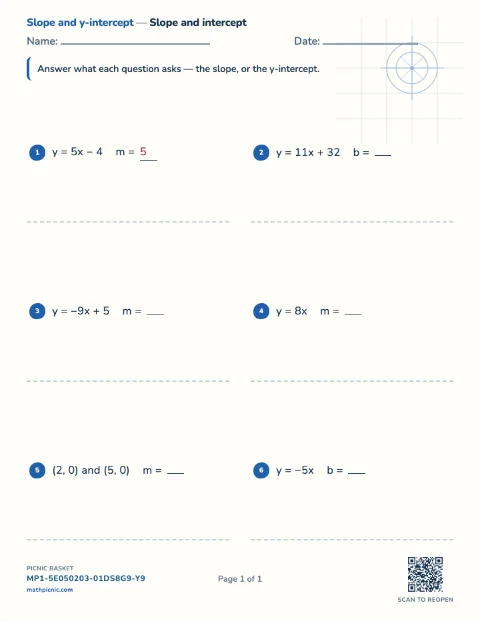 Print y = 3x + 5
 - Systems of equations
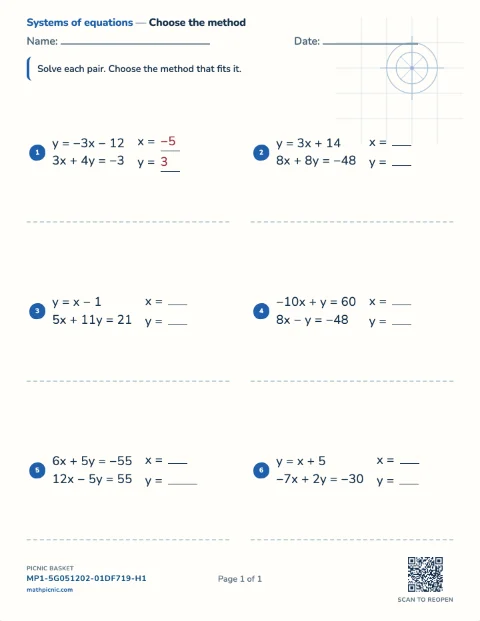 Print 2x + 3y = 1
 - How many solutions?
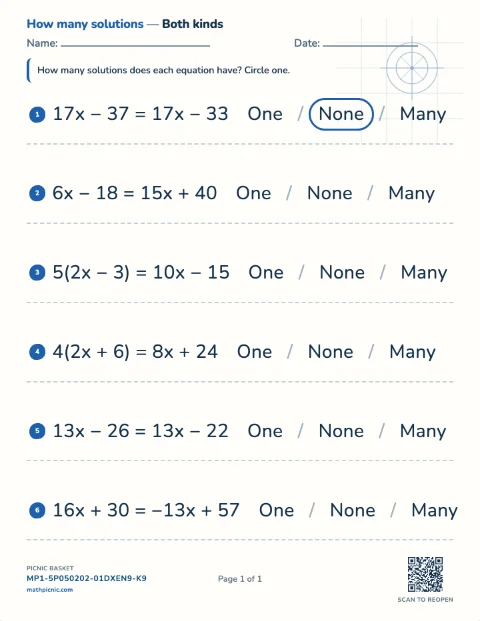 Print 3x + 2 = 3x + 5
 - Rational or irrational
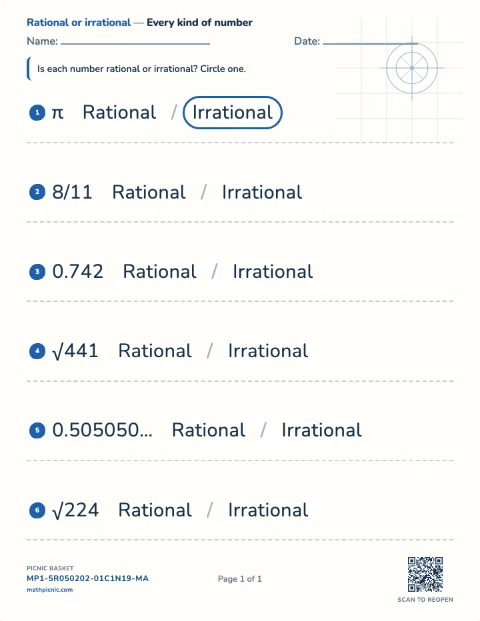 Print √16 or √17?
 - Estimating square roots
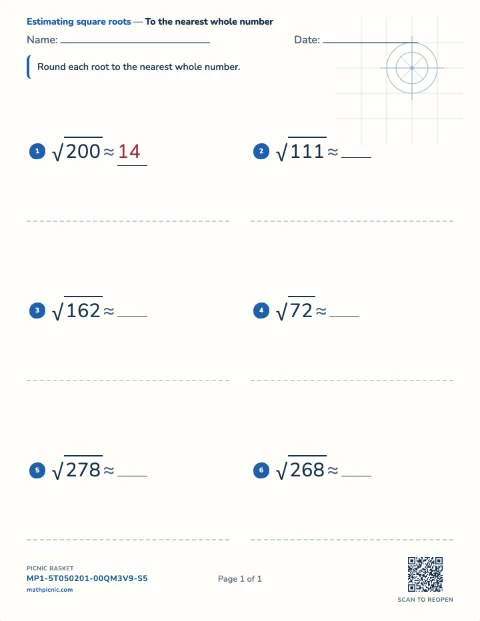 Print √10 ≈ ___
 - Is it a function?
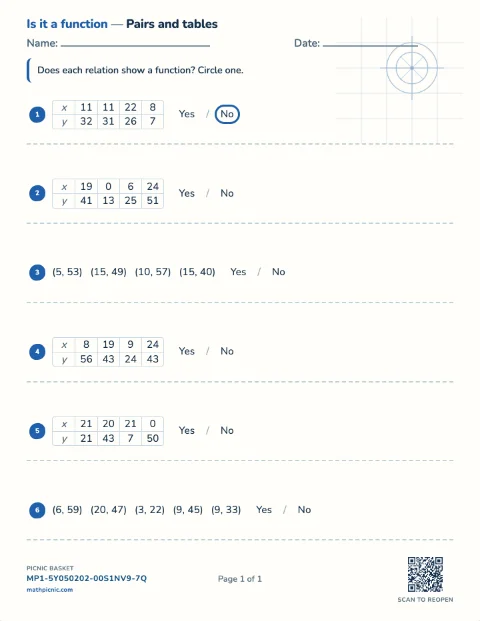 Print (1, 3) (2, 5) (1, 7)
 - Linear or nonlinear
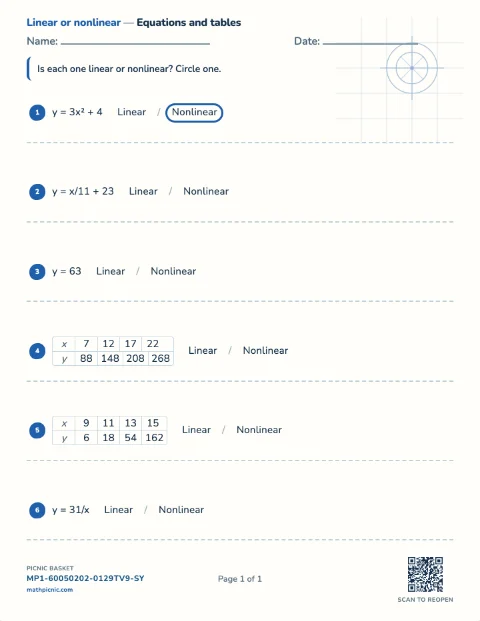 Print y = 2x² + 3
 - Evaluating expressions
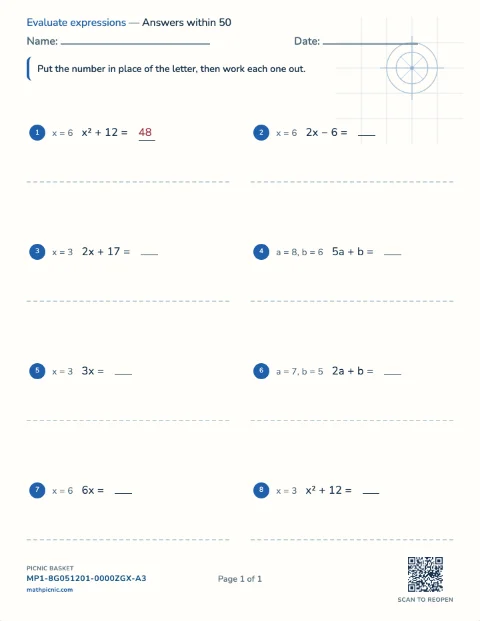 Print 3x + 4, x = 5
 - Combining like terms
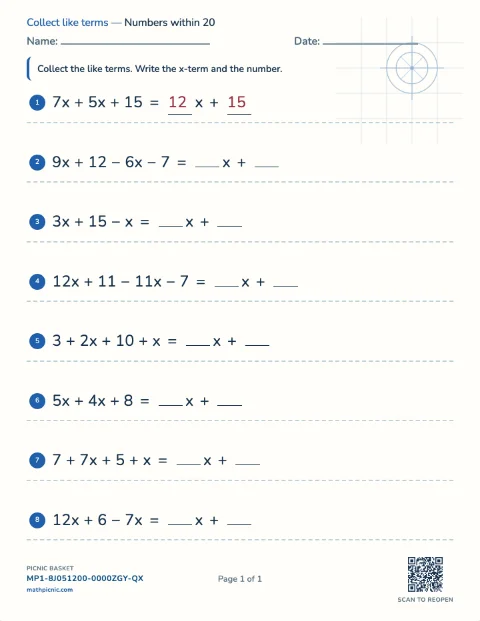 Print 4x + 3 + 2x + 5
 - Distributive property
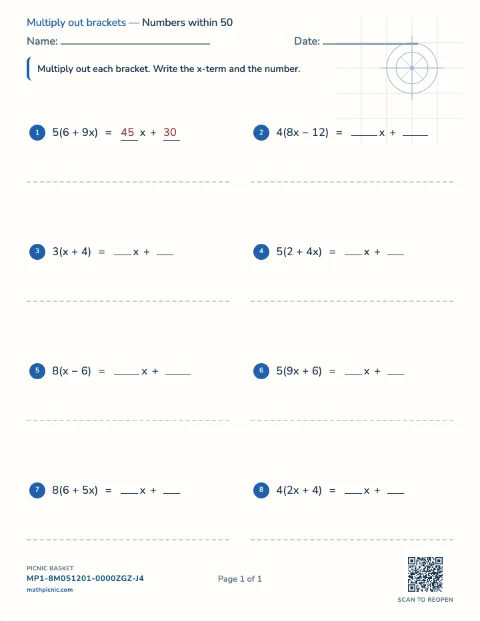 Print 3(2x + 5)
 - Absolute value
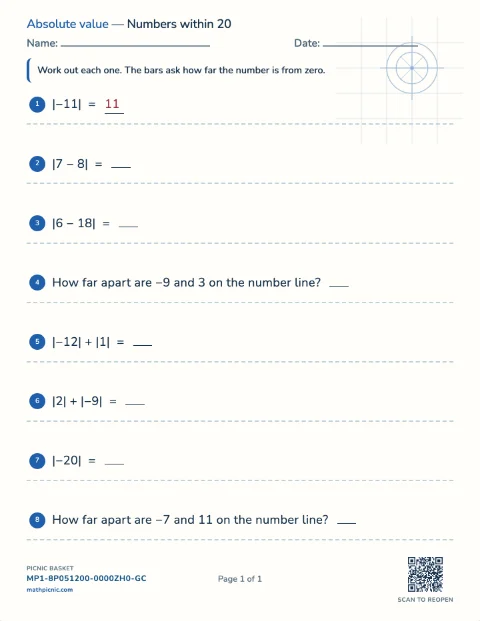 Print |3 − 8| = __
 - Solving inequalities
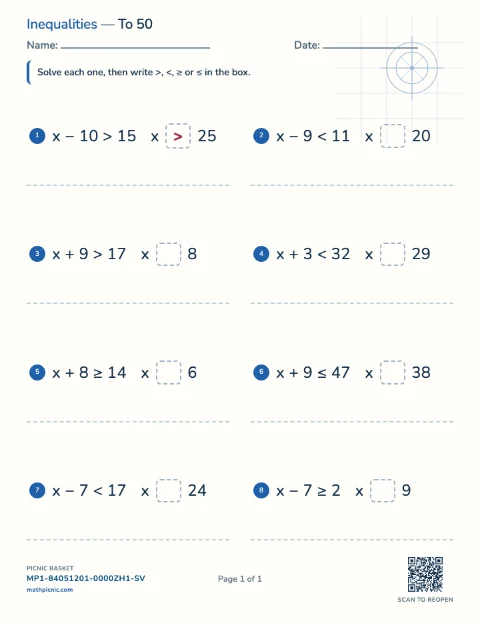 Print x + 7 > 12
 - Two-step equations
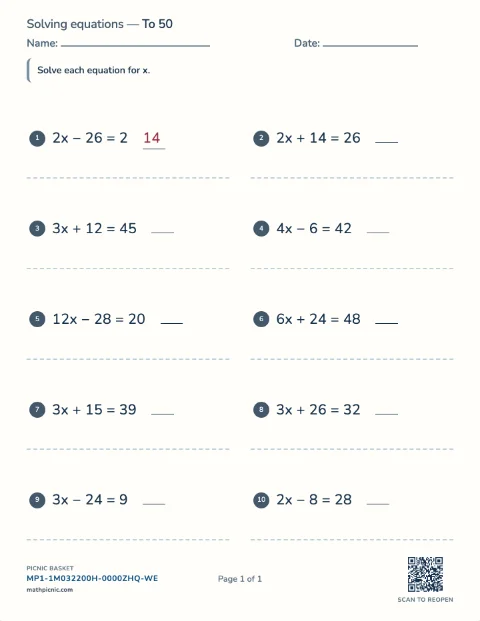 Print 3x + 5 = 20
 - Slope from two points
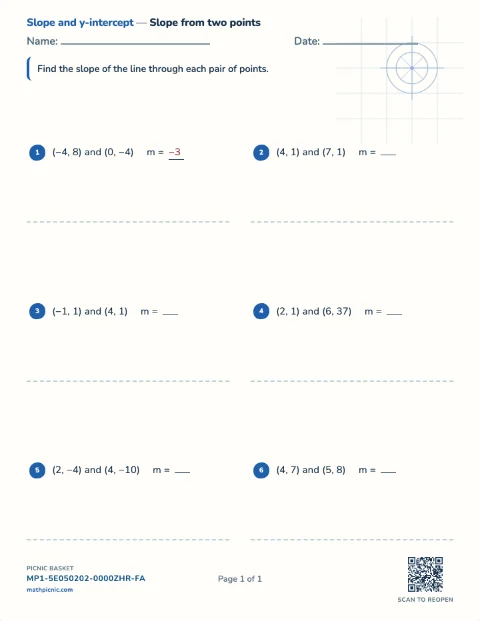 Print (2, 3) and (5, 9)
 - Systems by elimination
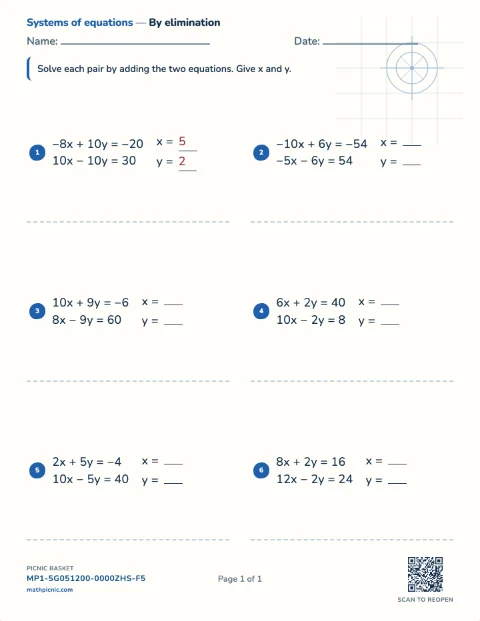 Print add to cancel y
 - Systems by substitution
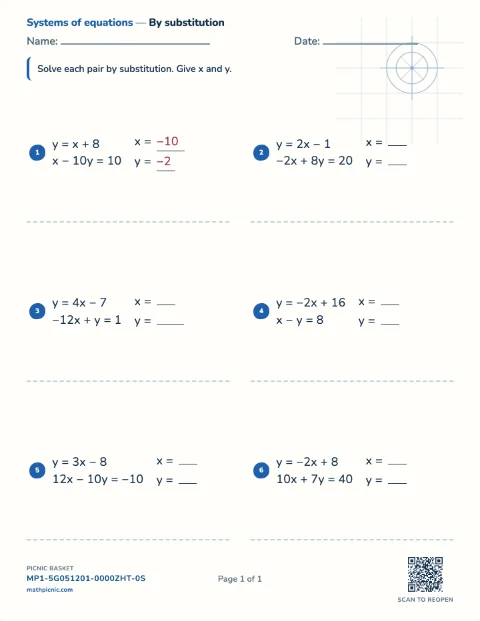 Print y = 2x + 1
 - One-step multiplication and division equations
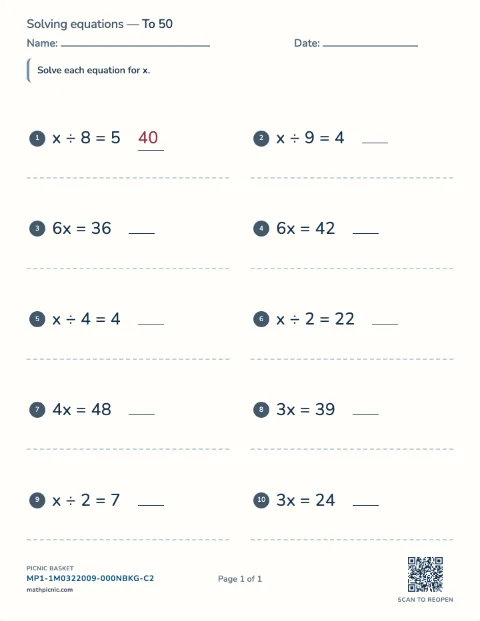 Print 3x = 21
 - Multiplication and division inequalities
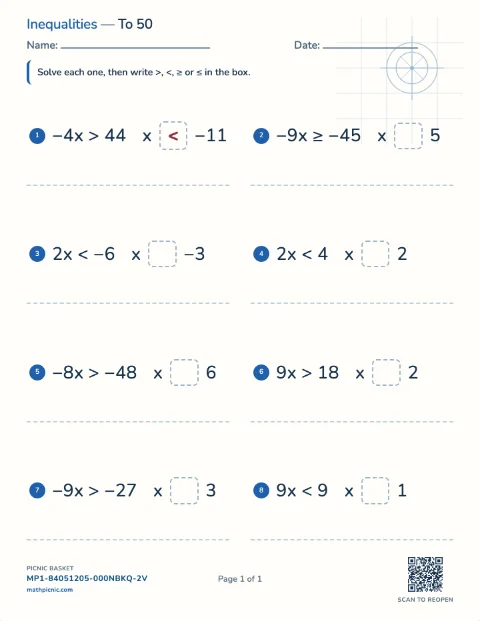 Print −2x < 8
 - Two-step inequalities
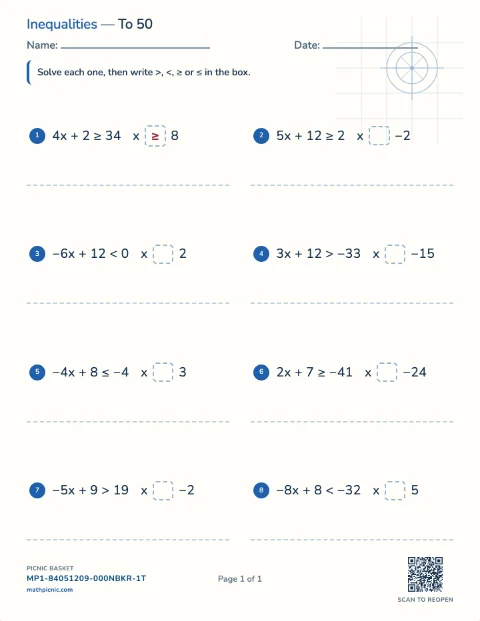 Print 2x + 3 ≤ 11
 - Slope from an equation
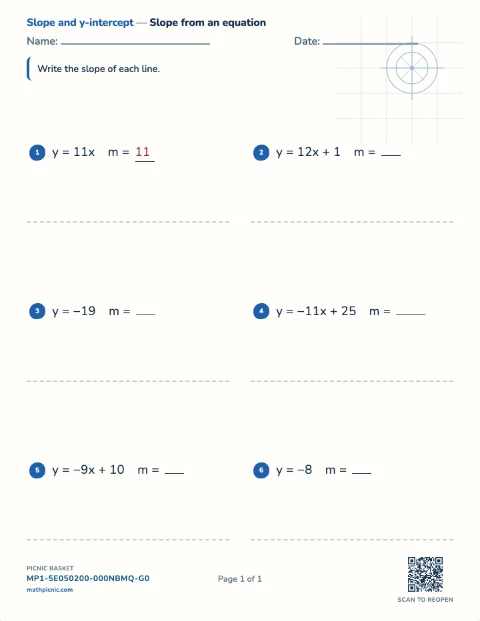 Print y = 3x + 5 → m
 - Y-intercept from an equation
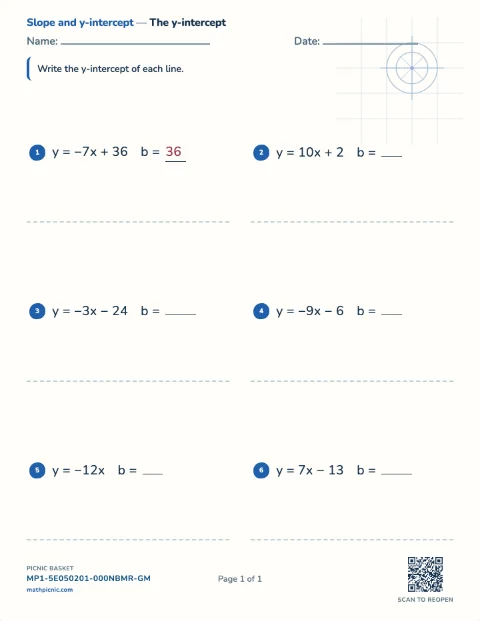 Print y = 3x + 5 → b
 - Number of solutions
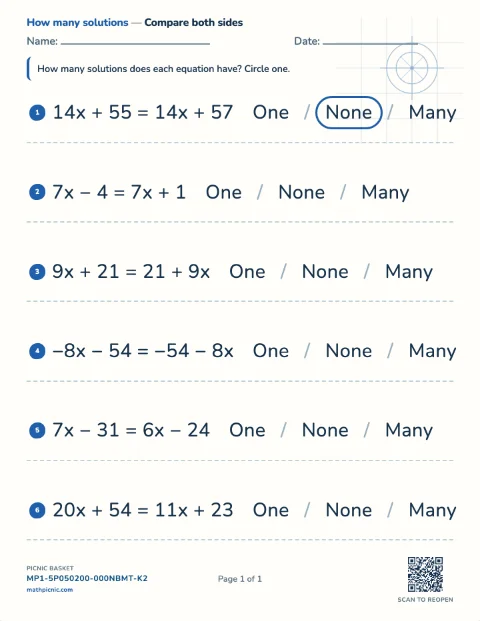 Print 3x + 2 = 3x + 5
 - Solutions after expanding
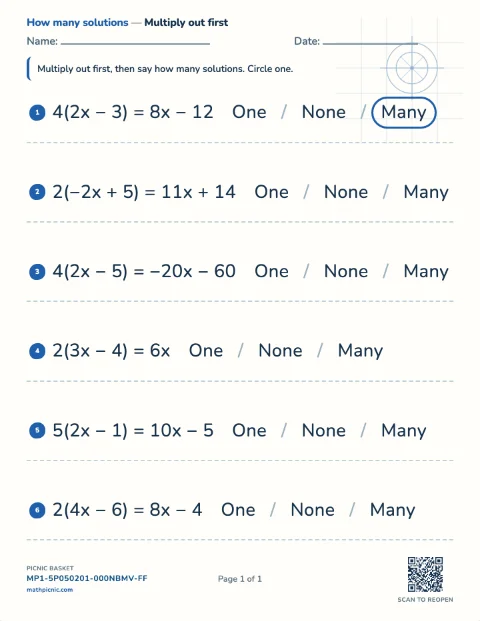 Print 2(x + 3) = 2x + 6
 - Rational or irrational roots
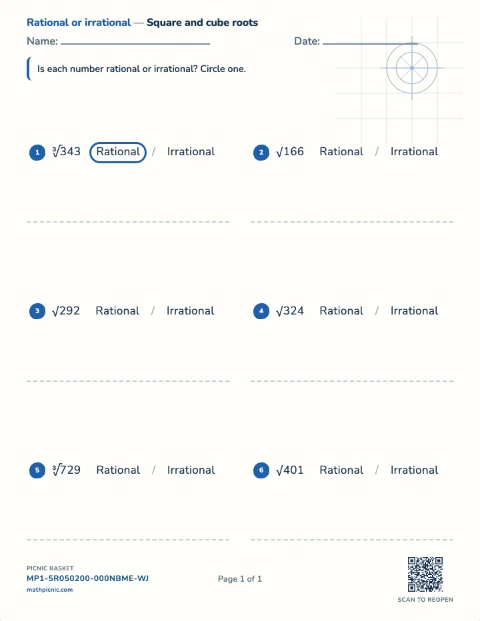 Print √16 or √17?
 - Rational or irrational numbers
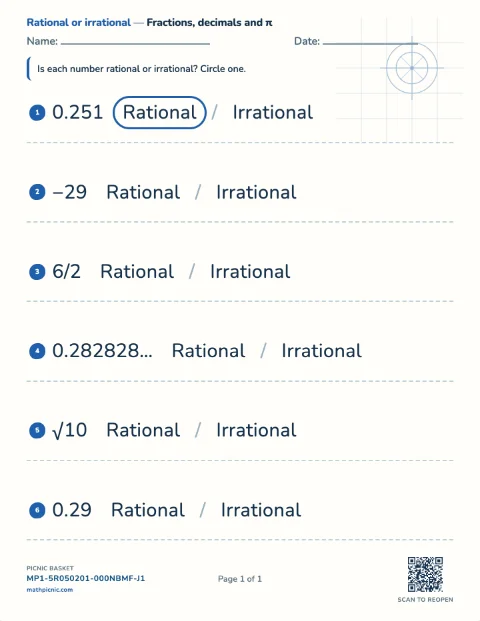 Print 0.75, π, ⅔
 - Square roots between integers
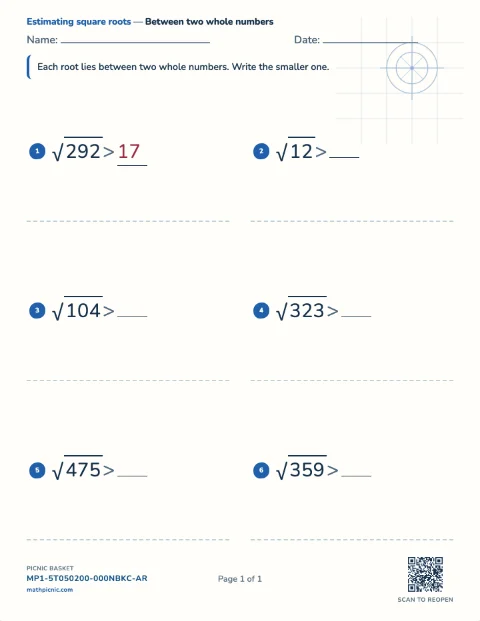 Print √10 is between ___
 - Square roots to one decimal place
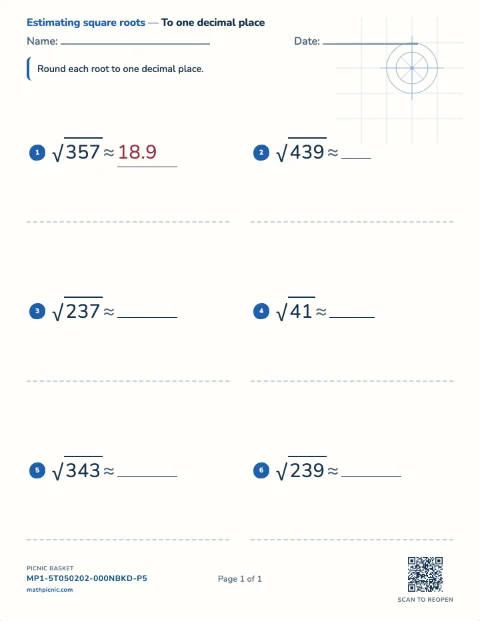 Print √10 ≈ 3.2
 - Function from ordered pairs
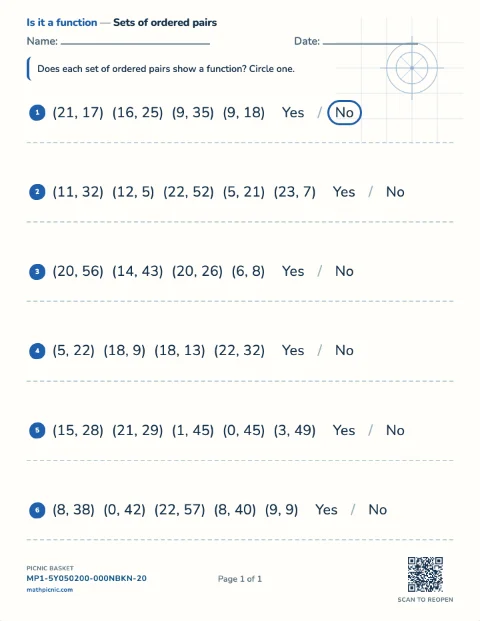 Print (1, 3) (2, 5) (1, 7)
 - Function from a table
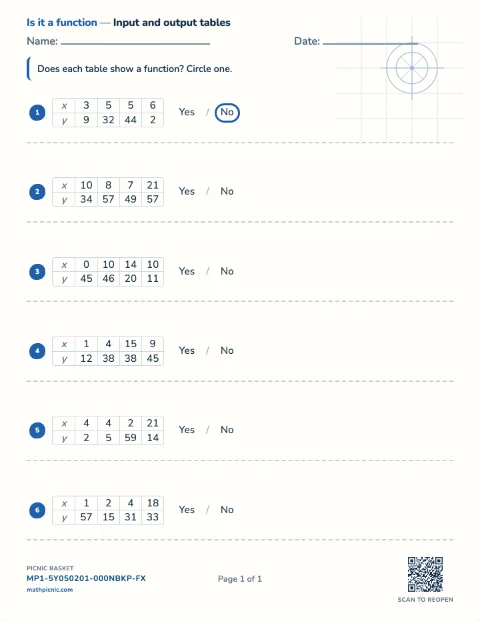 Print x: 2, 4, 2
 - Linear from an equation
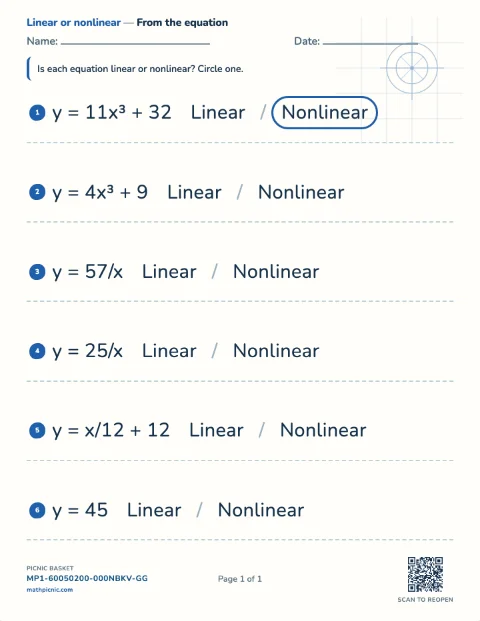 Print y = 2x² + 3
 - Linear from a table
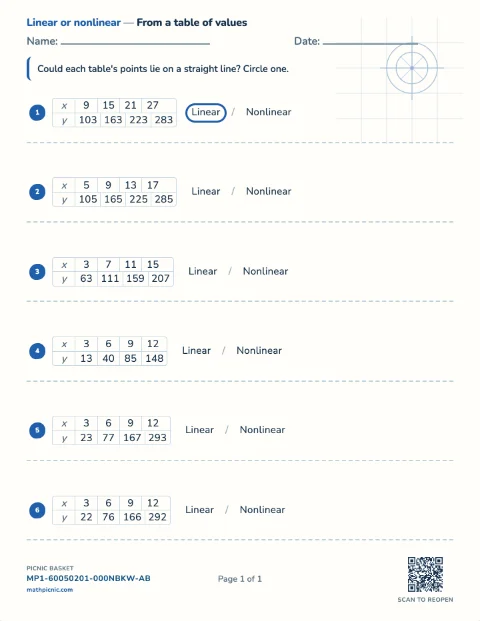 Print x: 1 2 3, y: 2 4 8
A simple way through pre-algebra
Two threads run through this stage. The first is the standard written algorithms for large numbers — column addition and subtraction, multi-digit multiplication, and long division. Each is sized by digit count rather than a vague range, so a sheet is exactly '3-digit by 2-digit' or '4-digit by 1-digit', the way a curriculum describes it.
Why this order works
The second thread is structure. Order of operations teaches that a single expression has one agreed answer, with parentheses that can change it. Listing factors, then finding a greatest common factor or least common multiple, teaches children to look inside a number at the pieces it is built from — the skill that makes simplifying fractions and, later, factoring possible.