
Counting worksheets
Not sure what comes next? Start with the first sheet that feels comfortable.
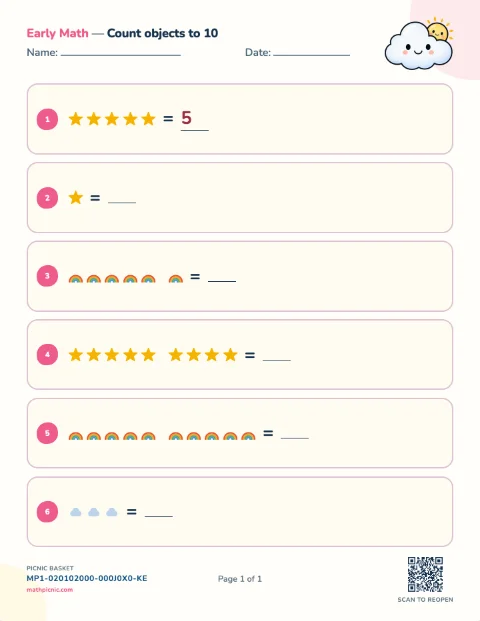
Count objects to 10
Preschool–Kindergarten
Count a visible group of objects and write the total
Customize this sheet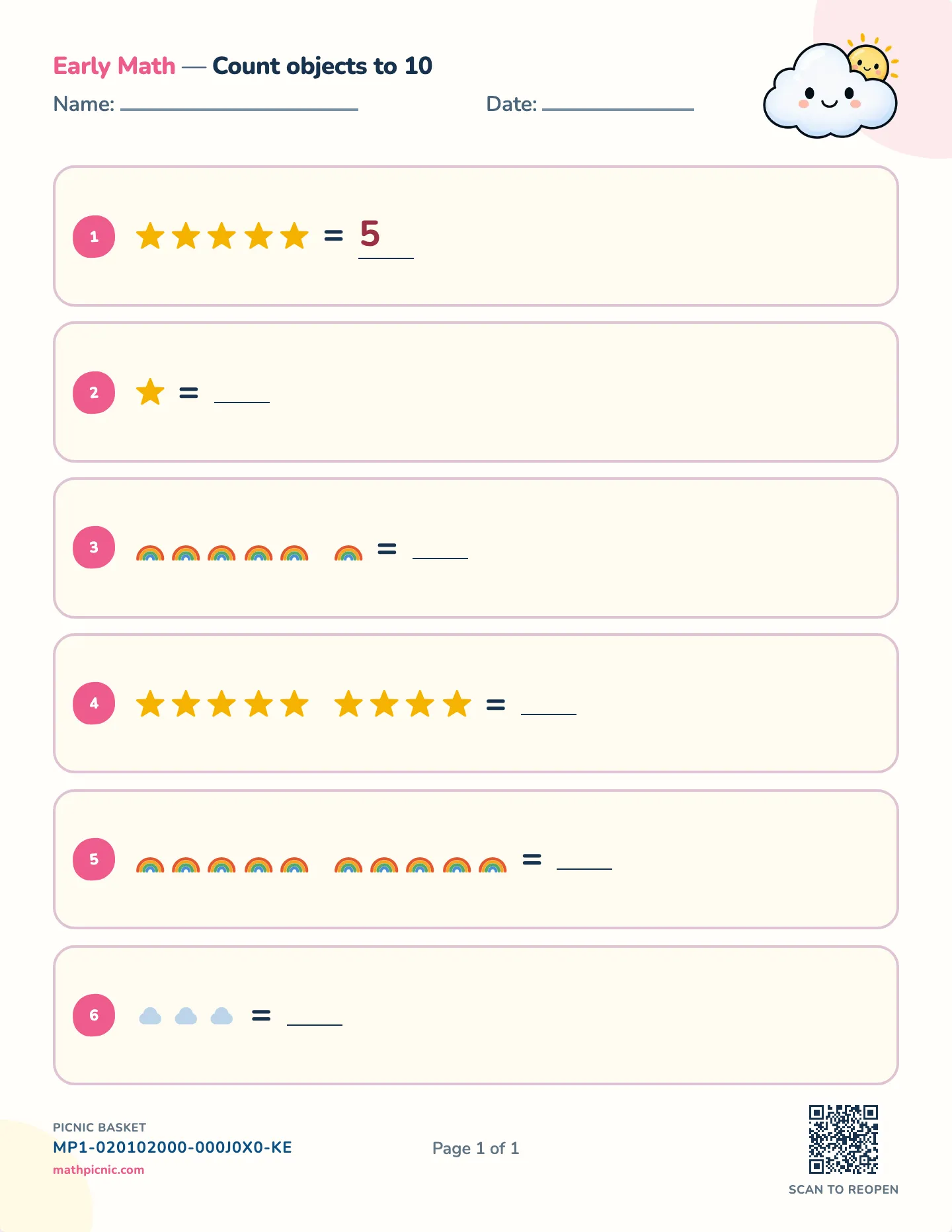


Nothing matches that. Try a skill, a number, or a grade.
In teaching order
Counting worksheets, easiest first
Each sheet assumes the one above it is comfortable. Start where your child is, not at the top.- Count objects to 10
 Print → __
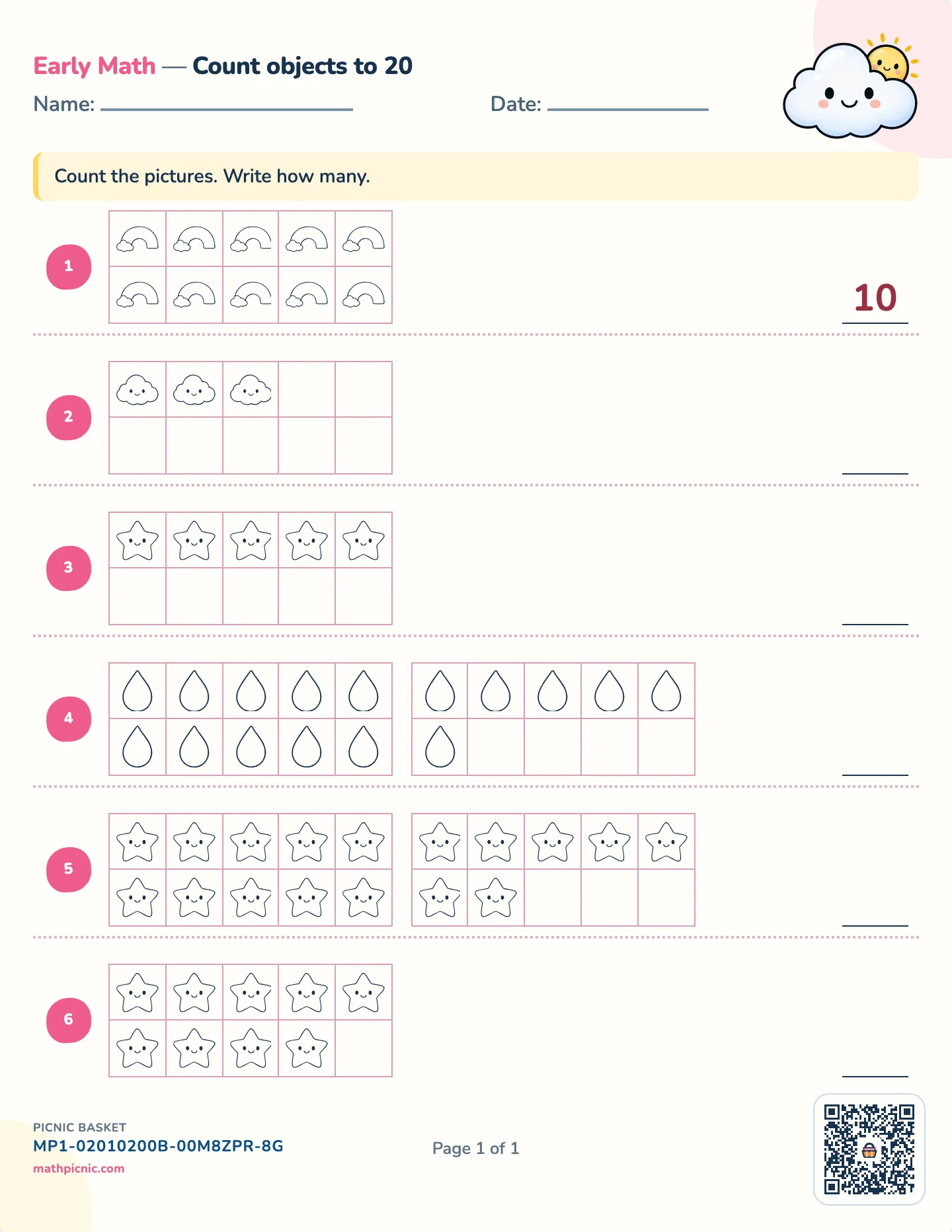
- Count objects to 20
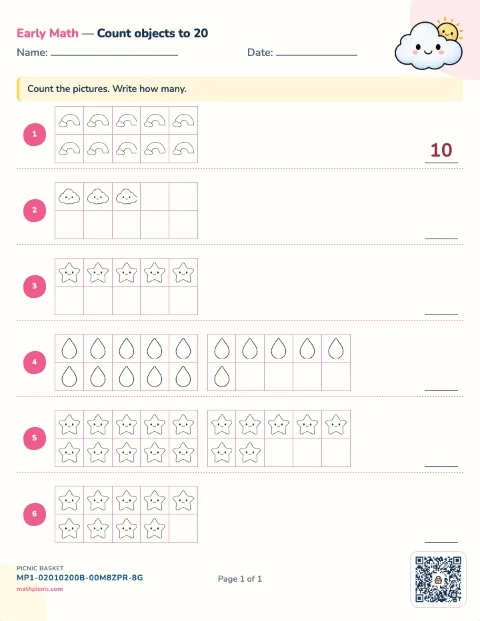 Print ×16 → __
- Match numbers to objects
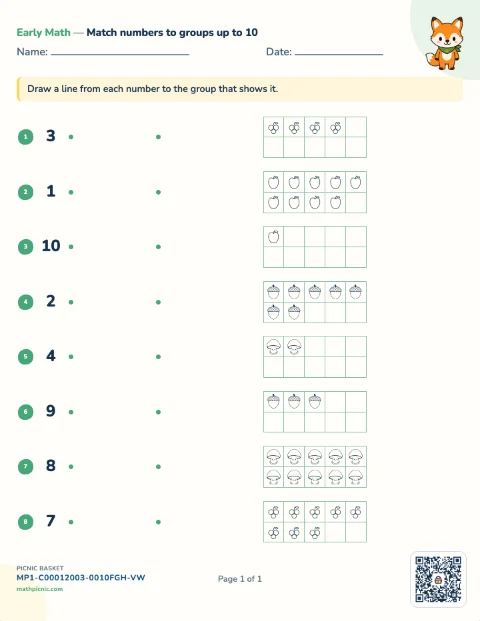 Print ── 3
- Circle how many
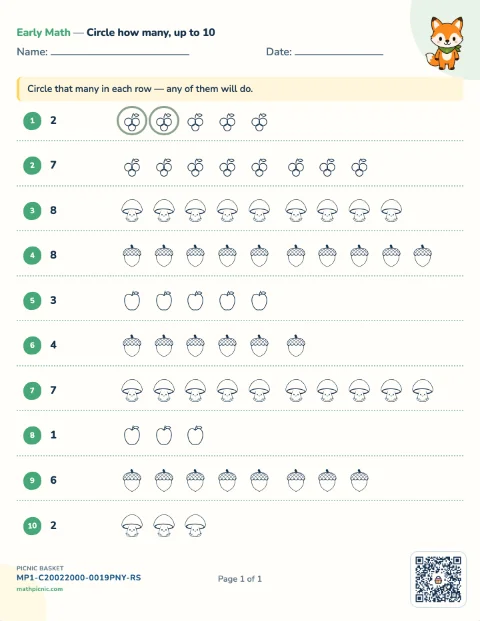 Print 6 → ◯
- Reading tally marks
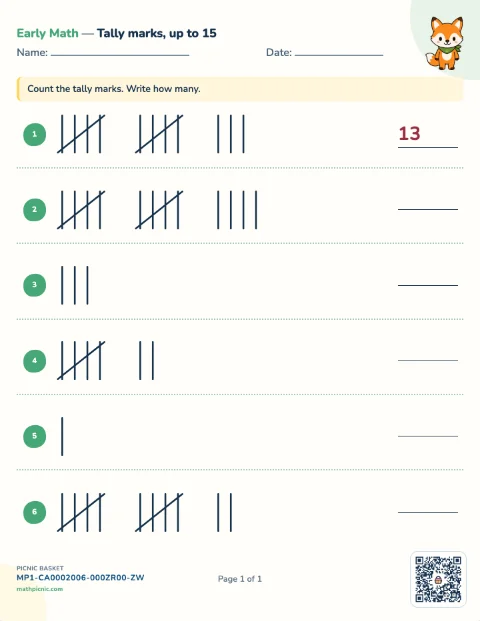 Print 卌 卌 ||| → __
- Ordinal numbers
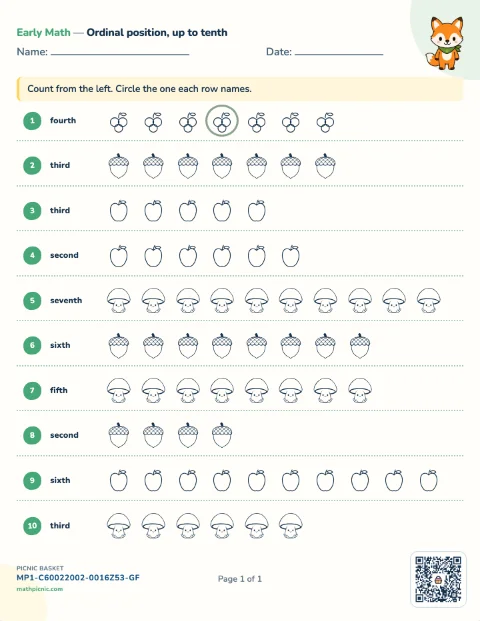 Print fourth → ◯
- Hundreds chart: missing numbers
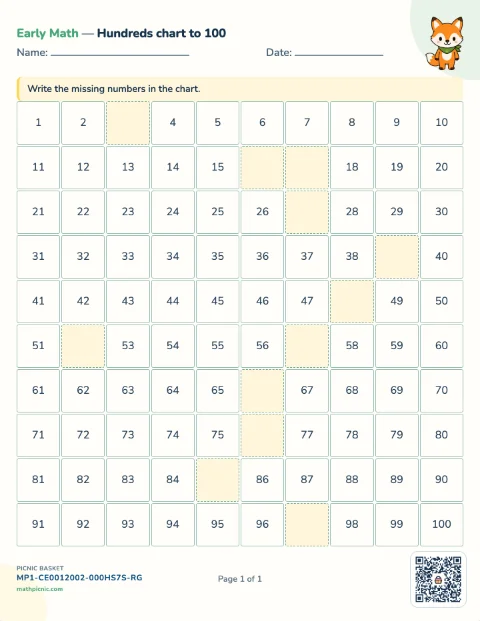 Print 51 52 __ 54 55
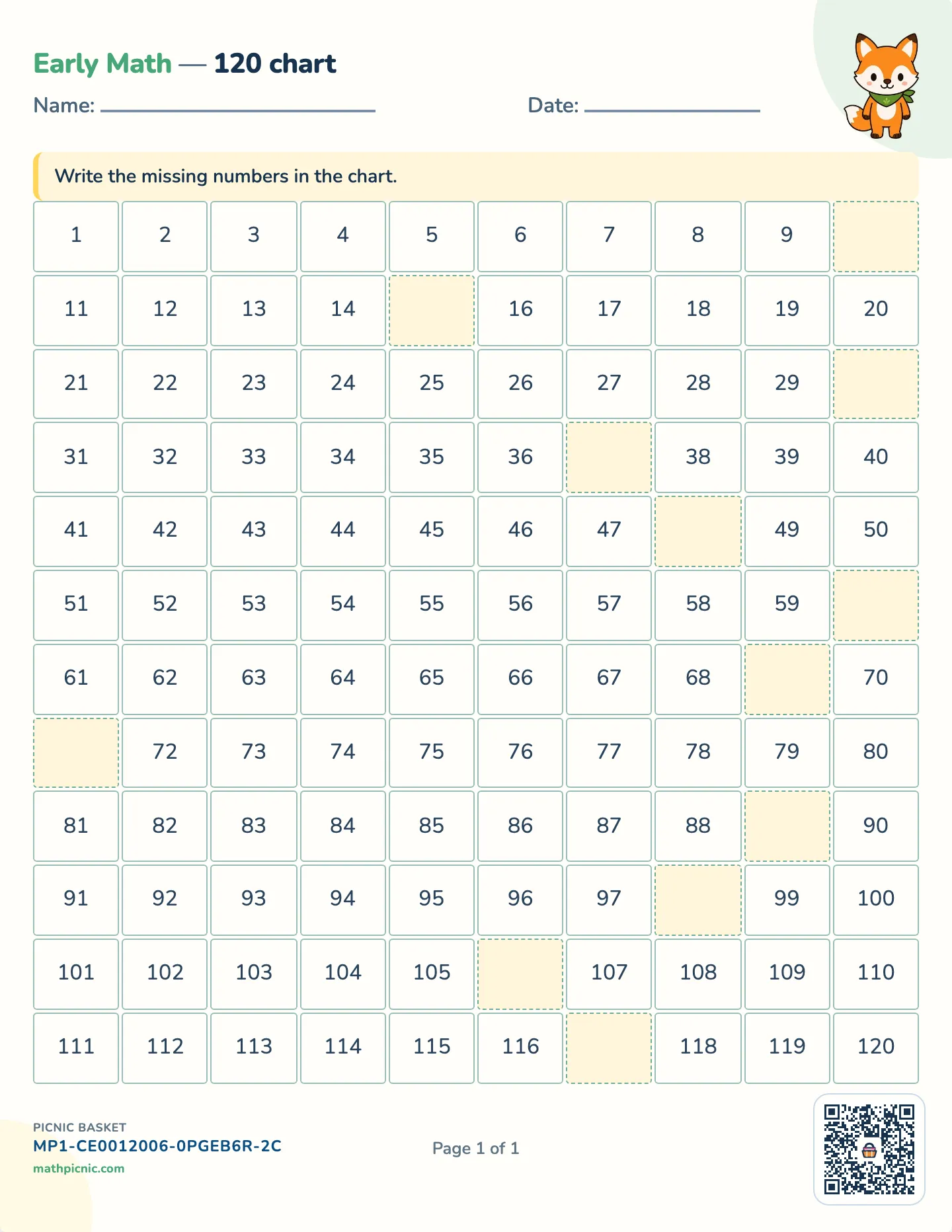
- 120 chart: missing numbers
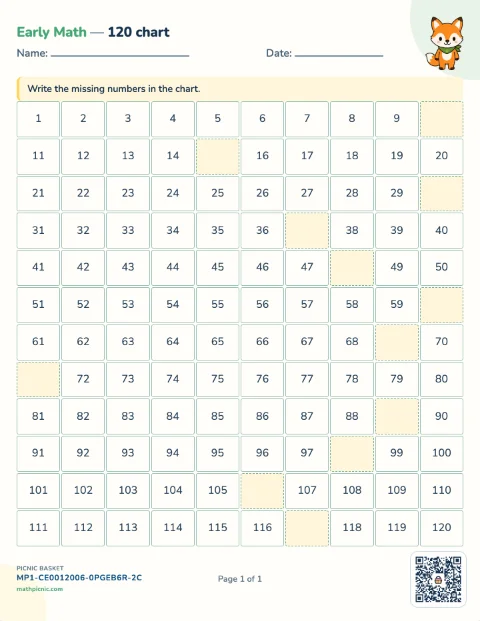 Print 109, __, 111
- Before, after, and between
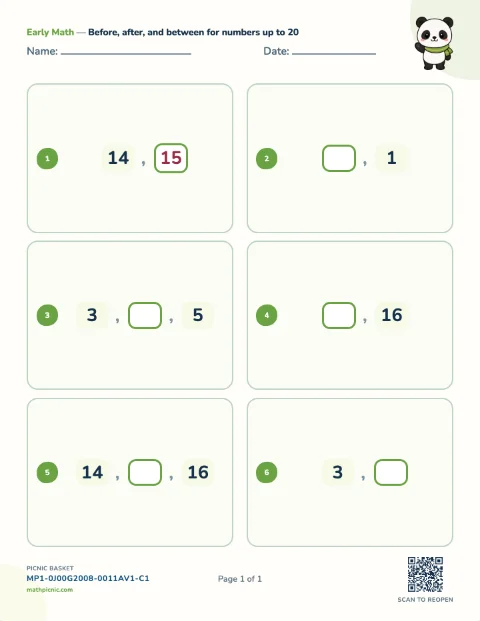 Print 6, __, 8
- 10 more and 10 less
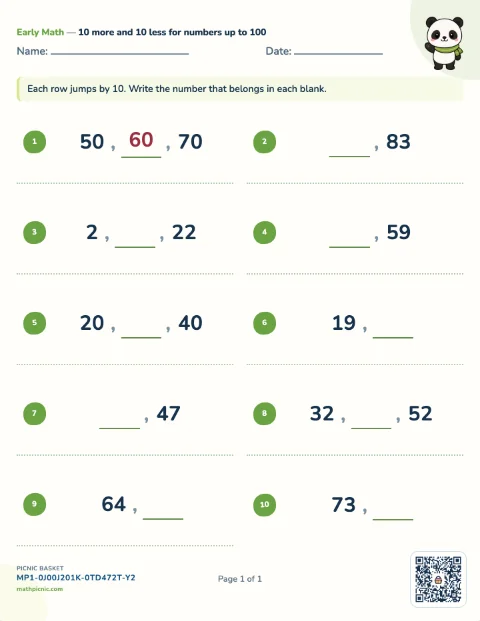 Print 47, __
- 100 more and 100 less
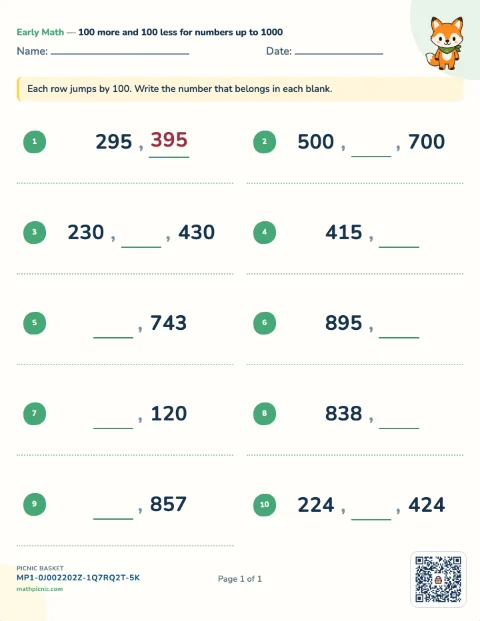 Print 387, __
- Adding and subtracting on a number line
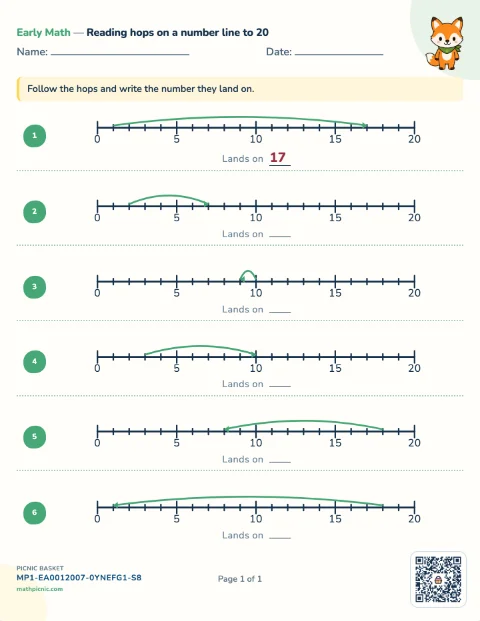 Print 8 → hop 3 → ?
- Show it on a number line to 100
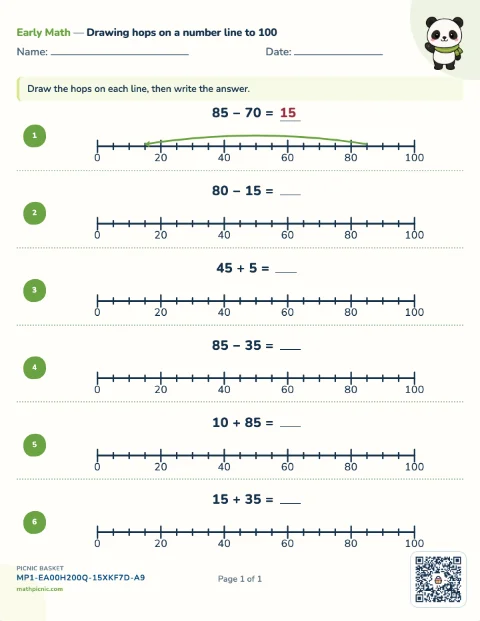 Print 45 + 20 = ___
- Mixed skip counting sequences
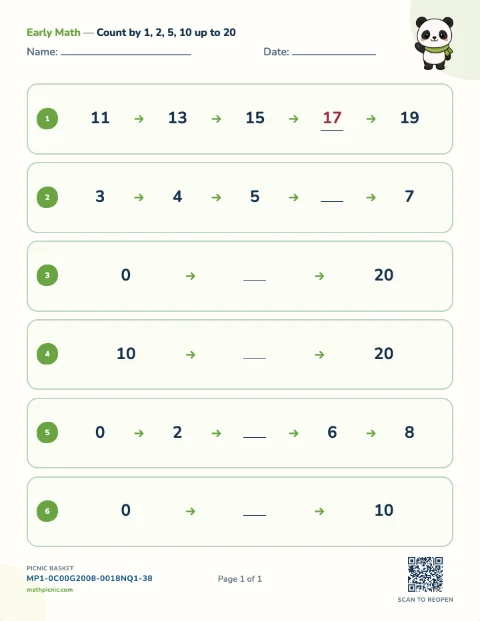 Print 2, 4, __, 8
- Skip counting by 2s
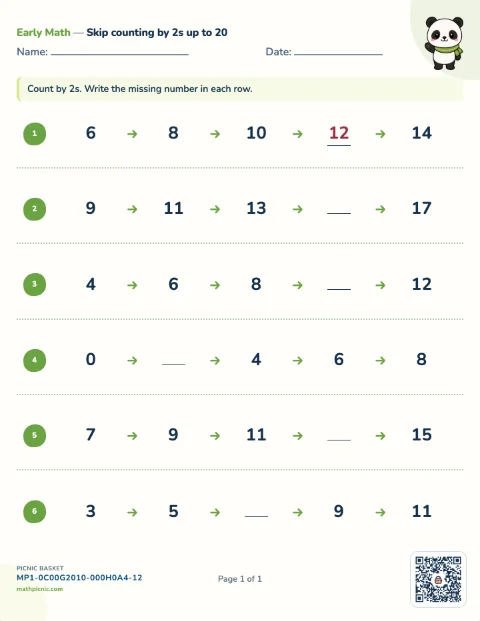 Print 4, 6, __, 10, 12
- Skip counting by 5s
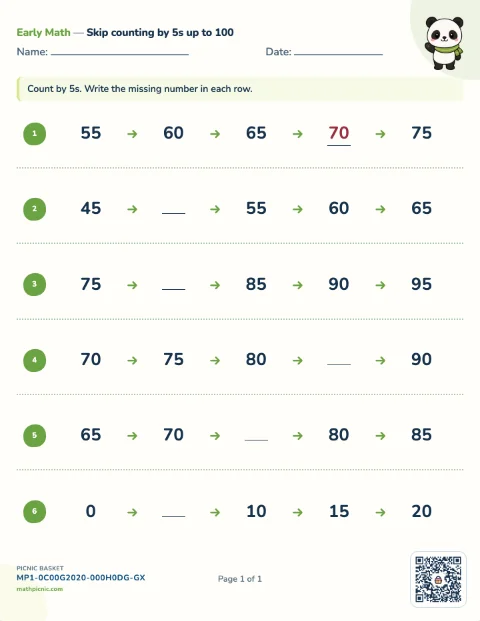 Print 20, __, 30, 35, 40
- Skip counting by 10s
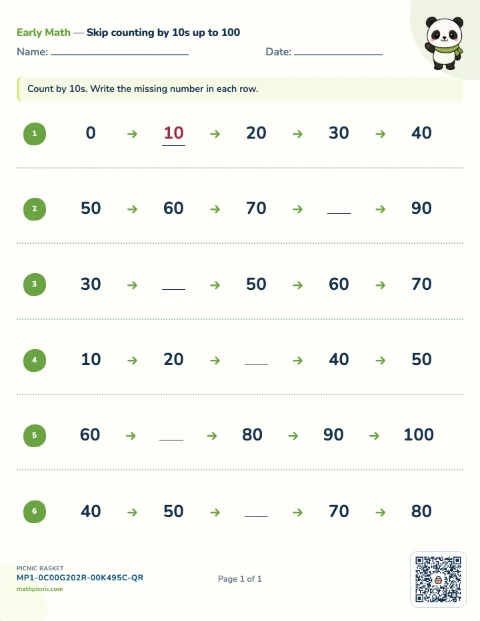 Print 30, 40, __, 60, 70
- Odd and even numbers
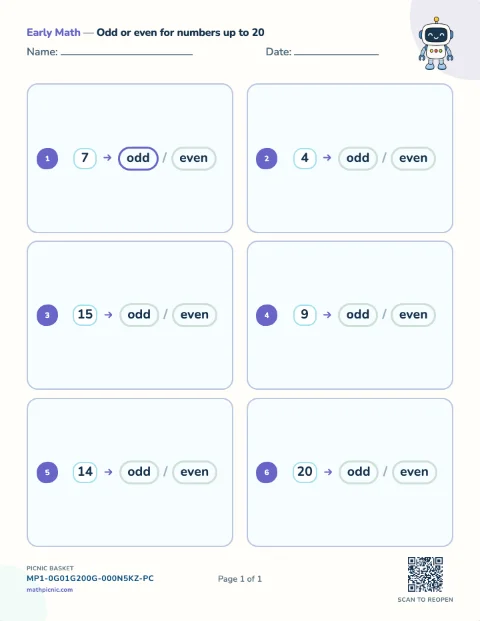 Print 7 → odd · even
A simple way through counting
A child who can recite "one, two, three" is not yet counting. Real counting means touching each object exactly once while saying exactly one number — and then knowing that the last number said is how many there are. Those two ideas, one-to-one correspondence and cardinality, are what the first sheets here practice, using pictures a child can point at.
Why this order works
Once counting objects is secure, the number sequence becomes something a child can work inside rather than only recite. Filling the number before, after, or between a pair means holding a position in the sequence and moving one step from it, which is harder than counting from one and is exactly the skill that later turns into mental addition.