
Real-Life Math worksheets
Not sure what comes next? Start with the first sheet that feels comfortable.
Measure objects in centimeters
Ages 5–8
Measure familiar objects in whole centimeters from zero
Customize this sheet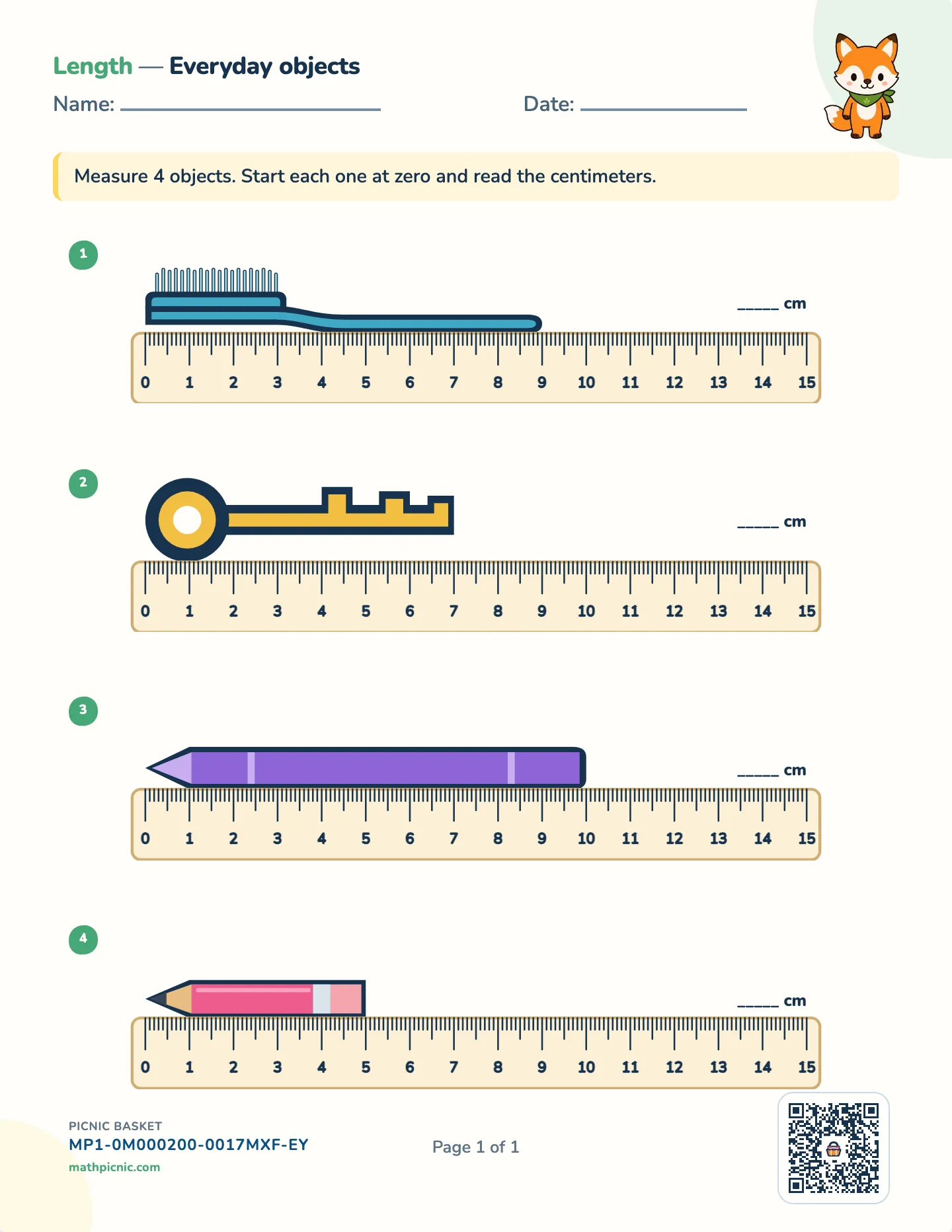
Nothing matches that. Try a skill, a number, or a grade.
In teaching order
Real-Life Math worksheets, easiest first
Each sheet assumes the one above it is comfortable. Start where your child is, not at the top.- Measure objects in centimeters
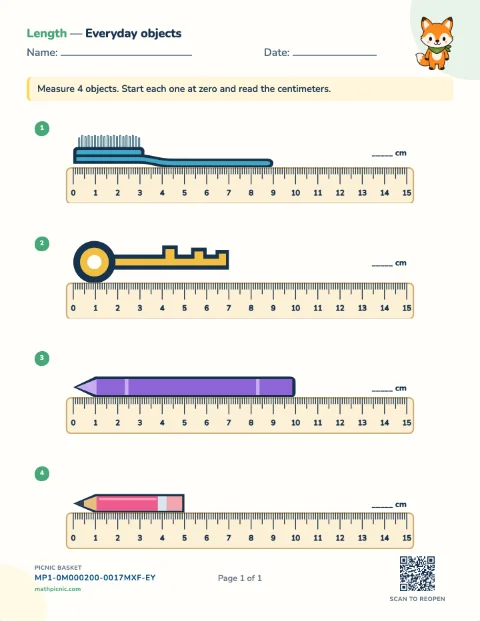 Print key → __ cm
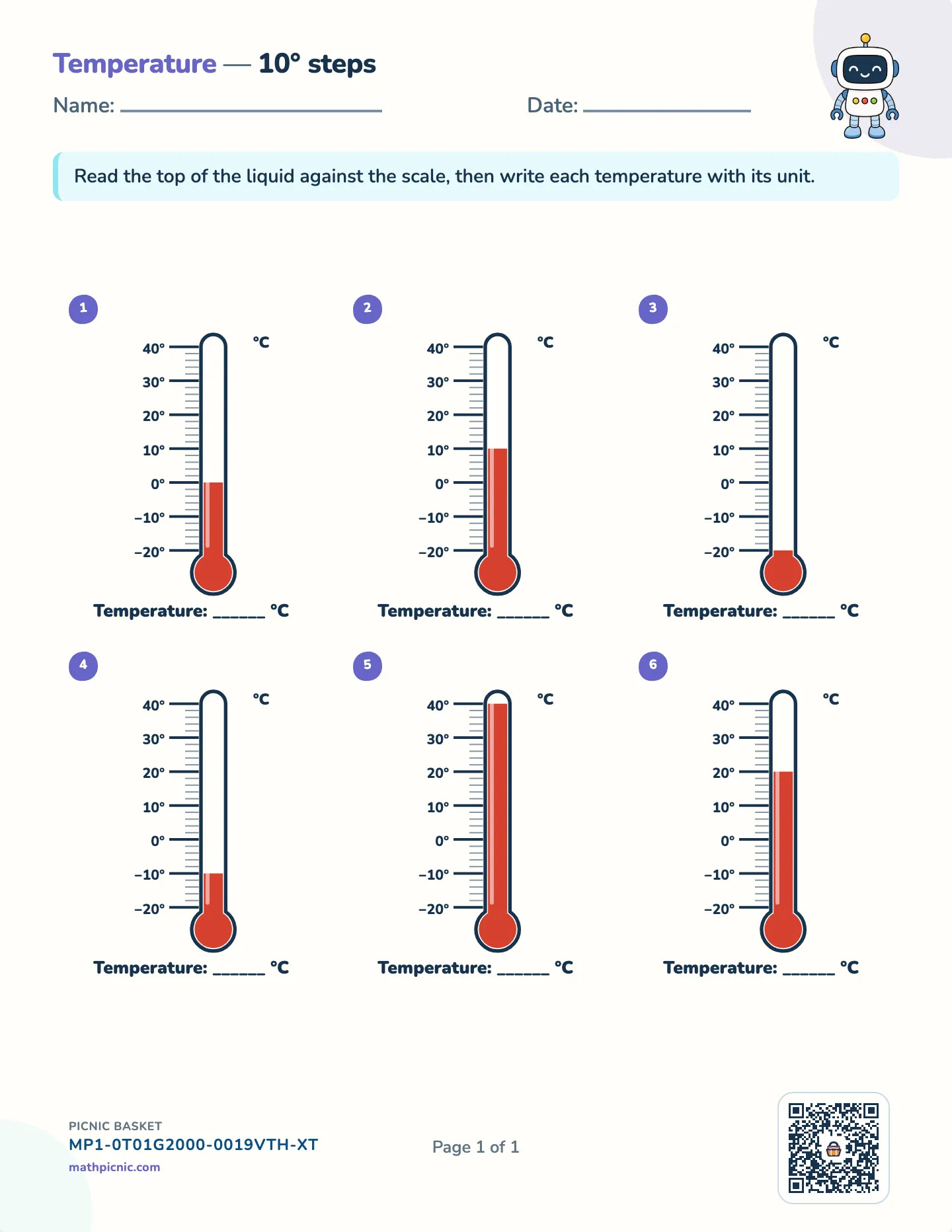
 - Read thermometers
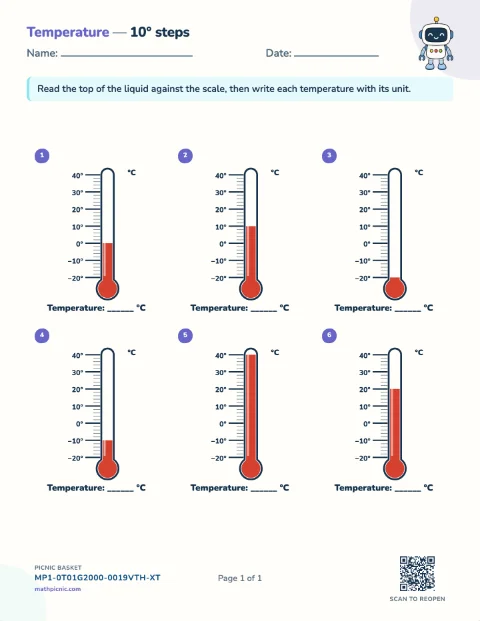 Print thermometer → __°C
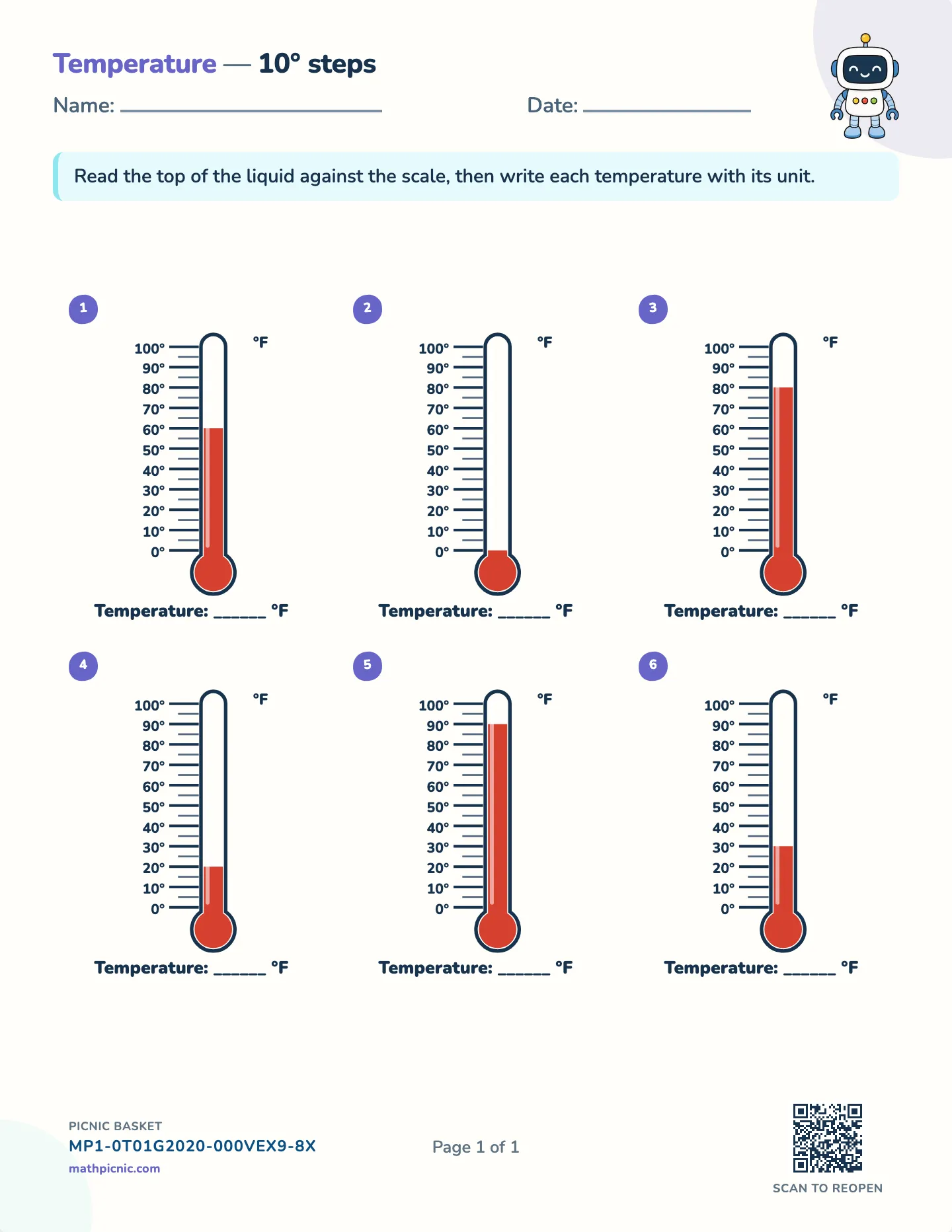
 - Read Fahrenheit thermometers
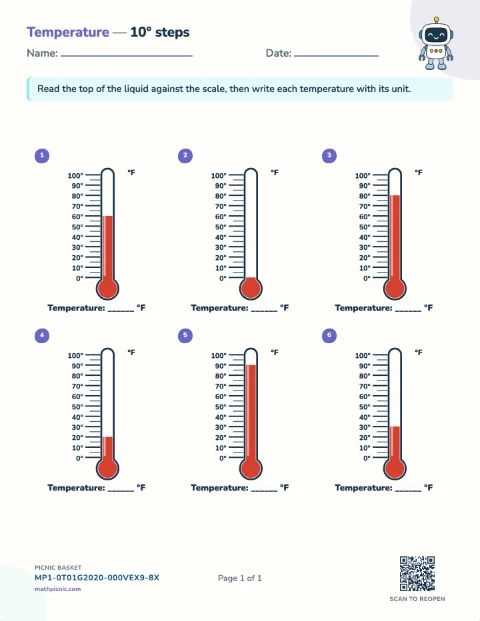 Print thermometer → __°F
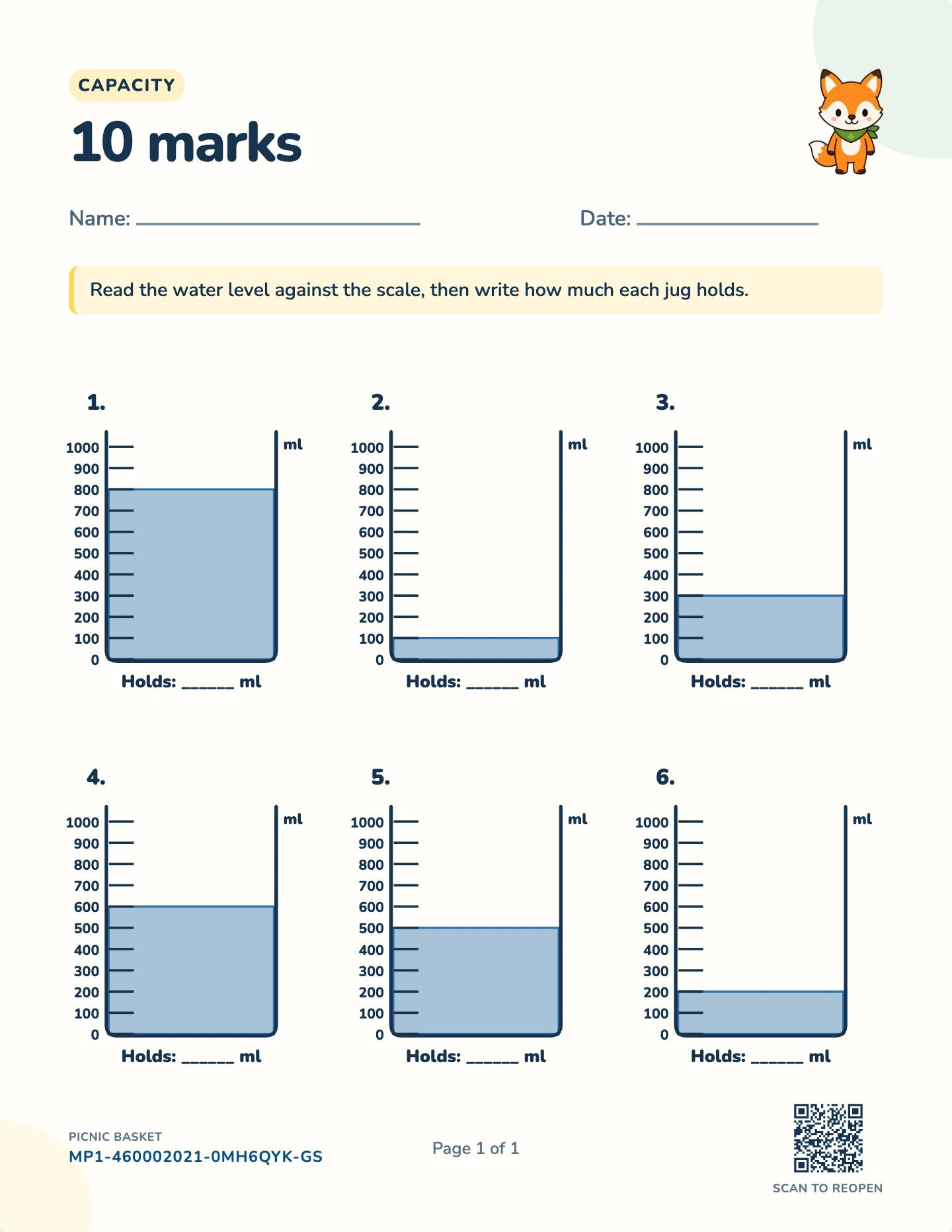
 - Read beakers
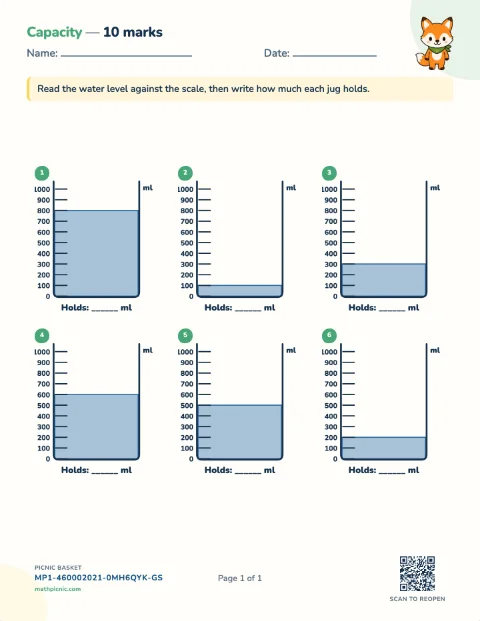 Print beaker → __ ml
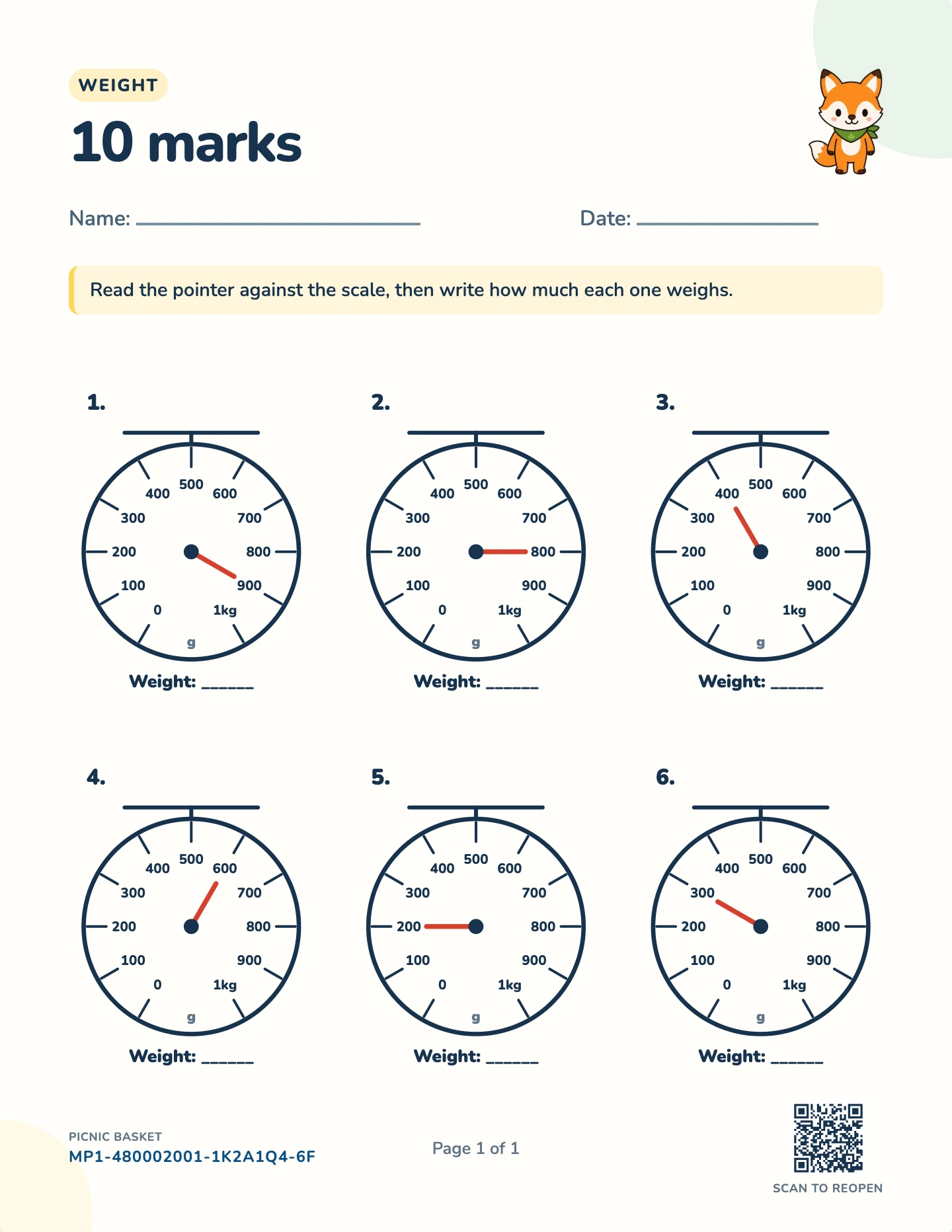
 - Read dial scales
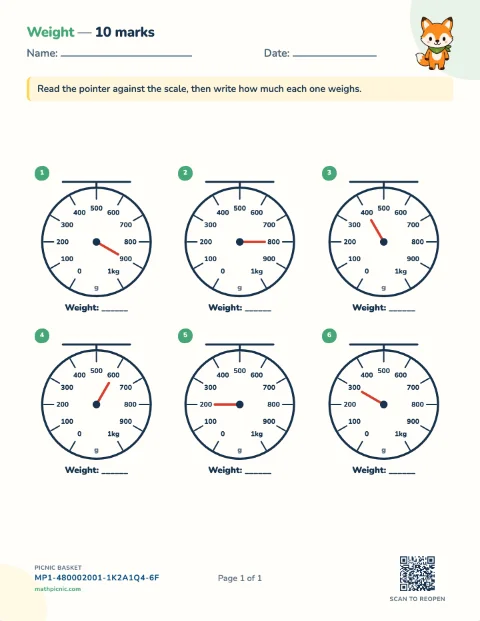 Print dial → __ g
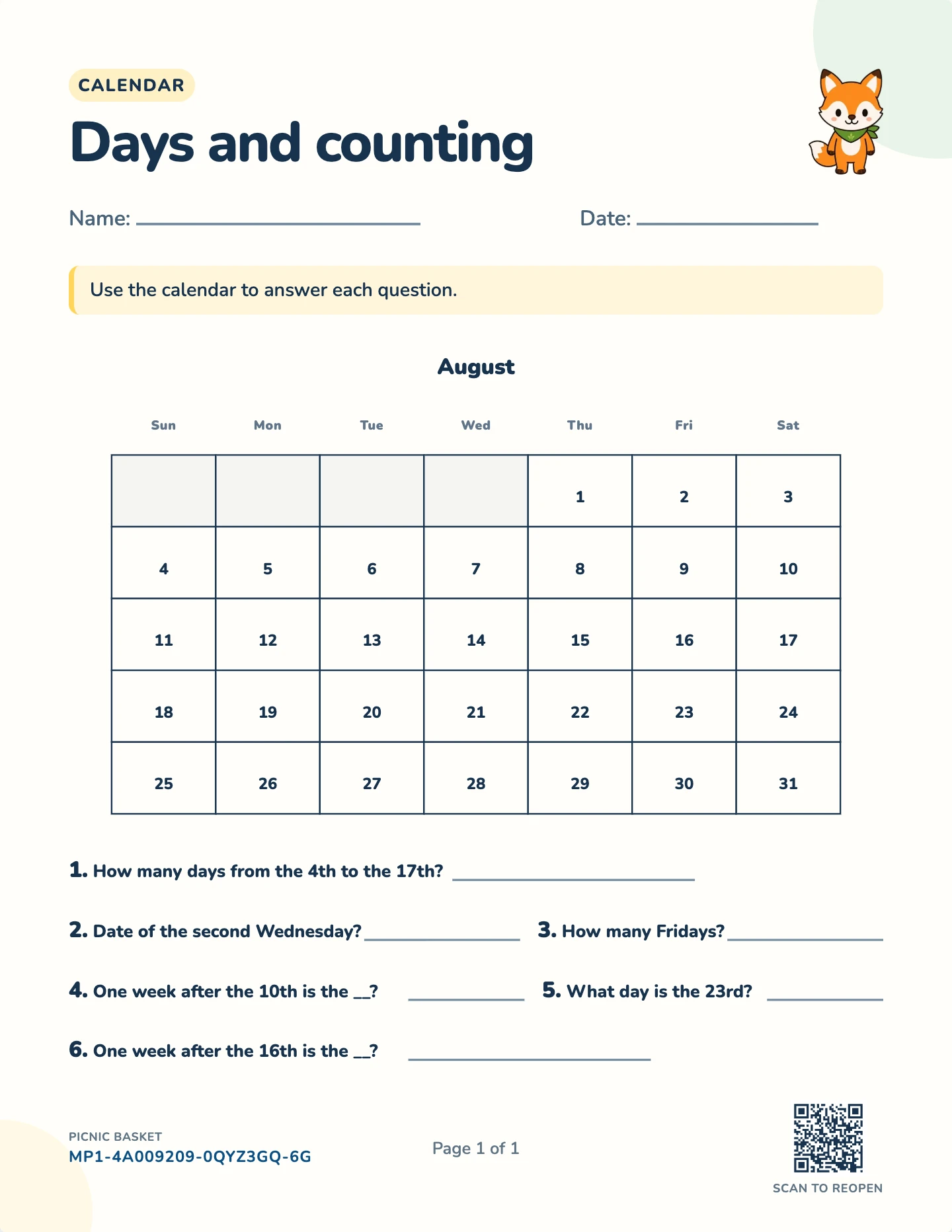
 - Read a calendar
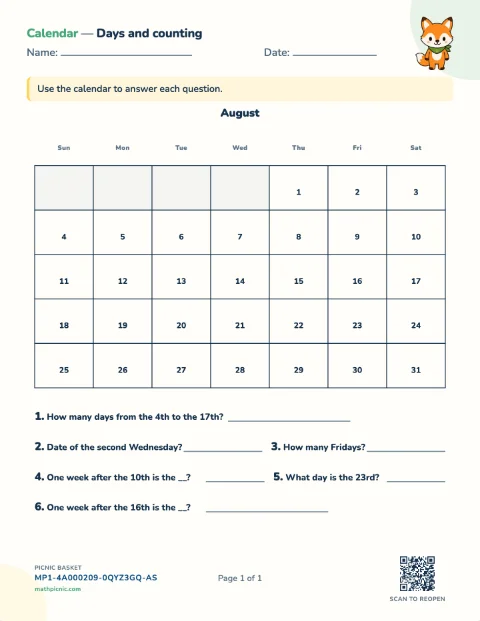 Print 3rd Friday → __
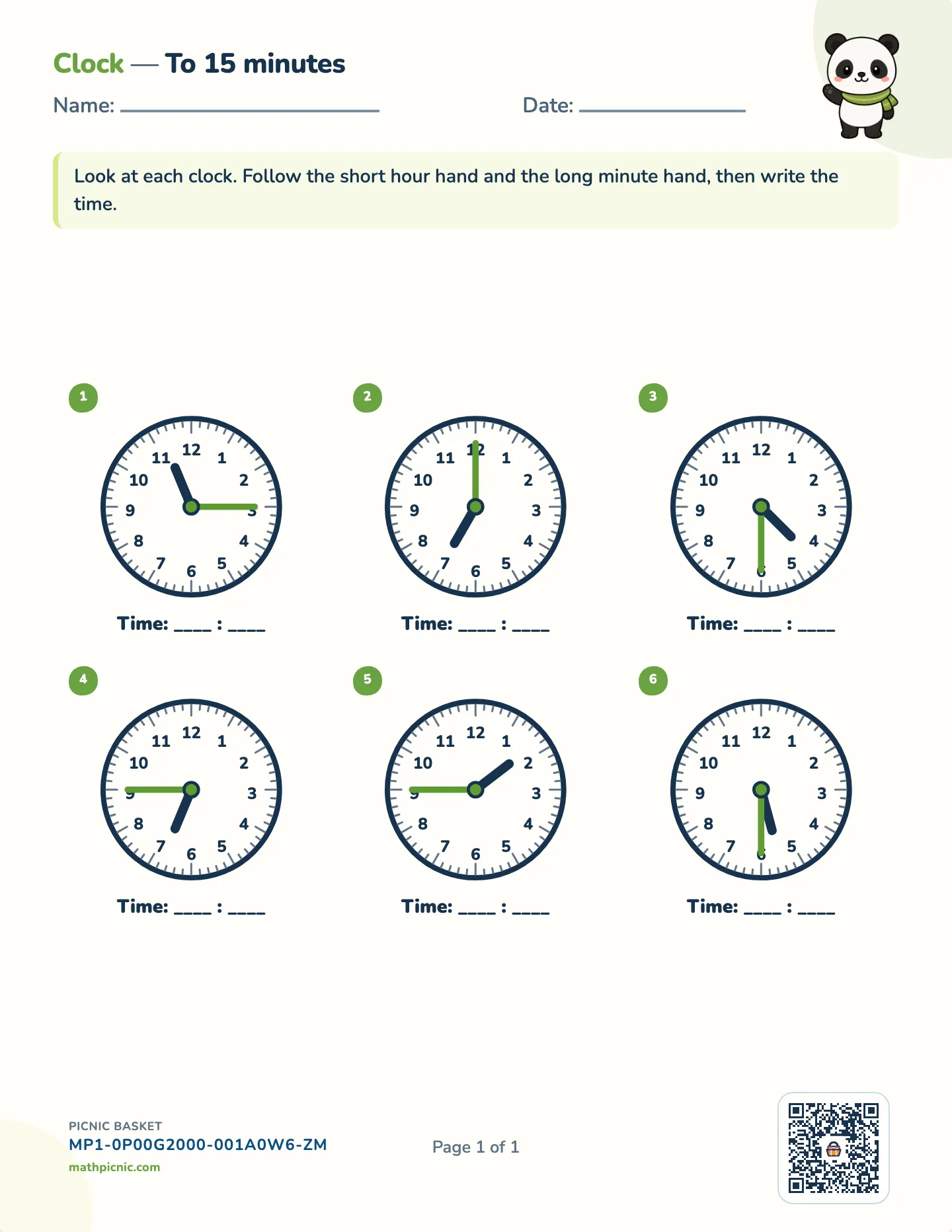
 - Tell time to the quarter hour
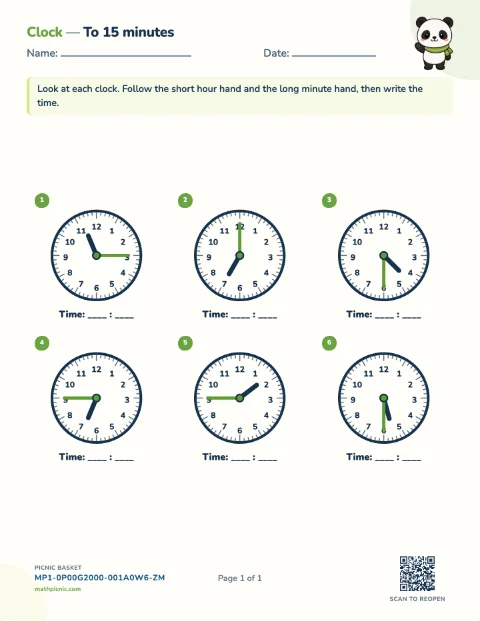 Print 🕒 → __:__
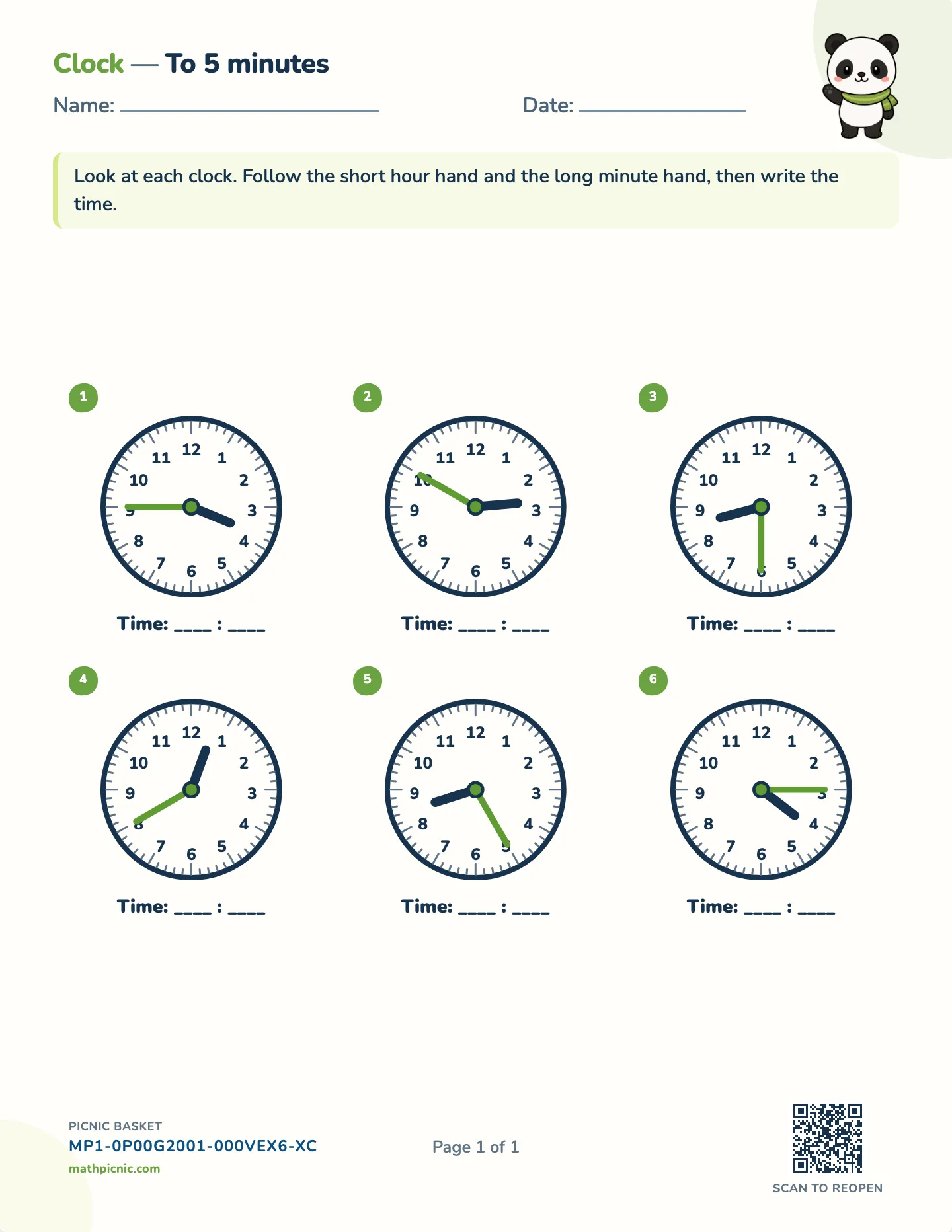
 - Tell time to five minutes
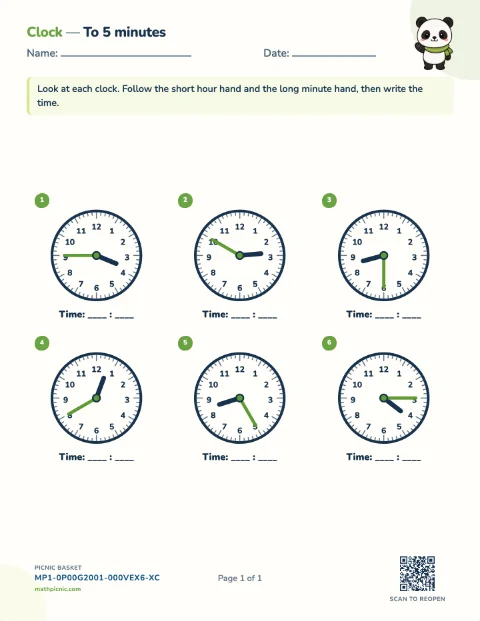 Print 🕒 → __:__
 - Tell time to the minute
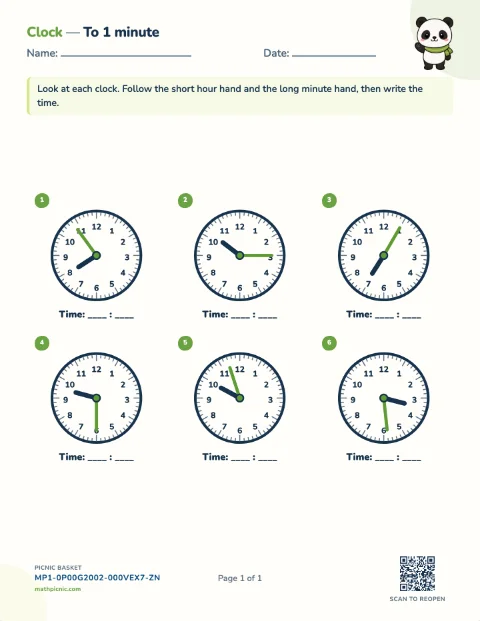 Print 🕐 → __:__
 - Draw the clock hands
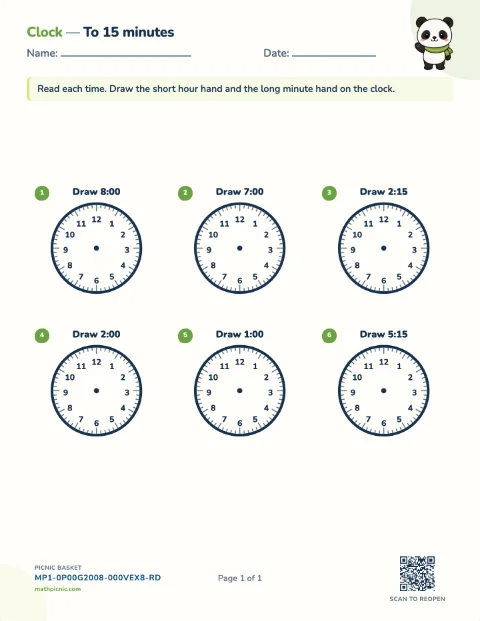 Print 3:15 → draw
 - Elapsed time
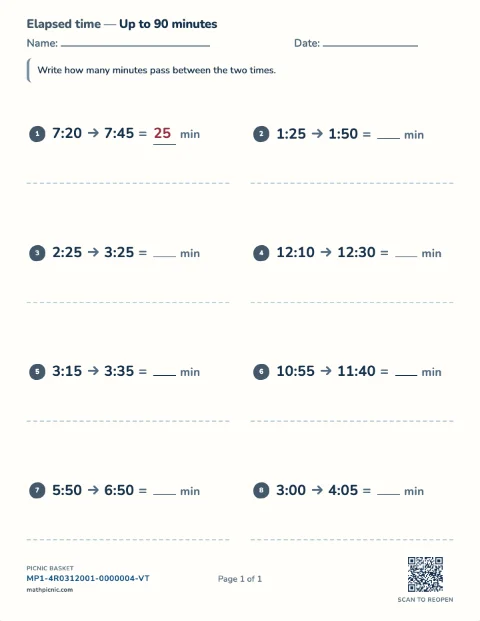 Print 3:15 → 4:00 = ?
 - What time will it be
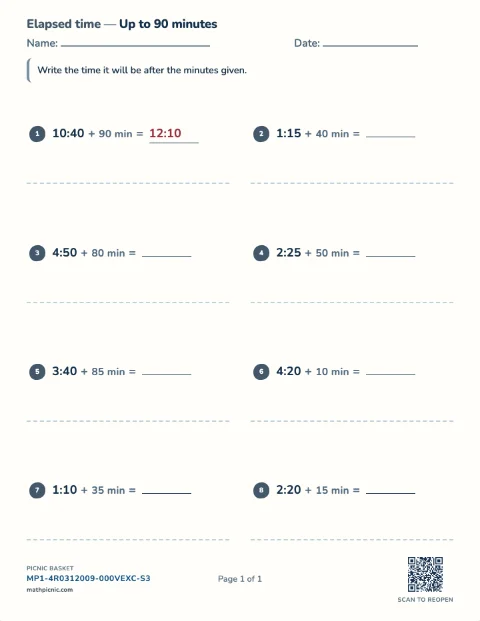 Print 3:45 + 30 min = __
 - Count money
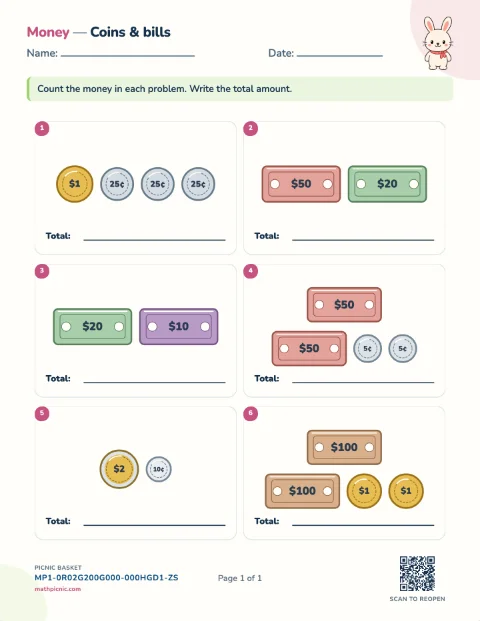 Print $5 + $2 + 25¢ = __
 - Counting coins
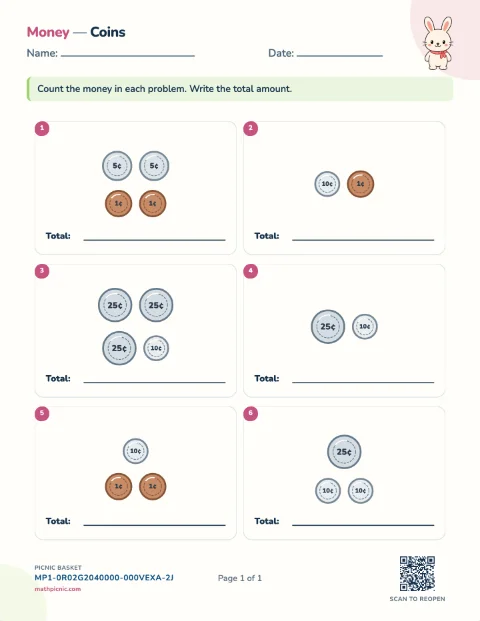 Print 25¢ + 10¢ + 1¢ = __
 - Making change
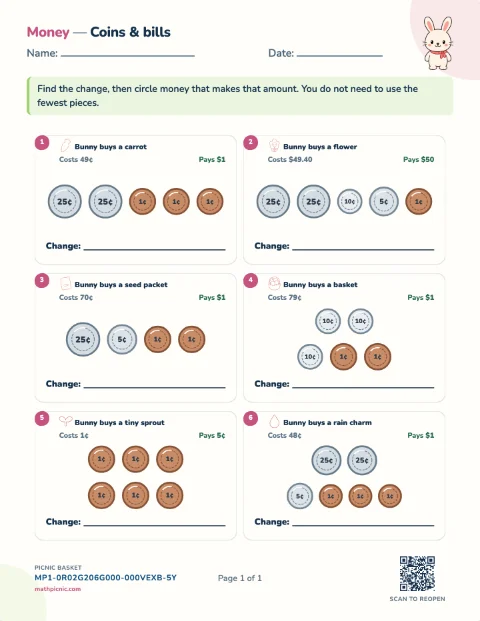 Print $5.00 − $3.65 = __
 - Finding the start time
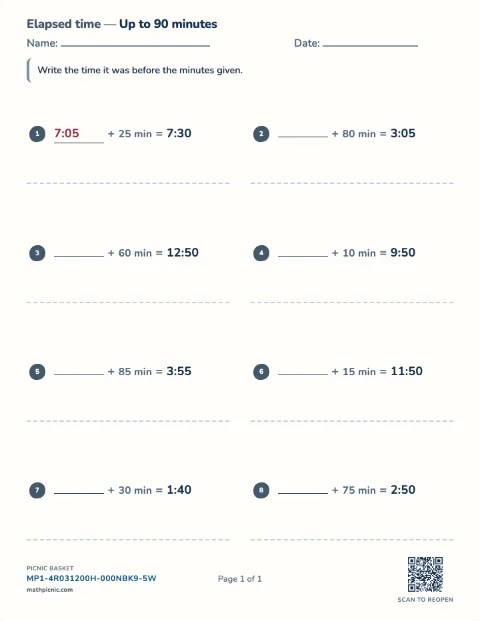 Print __ + 45 min = 4:00
A simple way through real-life math
Measurement begins with a physical agreement: every interval marked one centimeter must have the same length. A child who starts an object at the edge of a ruler instead of at zero may count marks rather than intervals and be wrong by one, so the measuring sheet makes both endpoints visible and keeps that foundational habit explicit.
Why this order works
Thermometers and clocks are number lines wrapped into familiar instruments. Their labels do not name every value, which means a child has to work out what one interval represents before reading the pointer or liquid. Starting with ten-degree thermometer steps and quarter-hour clock positions keeps the scale reasoning visible without overloading the arithmetic.