
Measurement worksheets
Not sure what comes next? Start with the first sheet that feels comfortable.
Or you can pick your level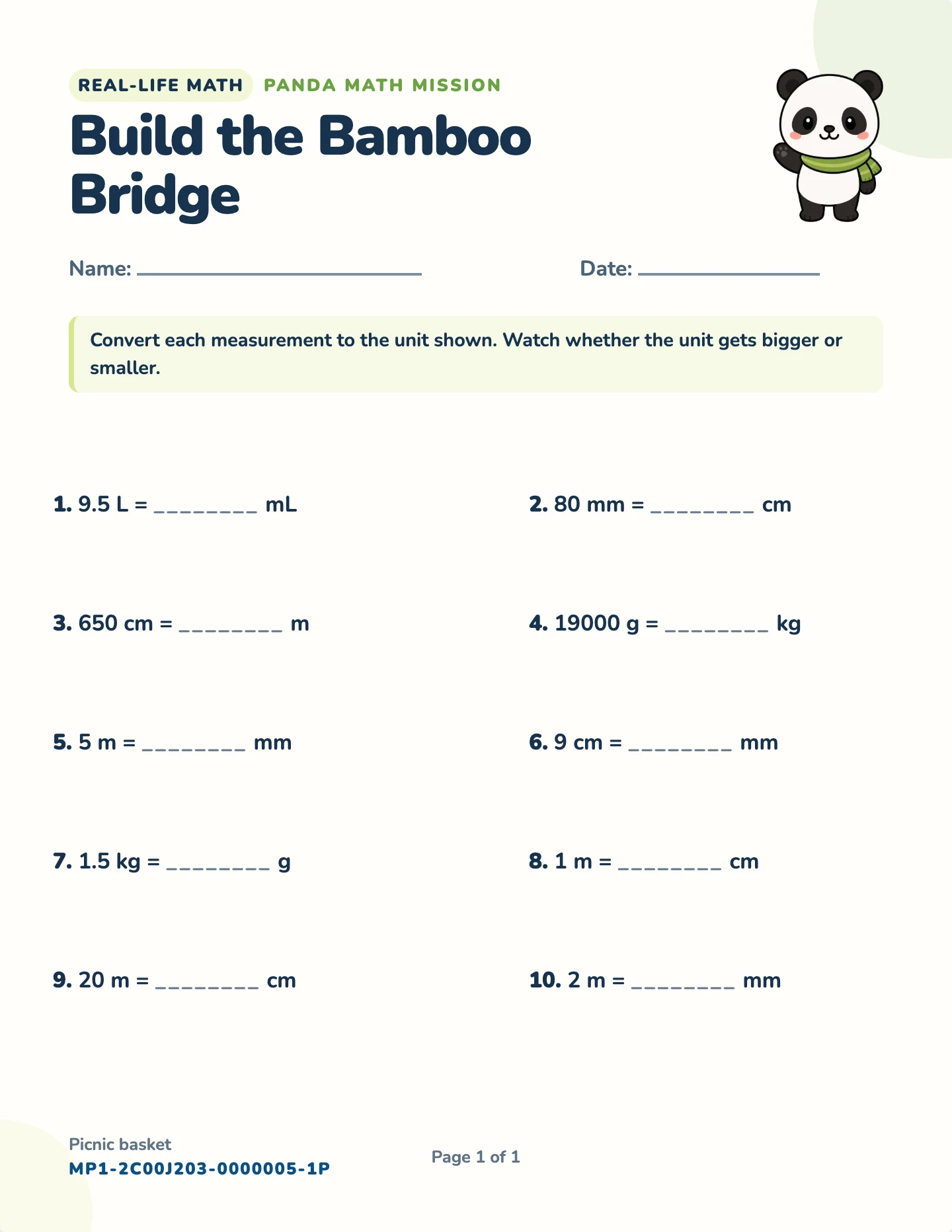
Nothing matches that. Try a skill, a number, or a grade.
In teaching order
Measurement worksheets, easiest first
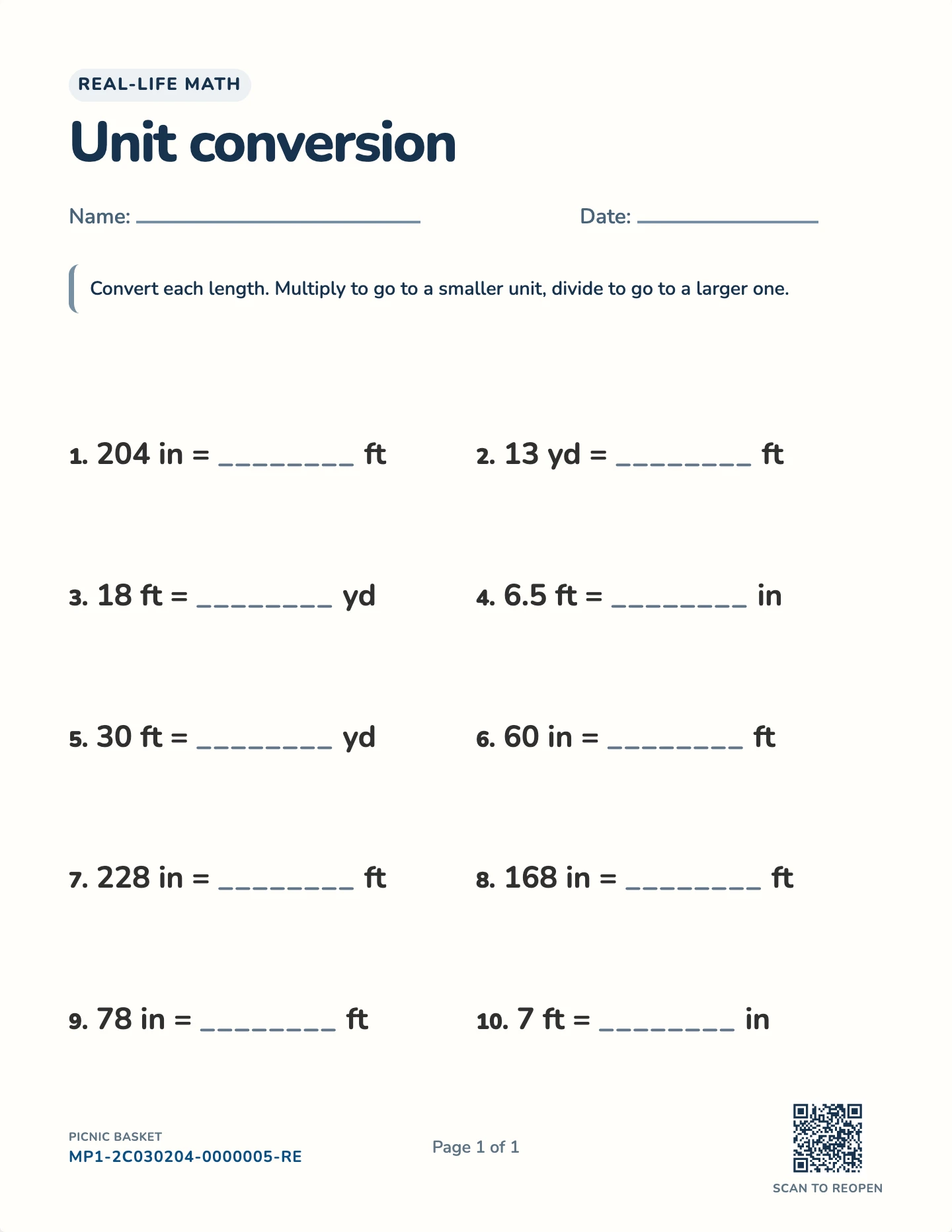
Each sheet assumes the one above it is comfortable. Start where your child is, not at the top.- Unit conversion
 Print 3 m = ___ cm
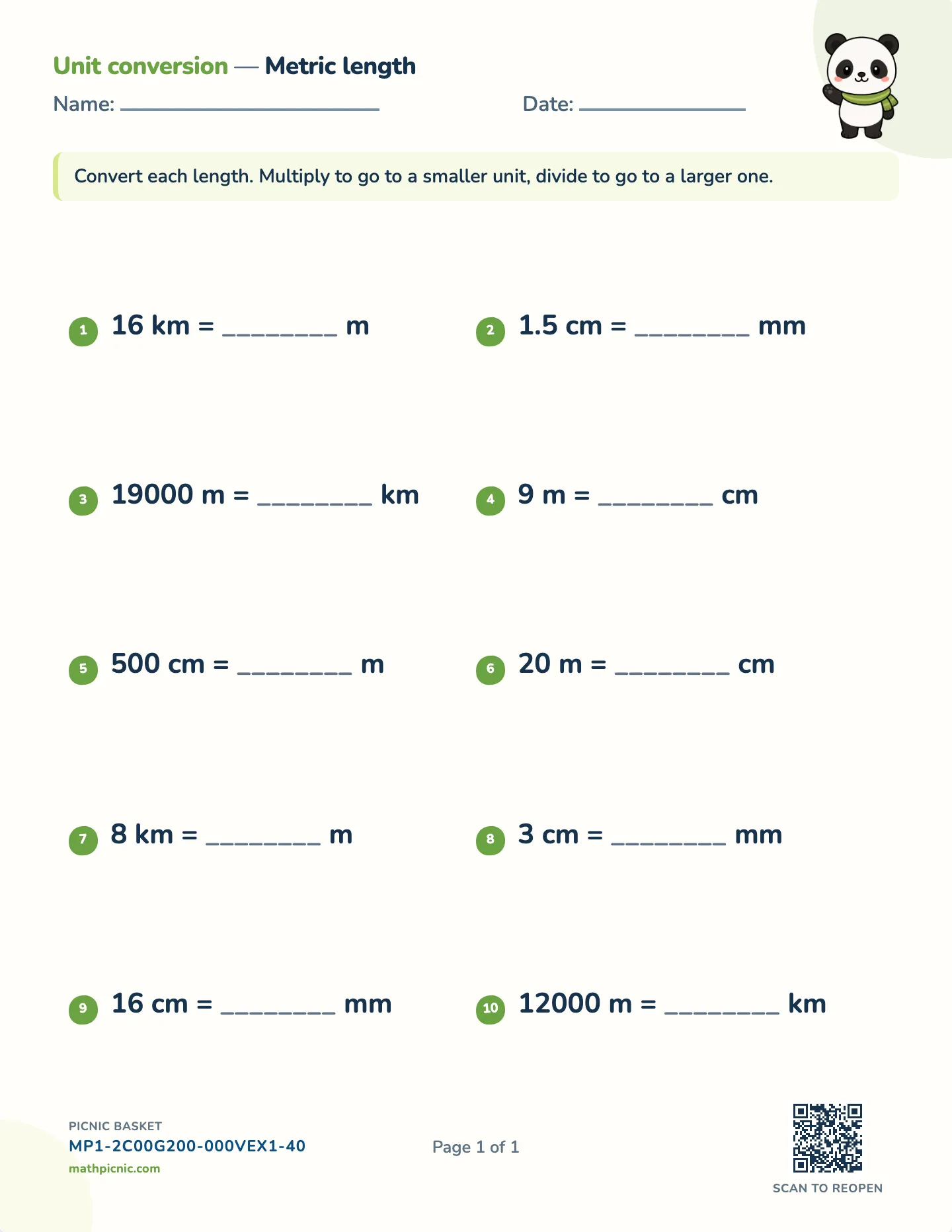
 - Metric length conversion
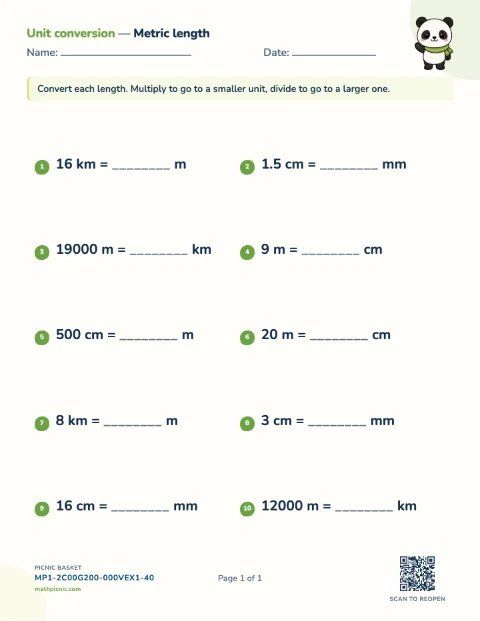 Print 3 m = ___ cm
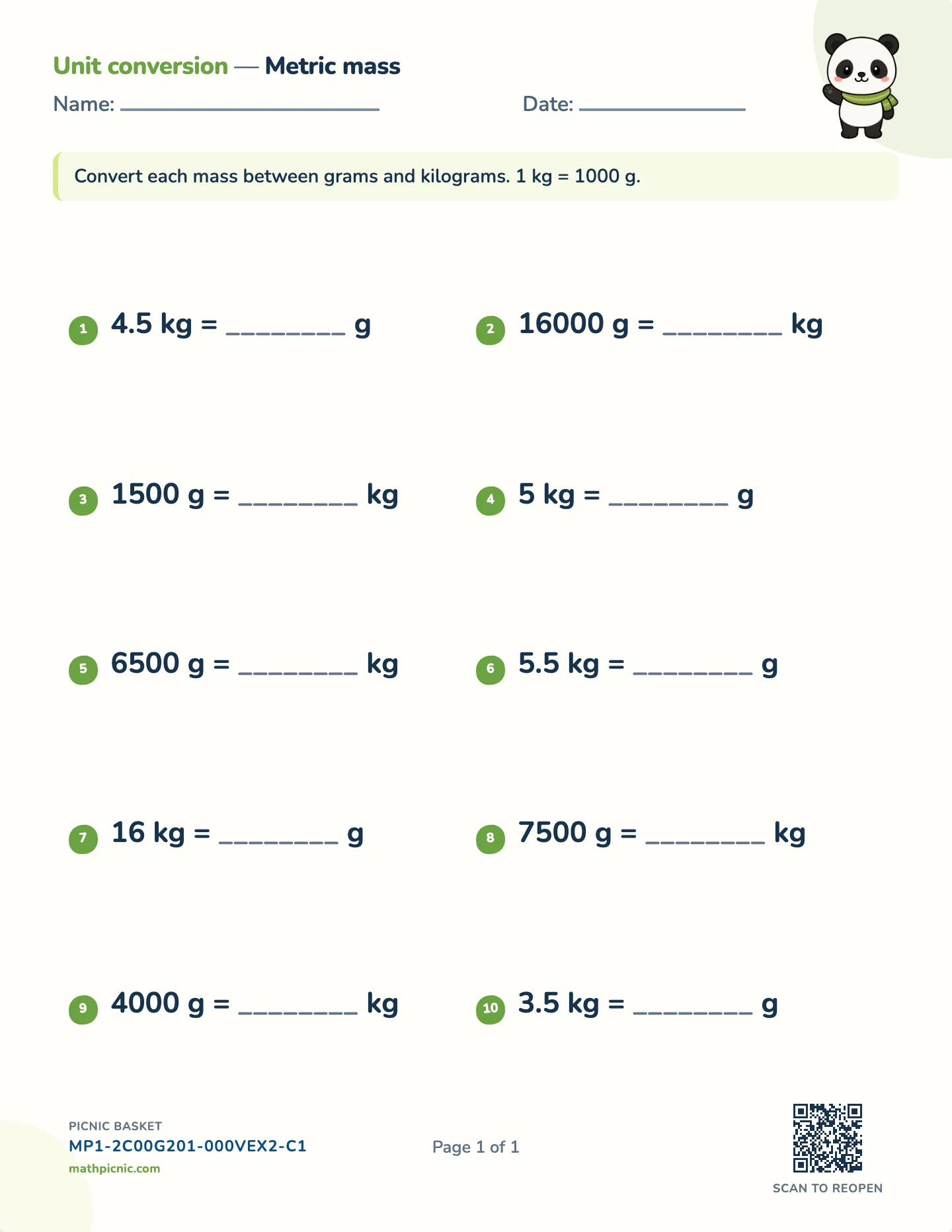
 - Metric mass conversion
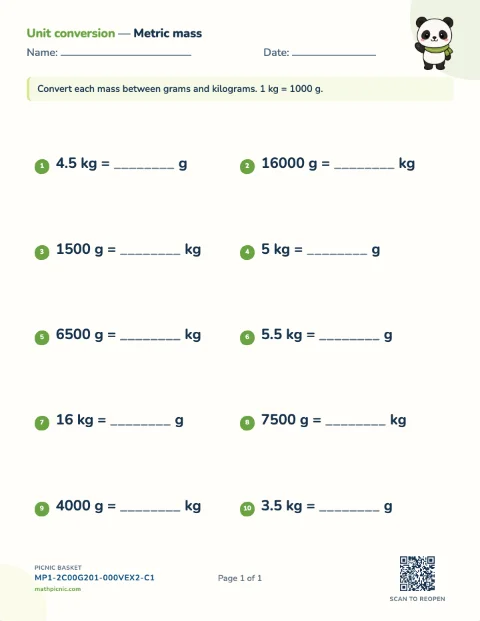 Print 2 kg = ___ g
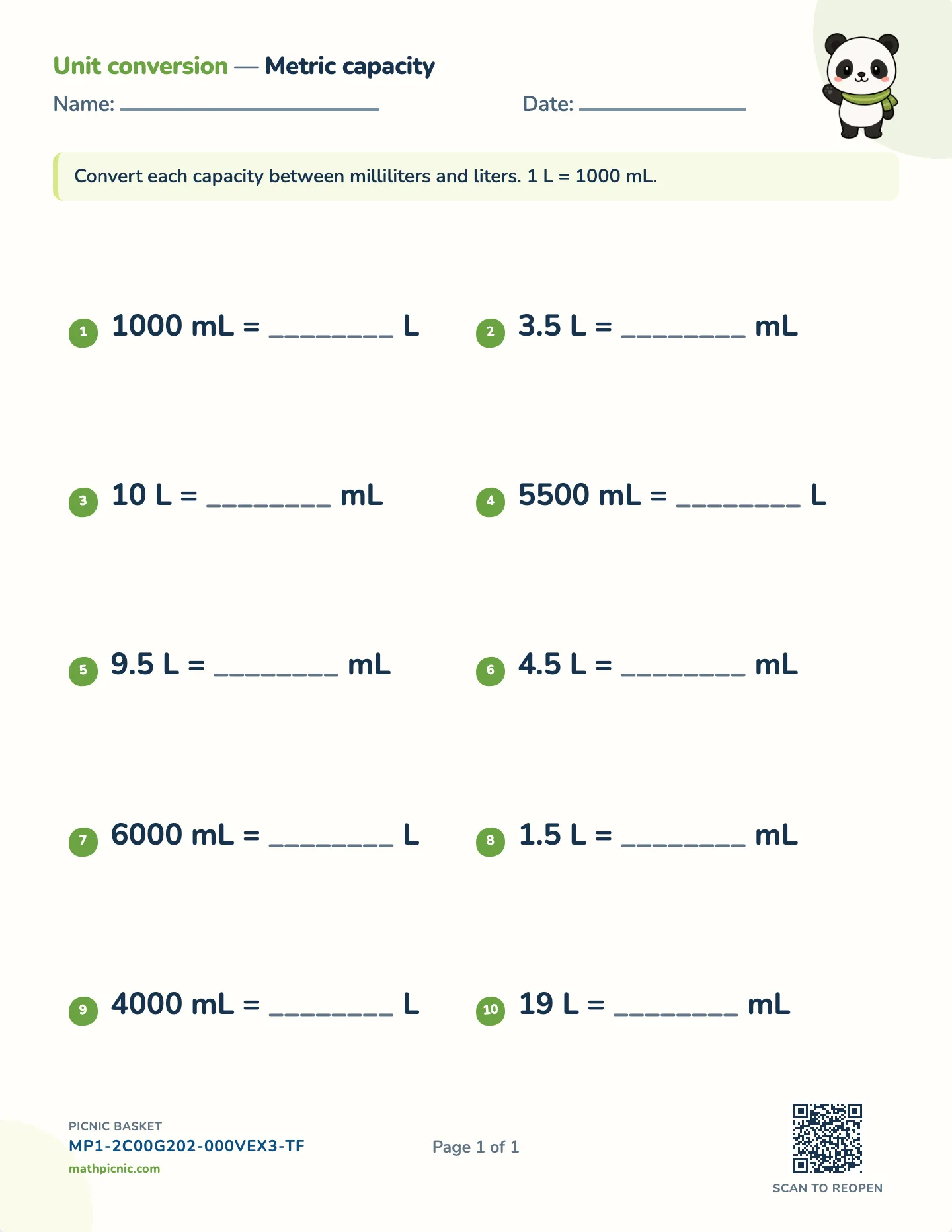
 - Metric capacity conversion
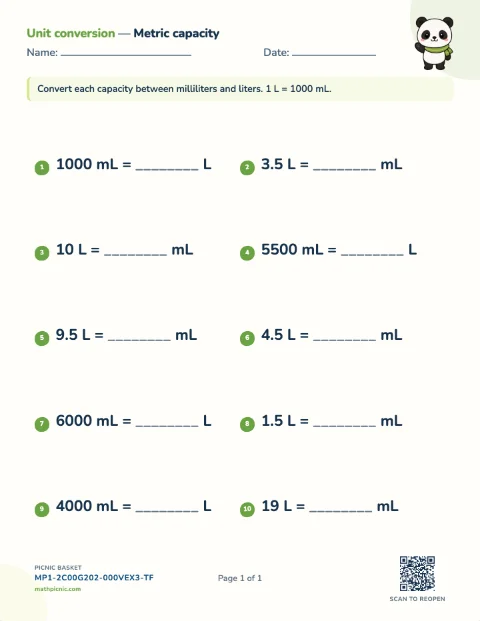 Print 1.5 L = ___ mL
 - Customary unit conversion
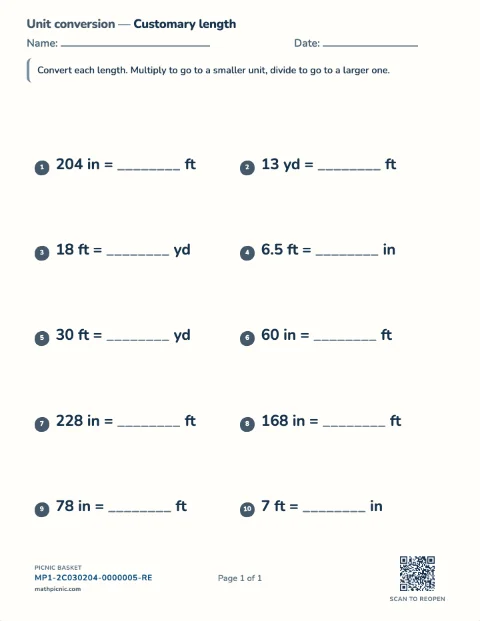 Print 4 ft = ___ in
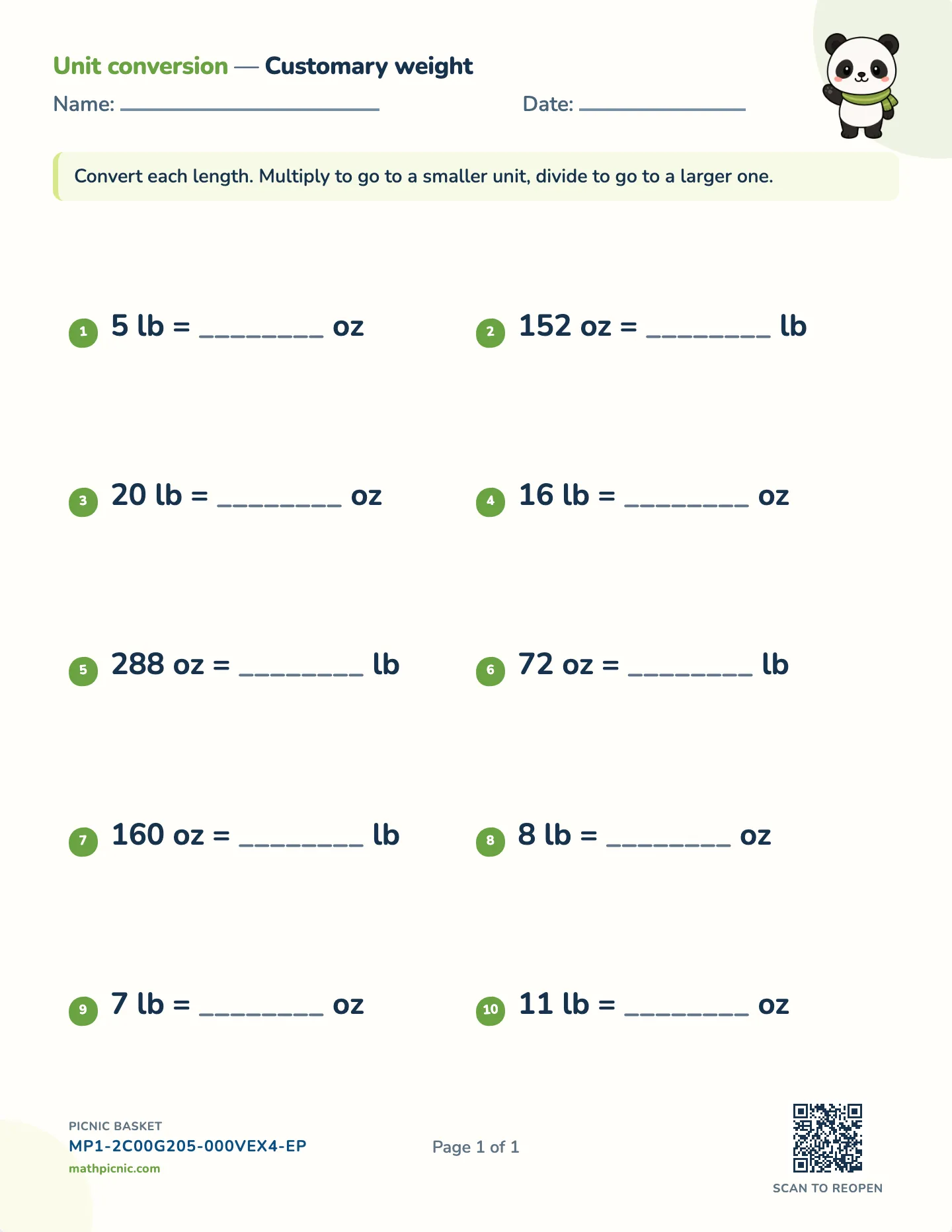
 - Customary weight conversion
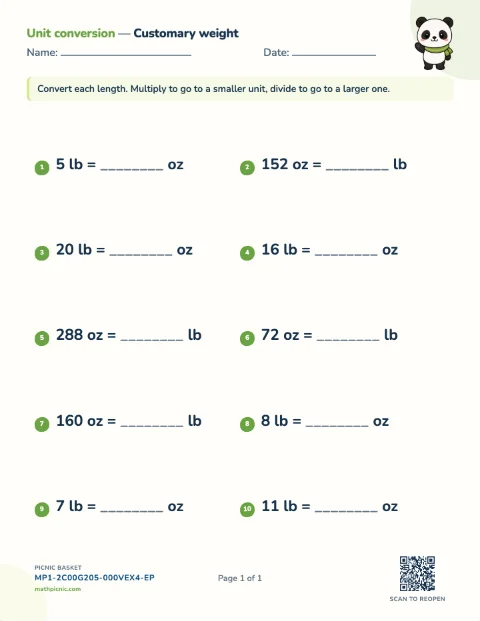 Print 2 lb = ___ oz
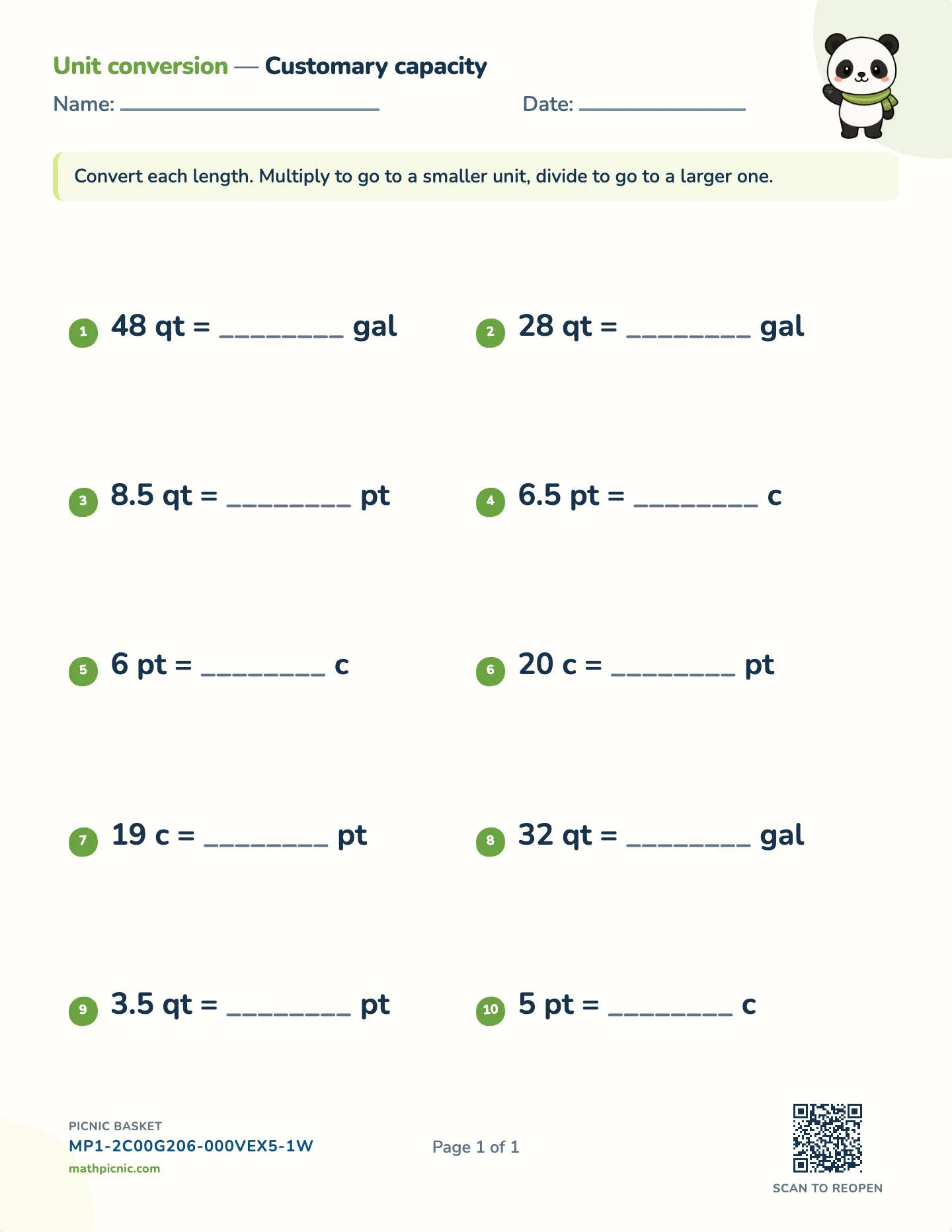
 - Customary capacity conversion
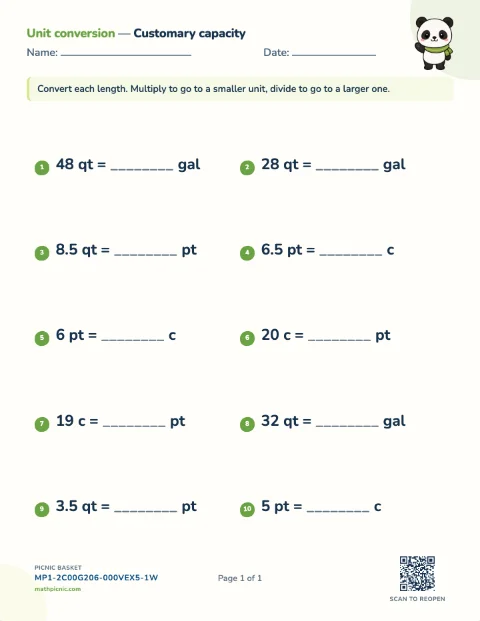 Print 1 gal = ___ qt
A simple way through measurement
The metric system is built to make conversion easy: every unit is ten, a hundred, or a thousand times the next, so converting is really the same place-value move a child already practices when multiplying and dividing by powers of ten. The one thing to get right is direction — a smaller unit needs more of it, so you multiply; a larger unit needs fewer, so you divide. Three meters is three hundred centimeters; three thousand grams is three kilograms.
Why this order works
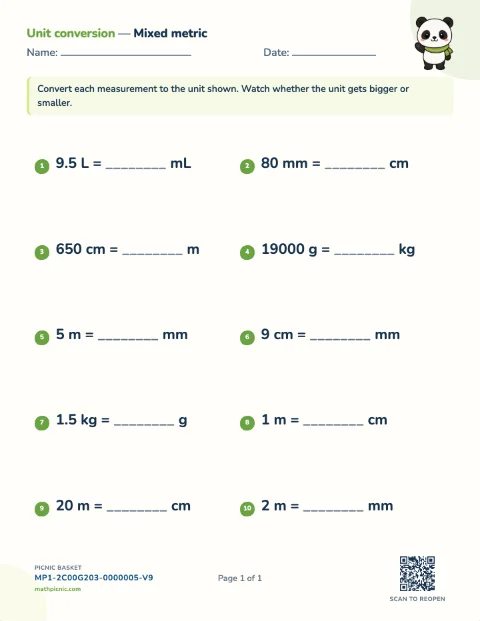
Practicing within a single family first — length, then mass, then capacity — lets a child fix the units and their sizes before mixing them. A mixed sheet then forces the real decision: look at the two units, decide which is bigger, and choose to multiply or divide accordingly. Numbers stay friendly, whole or half amounts, so the attention goes to the reasoning, not the arithmetic.