4th grade math worksheets
Need the right level, not just the grade label? Start wherever your child feels comfortable.
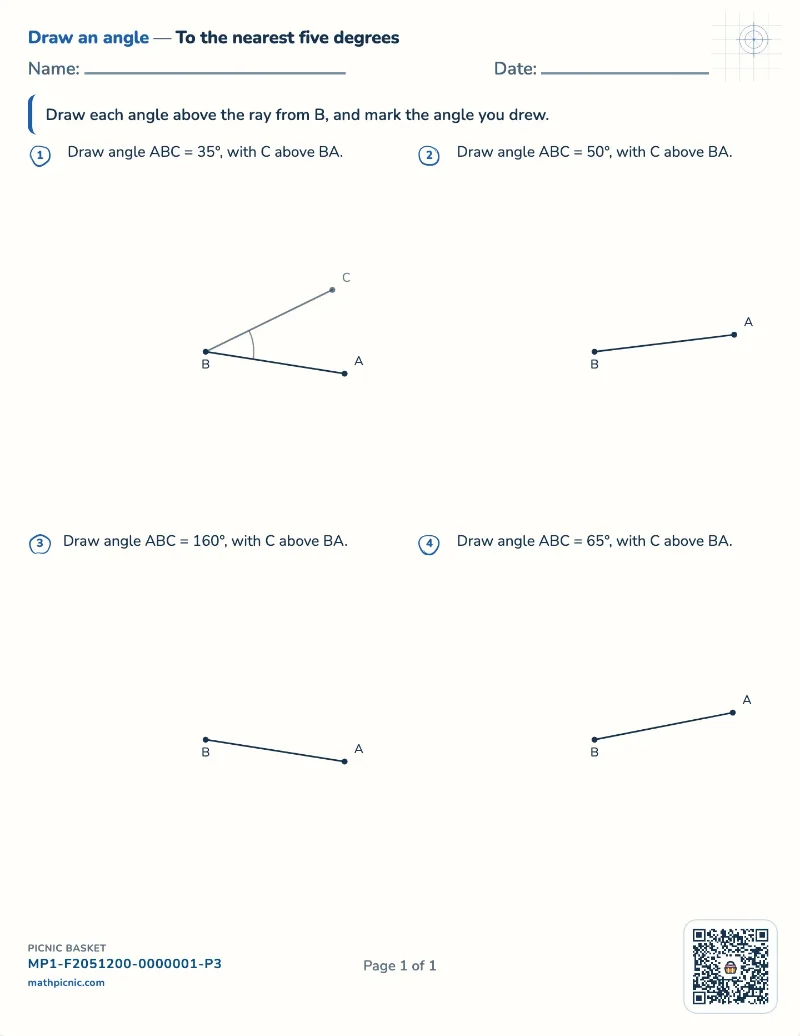
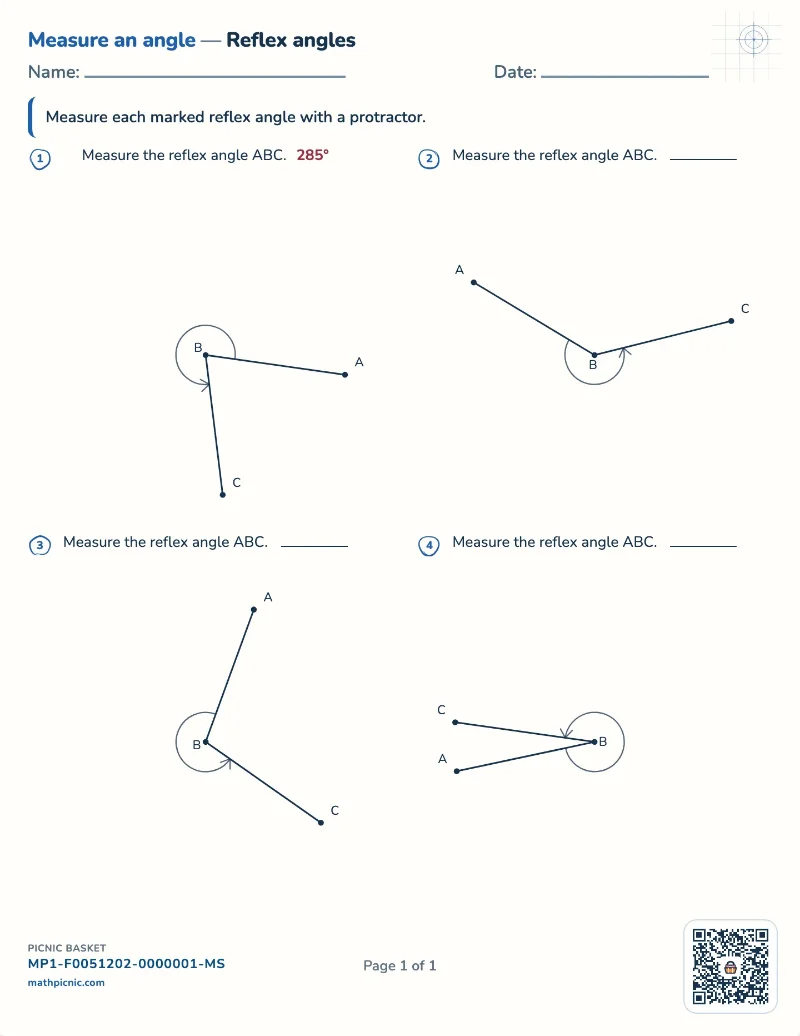
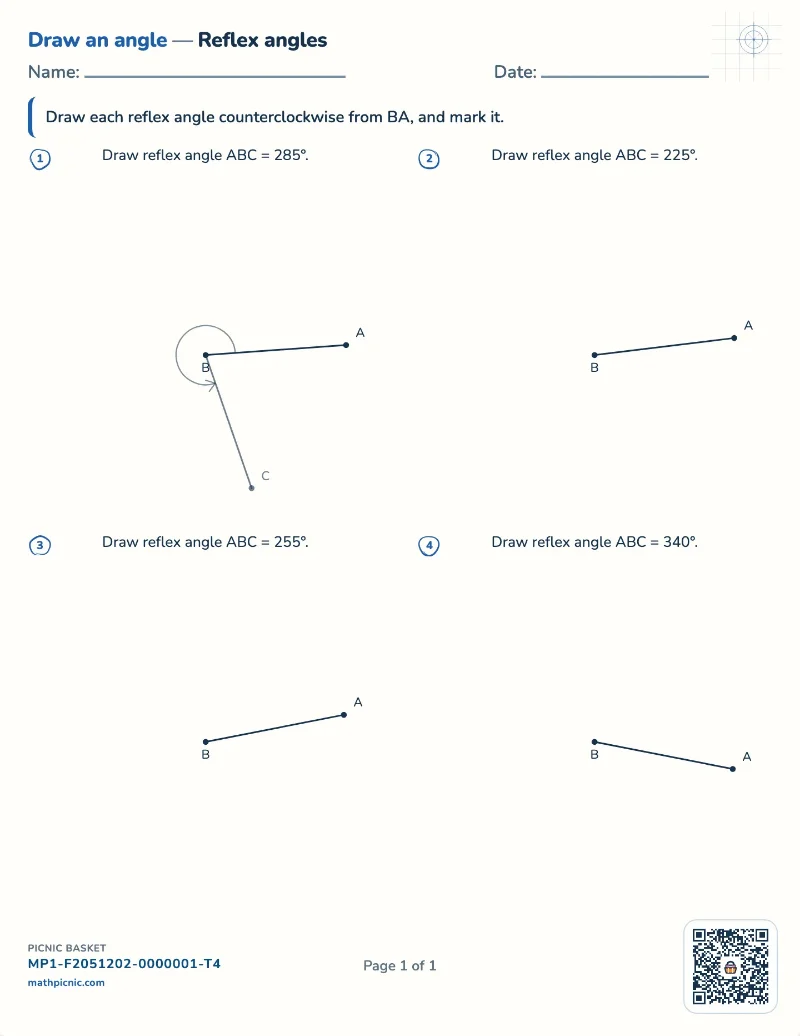
Measuring angles with a protractor
Grade 4–6
Read an angle off a protractor, at any rotation
Customize this sheet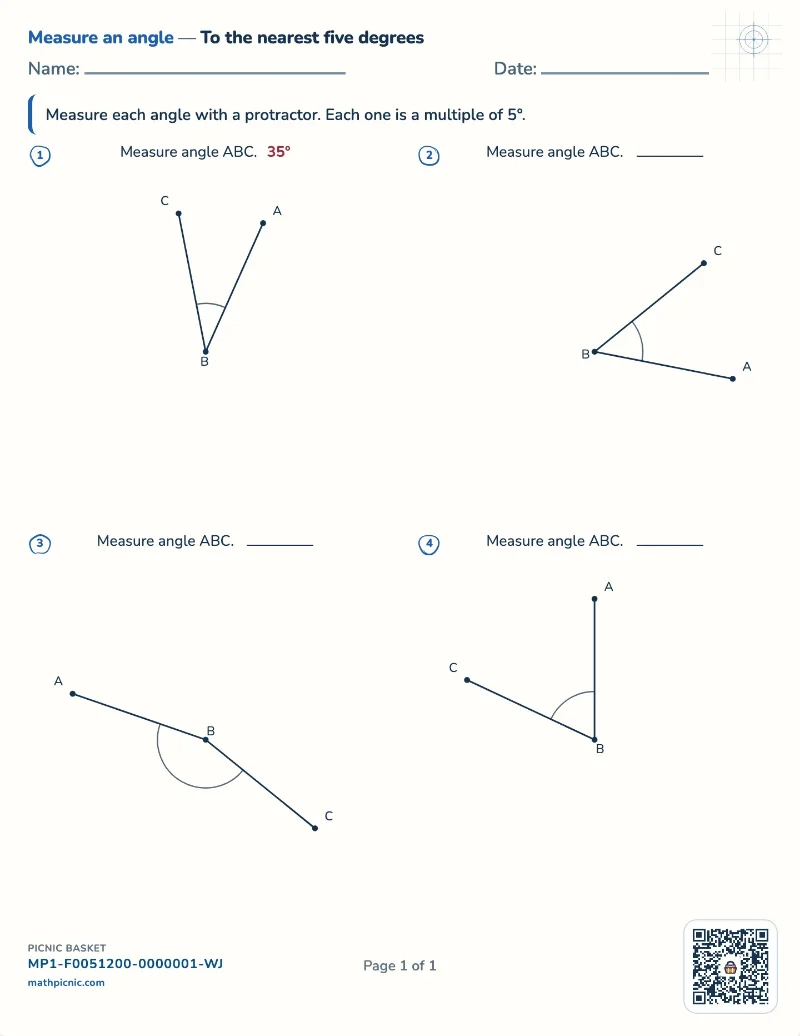
What to practice this year
The single-digit facts are assumed now, and it shows: every multi-digit algorithm is just those facts, organized by place value and repeated. If multiplication or division facts still take a beat, a week of the fact sheets pays for itself immediately, because a shaky fact turns into a wrong partial product a child cannot debug.
Why these skills come next
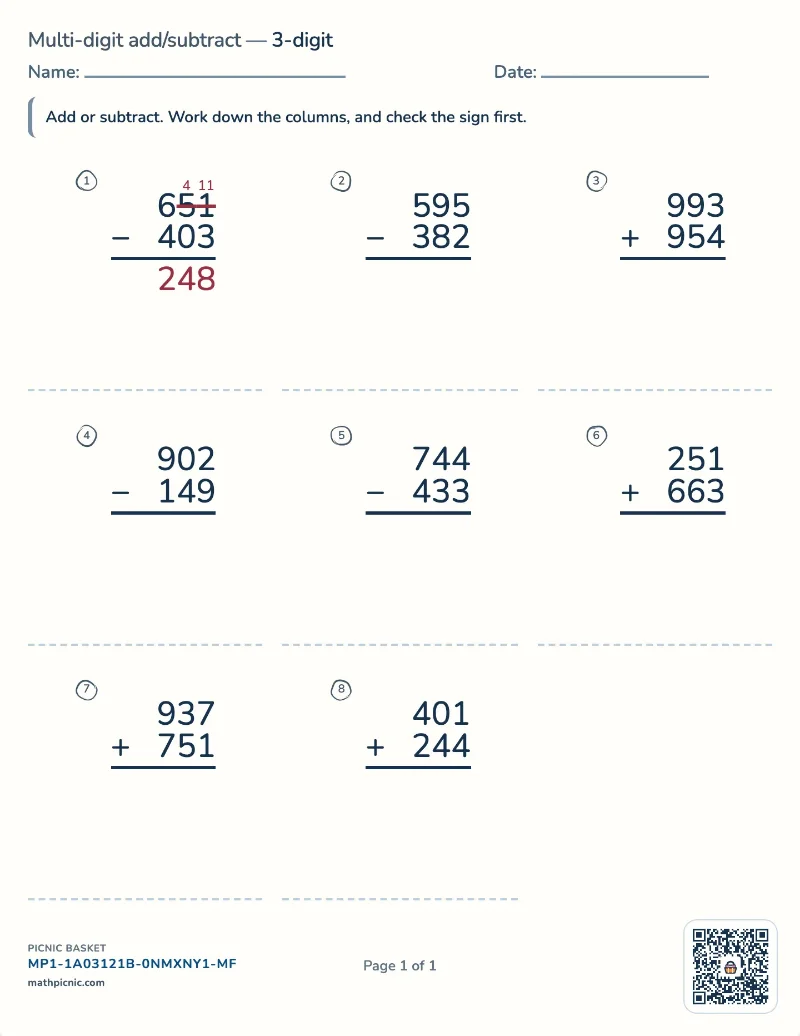
The written methods arrive together and reinforce each other. Column addition and subtraction settle carrying and borrowing across three and four digits; multi-digit multiplication — up to four digits by one, and two by two this year — stacks partial products; long division walks divide, multiply, subtract, bring down over a single-digit divisor. Each is sized by digit length here, so a sheet targets exactly the step a child is on.
Nothing matches that. Try a skill, a number, or a topic.
Step 1 of 15
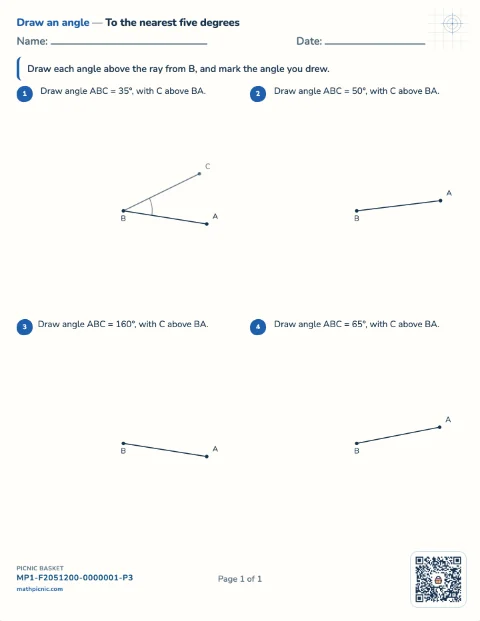
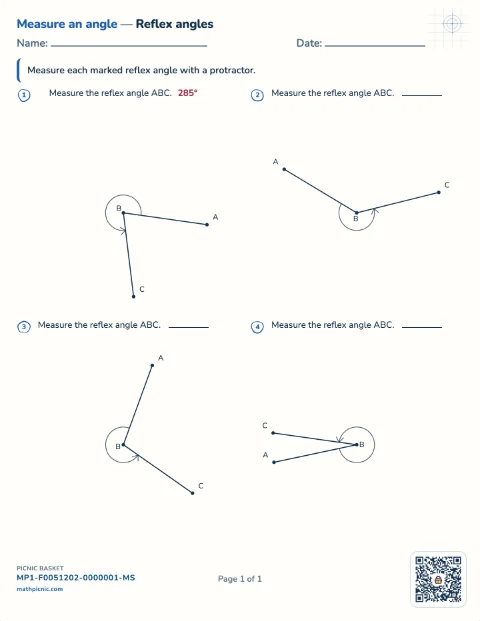
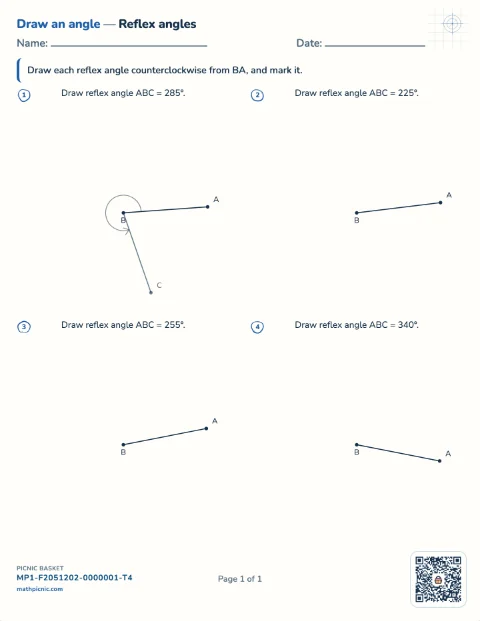
Measuring angles
Reading a protractor at any rotation, and setting one to draw an angle of a given size.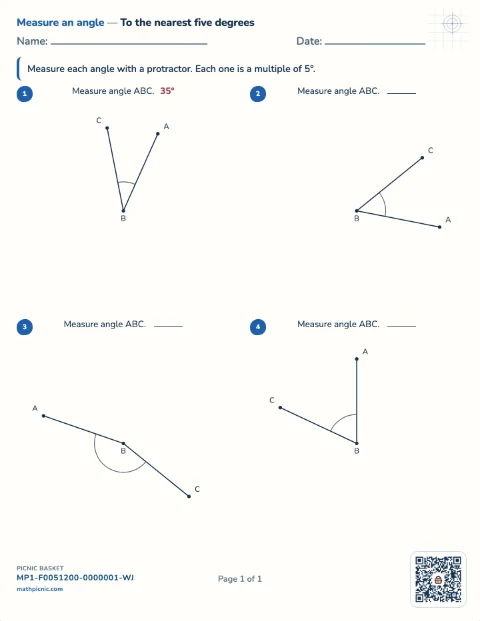
Step 2 of 15
Start of grade 4
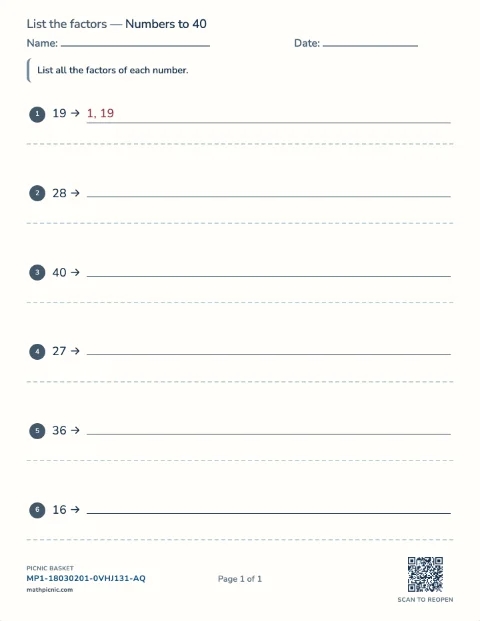
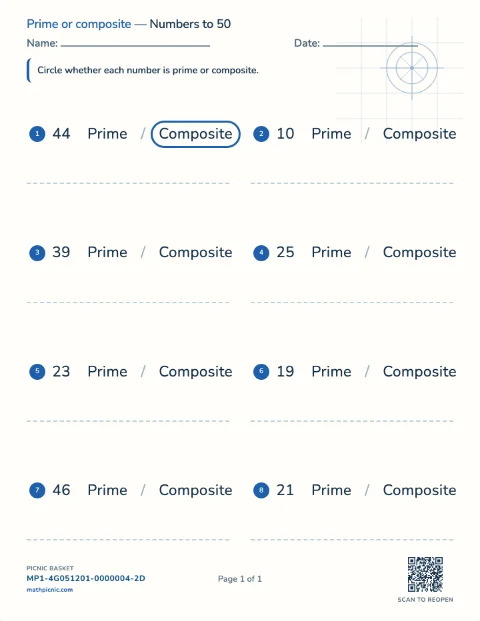
The written methods for adding, subtracting, and breaking numbers apart.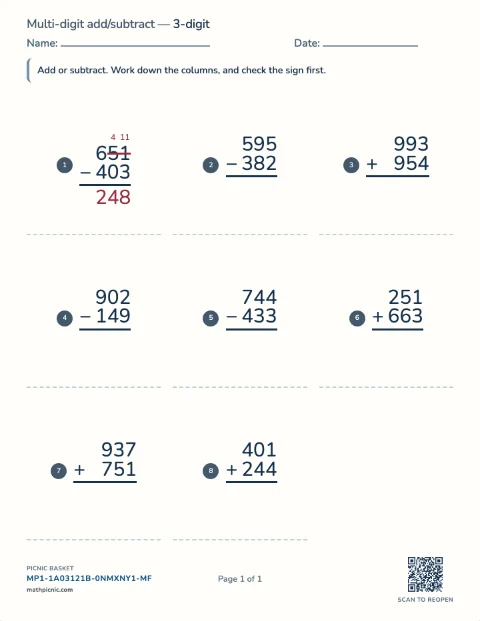
Step 3 of 15
Core grade 4 skills
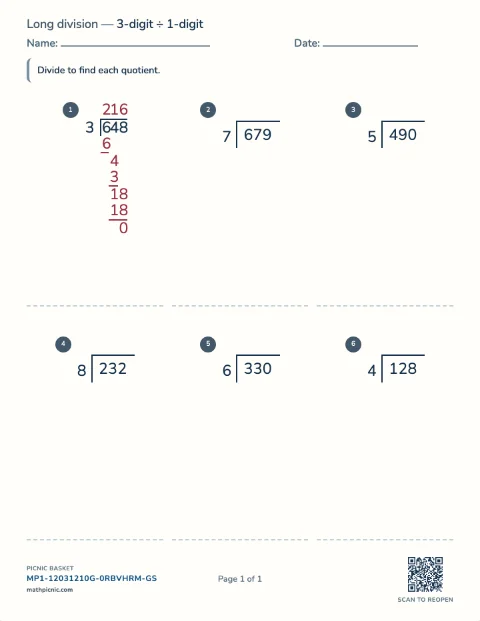
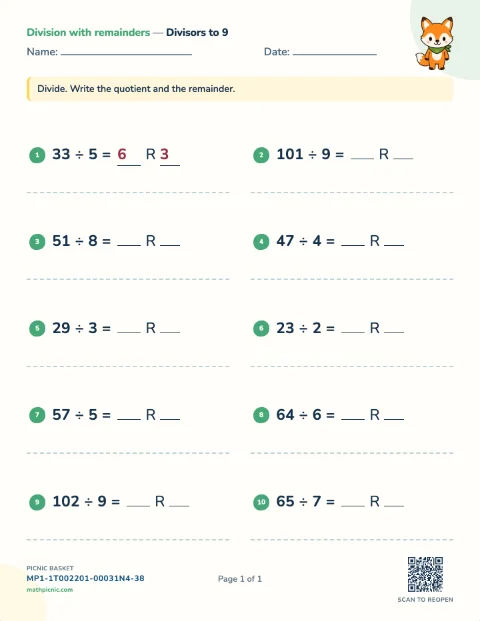
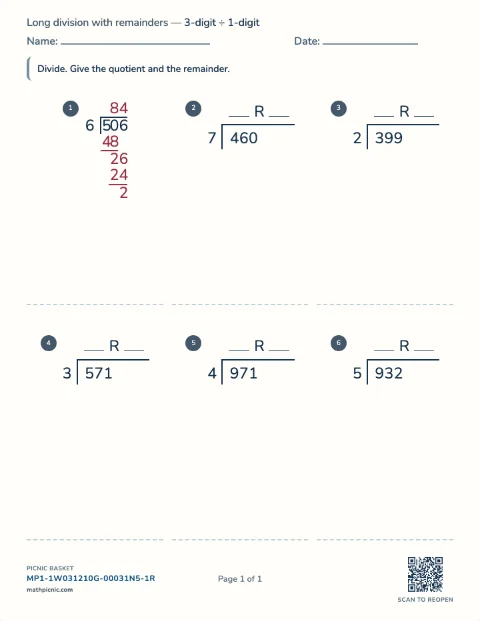
Multi-digit multiplication and long division by the standard algorithms.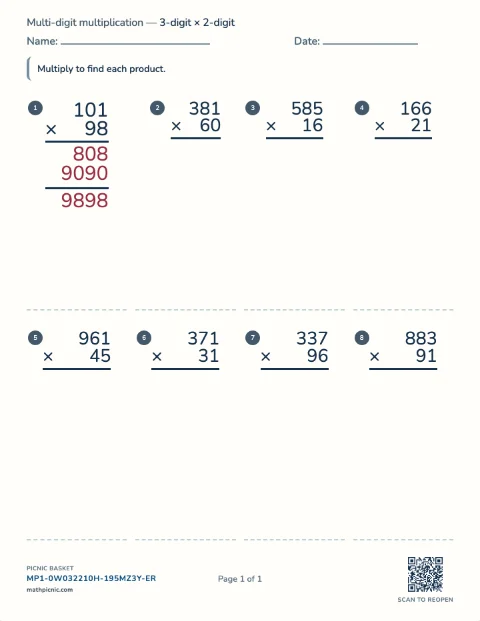
Step 4 of 15
One digit at a time
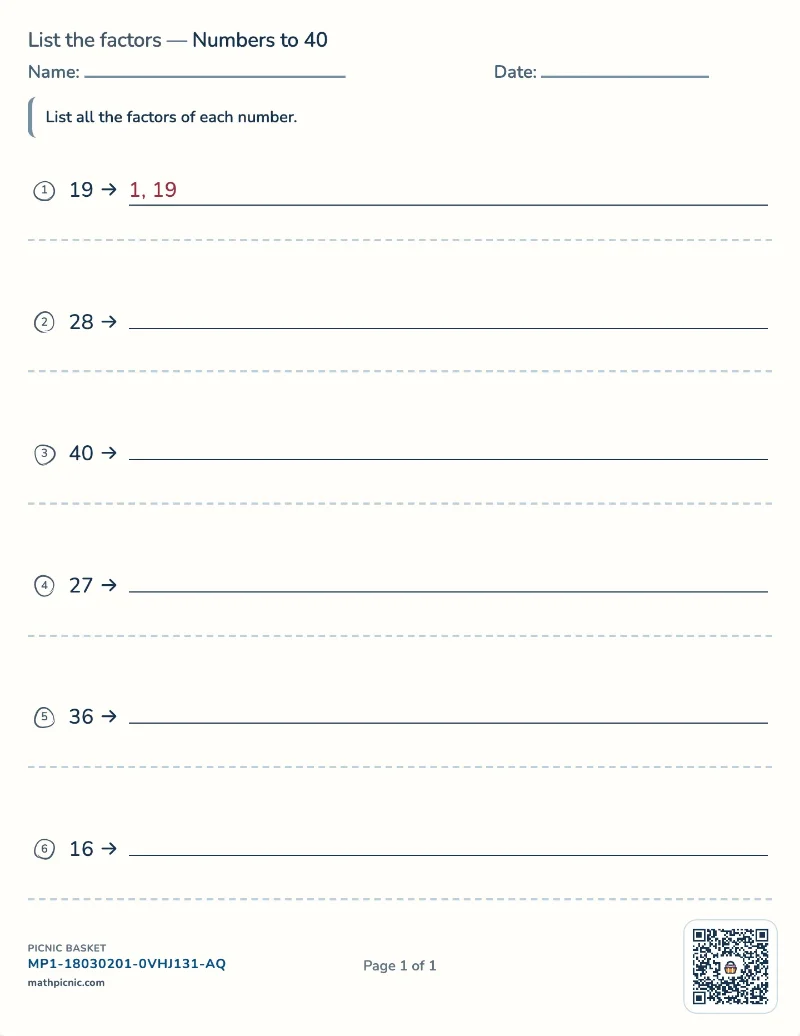
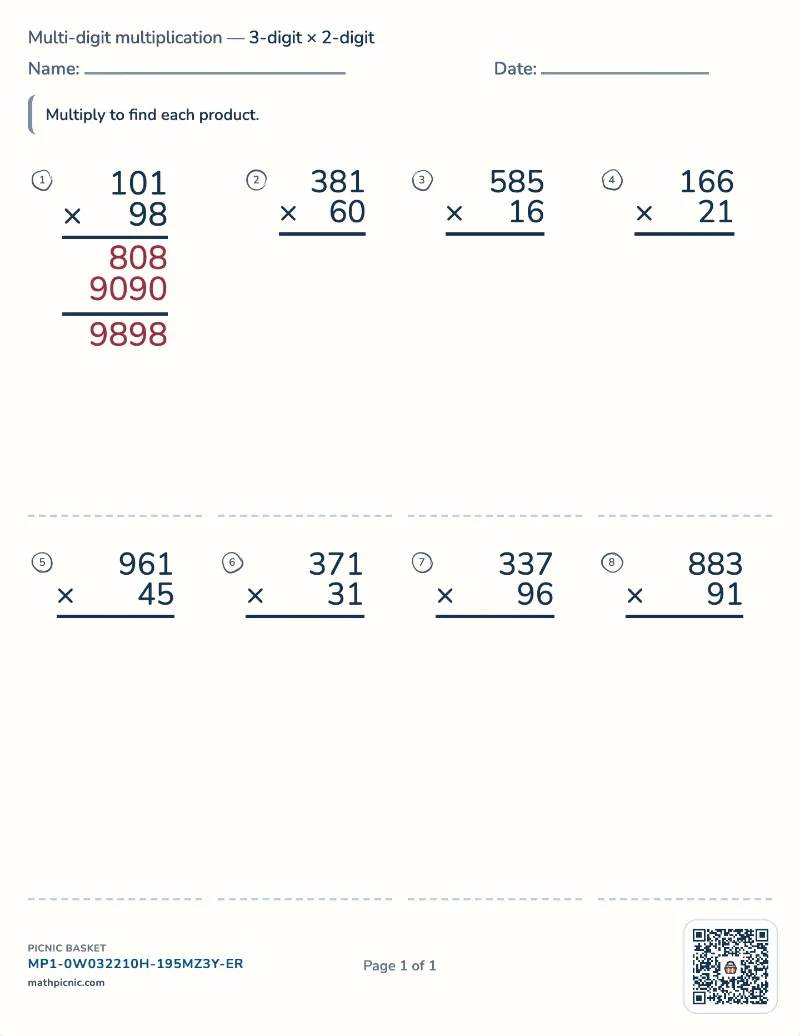
The same two algorithms sized by digit count, so each sheet adds one step to the last.- 2-digit by 1-digit multiplication
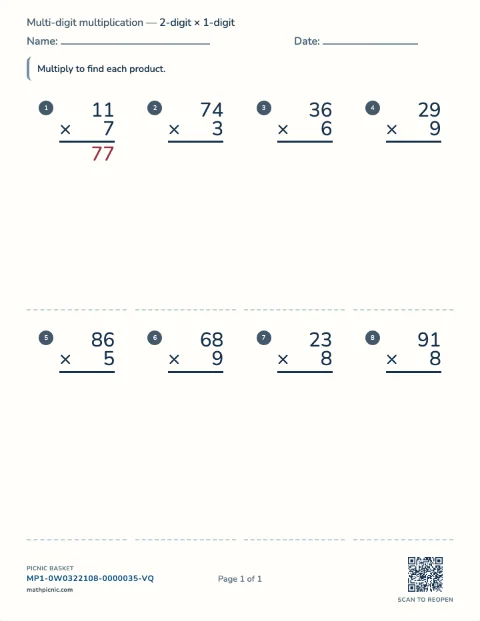 Print 47 × 6 = __
- 3-digit by 1-digit multiplication
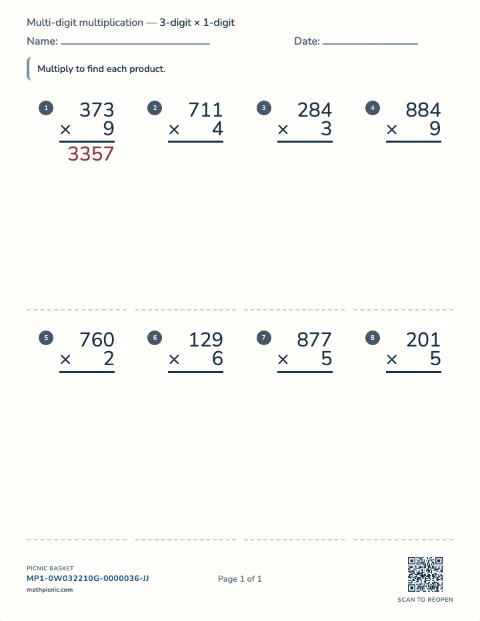 Print 316 × 8 = __
- 2-digit by 2-digit multiplication
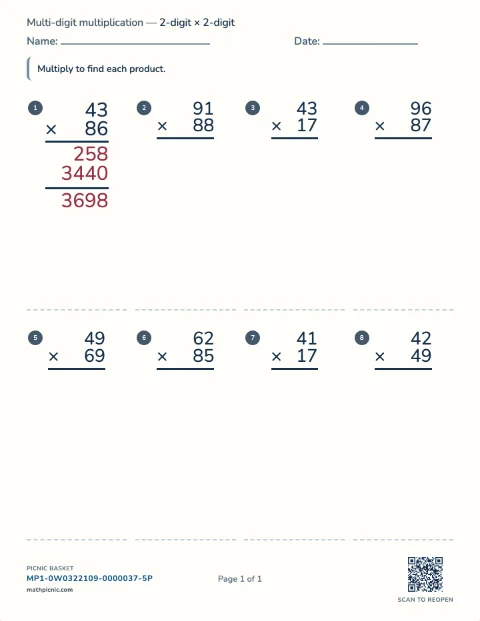 Print 34 × 26 = __
- 4-digit by 1-digit multiplication
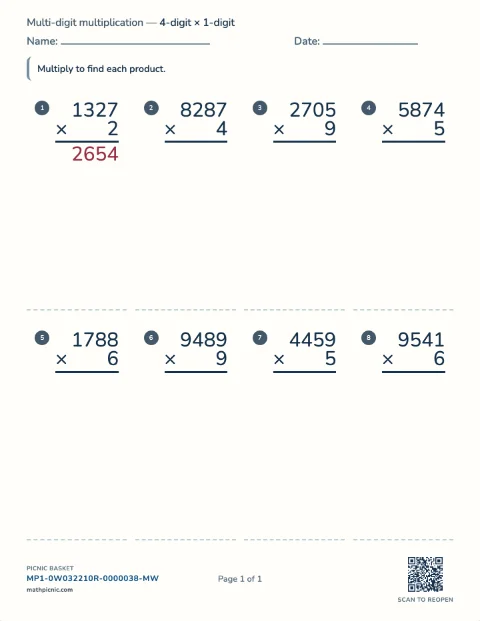 Print 2431 × 6 = __
- 2-digit by 1-digit long division
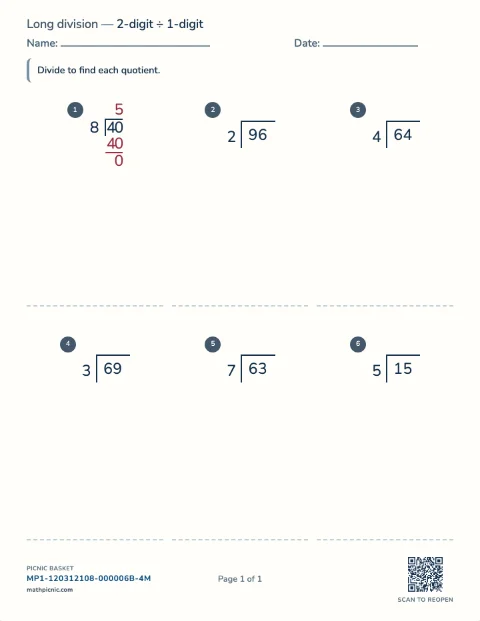 Print 84 ÷ 6 = __
- 4-digit by 1-digit long division
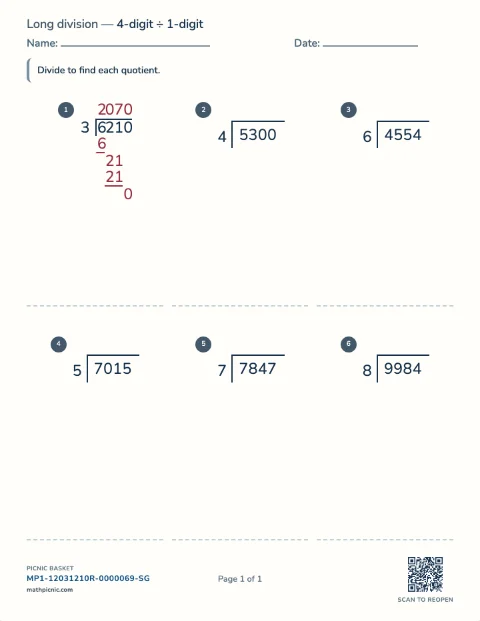 Print 3724 ÷ 4 = __
Step 5 of 15
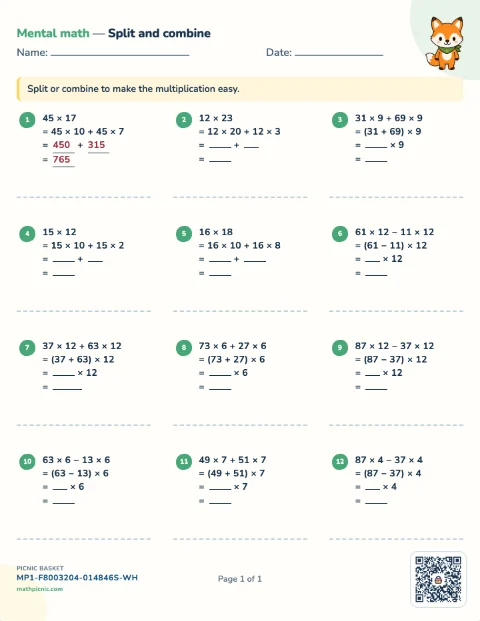
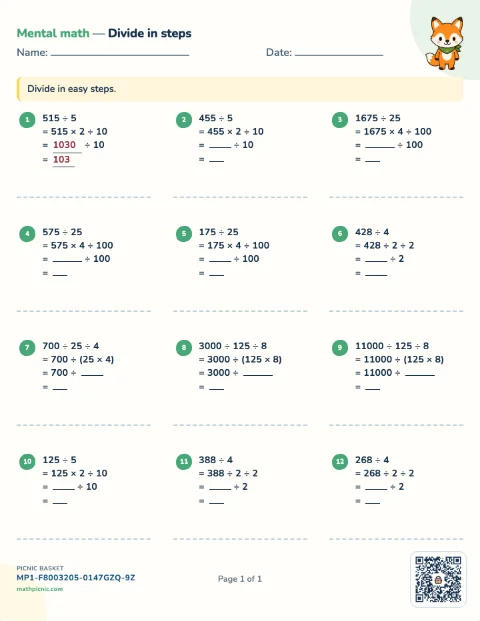
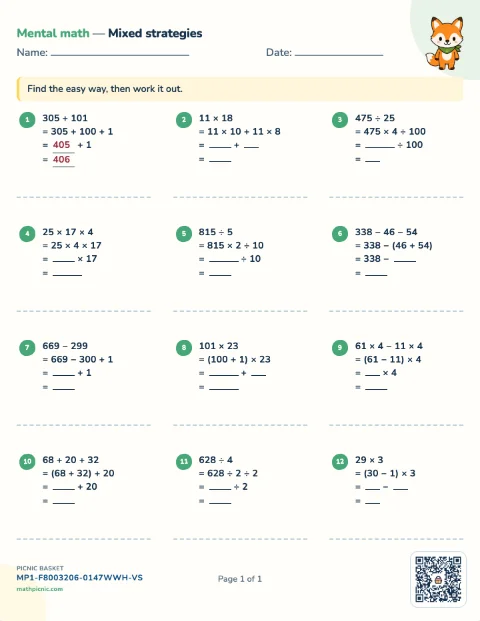
In your head
Multiply and divide without writing it out.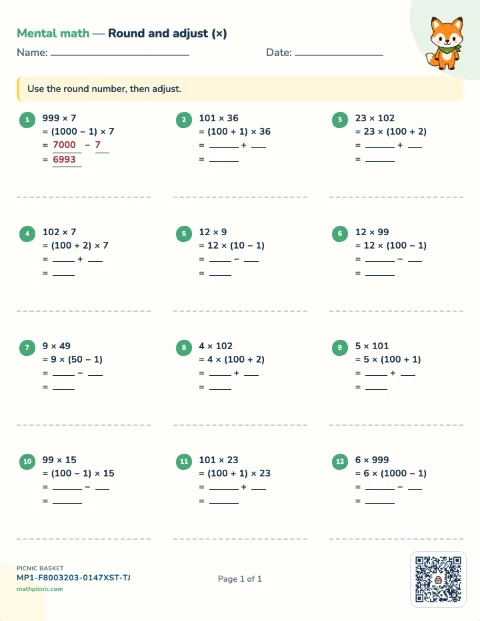
Step 6 of 15
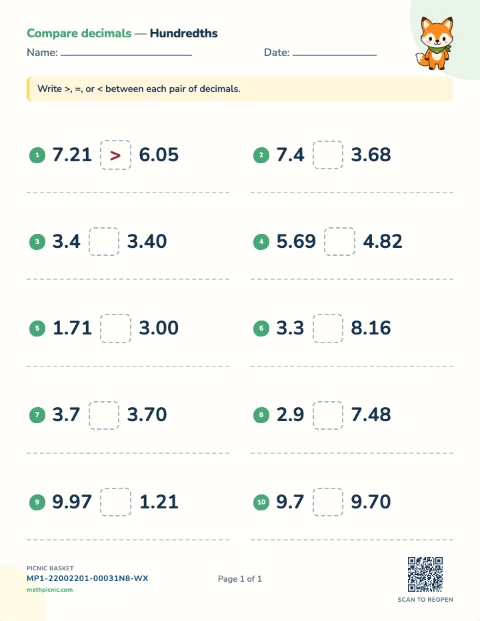
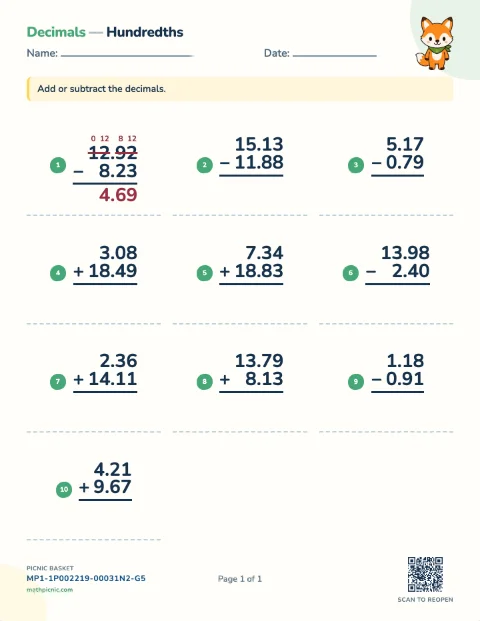
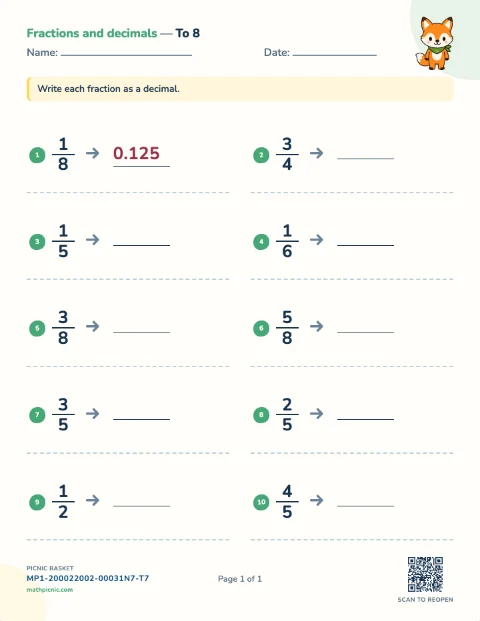
First fraction and decimal arithmetic
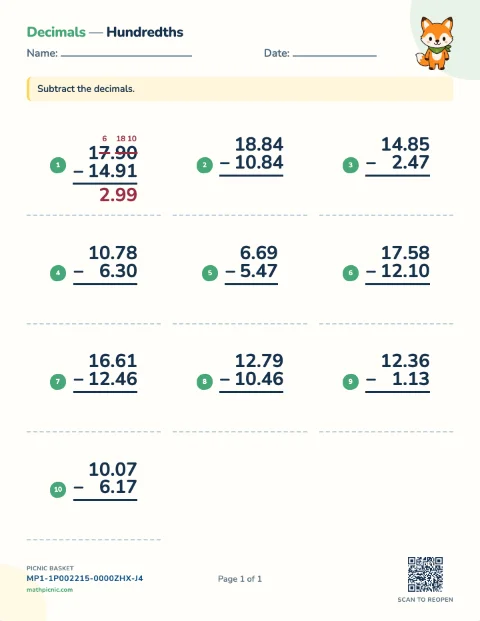
Same-denominator addition, decimals read and compared before they are computed, and the two notations side by side.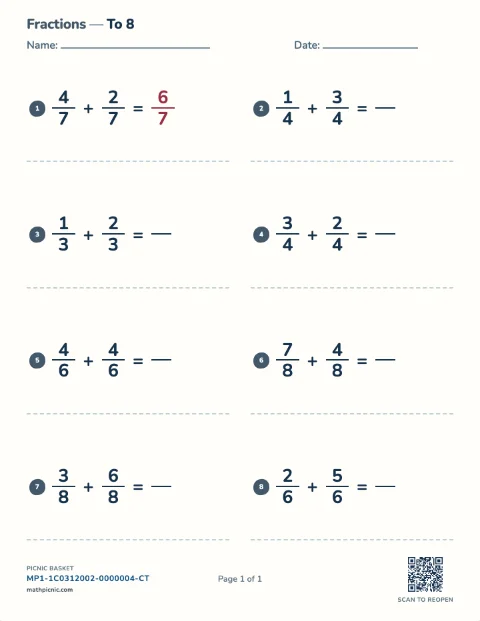
Step 7 of 15
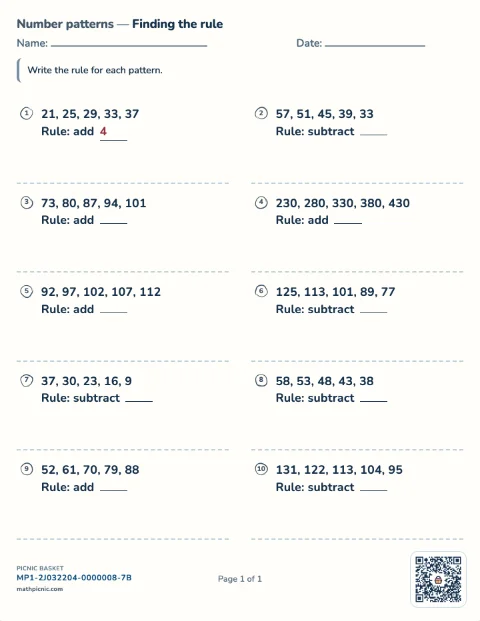
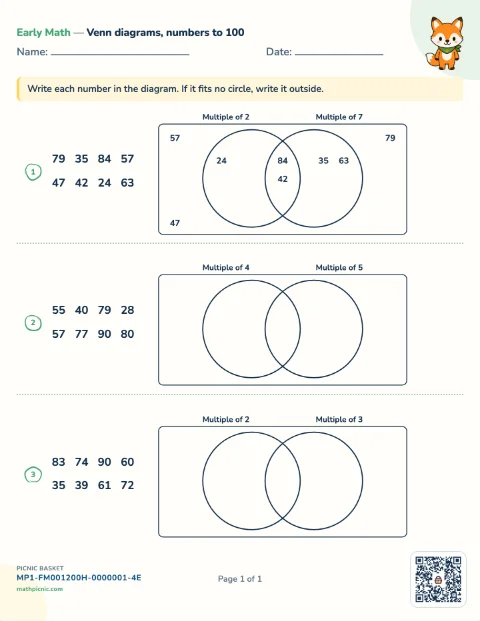
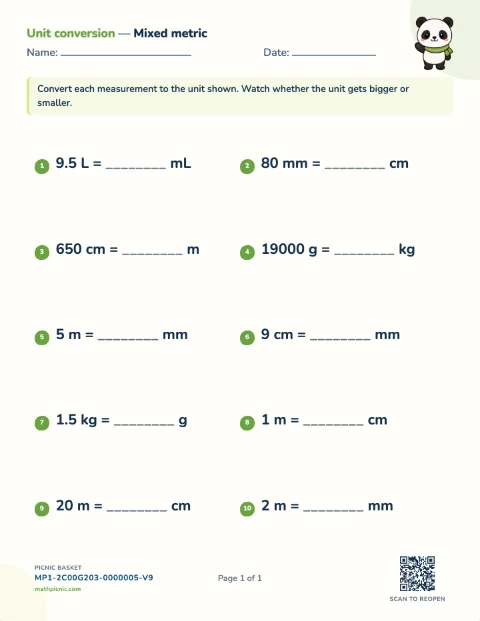
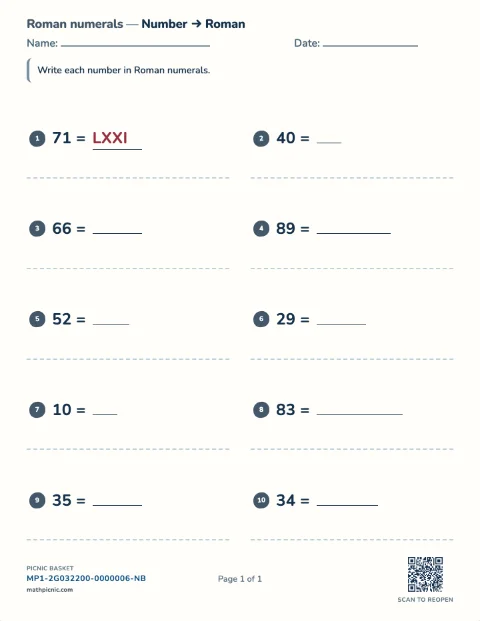
Patterns, units, and numerals
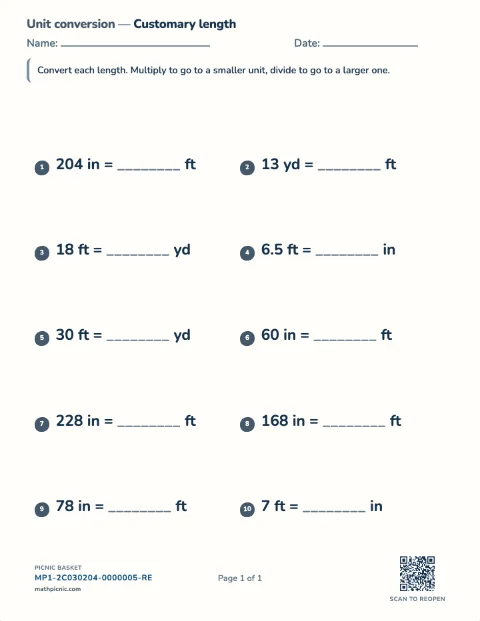
Continue a rule, convert within one measurement system, and read the other numeral system.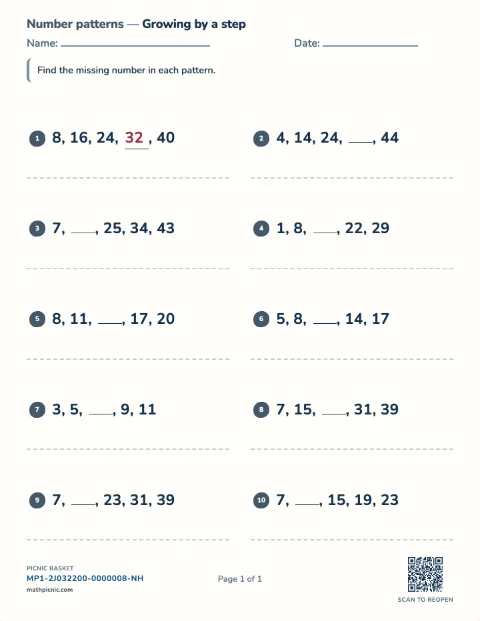
Step 8 of 15
Apply it in word problems
Two-step reasoning, fraction and decimal stories, and writing equations.- Two-step word problems
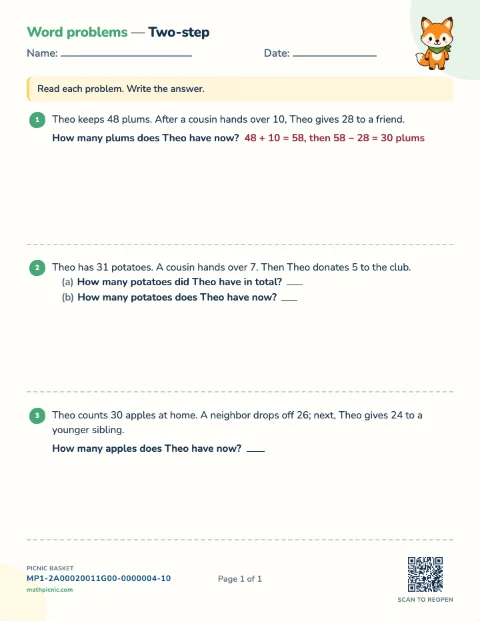 Print 6 × 7, then + 11 = __
- Three-step word problems
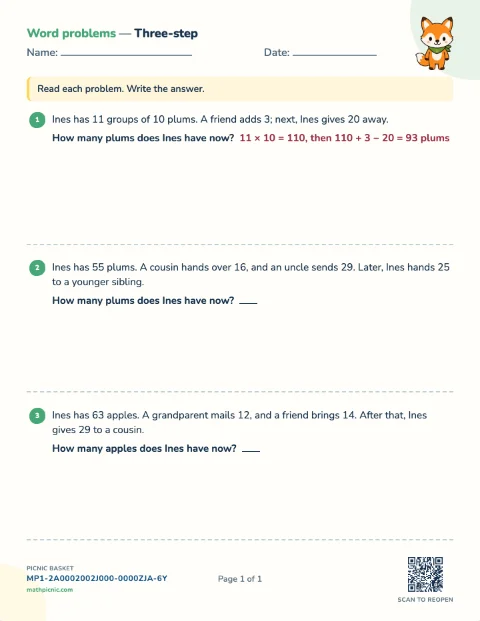 Print three steps, one answer
- Fraction word problems
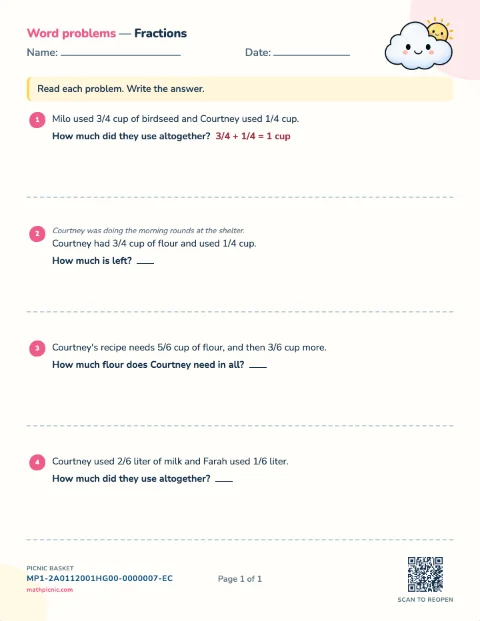 Print 3/8 − 2/8 = __
- Decimal word problems
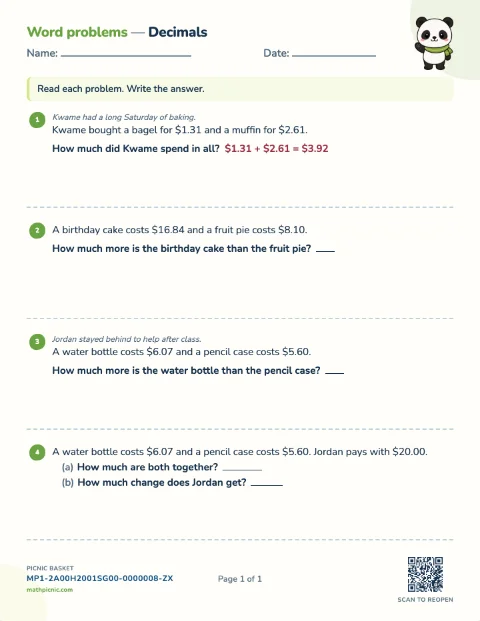 Print $2.75 + $2.25 = __
- Equation word problems
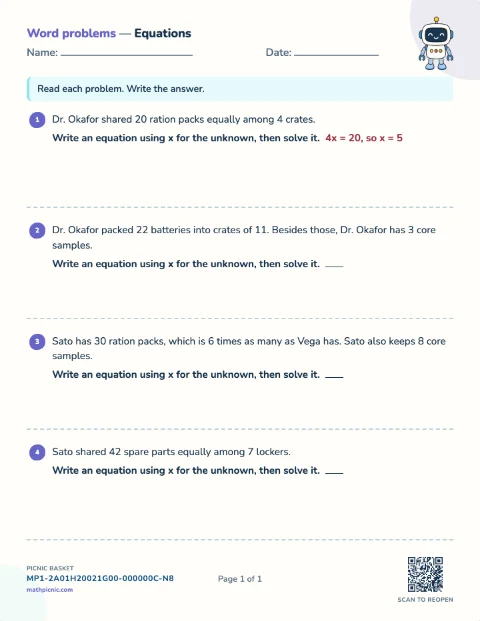 Print x + 12 = 27
- Geometry word problems
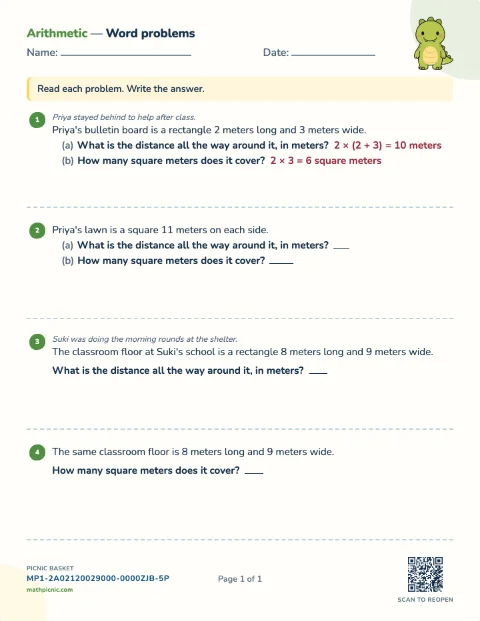 Print a rug 4 m by 11 m
- What the leftover means
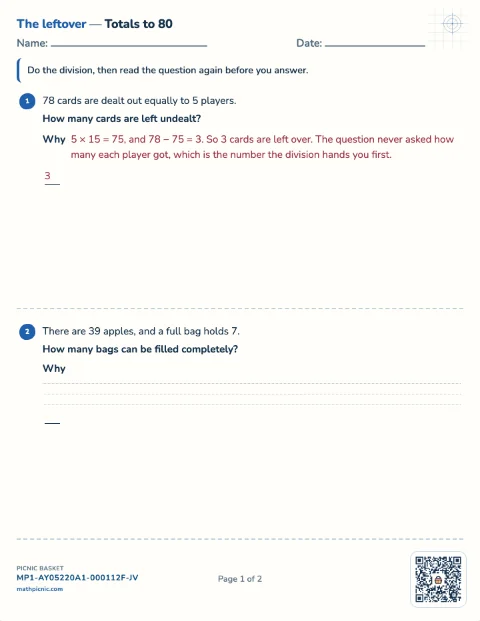 Print 19 eggs, boxes of 3 → __ boxes
Step 9 of 15
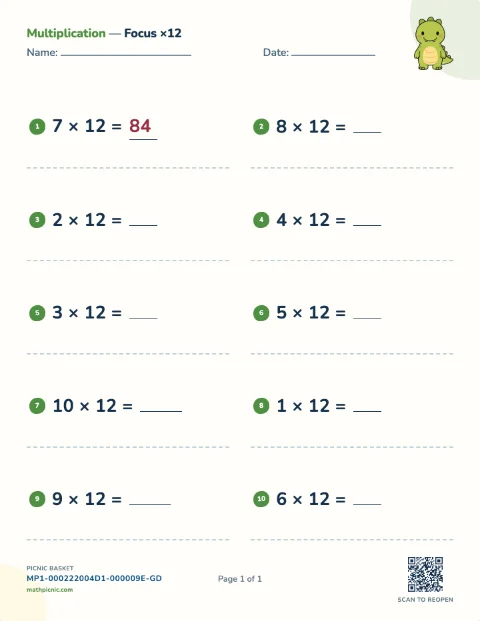
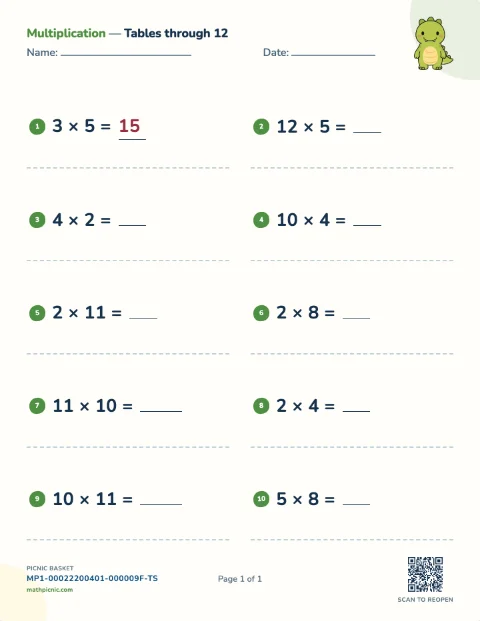
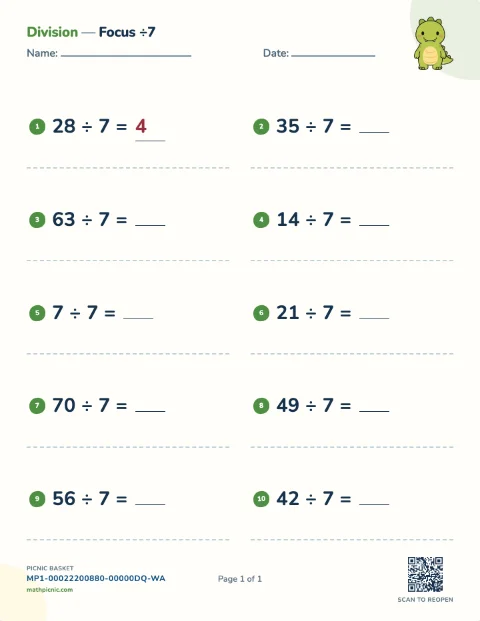
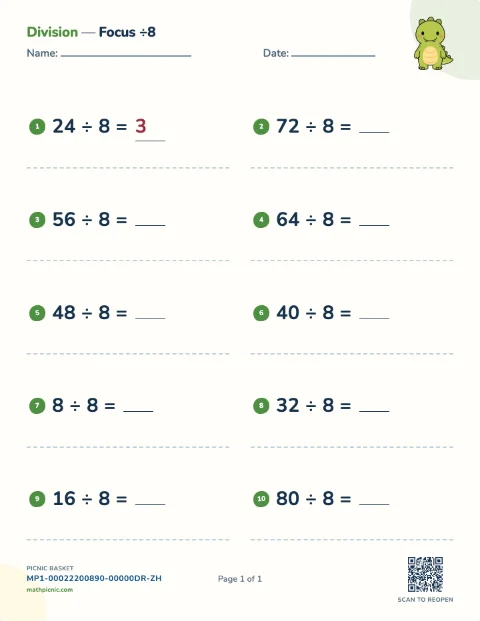
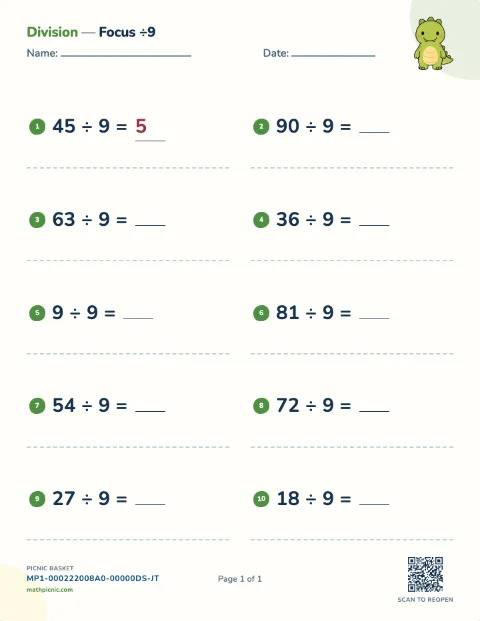
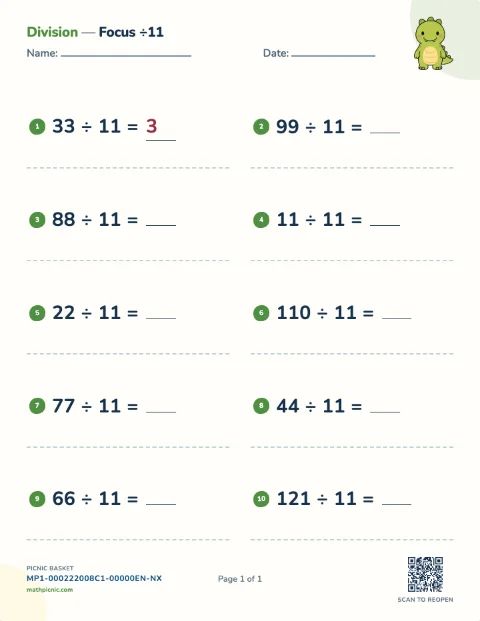
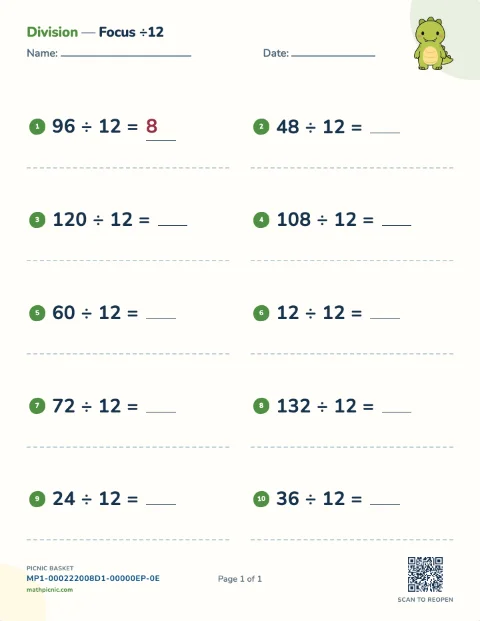
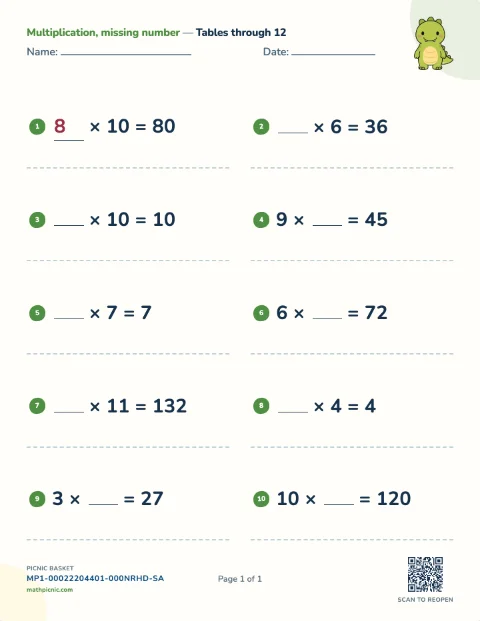
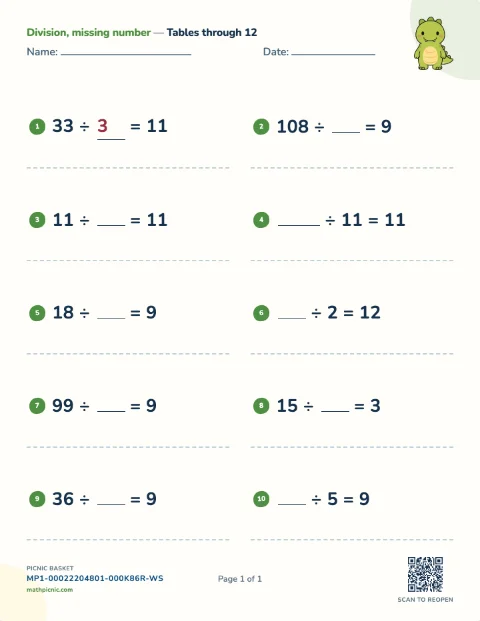
Finish the tables
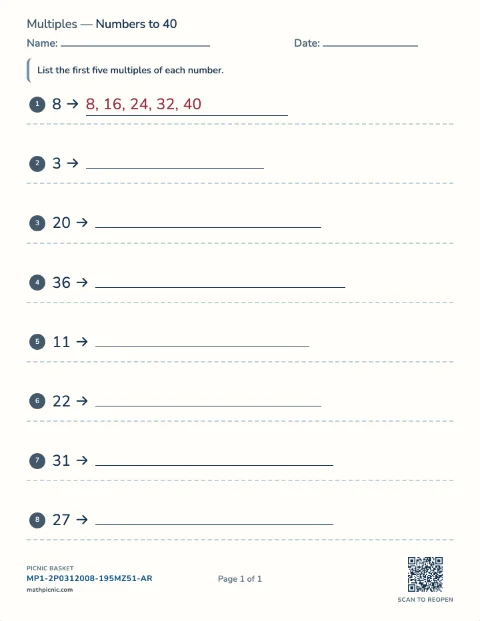
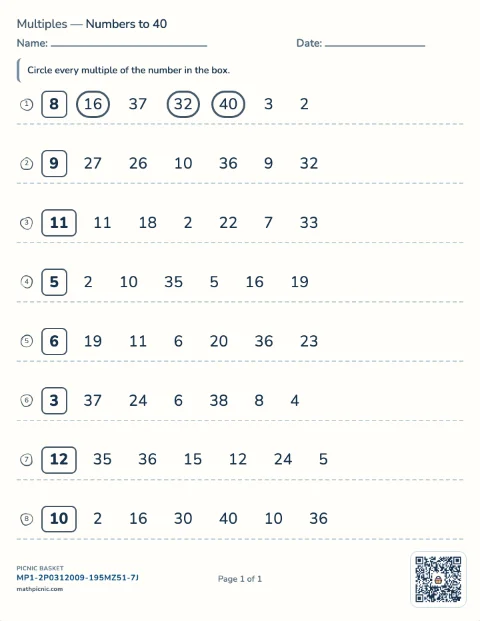
Elevens and twelves, and every divisor grade three did not reach.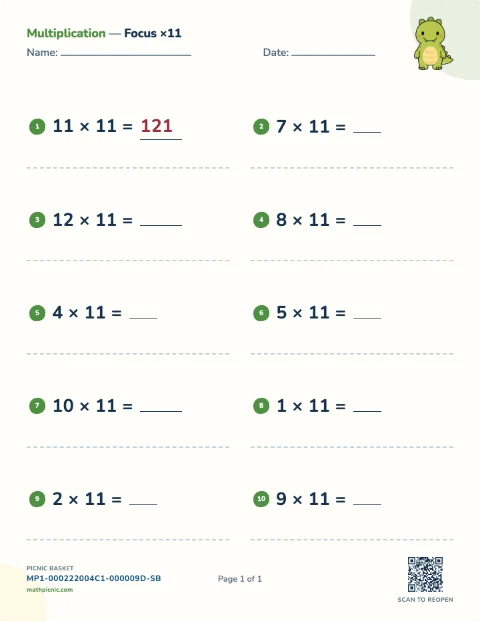
Step 10 of 15
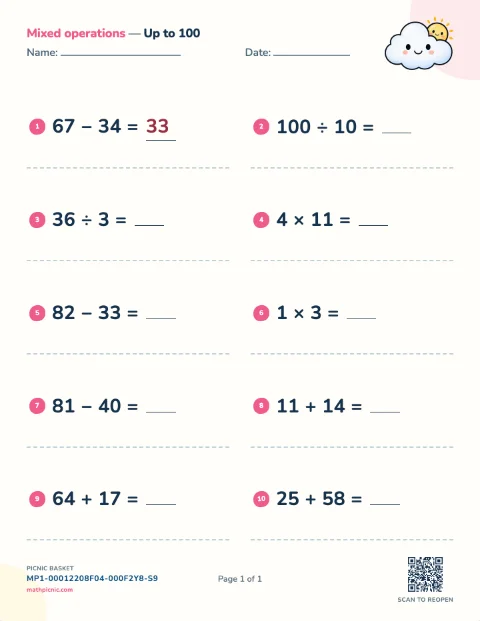
Reading the sign
Mixed operations and the blank that sits in the middle of the sum.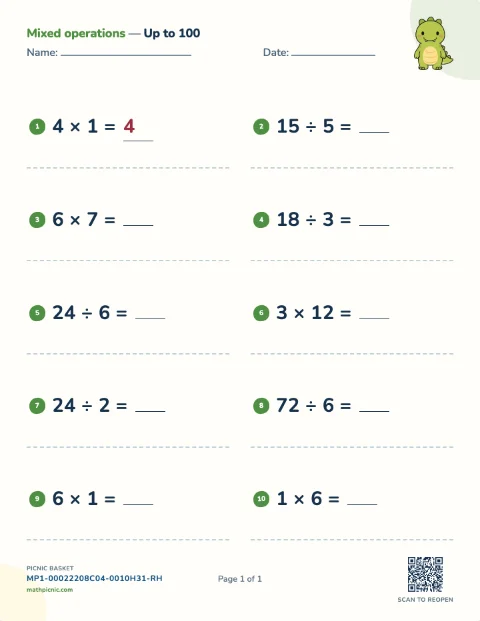
Step 11 of 15
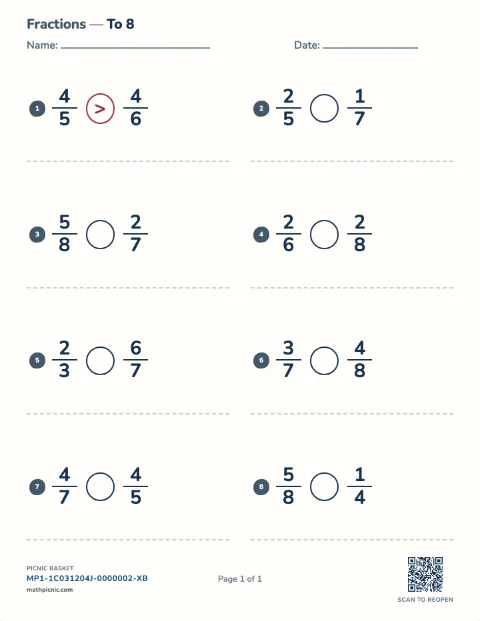
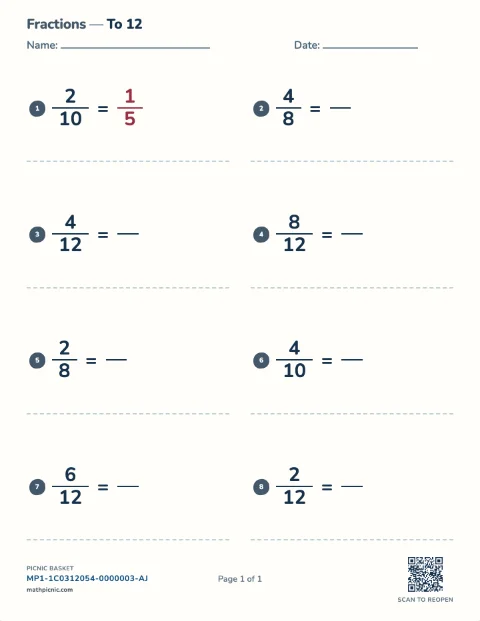
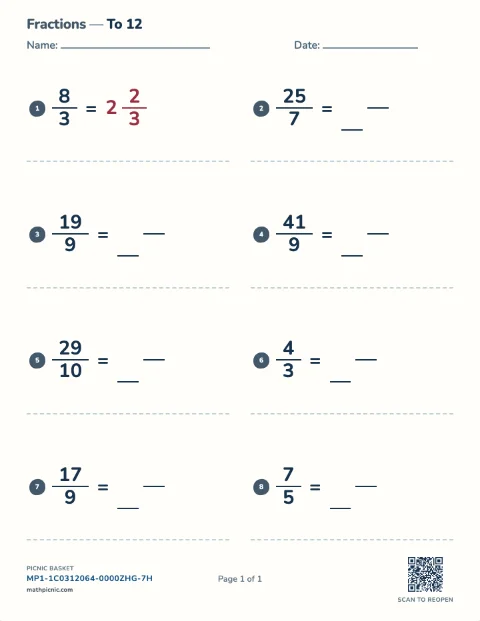
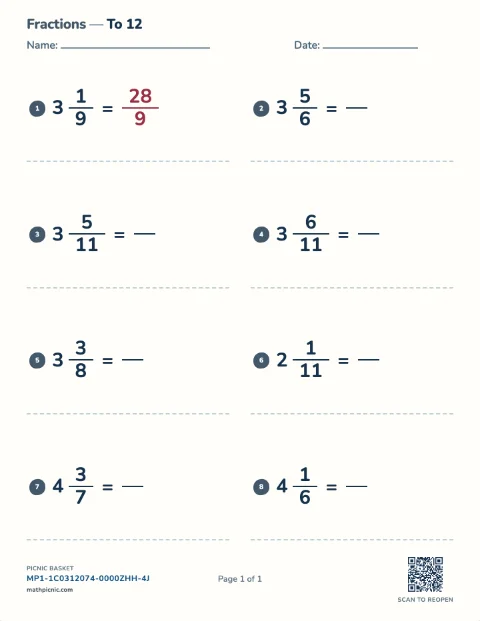
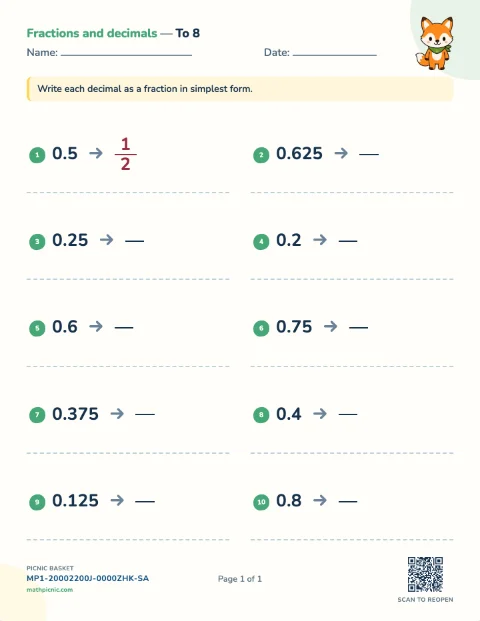
Equivalent fractions and the two spellings
Same amount, different numbers — and a fraction bigger than one, written both ways.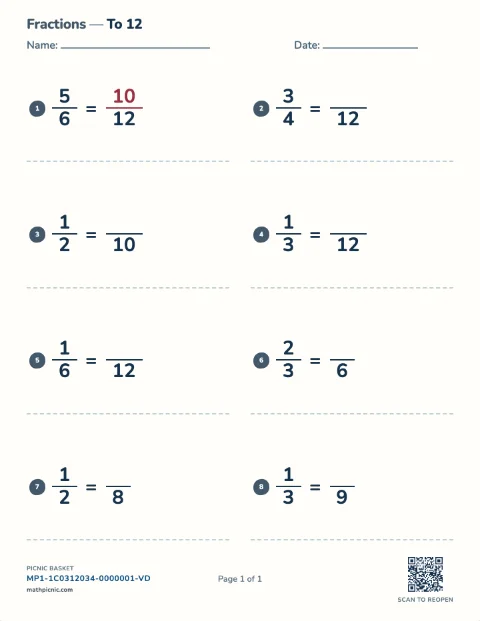
Step 12 of 15
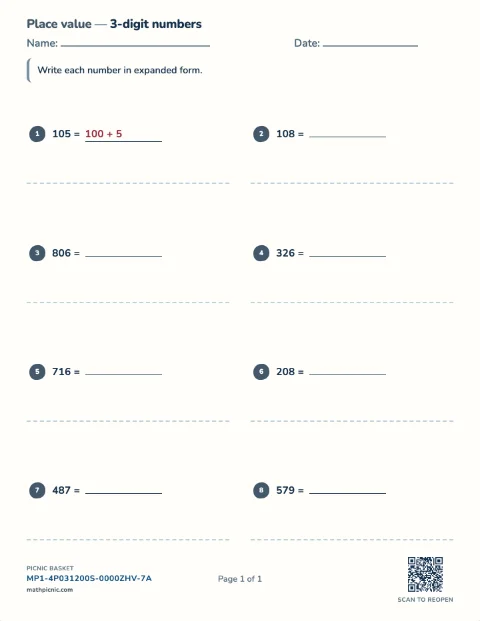
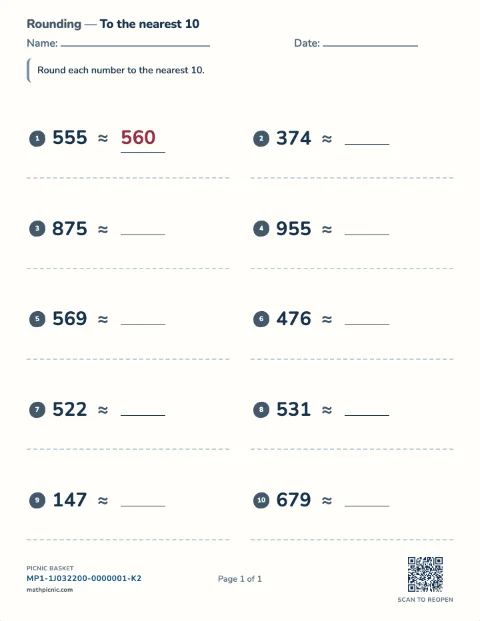
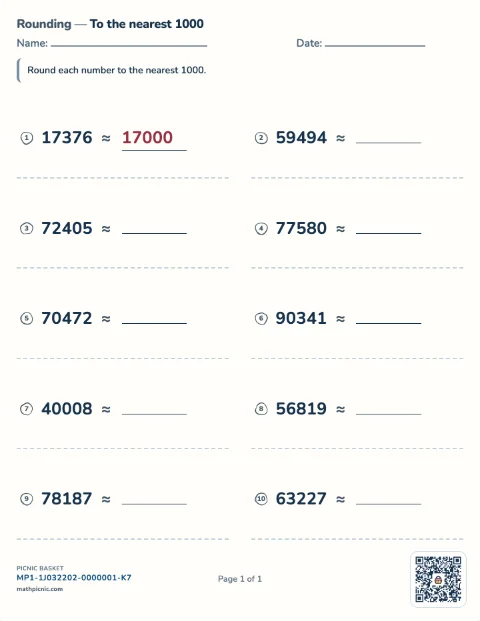
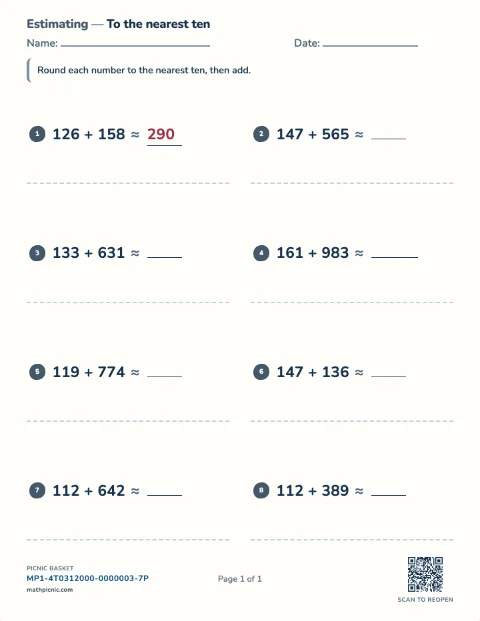
Place value and rounding
What a digit is worth, written out, and the nearest ten or hundred.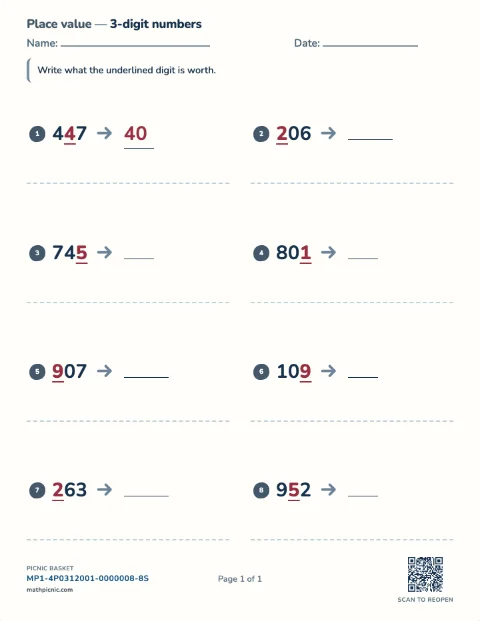
Step 13 of 15
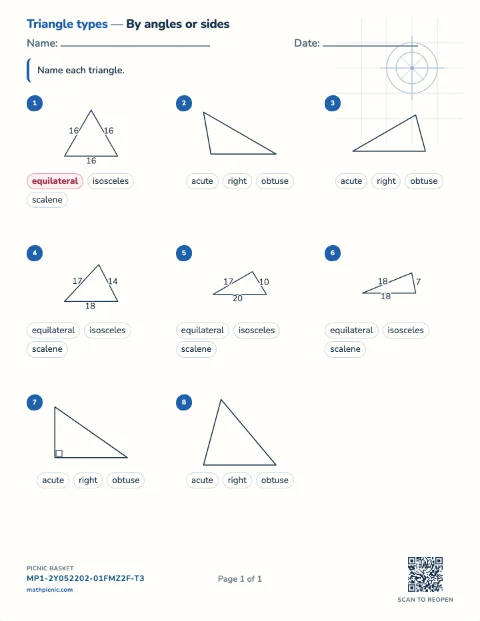
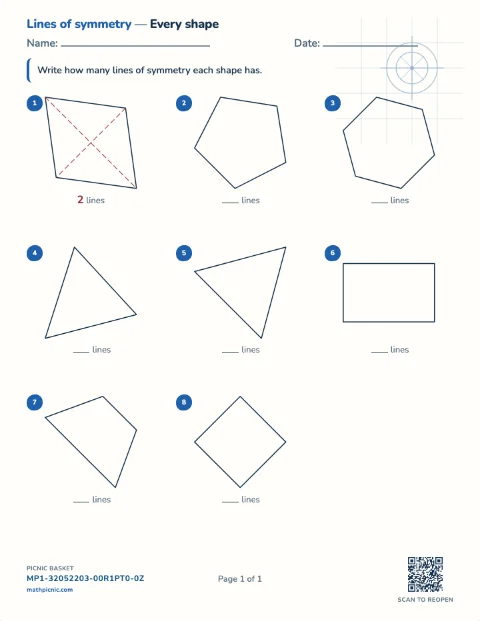
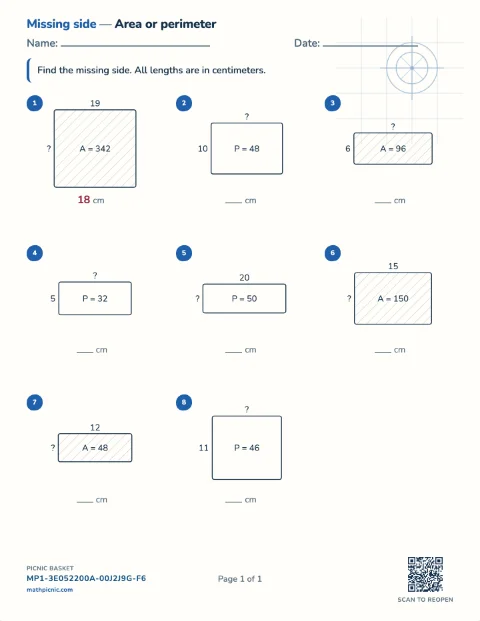
Angles, symmetry and a missing side
Grade four’s geometry: naming what you see, and one length you have to work back to.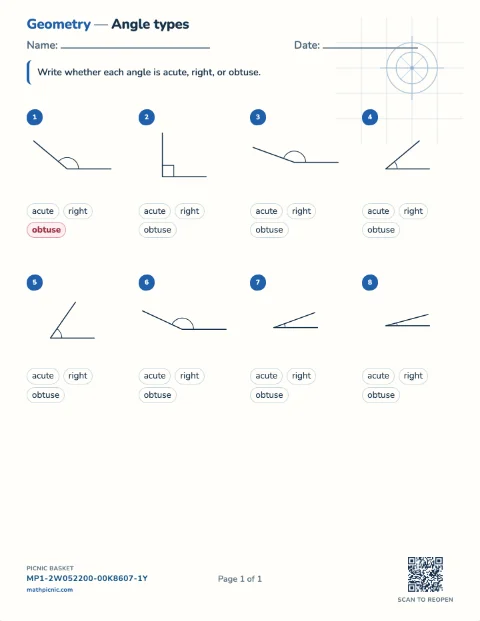
Step 14 of 15
Decimals arrive
Points lined up, and the customary units alongside the metric ones.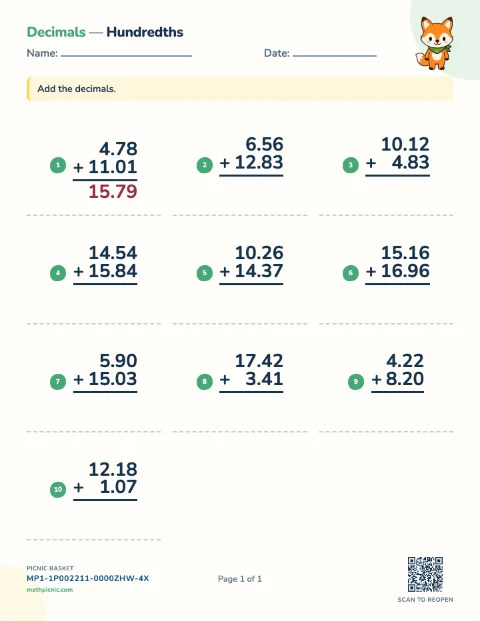
Step 15 of 15