FractionsTo 12
Name: Date:
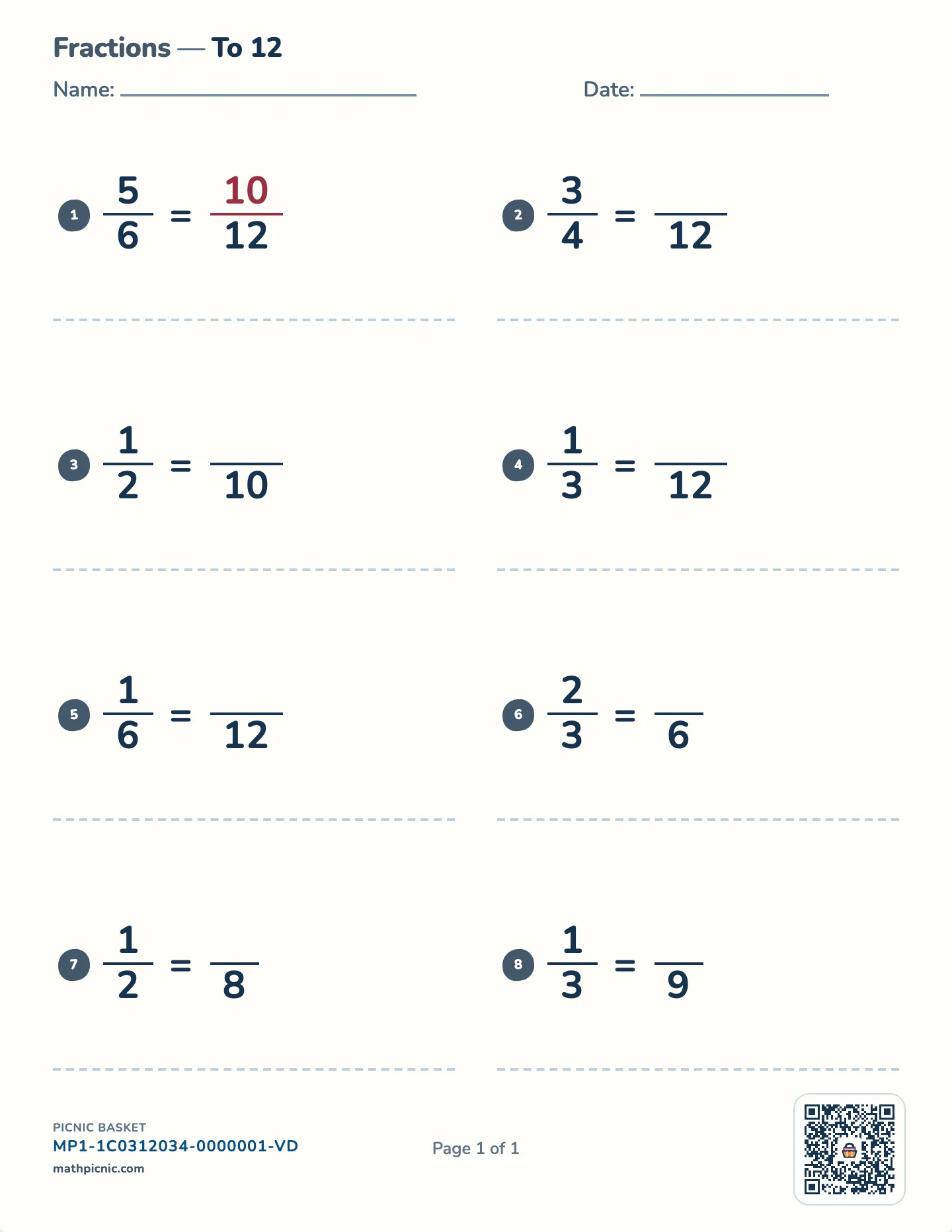
156=12
234=12
312=10
413=12
516=12
623=6
712=8
813=9

Two fractions can name the same amount even when the numbers look nothing alike — one half is the same slice as four eighths. These free printable worksheets show a fraction beside its equal partner with the top number blank, and ask for the missing numerator.
Kid stuck on one? You don’t just get the sheet.
The answer key prints on a separate page.
Each pair is built from a real relationship, not two fractions thrown together: the second denominator is always a multiple of the first, so a whole-number multiplier exists and the missing numerator is never a fraction of its own. One half becomes two fourths, three sixths, four eighths — the same amount cut into more pieces. Every fraction is drawn as a real stacked fraction, a numerator sitting over a denominator, never a typed 1/2.
The move that solves every question is the same: whatever you multiply the bottom by, multiply the top by too. If the denominator grew from two to eight it was multiplied by four, so the numerator does the same, and one times four is four. Multiplying top and bottom by one number changes how the fraction looks without changing how much it is worth.
One question from this sheet, worked through a step at a time.
=