11th grade math worksheets
Need the right level, not just the grade label? Start wherever your child feels comfortable.
Logarithms
Grade 10–11
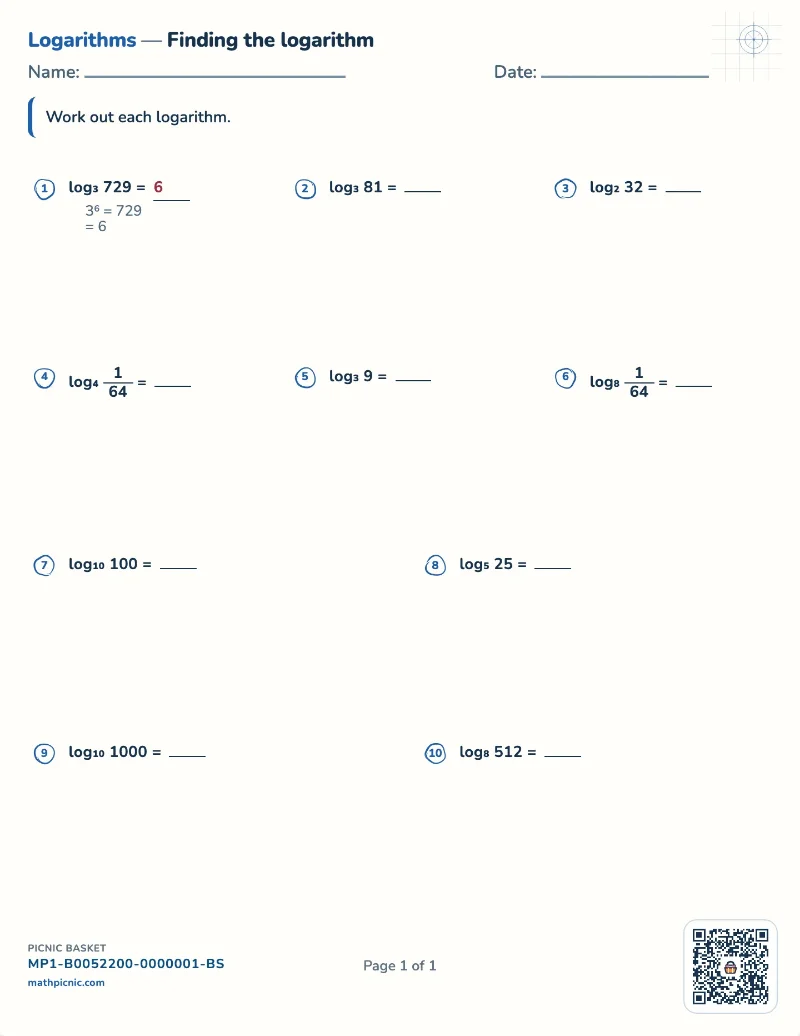
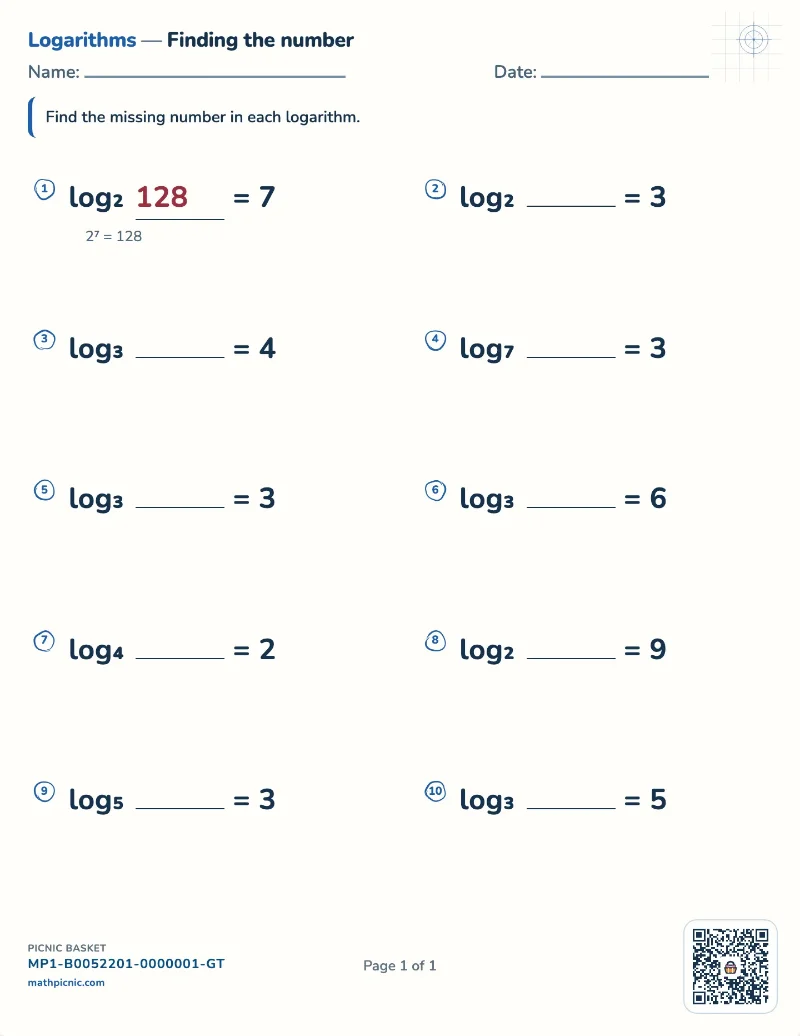
Read a logarithm as the power its base is raised to, in both directions
Customize this sheet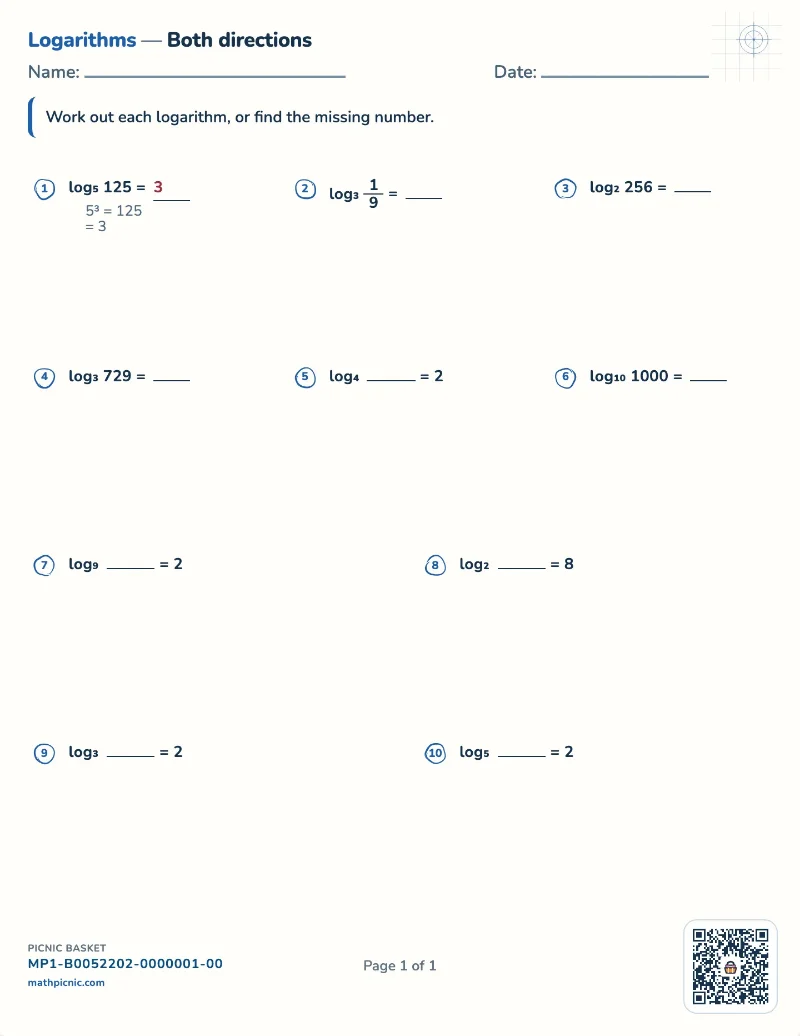
What to practice this year
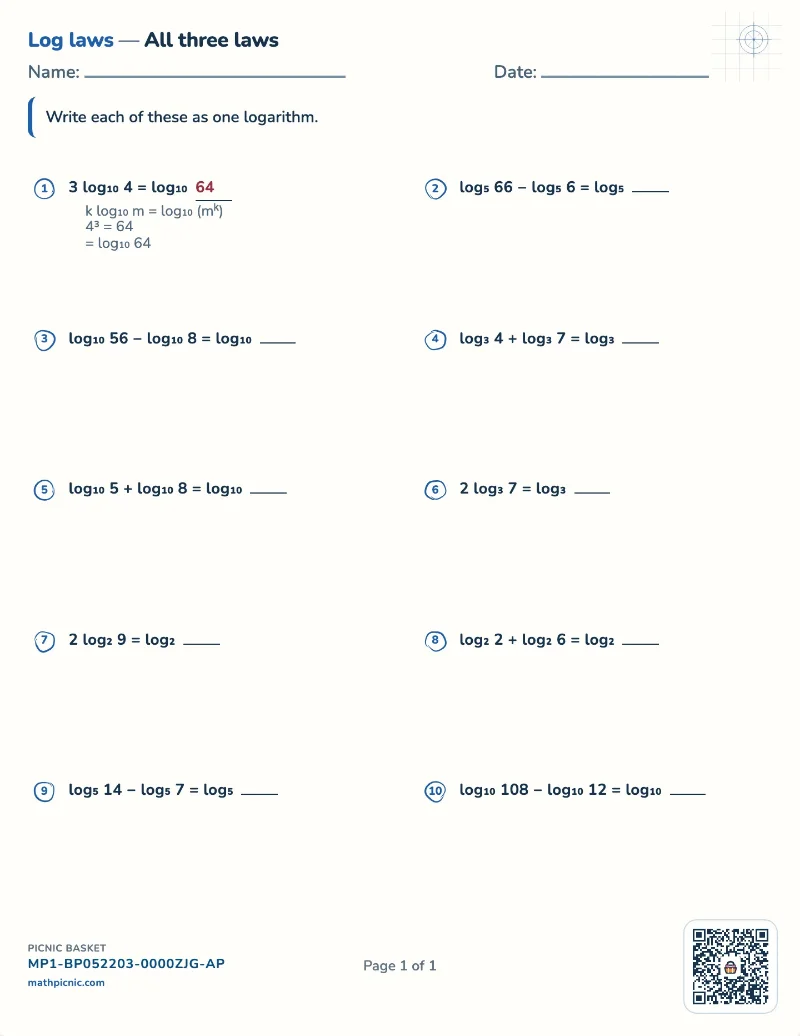
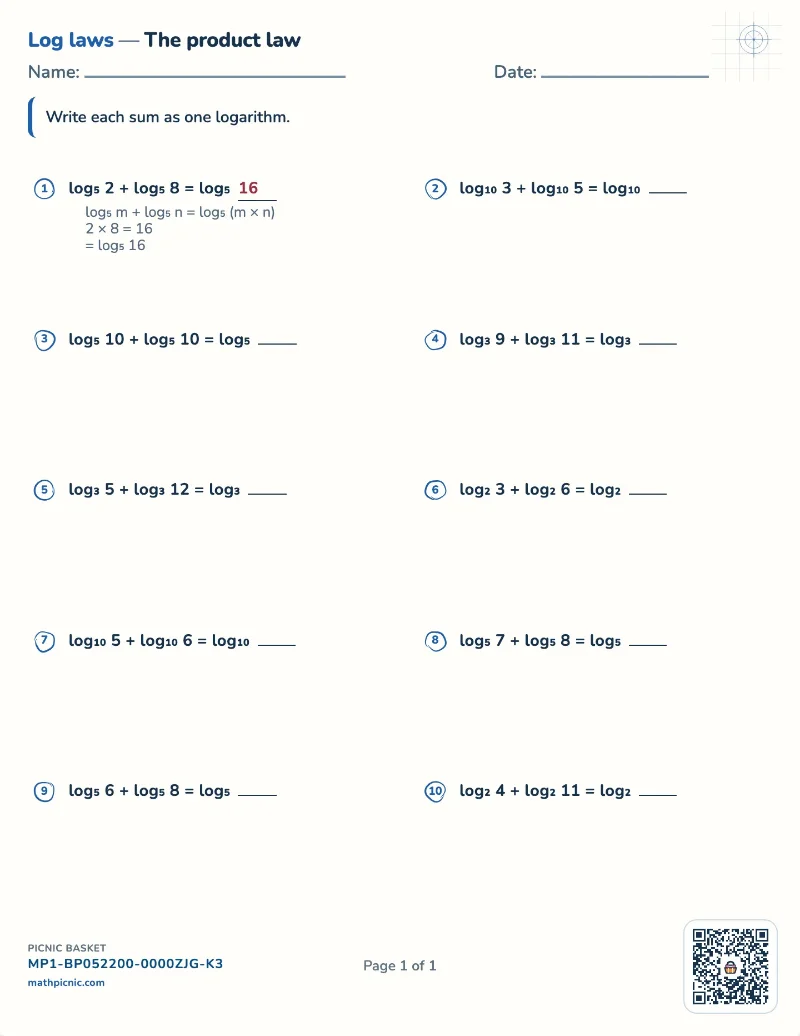
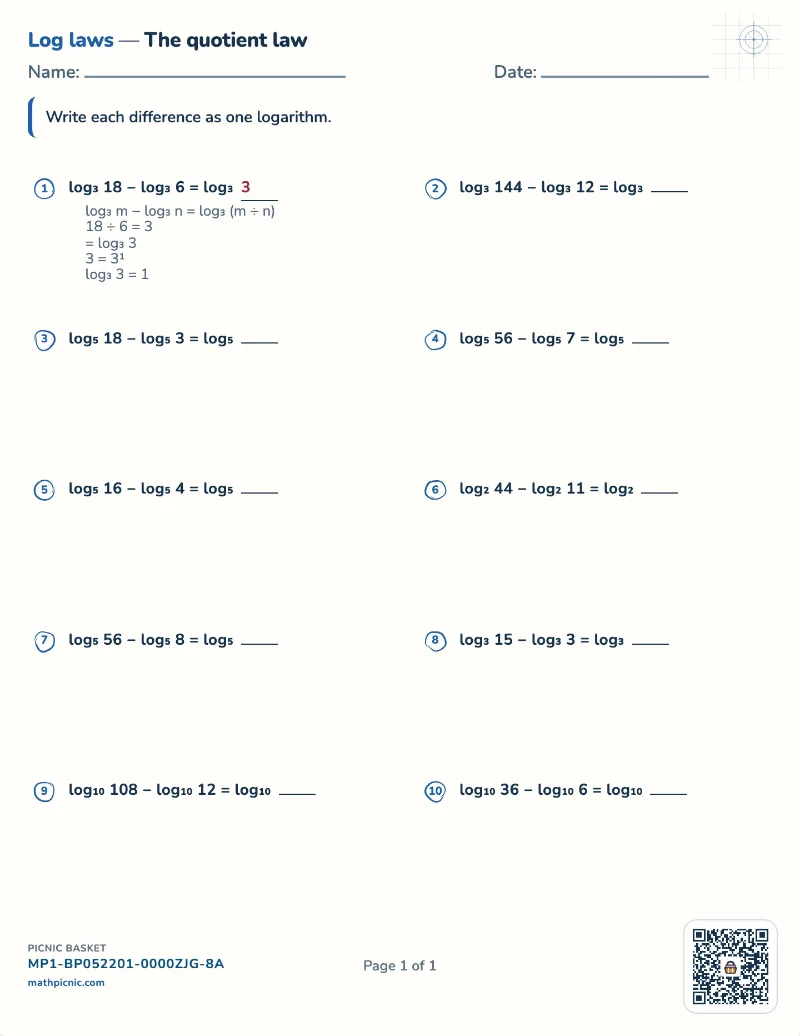
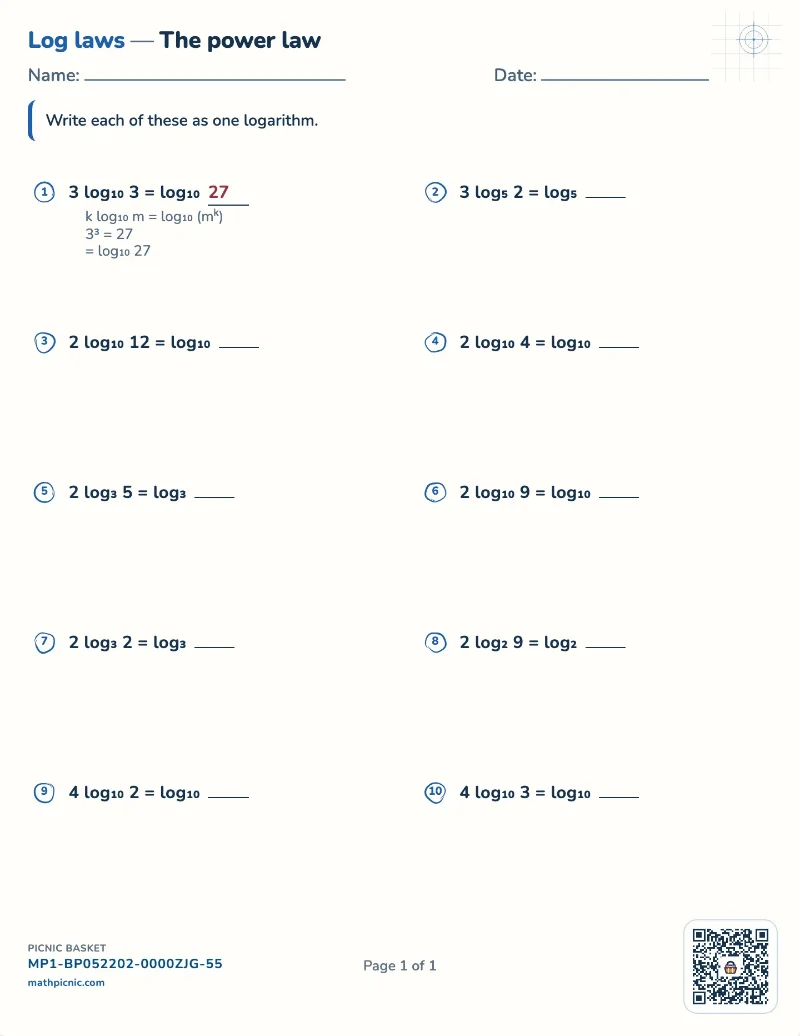
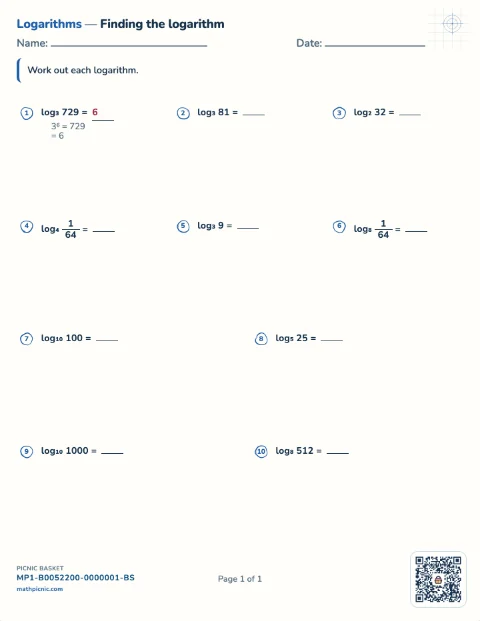
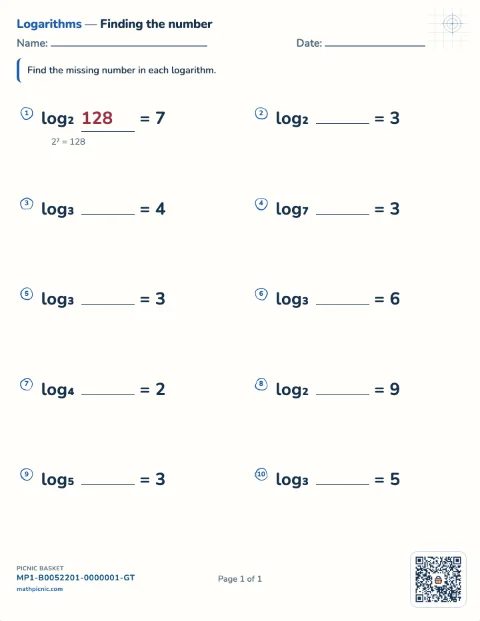
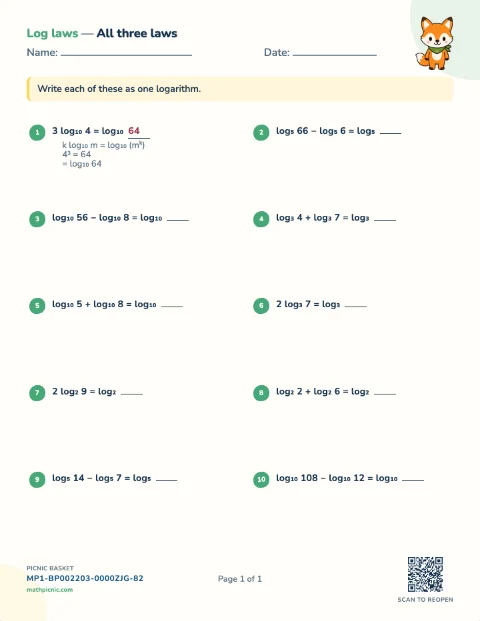
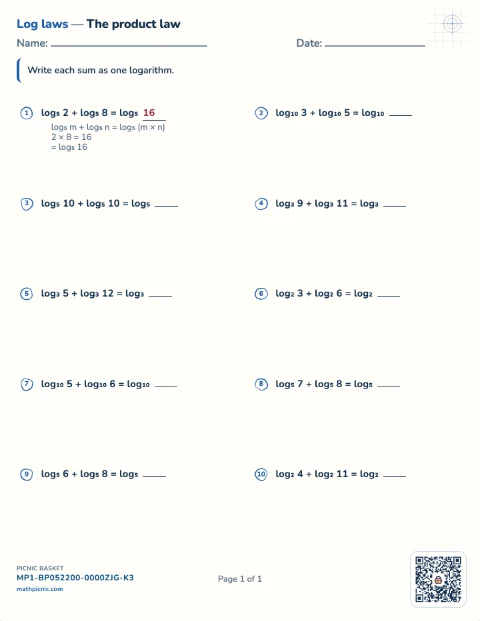
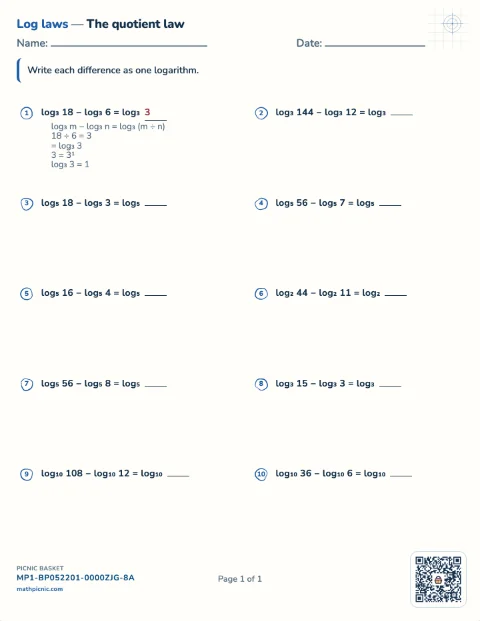
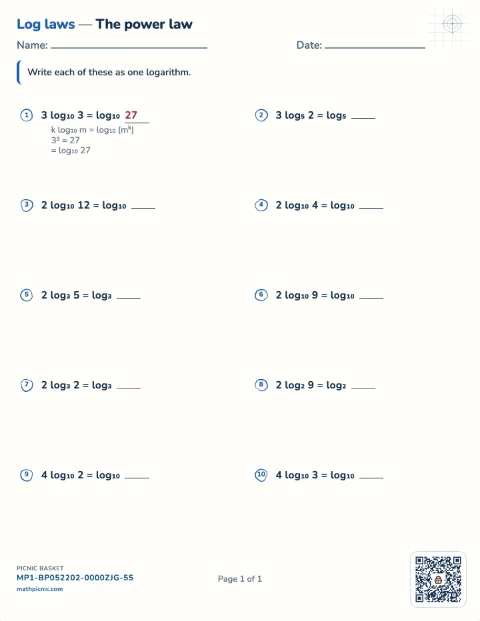
A logarithm is an inverse before it is anything else — log₂ 8 = 3 asks what power of 2 gives 8, and a student who reads it that way never has to memorize what the notation means. The three laws follow from the exponent rules one for one, which is why they are drilled straight after rather than kept as a separate list.
Why these skills come next
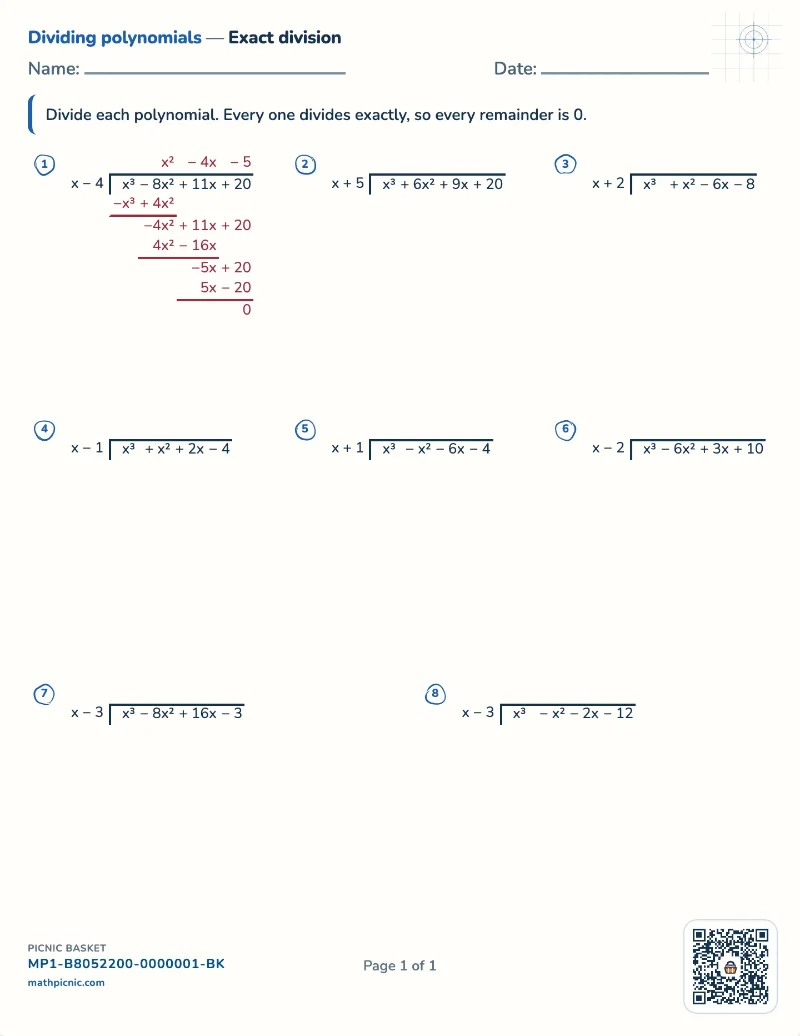
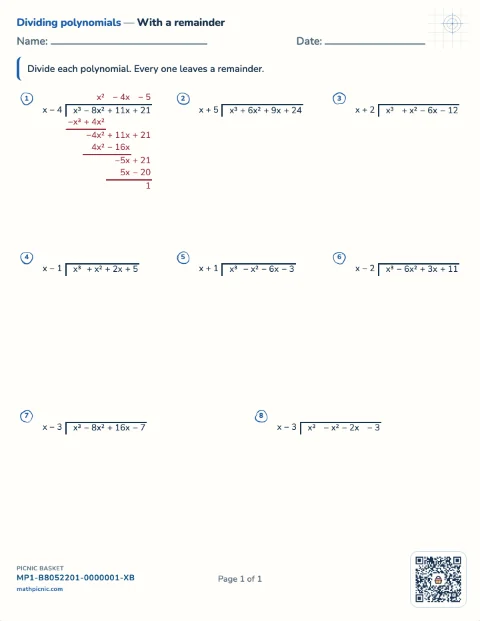
Dividing a polynomial is long division with letters, and it behaves: the quotient and the remainder mean what they mean with numbers, and a remainder of zero says the divisor is a factor. That is the fact the factor theorem is built on.
Nothing matches that. Try a skill, a number, or a topic.
Step 1 of 8
Logarithms
A logarithm is an exponent. Evaluate them, then use the three laws.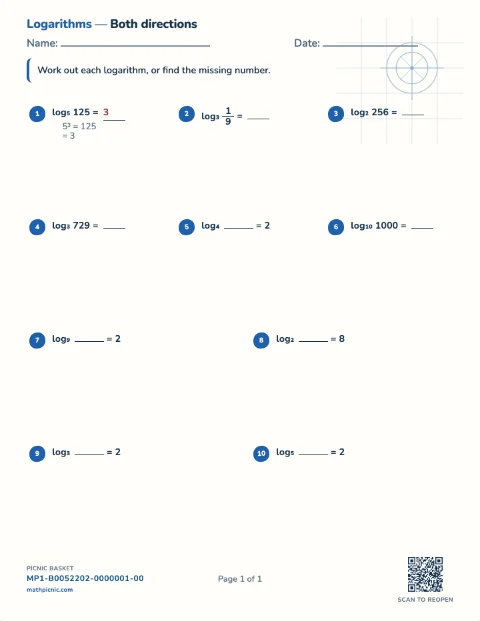
Step 2 of 8
Polynomials
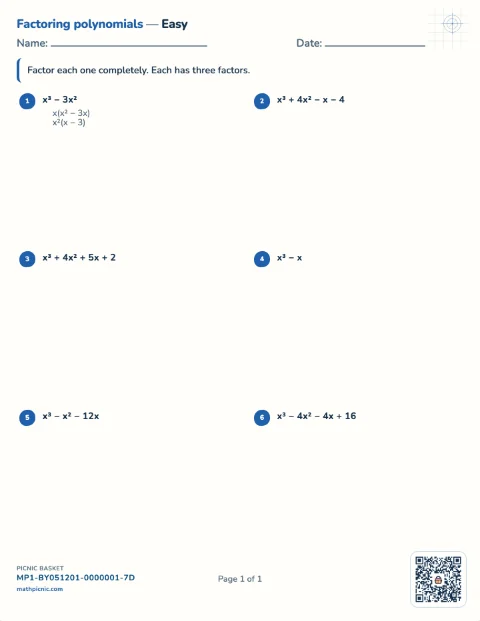
Long division with letters, what the remainder tells you, and a cubic taken apart.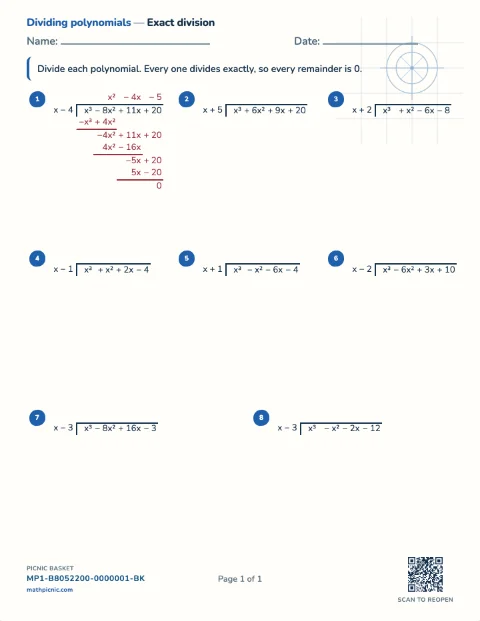
Step 3 of 8
Rational expressions
Factor first, then cancel. Then multiply, divide, and solve them.- Rational expressions
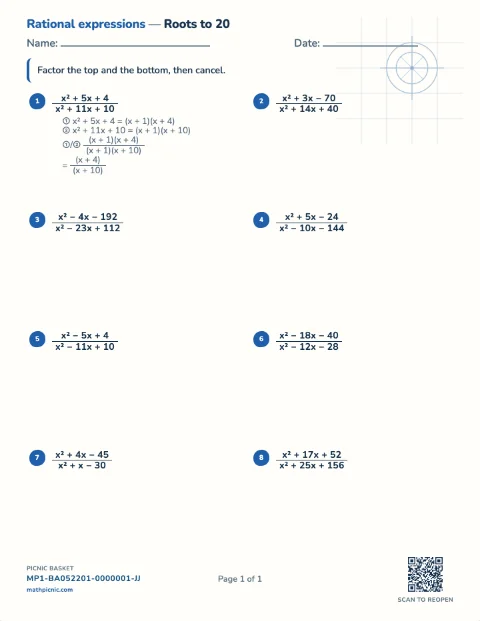 Print (x² − 9) / (x² + x − 12)
- Multiplying rational expressions
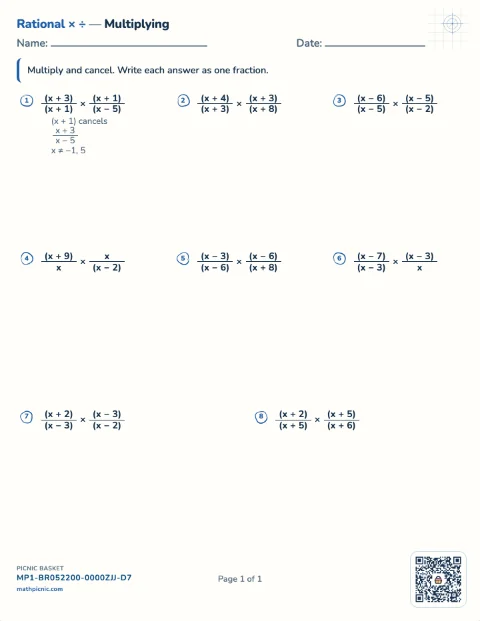 Print (x + 3)/(x + 5) × (x + 5)/(x − 2)
- Dividing rational expressions
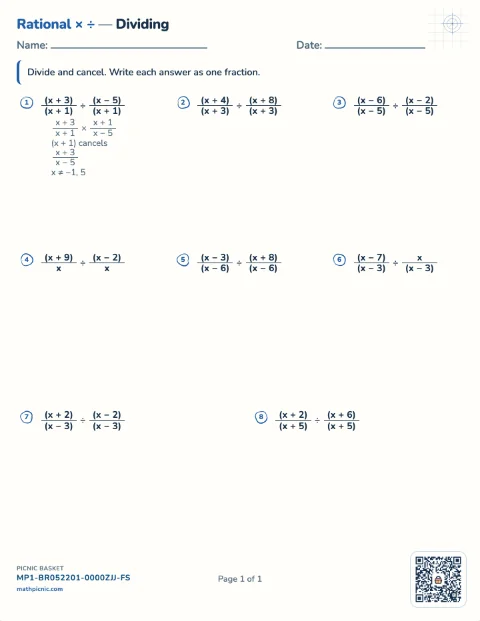 Print (x + 3)/(x + 5) ÷ (x − 2)/(x + 5)
- Multiplying and dividing rational expressions
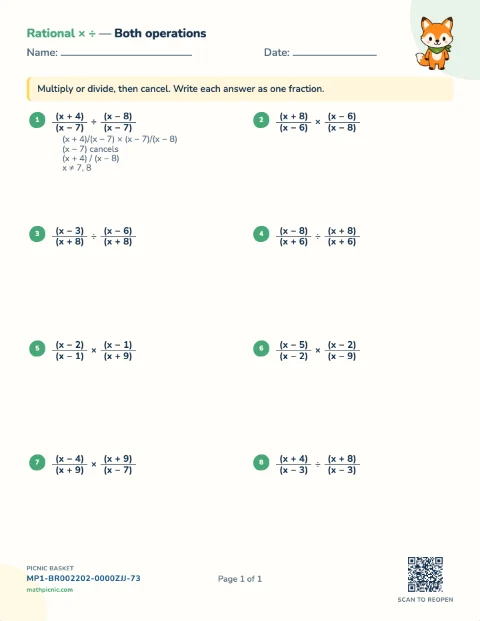 Print (x + 3)/(x + 5) × (x + 5)/(x − 2)
- Solving rational equations
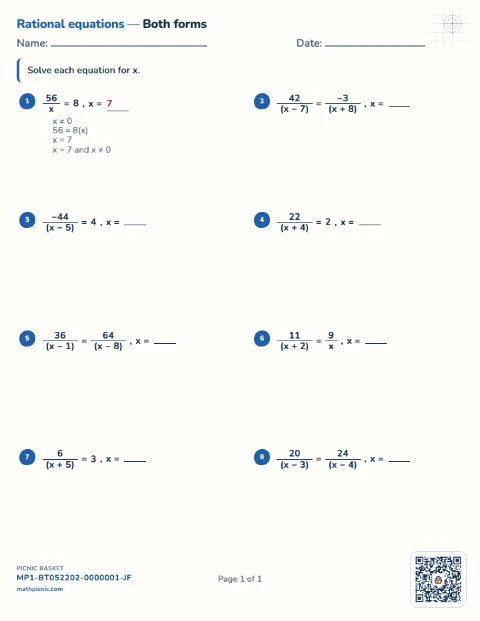 Print 12/(x + 3) = 4
Step 4 of 8
Functions
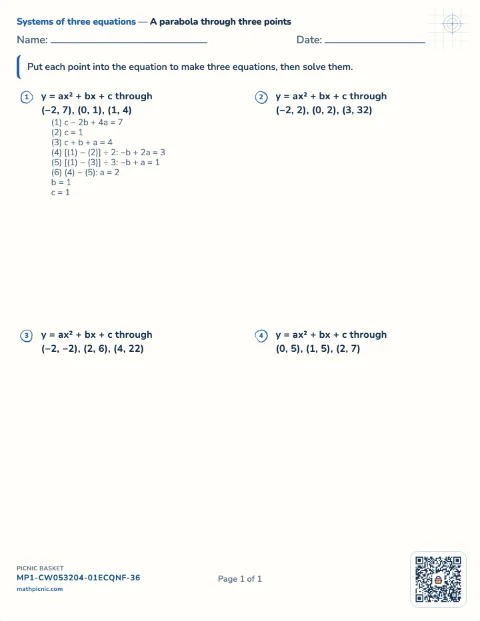
Undo a rule, and find where a line meets a parabola.

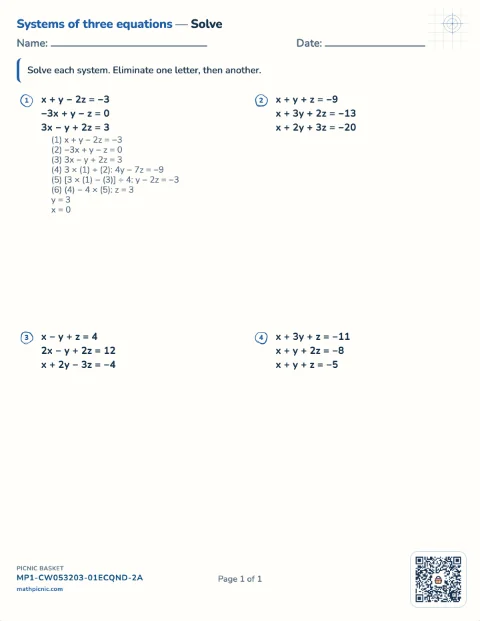
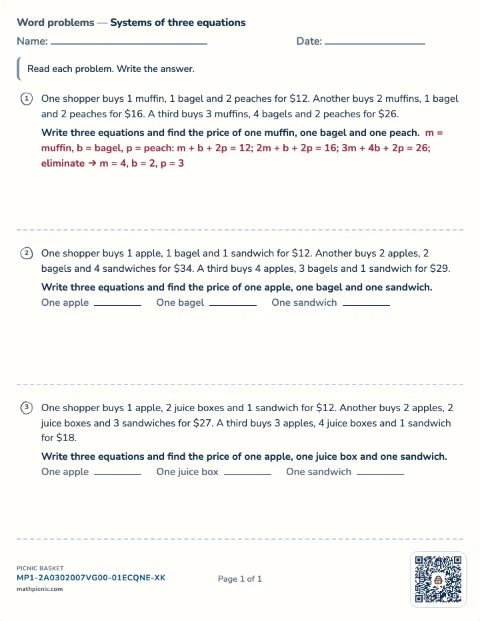
Step 5 of 8
Sequences and series
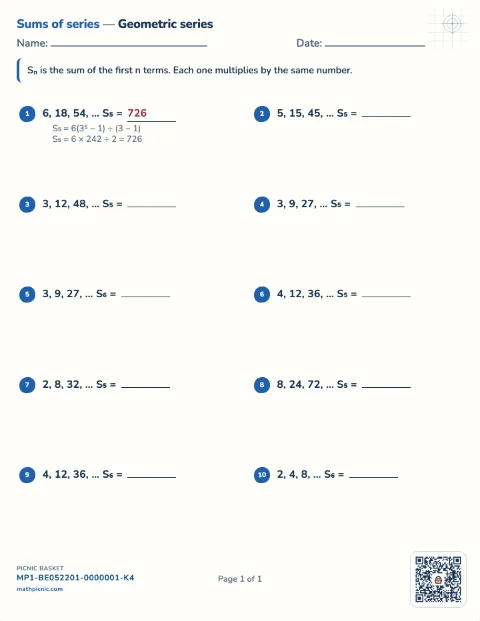
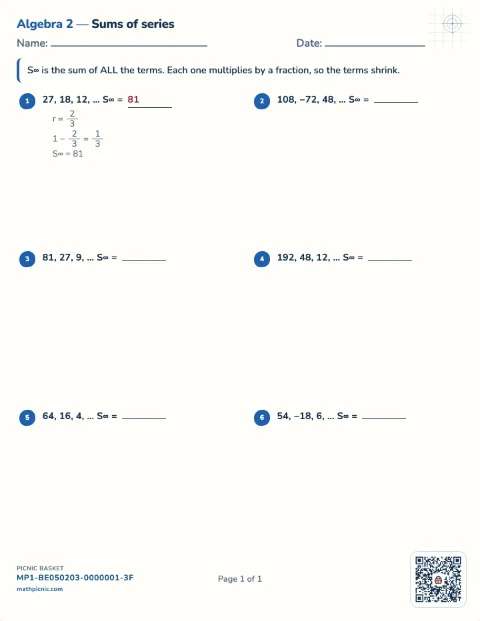
Add an arithmetic or geometric sequence up — and an infinite one that still has a total.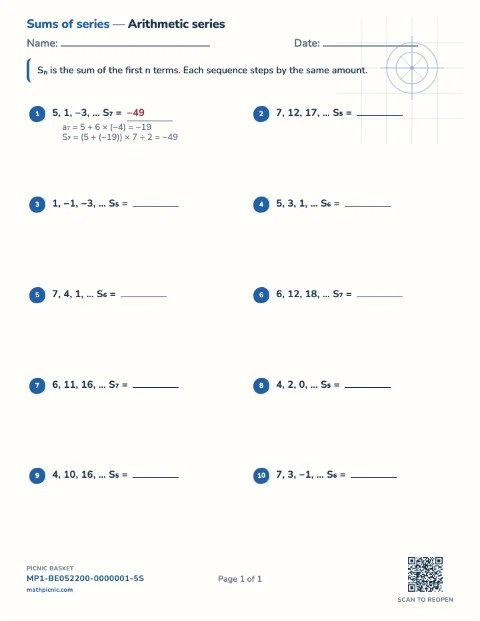
Step 6 of 8
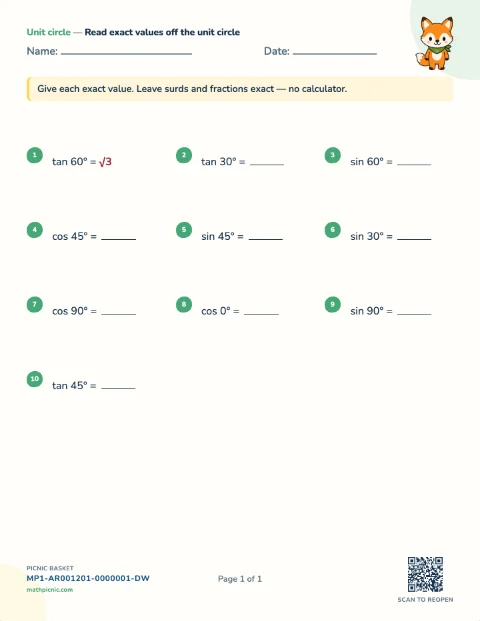
The unit circle
Convert degrees and radians, and give the exact values at the special angles.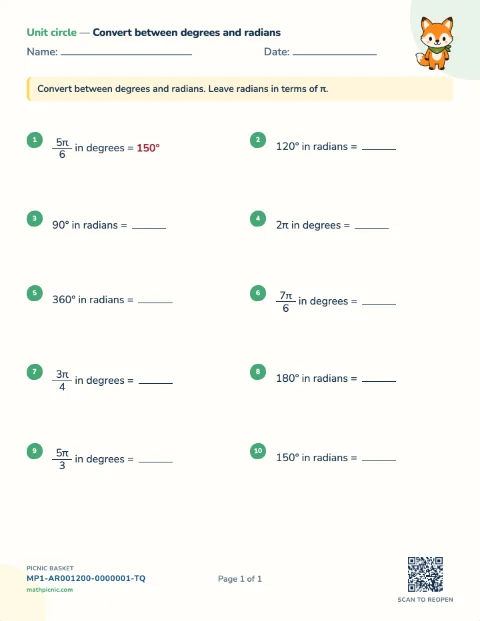
Step 7 of 8
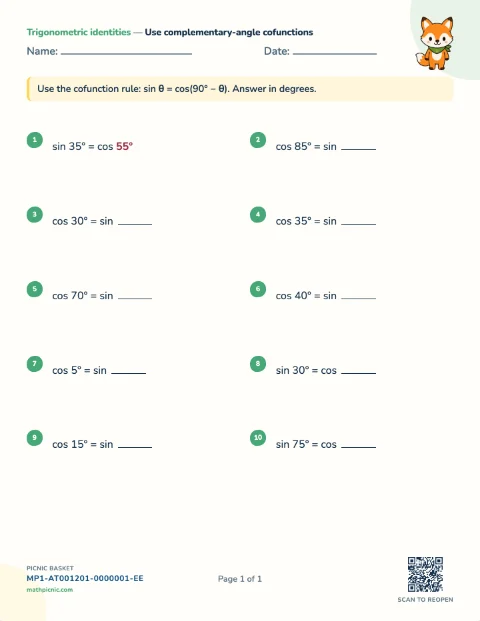
Trigonometric identities
The Pythagorean identity, and cofunctions of complementary angles.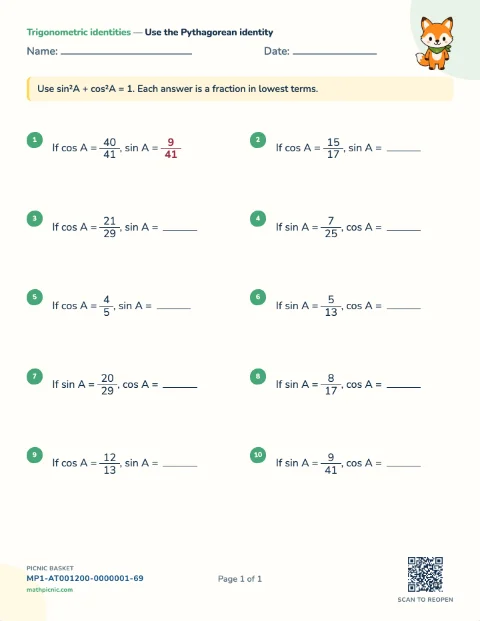
Step 8 of 8