
Fraction worksheets
Not sure what comes next? Start with the first sheet that feels comfortable.
Or you can pick your level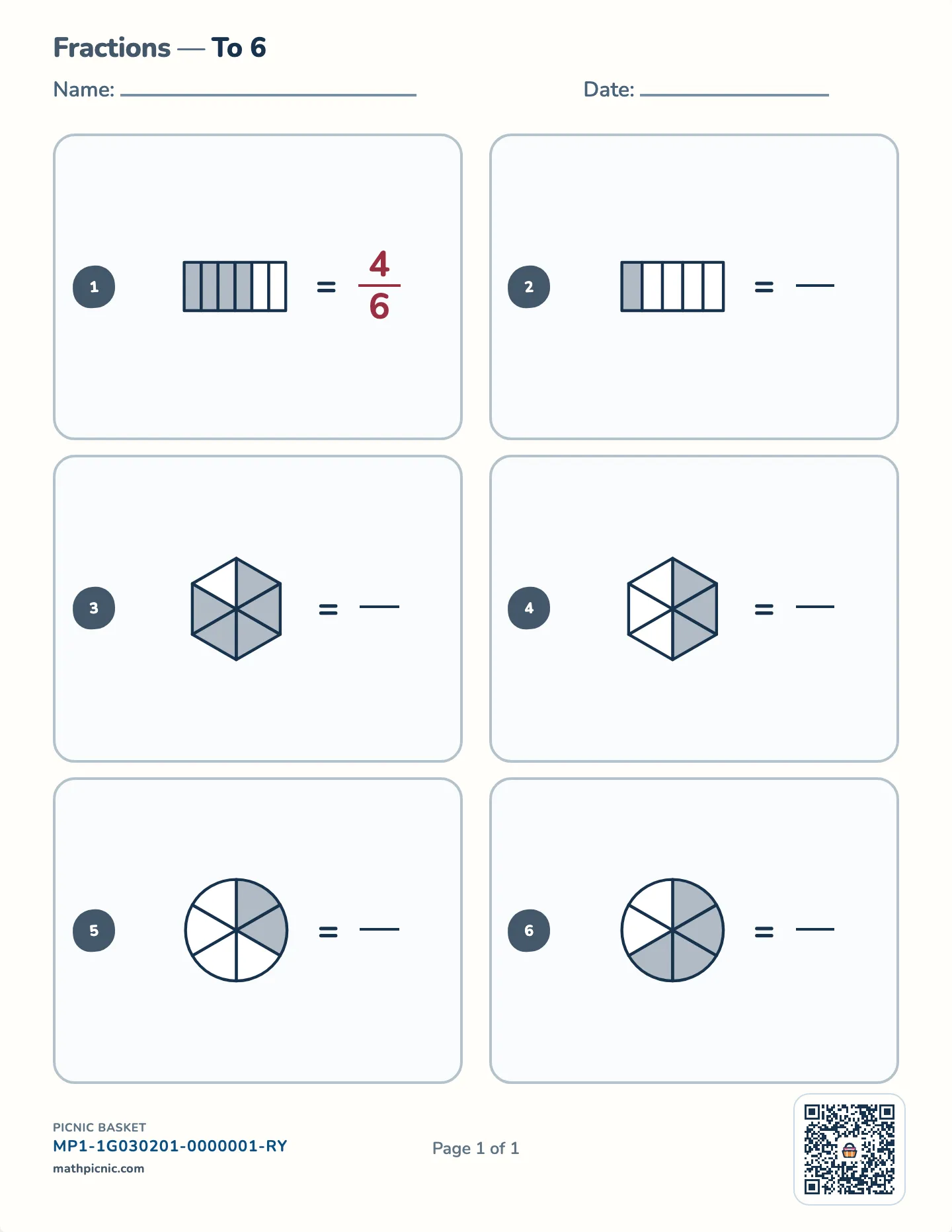
Nothing matches that. Try a skill, a number, or a grade.
In teaching order
Fractions worksheets, easiest first
Each sheet assumes the one above it is comfortable. Start where your child is, not at the top.- Fractions of shapes
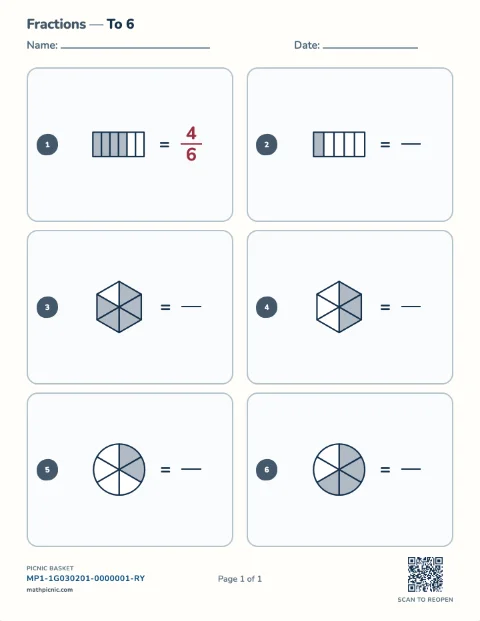 Print ▰▱▱▱ = ?/4
 - Fractions on a number line
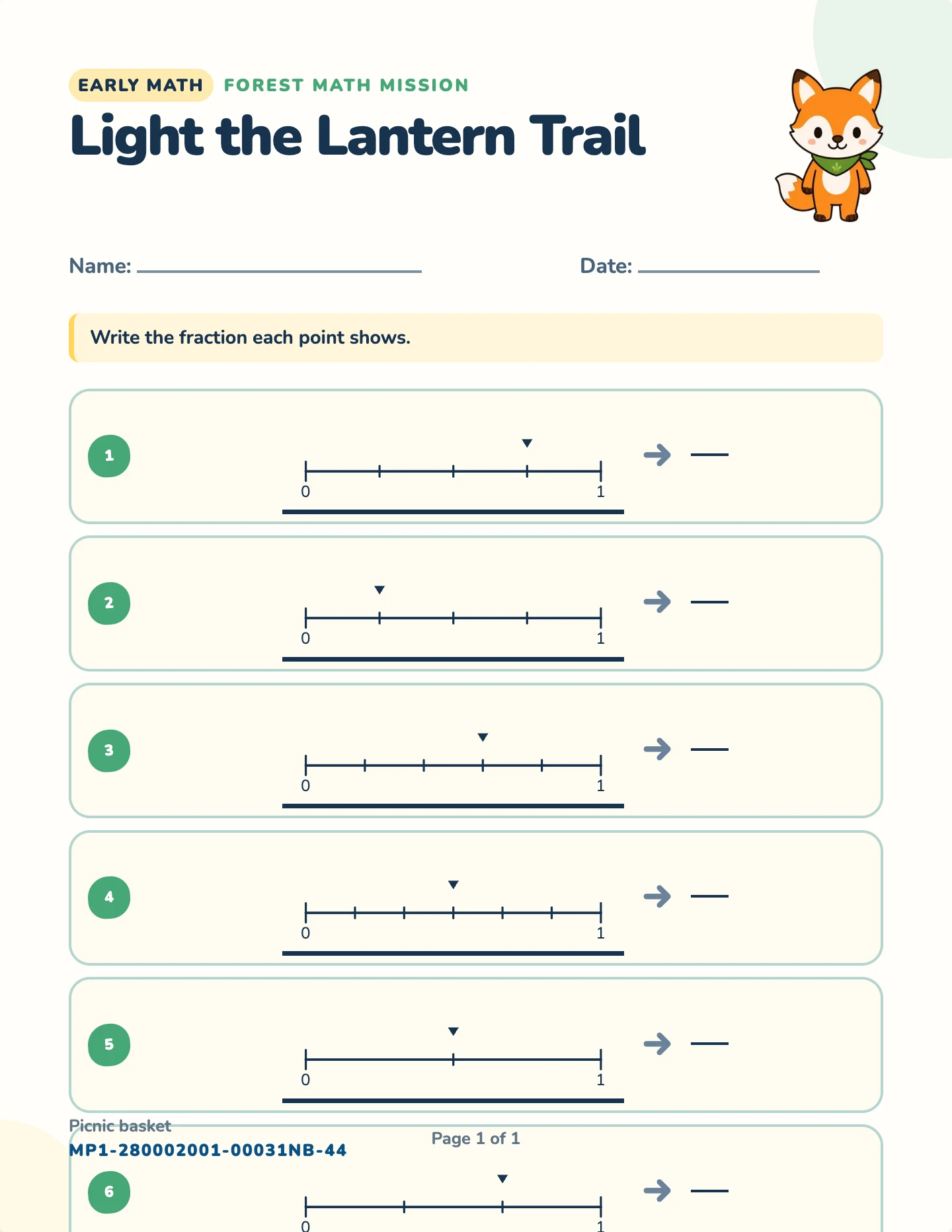
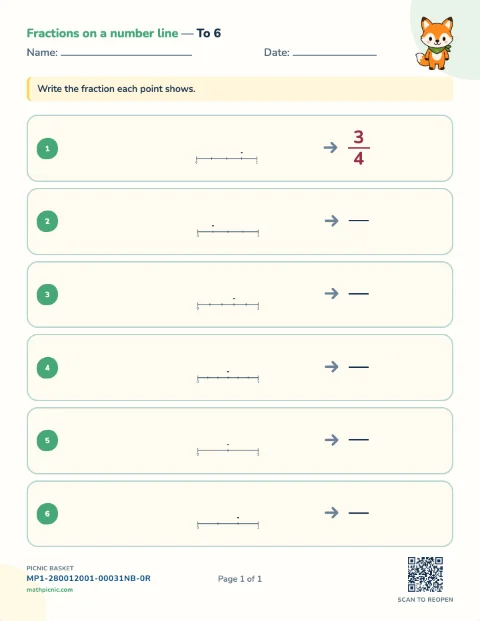 Print 0—•—1 → __
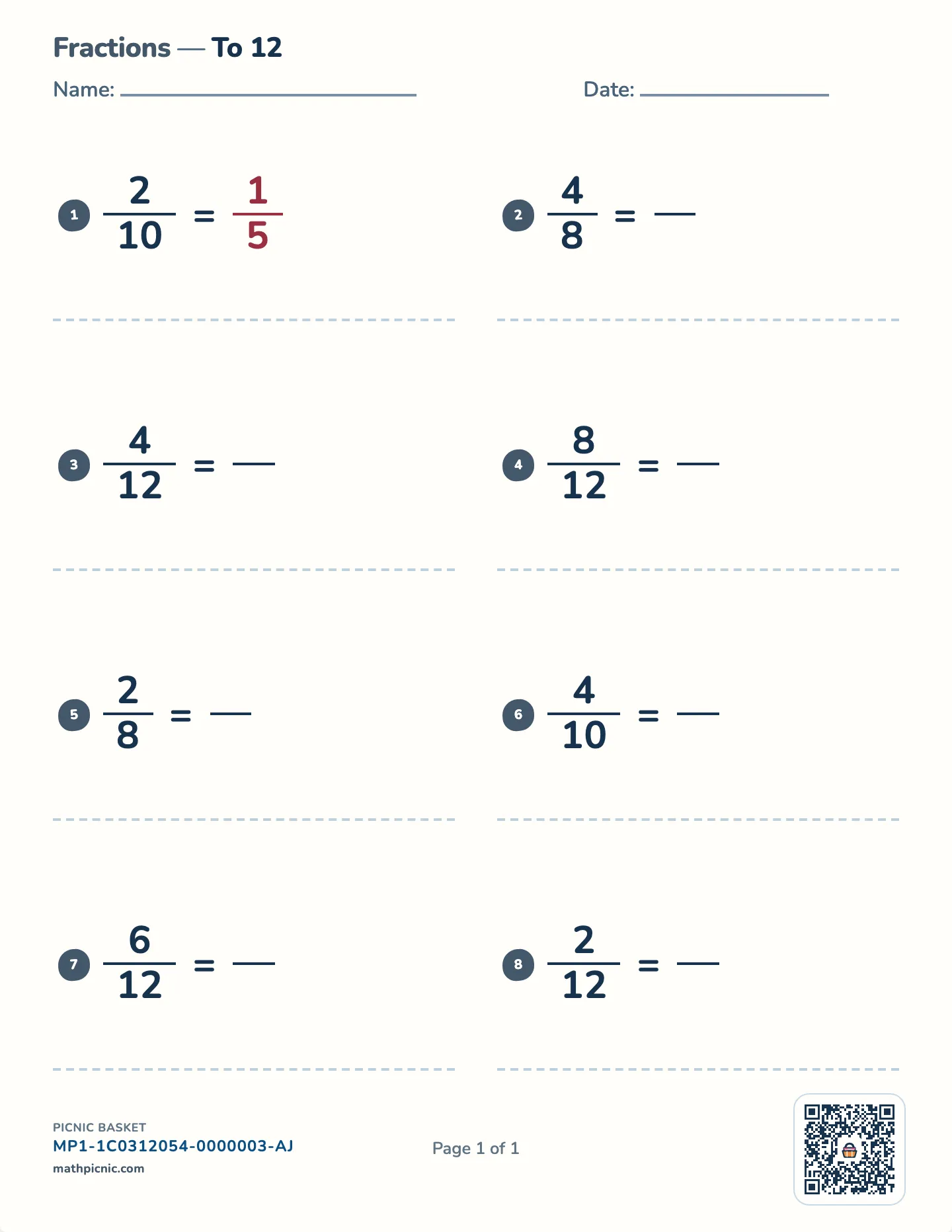
 - Equivalent fractions
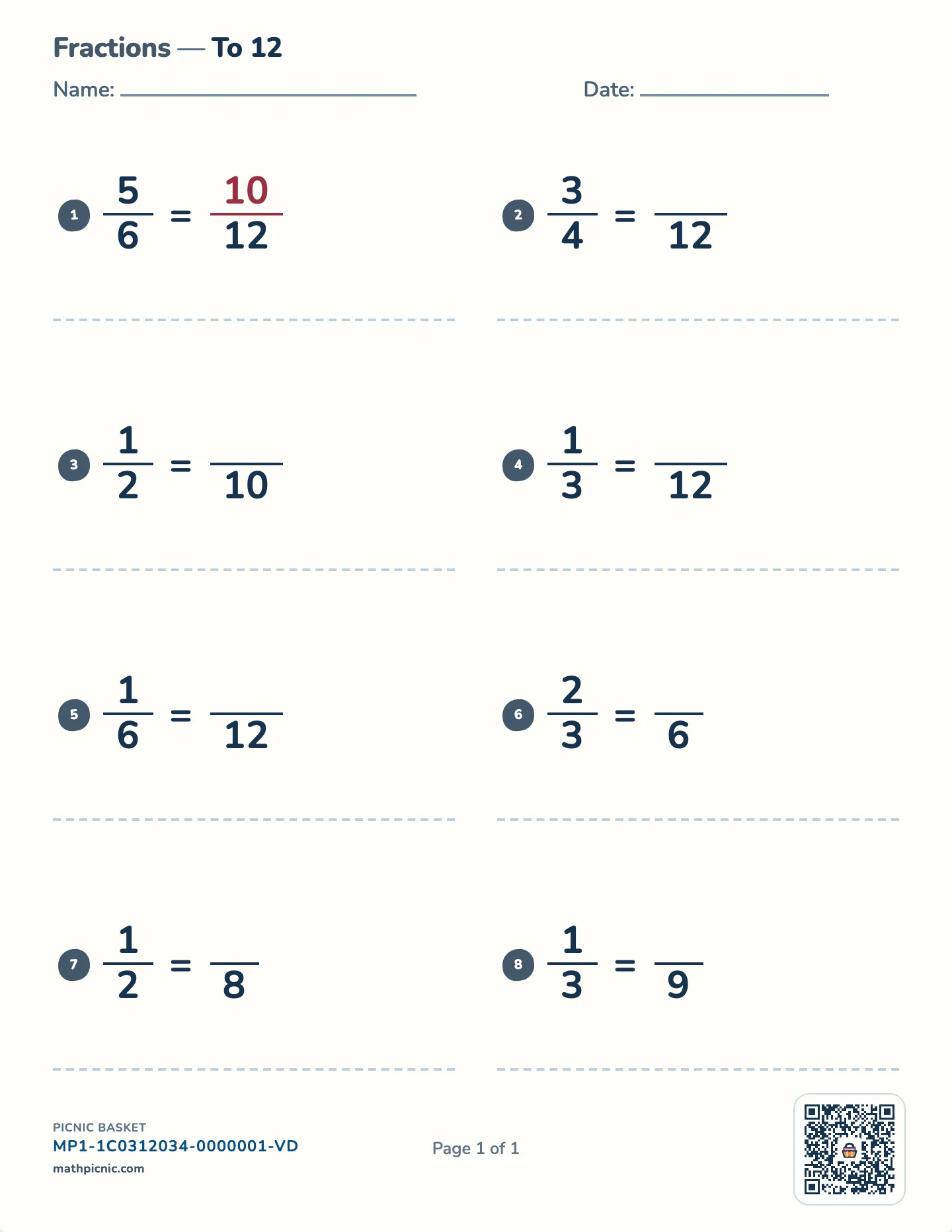
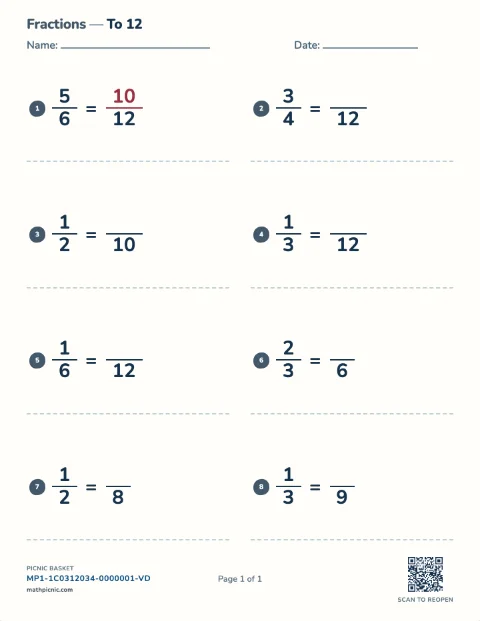 Print 1/2 = ?/8
 - Comparing fractions
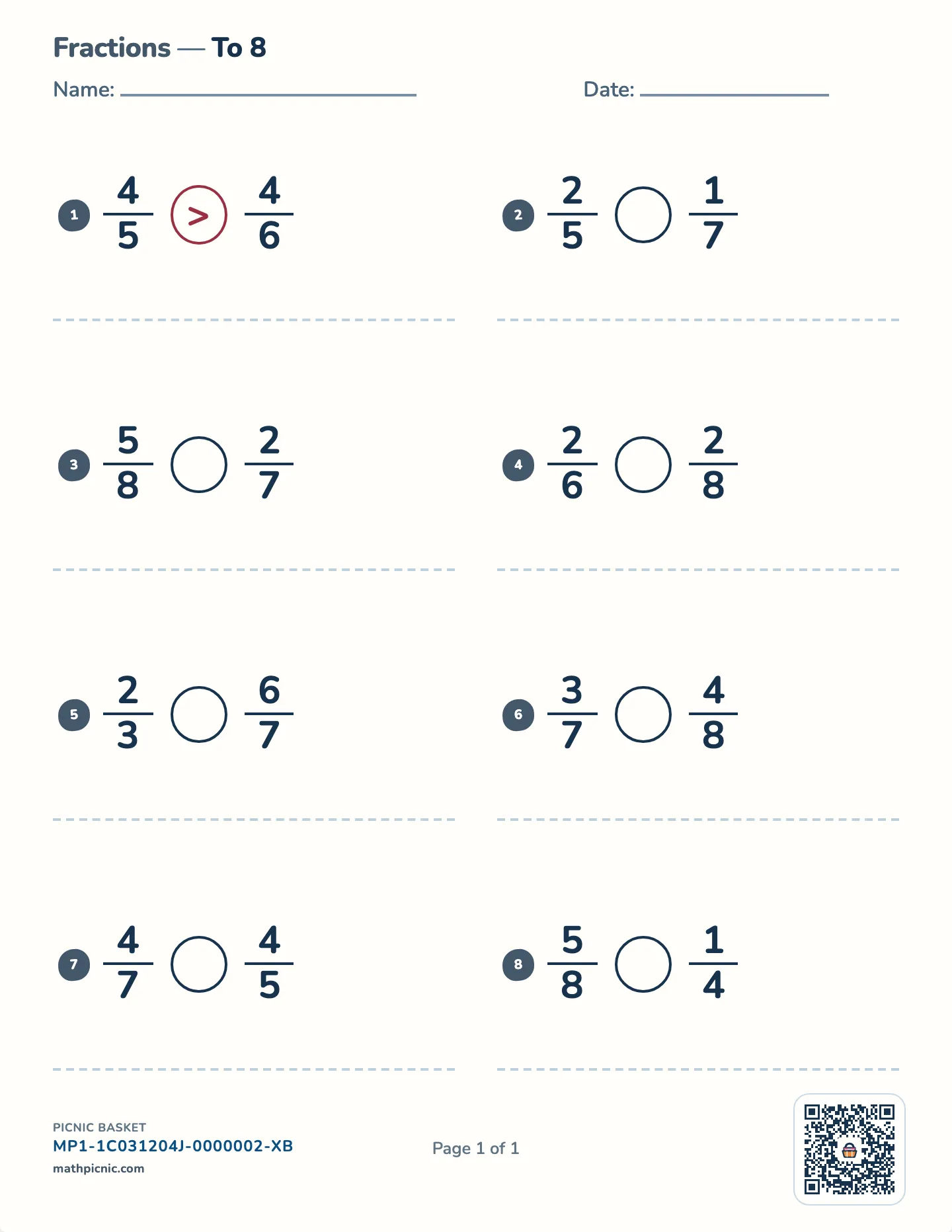
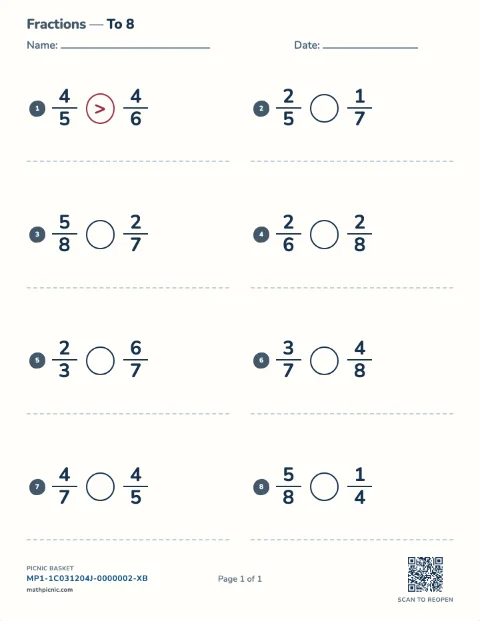 Print 3/4 ? 2/3
 - Simplifying fractions
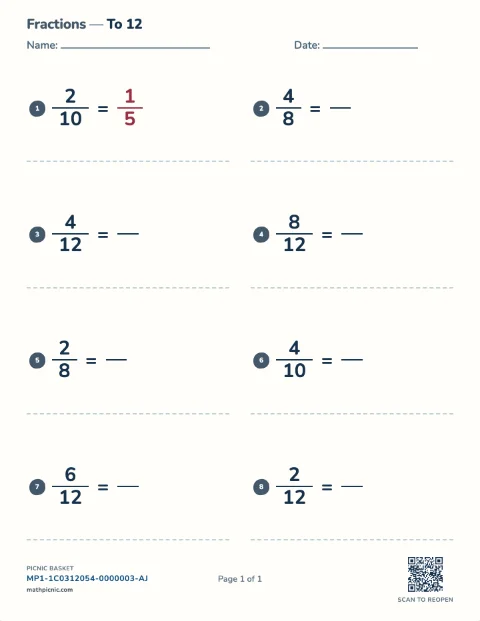 Print 6/8 → 3/4
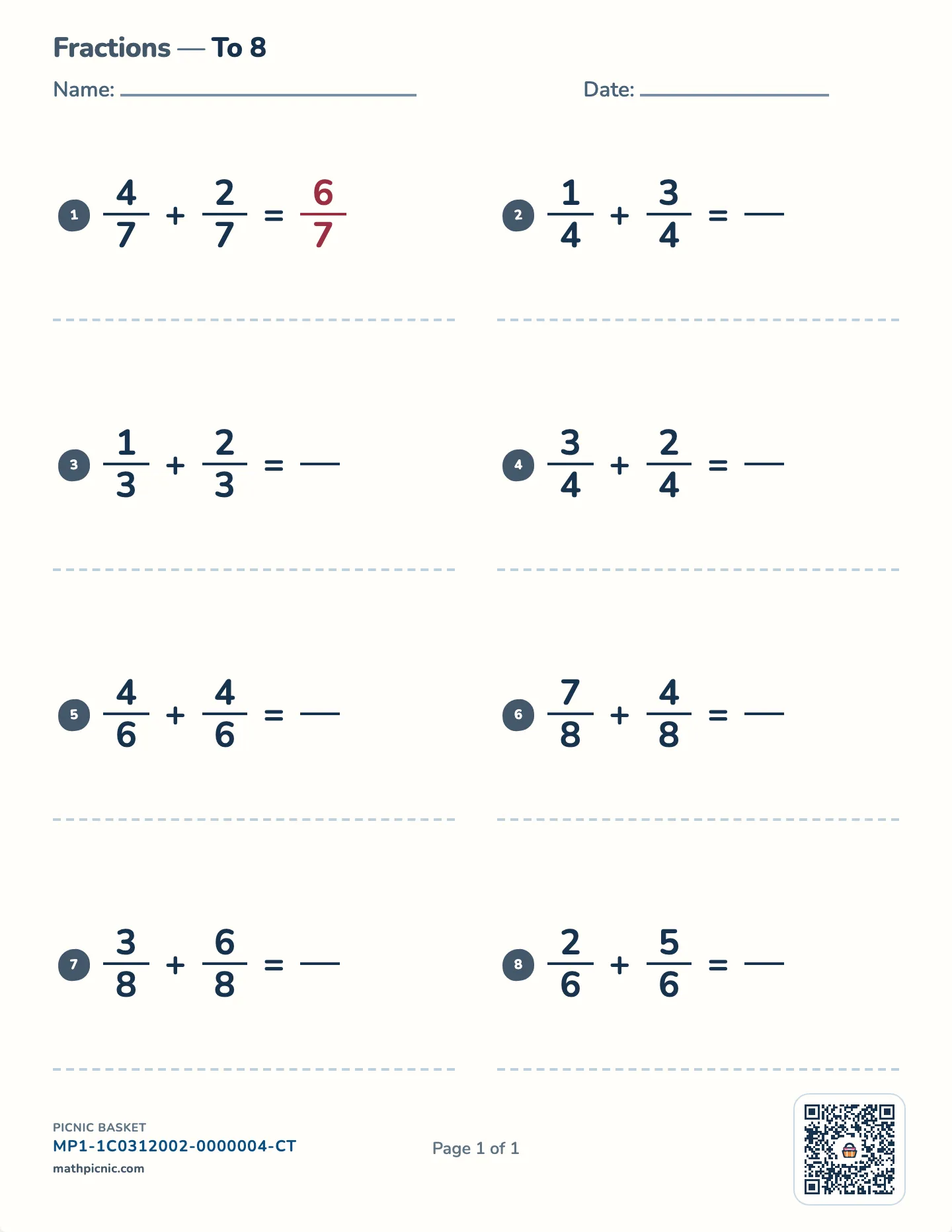
 - Adding like fractions
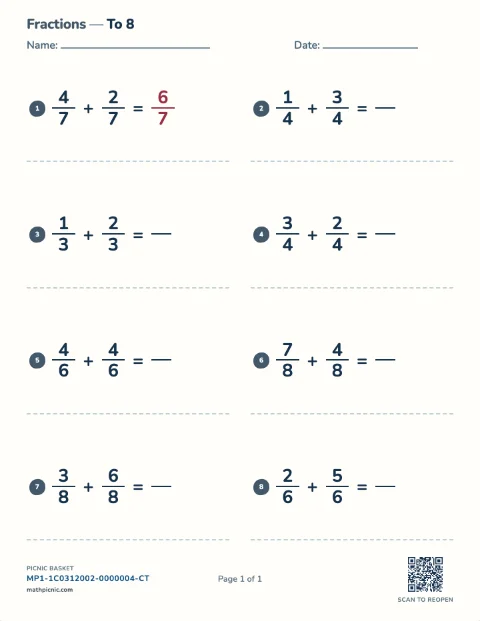 Print 1/6 + 2/6 = ?
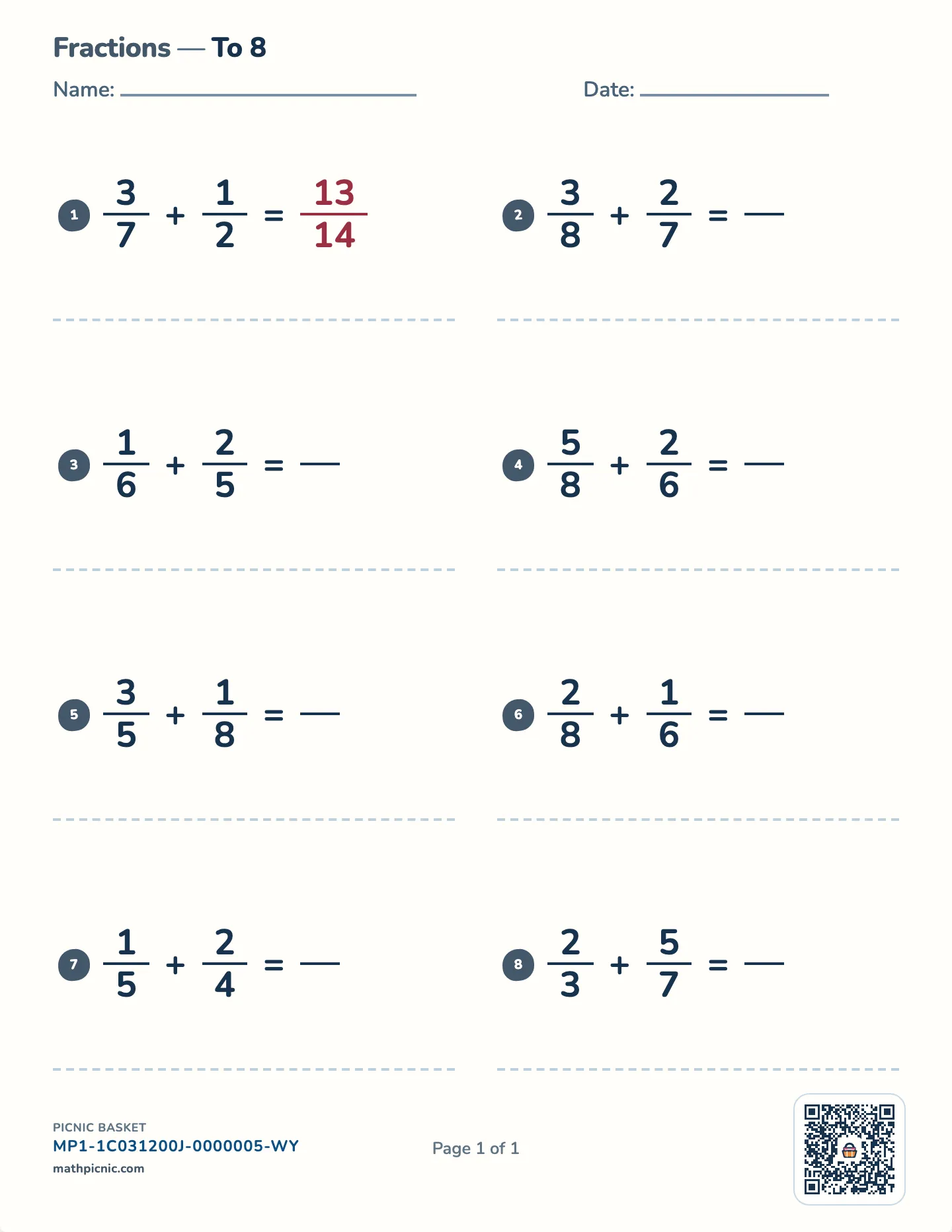
 - Adding unlike fractions
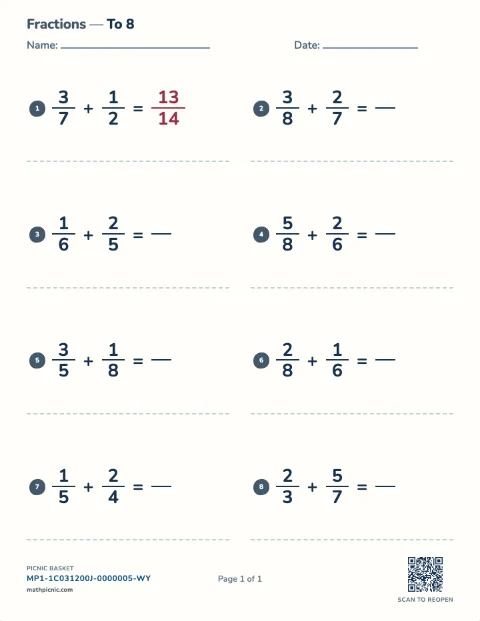 Print 1/2 + 1/3 = ?
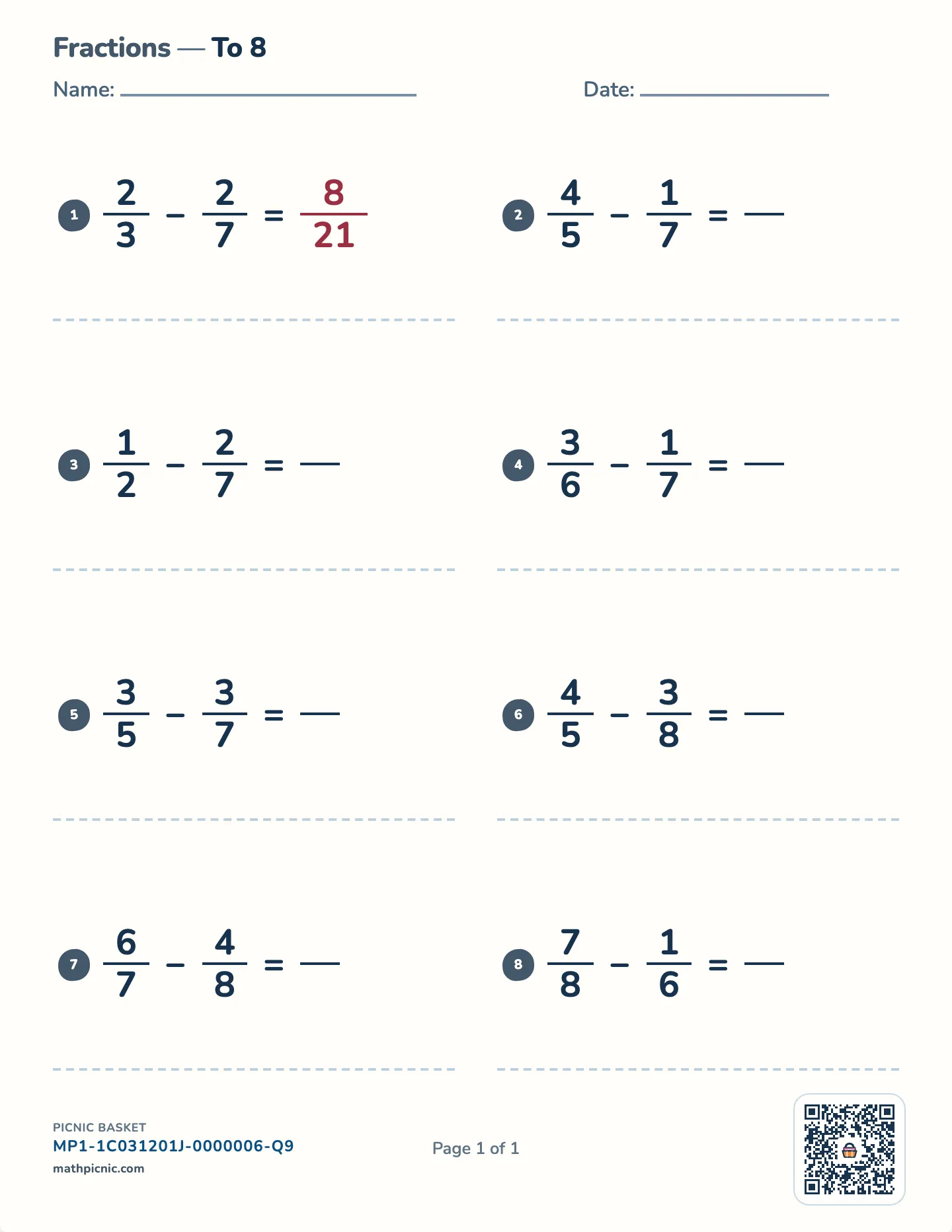
 - Subtracting fractions
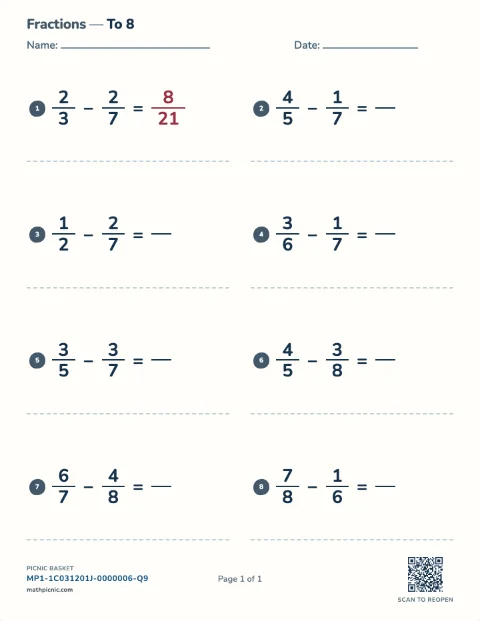 Print 3/4 − 1/6 = ?
 - Adding and subtracting mixed numbers
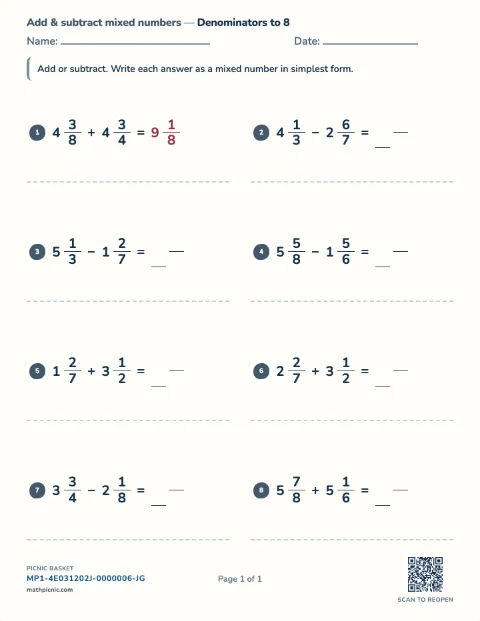 Print 2 3/4 + 1 1/2 = ?
 - Multiplying fractions
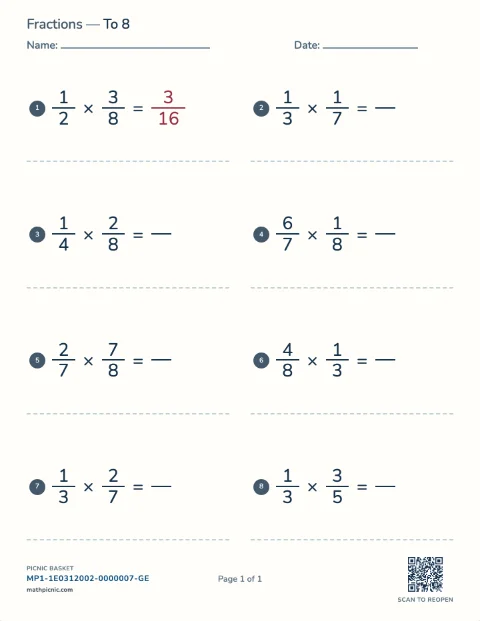 Print 2/3 × 3/4 = ?
 - Dividing fractions
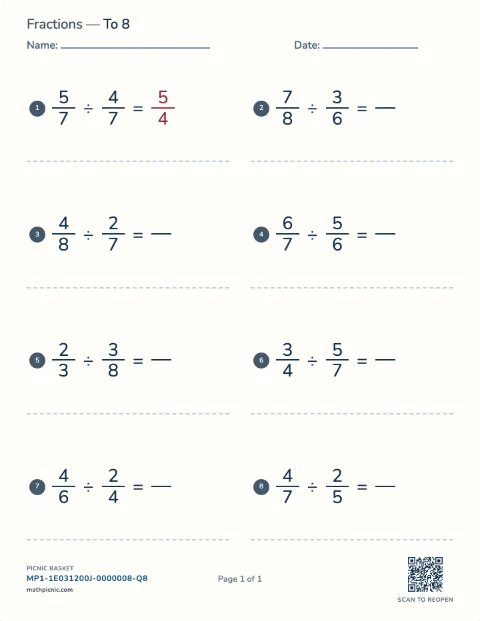 Print 1/2 ÷ 3/4 = ?
 - Fractions and decimals
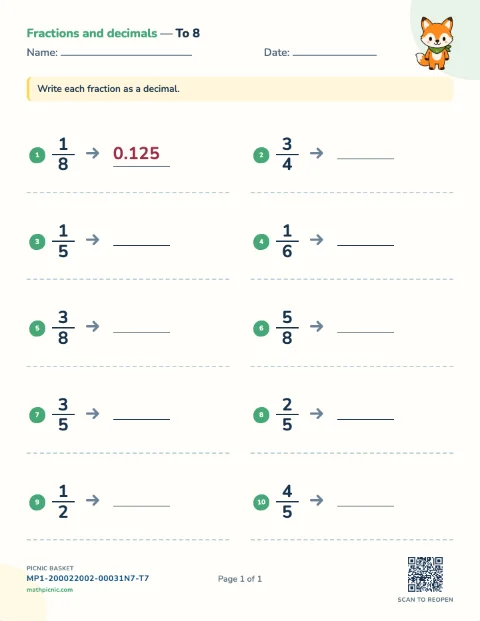 Print 1/3 → 0.3‾
 - Improper fractions to mixed numbers
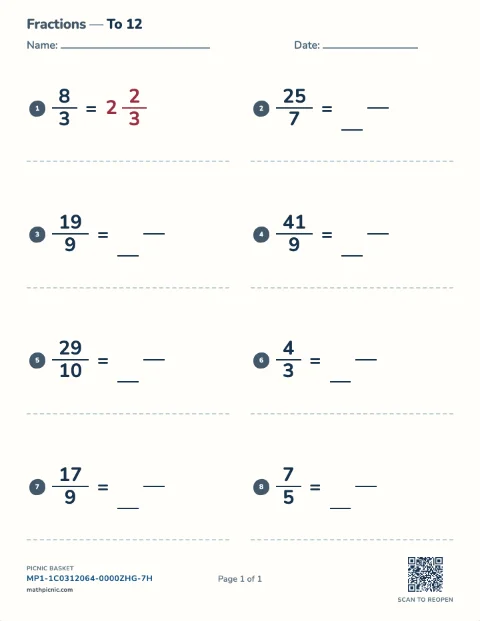 Print 17/5 = __
 - Mixed numbers to improper fractions
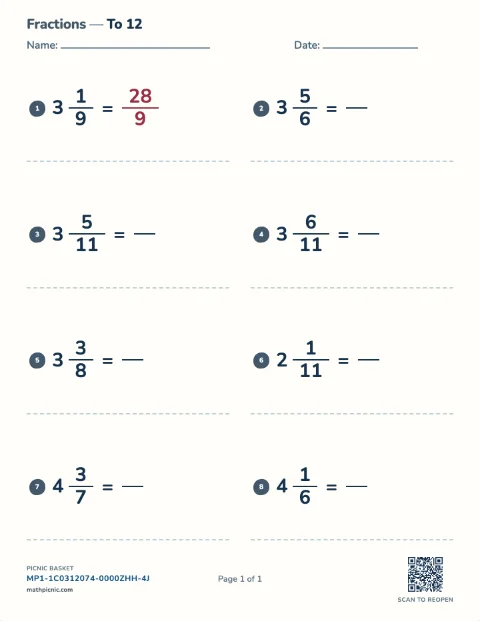 Print 3 1/4 = __
 - Subtracting mixed numbers
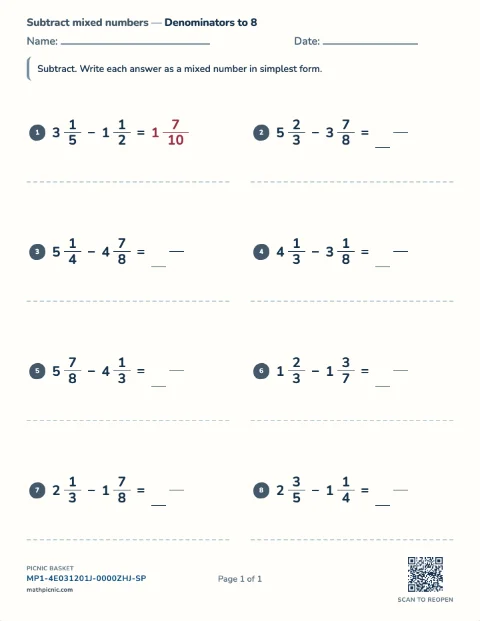 Print 3 1/5 − 1 1/2
 - Decimals to fractions
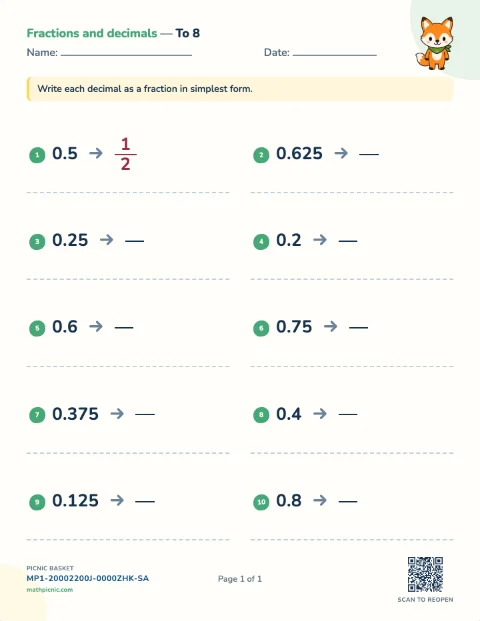 Print 0.62 = __/__
 - Adding and subtracting like fractions
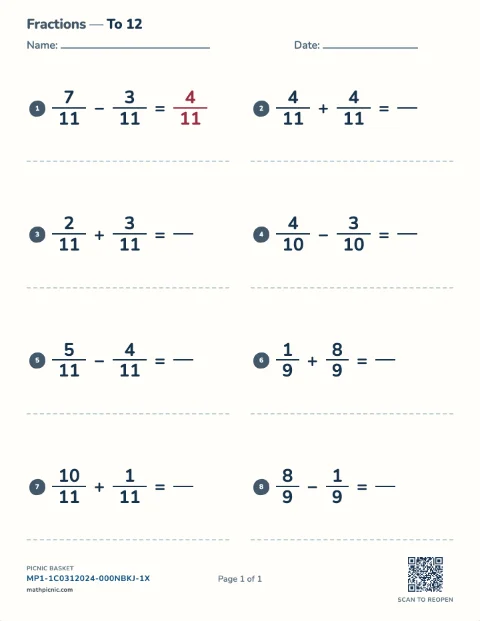 Print 5/6 − 2/6 = ?
 - Adding mixed numbers
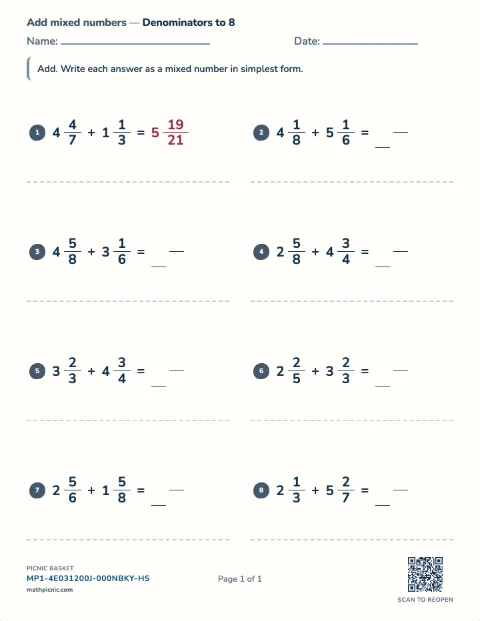 Print 2 3/4 + 1 1/2 = ?
A simple way through fractions
The order matters. A child first sees that three quarters and six eighths name the same amount (equivalent fractions), then compares which of two fractions is larger, then writes a fraction in lowest terms. Those three skills are really one idea — that a fraction has many spellings but one value — and they make every later step easier.
Why this order works
Adding and subtracting come next. Same-denominator sums are the gentle start: add the numerators and keep the denominator. Unlike denominators are the real grade-five jump, because you have to build a common denominator first. Multiplying and dividing arrive last and are, surprisingly, more mechanical — multiply straight across, or keep-change-flip.