Subtract mixed numbersDenominators to 8
Name: Date:
Subtract. Write each answer as a mixed number in simplest form.
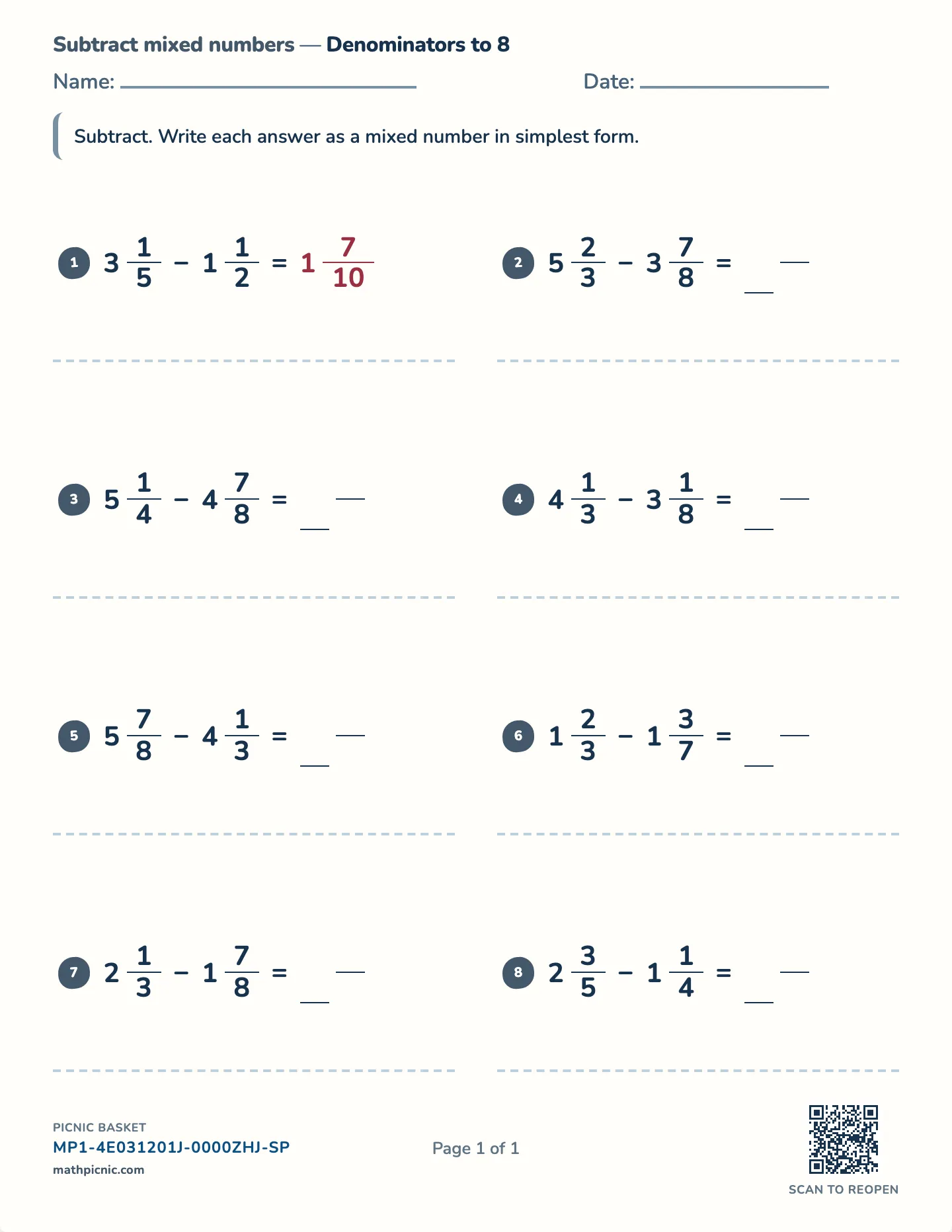
1315−112=
2523−378=
3514−478=
4413−318=
5578−413=
6123−137=
7213−178=
8235−114=

Subtracting mixed numbers is where fractions meet borrowing, and it is harder than adding them for exactly that reason. These free printable worksheets keep the wholes small and the denominators friendly so the borrow is the thing being practiced.
If they get stuck
The answer key prints on a separate page.
3 1/5 − 1 1/2 needs a common denominator first: 3 2/10 − 1 5/10. Now the fraction on top is smaller than the one below it, and one whole has to be broken into ten tenths before the subtraction can happen. That step has no equivalent in addition, and it is where nearly every mark on this topic is lost.
Doing the wholes and the fractions as two separate subtractions is what makes the difficulty visible, and it is worth keeping that layout even when a child could convert everything to improper fractions instead. The improper-fraction route works and it hides what is going on; a child who has borrowed once understands both.
One question from a sheet like this one, worked a step at a time — with a sentence saying what just happened and why.
Subtracting mixed numbers, step by step