FractionsTo 6
Name: Date:
1=
2=
3=
4=
5=
6=

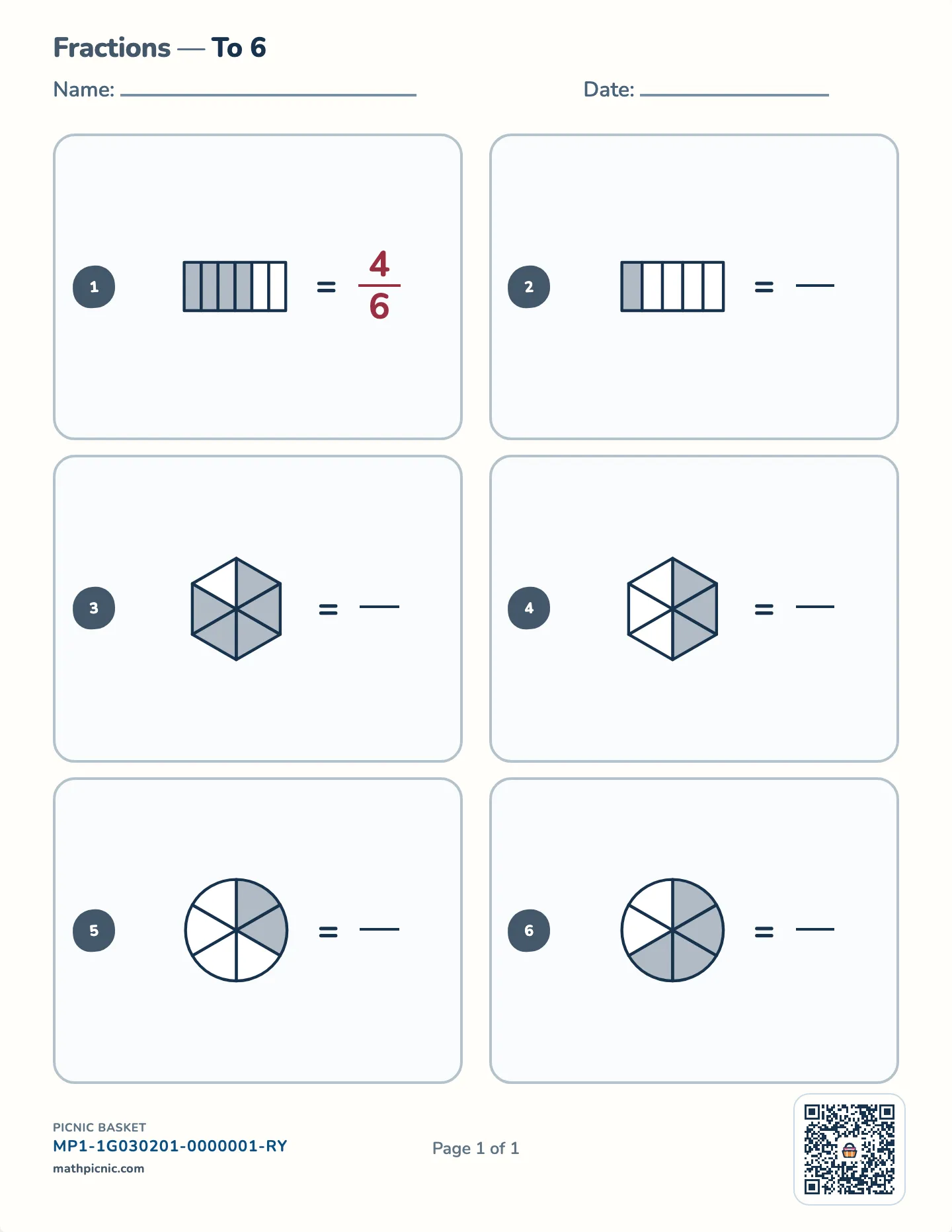
A fraction is easiest to meet as a picture: a shape cut into equal parts with some of them shaded. These free printable worksheets show a circle, a bar, or a many-sided shape divided into equal pieces and ask a child to write the fraction that is colored in.
Kid stuck on one? You don’t just get the sheet.
The answer key prints on a separate page.
Every shape is split into equal parts, because that is the whole idea of a fraction: the bottom number counts how many equal pieces the whole was cut into, and the top number counts how many are shaded. A child reads it straight off the picture — count the shaded parts for the numerator, count all the parts for the denominator. Three shapes keep it fresh: a pie-cut circle, a bar of equal strips, and a regular polygon whose sides match its parts, so a triangle shows thirds and a hexagon shows sixths.
The answer is left exactly as the picture shows it and is never simplified — two of six shaded is written two sixths, not one third — because the point here is counting parts, not reducing them. Simplifying comes later, once naming a fraction is automatic, and keeping the fraction unreduced means the picture and the answer always agree part for part.
One question from this sheet, worked through a step at a time.
Name the fraction