DecimalsHundredths
Name: Date:

Subtract the decimals.
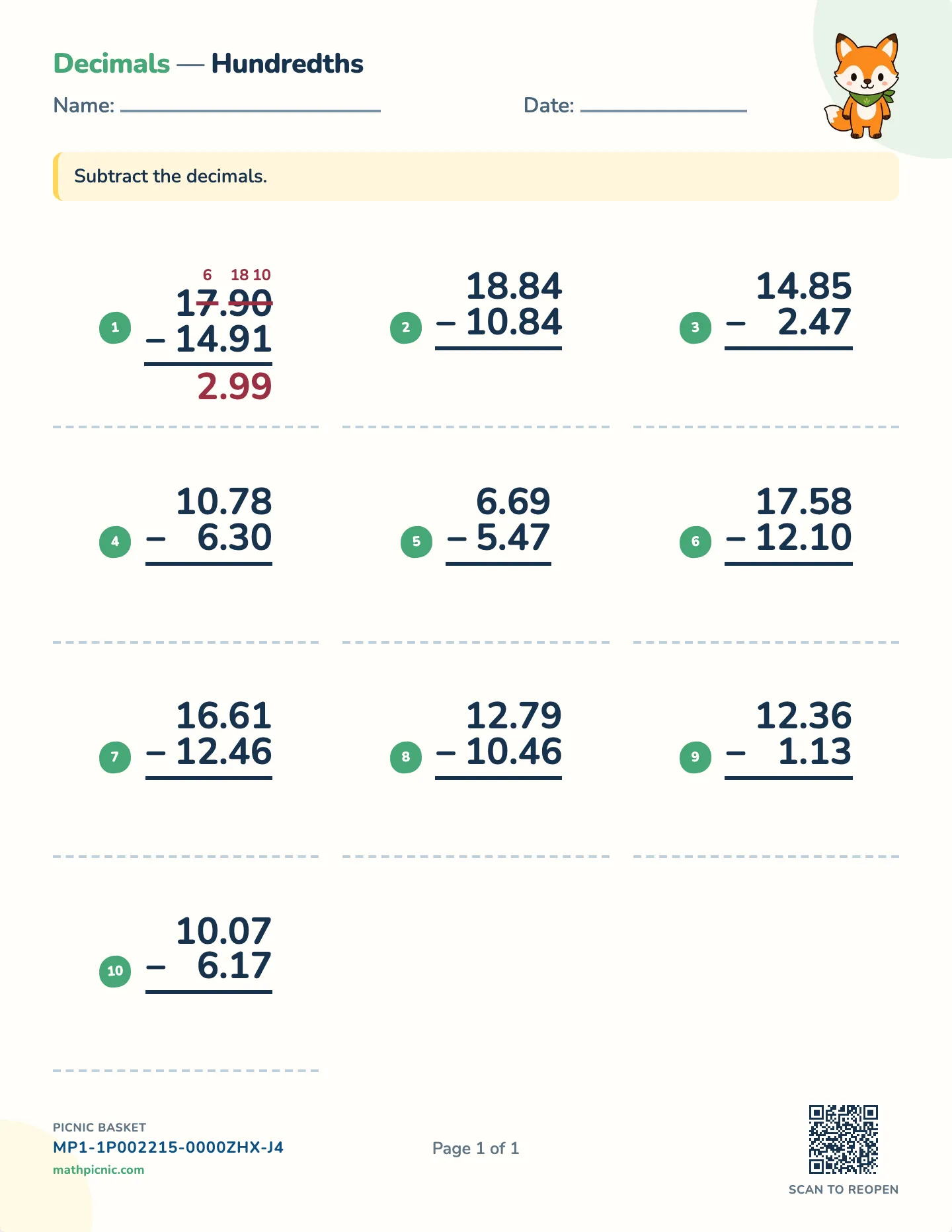
117.90−14.91
218.84−10.84
314.85−2.47
410.78−6.30
56.69−5.47
617.58−12.10
716.61−12.46
812.79−10.46
912.36−1.13
1010.07−6.17

Subtracting decimals is column subtraction with the points lined up and the gaps filled in. These free printable worksheets stack every question already aligned, with borrowing across the decimal point where it comes up.
If they get stuck
The answer key prints on a separate page.
17.9 − 14.91 is the shape that catches people out. The top number has nothing in the hundredths column, so a zero goes in — 17.90 — and now there is a borrow to make. A child who leaves the space blank has an empty column to subtract from and usually invents an answer for it.
Borrowing works exactly as it does with whole numbers, and it is worth saying so. The point does not stop a borrow or change how one works; it only marks where the whole numbers end. Children who treat the two sides of the point as separate sums get the right digits in the wrong places.
One question from a sheet like this one, worked a step at a time — with a sentence saying what just happened and why.
Subtracting decimals, step by step