EstimatingTo the nearest ten
Name: Date:
Round each number to the nearest ten, then add.
1126 + 158
2147 + 565
3133 + 631
4161 + 983
5119 + 774
6147 + 136
7112 + 642
8112 + 389

Rounding is a skill; estimating is what rounding is for. These free printable sheets round each number first and then work with the rounded pair — 83 × 32 becomes 80 × 30, which is 2,400 and takes a moment.
If they get stuck
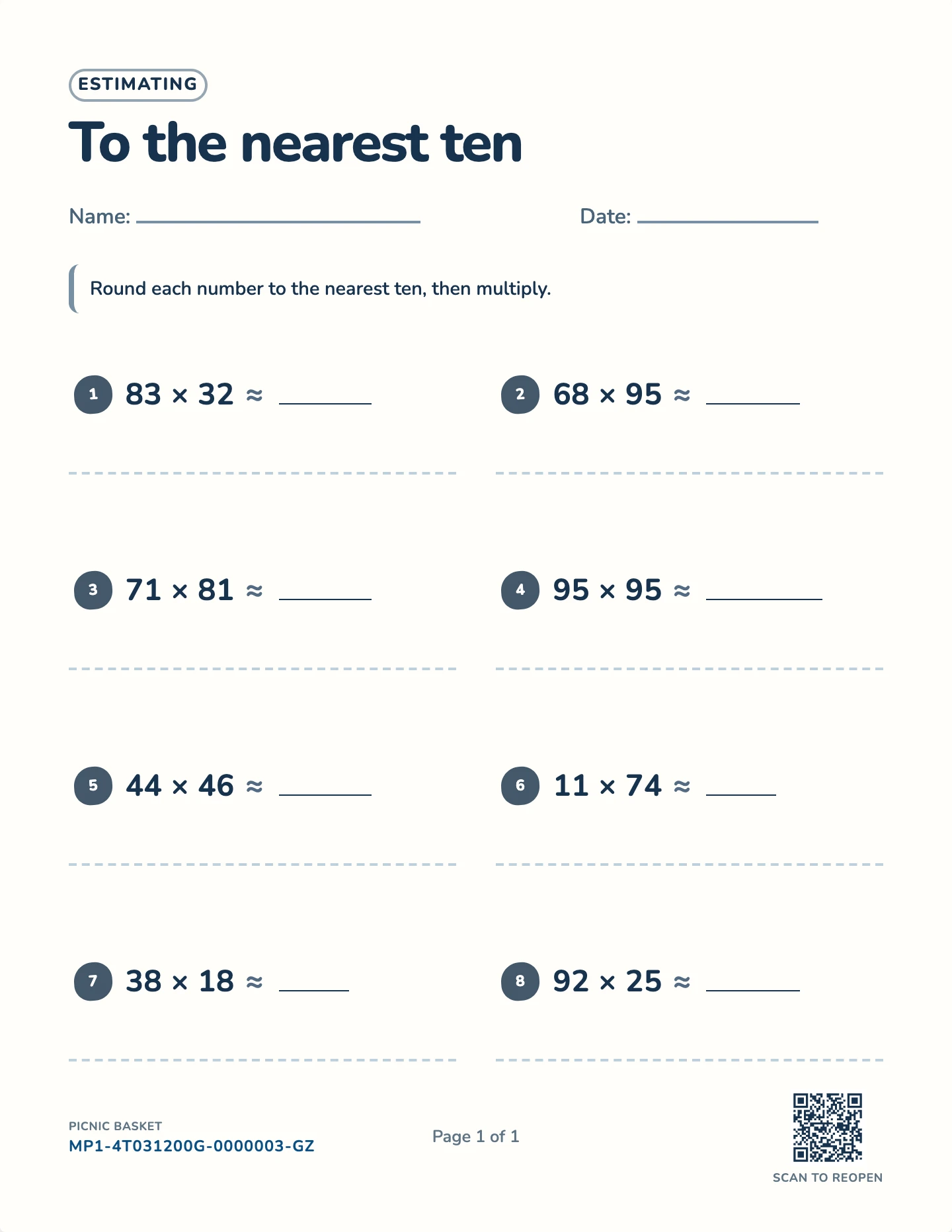
The answer key prints on a separate page.
Round first, then compute — and the instruction says so, because the other order gives different answers. 44 + 44 is 40 + 40 = 80 rounding first, and 88 → 90 computing first, and both are defensible English. A printed sheet cannot hold two right answers, so it names the one it wants. It is also the one the standard means: an estimate is what you work out INSTEAD of the calculation, not a tidying-up afterwards.
The numbers are big enough that estimating is worth doing, which sounds obvious and is the part these sheets are usually wrong about. 8 + 7 rounds to 10 + 10 = 20, and a child who can add 8 and 7 in their head has no reason to estimate anything — the technique gets taught where it is useless, and the honest answer to “why would I?” is “you wouldn’t”. So sums and differences use three-digit numbers, where the exact answer needs carrying, and products use two digits by two, where the exact answer needs a written method.
126 + 158