ClockTo 15 minutes
Name: Date:

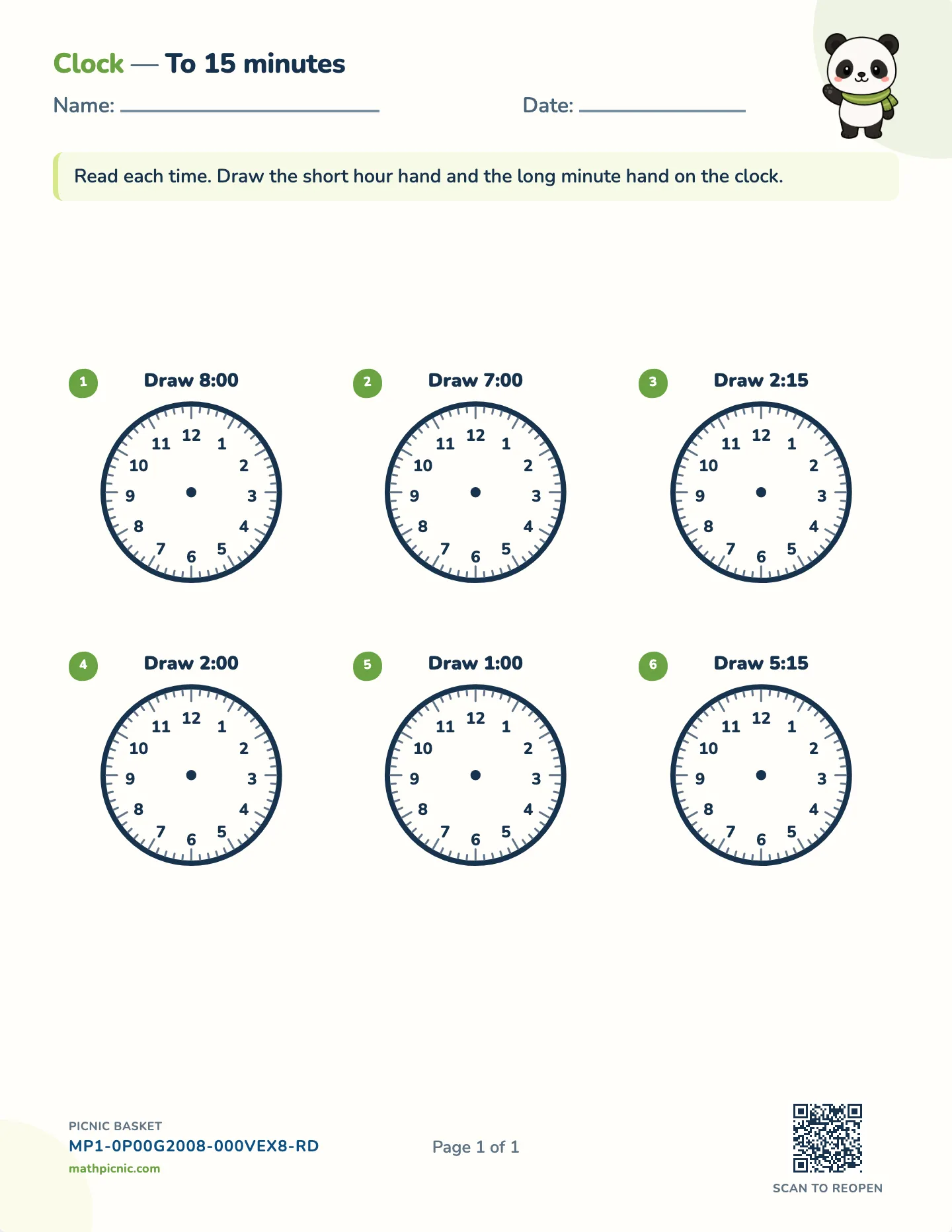
Read each time. Draw the short hour hand and the long minute hand on the clock.
1
2
3
4
5
6

Reading a clock and drawing one are opposite skills, and the second proves the first. These free printable sheets give a digital time and an empty face, and ask the child to draw the hour and minute hands in the right places.
If they get stuck
The answer key prints on a separate page.
Drawing forces the part reading lets a child skim: the hour hand is not on the number. At quarter past three the minute hand points at the 3 and the hour hand sits a quarter of the way from the 3 to the 4, not on the 3 — and a child who draws it on the number has read a hundred clocks without noticing where the short hand really goes.
Each face is blank with the numbers marked, and the six times spread across the hour so no two sets of hands land alike. Making the two hands clearly different lengths is part of the task, because a clock the child draws has to be readable by someone else — the same standard the printed clocks are held to.
One question from a sheet like this one, worked a step at a time — with a sentence saying what just happened and why.
Draw the clock hands, step by step