InequalitiesTo 50
Name: Date:
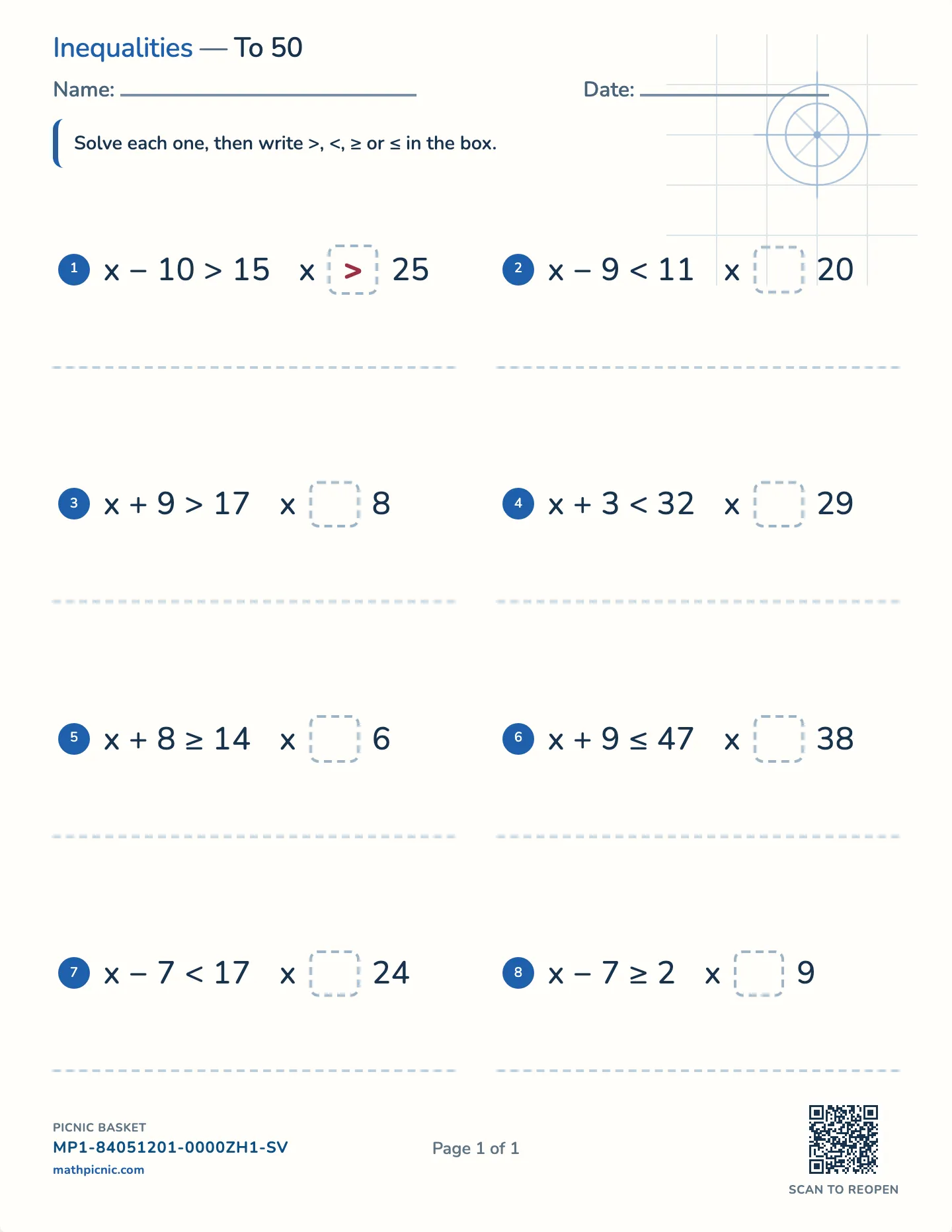
Solve each one, then write >, <, ≥ or ≤ in the box.
1x − 10 > 15x25
2x − 9 < 11x20
3x + 9 > 17x8
4x + 3 < 32x29
5x + 8 ≥ 14x6
6x + 9 ≤ 47x38
7x − 7 < 17x24
8x − 7 ≥ 2x9

An inequality is solved almost exactly like an equation, and the one place it differs is the place everybody loses marks. These free printable worksheets keep the steps to one and put the sign itself in the answer.
If they get stuck
The answer key prints on a separate page.
x + 7 > 12 comes apart the same way x + 7 = 12 does: take seven off both sides. The answer is x > 5, and the difference from an equation is that it names a whole range rather than one number — everything above five works, and five itself does not.
Then there is the rule. Multiplying or dividing both sides by a negative flips the sign, so −2x < 8 gives x > −4 rather than x < −4. It is worth checking rather than remembering: put −5 in and see whether it satisfies the original. A child who can test an answer never needs to recall which way the sign went.
One question from a sheet like this one, worked a step at a time — with a sentence saying what just happened and why.
Solving inequalities, step by step