Multiply out bracketsNumbers within 50
Name: Date:
Multiply out each bracket.
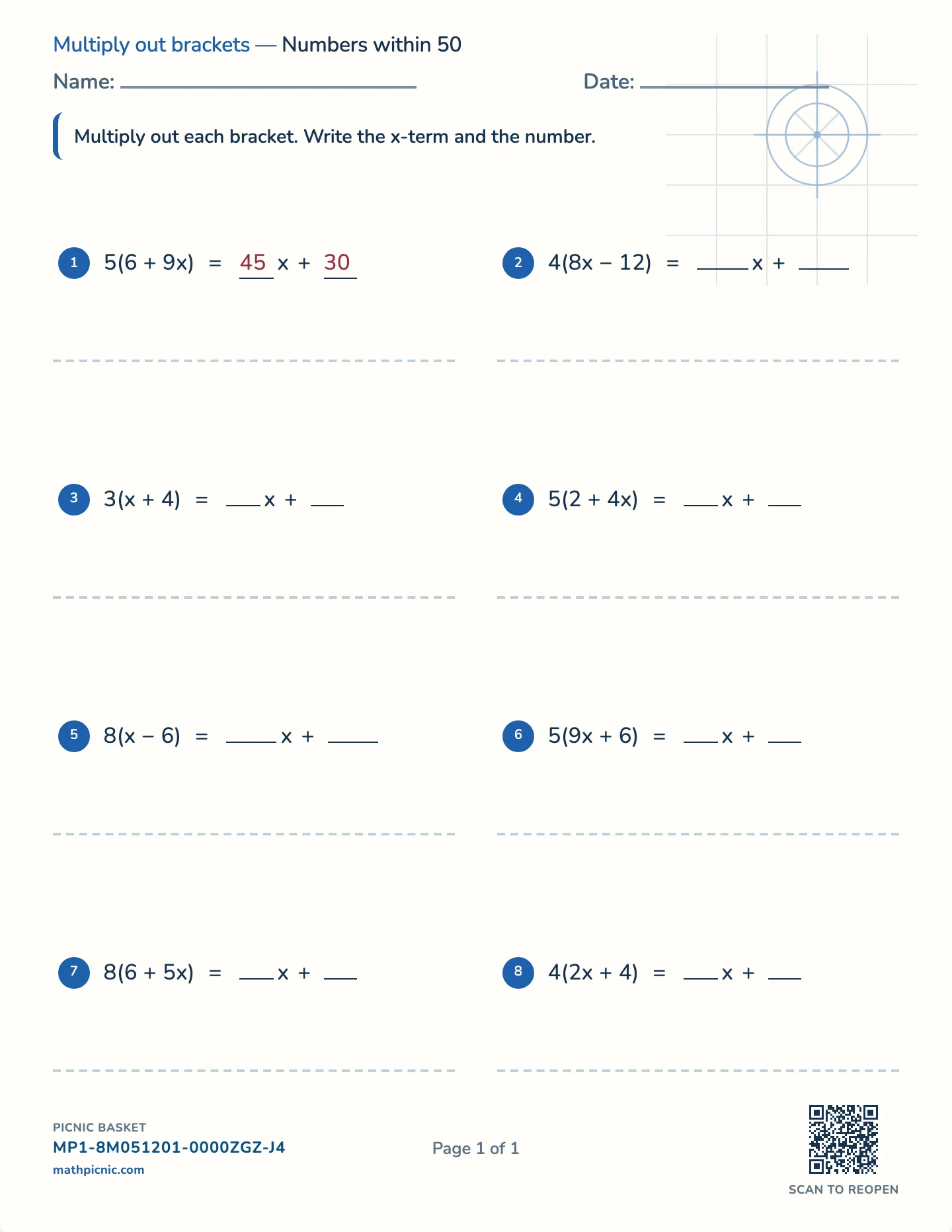
15(6 + 9x)
24(8x − 12)
33(x + 4)
45(2 + 4x)
58(x − 6)
65(9x + 6)
78(6 + 5x)
84(2x + 4)

Multiplying out a bracket means the number outside reaches everything inside it, not just the first thing. These free printable worksheets ask for the expanded form of expressions like 3(2x + 5), with the answer written as a coefficient and a constant.
If they get stuck
The answer key prints on a separate page.
The single most common mistake is stopping halfway: 3(2x + 5) becoming 6x + 5. Drawing two arcs from the 3 to each term inside makes the second multiplication impossible to forget, and it is worth doing on paper for a week rather than trusting it to memory.
Negatives are where it gets interesting. 4(2x − 3) is 8x − 12, and the minus travels with the 3 rather than staying behind. Some questions here carry a negative inside the bracket for exactly that reason, since a page of all-positive expansions teaches a rule that breaks the first time a real one appears.
One question from a sheet like this one, worked a step at a time — with a sentence saying what just happened and why.
Distributive property, step by step