RootsCube roots
Name: Date:
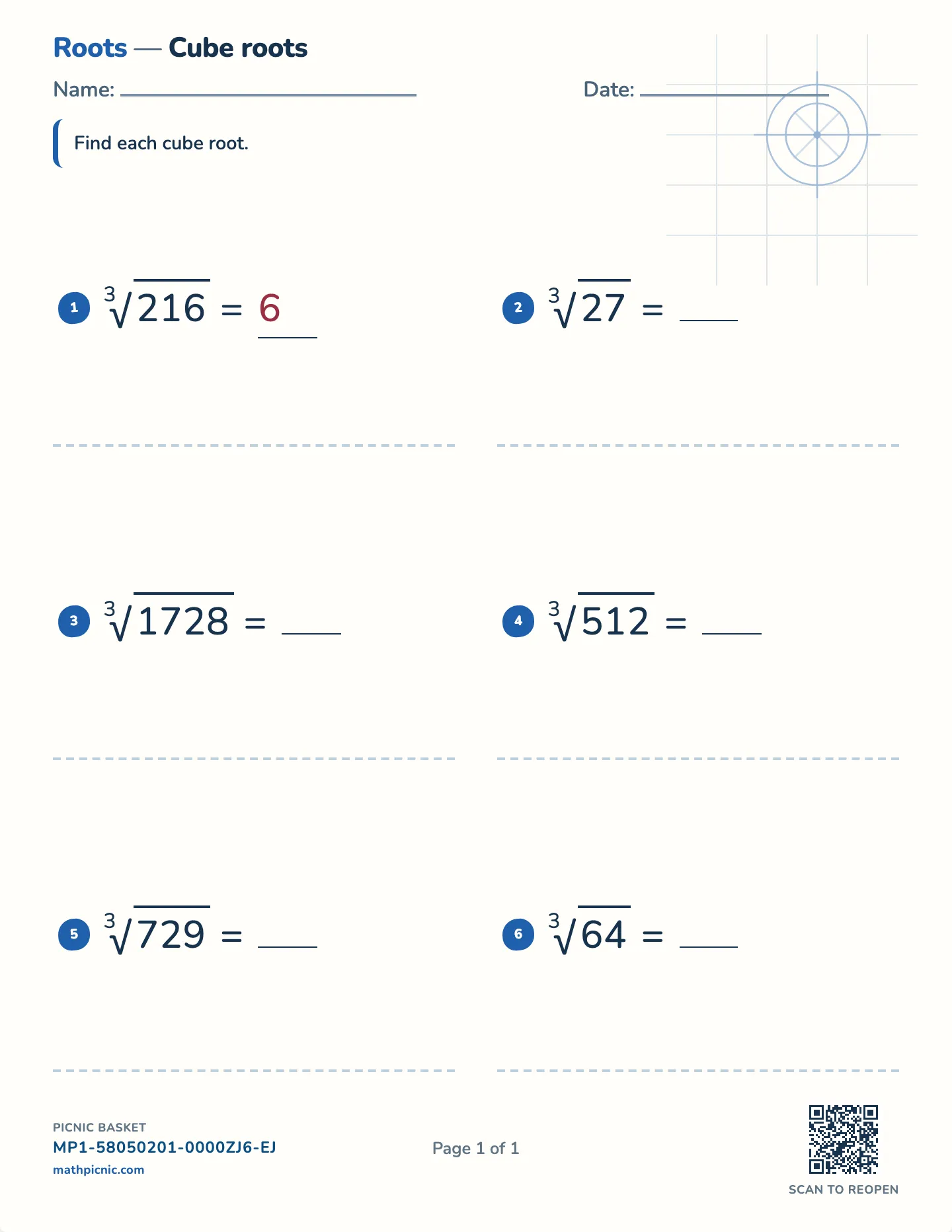
Find each cube root.
1216 =
227 =
31728 =
4512 =
5729 =
664 =

A cube root asks which number, multiplied by itself three times, gives this one. These free printable worksheets use perfect cubes only, so every answer comes out whole.
If they get stuck
The answer key prints on a separate page.
∛216 = 6 because 6 × 6 × 6 = 216. The list of cubes is much shorter than the list of squares — 1, 8, 27, 64, 125, 216, 343, 512, 729, 1000 — and knowing those ten covers most of what a course will ask for.
The most common mistake is dividing by three. ∛27 is 3, not 9, and a child who has only ever seen square roots will sometimes halve or third the number instead of looking for the factor that appears three times. Saying "what times itself times itself" out loud is usually enough to fix it.
One question from a sheet like this one, worked a step at a time — with a sentence saying what just happened and why.
Cube roots, step by step