Sphere volumeRadius or diameter
Name: Date:
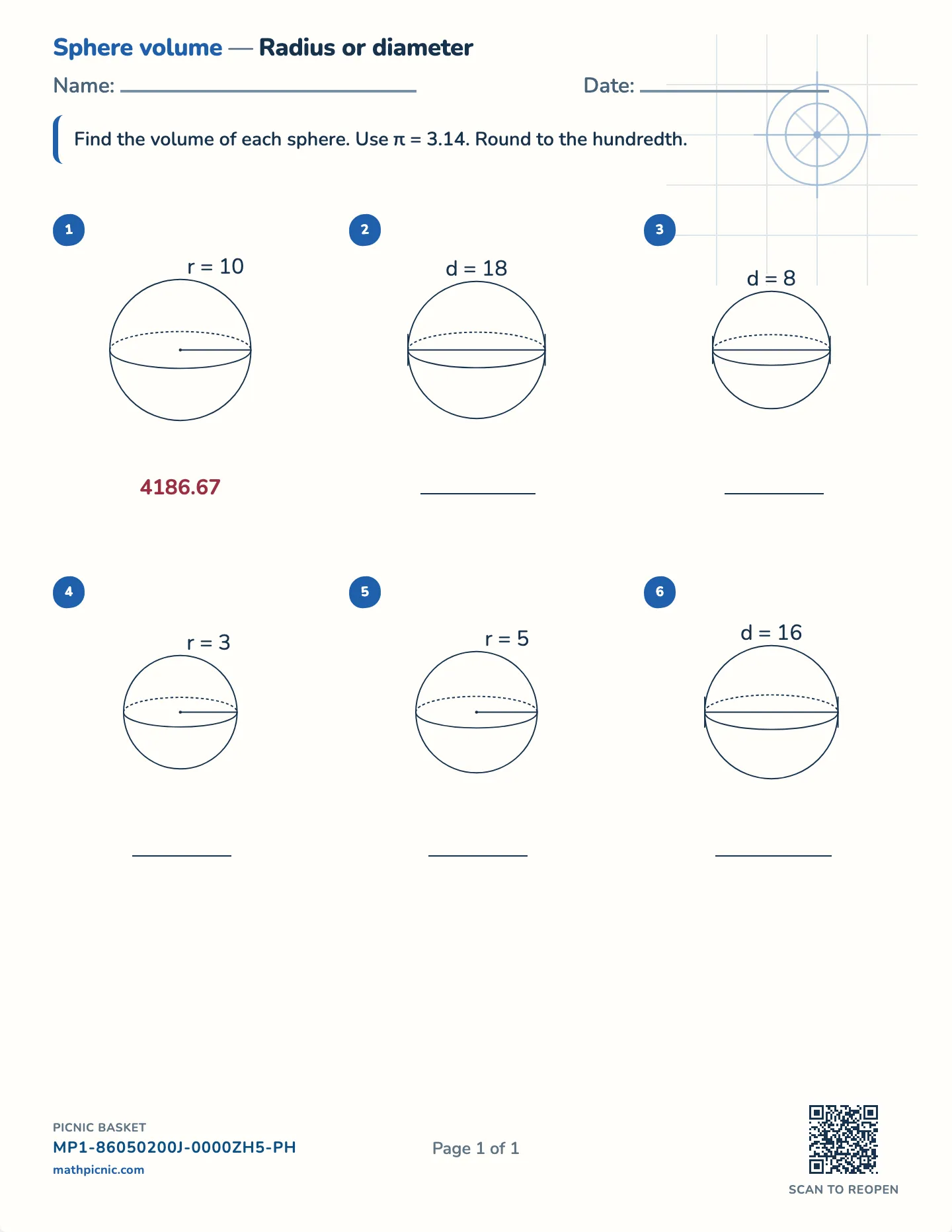
Find the volume of each sphere. Use π = 3.14. Round to the hundredth.
1
2
3
4
5
6

The volume of a sphere is four-thirds π r cubed, and almost every mark lost on it is lost before that formula is reached. These free printable worksheets label some figures with a radius and some with a diameter, so the first step is always reading which one you were given.
If they get stuck
The answer key prints on a separate page.
Halving a diameter is one keystroke and it is the step that disappears under pressure. A sphere 18 cm across has a radius of 9, and using 18 gives an answer eight times too big — a mistake large enough that a rough estimate would catch it, which is exactly why estimating first is worth the ten seconds.
Cubing is the other half. r³ means r × r × r, not r × 3, and the two are only equal when r is nothing useful. Working the cube out on its own line before multiplying by four-thirds keeps the two operations from colliding.
One question from a sheet like this one, worked a step at a time — with a sentence saying what just happened and why.
Volume of a sphere, step by step