RootsSquare and cube roots
Name: Date:
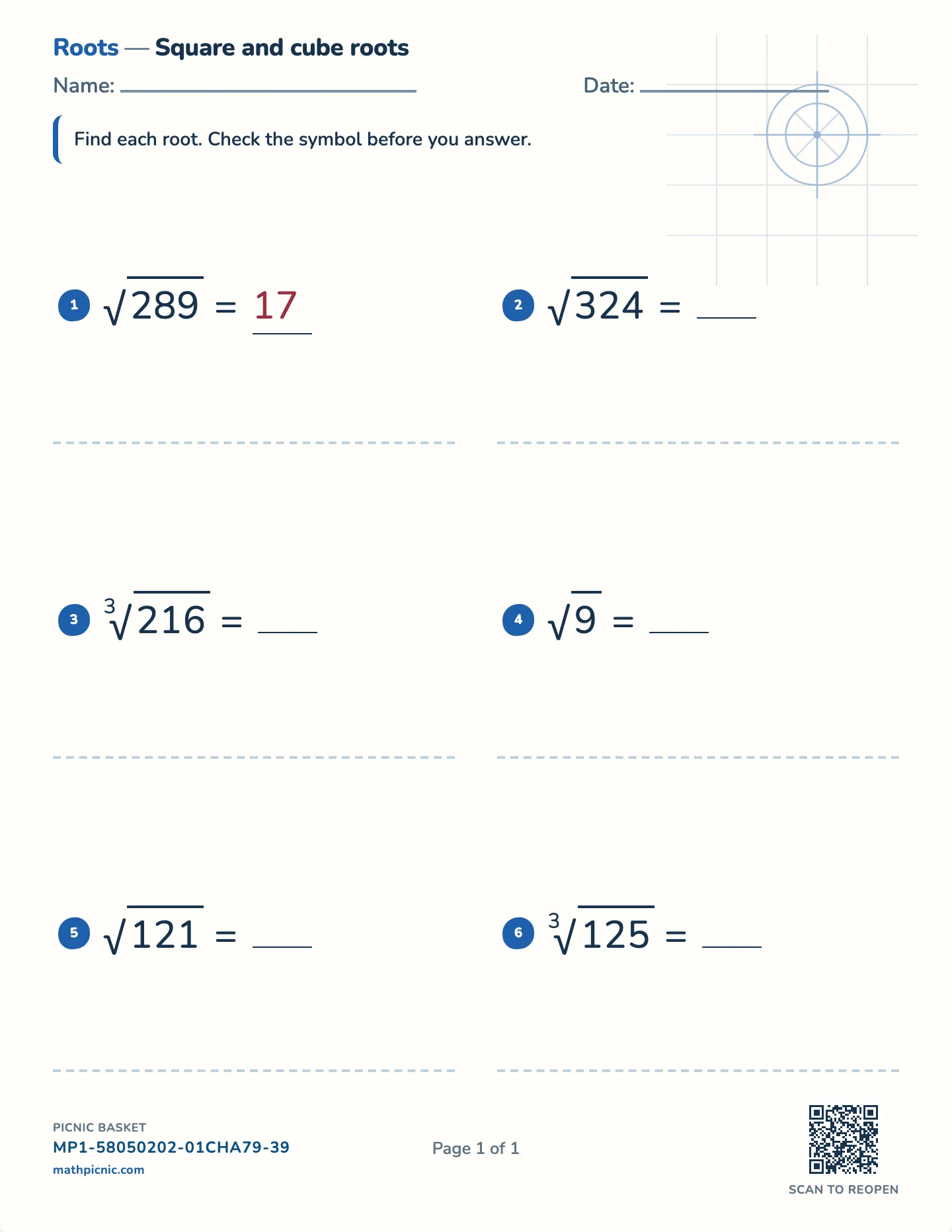
Find each root. Check the symbol before you answer.
1289 =
2324 =
3216 =
49 =
5121 =
6125 =

A square root asks a question: which number, times itself, gives this one? These free printable worksheets evaluate perfect squares and perfect cubes, so every answer is a whole number.
If they get stuck
The answer key prints on a separate page.
The error worth designing against is not arithmetic. Handed √324, a child who has known the symbol for a week divides — 324 ÷ 2 = 162 — because a radical looks like an operator that does something TO the number. Every sheet here is built so the question can be re-read as a question, and the step-by-step walk opens by doing exactly that.
The mixed setting is the one worth choosing, and it exists for a single reliable mistake: reading ∛ as √. A page of square roots never tests whether a child checks the symbol, because there is nothing to check. A page that alternates them does, and it is the only page that does.
One question from a sheet like this one, worked a step at a time — with a sentence saying what just happened and why.
Square roots and cube roots, step by step