Laws of exponentsMultiplying powers
Name: Date:
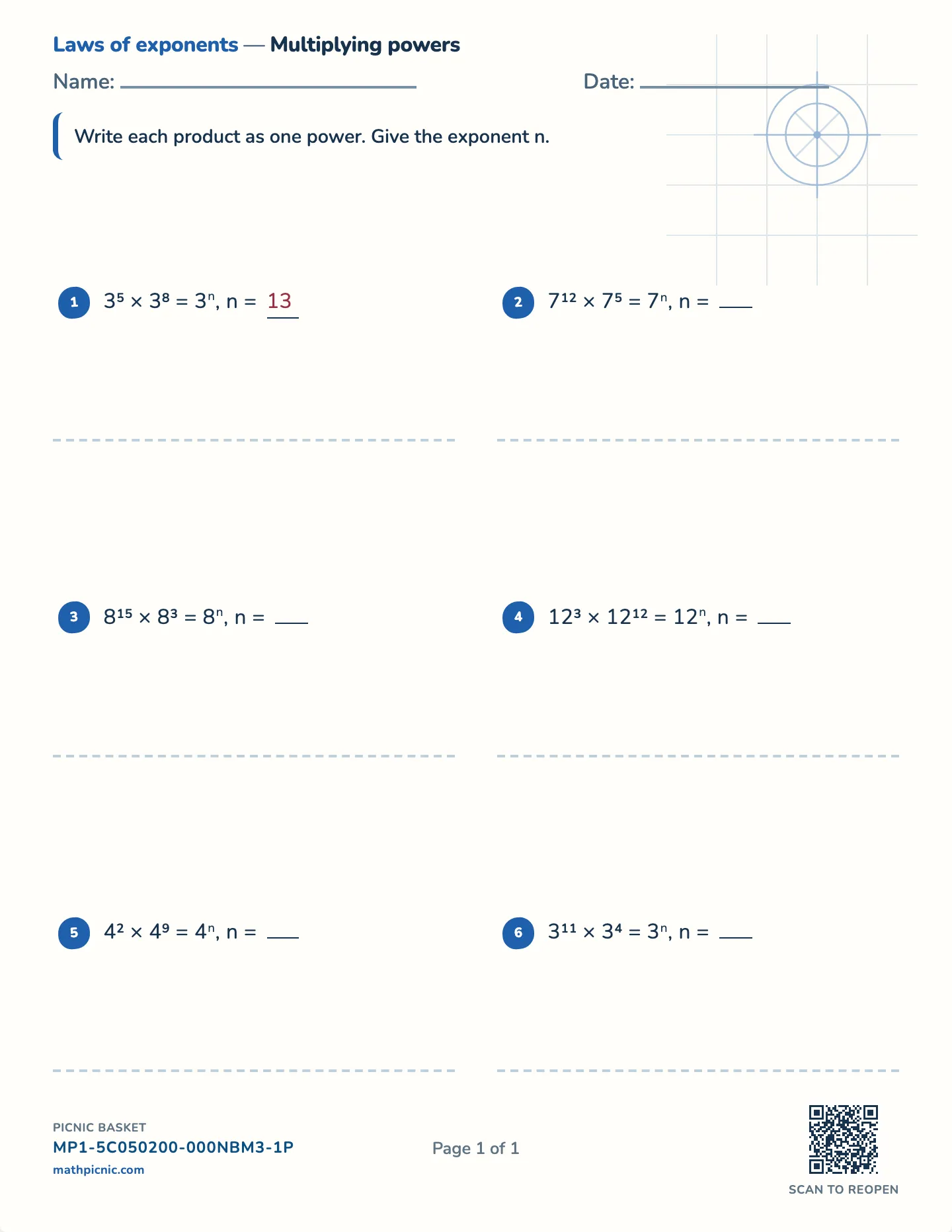
Write each product as one power. Give the exponent n.
13⁵ × 3⁸ = 3n, n =
27¹² × 7⁵ = 7n, n =
38¹⁵ × 8³ = 8n, n =
412³ × 12¹² = 12n, n =
54² × 4⁹ = 4n, n =
63¹¹ × 3⁴ = 3n, n =

Multiply two powers of the same base and the exponents add: that one move is the first rule of exponents a course teaches. These free printable worksheets ask for the exponent alone, so every answer is a whole number.
If they get stuck
The answer key prints on a separate page.
2³ × 2⁵ is three 2s multiplied by five 2s, which is eight 2s in a row — so the answer is 2⁸, and the exponent is simply 3 + 5. Writing it as 2ⁿ rather than as 32768 is what keeps the question about the rule: a child who works out both values and multiplies them has done real arithmetic but has never met the pattern the standard is after.
The base has to be the same for the exponents to add, and the sheet holds a child to that. 2³ × 2⁵ combines because both are powers of 2; 2³ × 5² does not, because there is no single base to count. Keeping to one base per question is what makes "add the exponents" a rule rather than a coincidence.
One question from a sheet like this one, worked a step at a time — with a sentence saying what just happened and why.
Product rule for exponents, step by step