Math test
Name: Date:
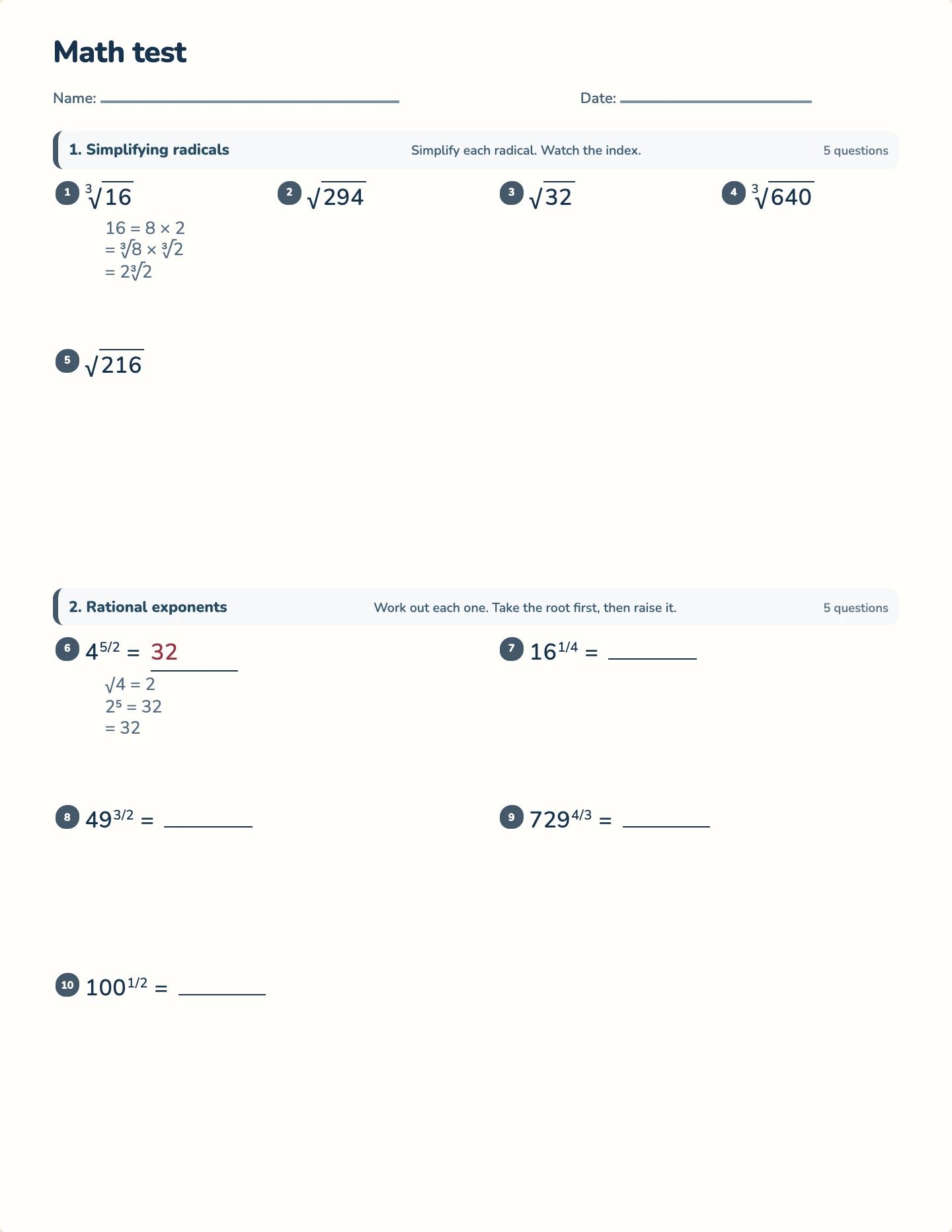
1. Simplifying radicalsSimplify each radical. Watch the index.5 questions
116
2294
332
4640
5216
2. Rational exponentsWork out each one. Take the root first, then raise it.5 questions
645/2 =
7161/4 =
8493/2 =

Pull the square out, then meet the same idea written as a fraction in the exponent.
The answer key prints on a separate page.
Simplifying a radical is one question asked twice: which perfect square divides this number, and what is left. The reliable error is stopping at the first square that works — √72 as 2√18 is not wrong so much as unfinished, and a paper that mixes square and cube roots checks that the index is being read rather than assumed. The cube-root questions are there for that reason and not to be harder.
Rational exponents are the same operation in different clothes: 8^(2/3) is the cube root of 8, squared. Students who can simplify √72 and still stall on 8^(2/3) have not met the connection, which is exactly what putting the two sections on one paper is for. The last section solves by taking a square root, and it is where the two solutions matter — x² = 49 has two answers, and dropping the negative one is the most common single mark lost in this unit.