What's on this sheet
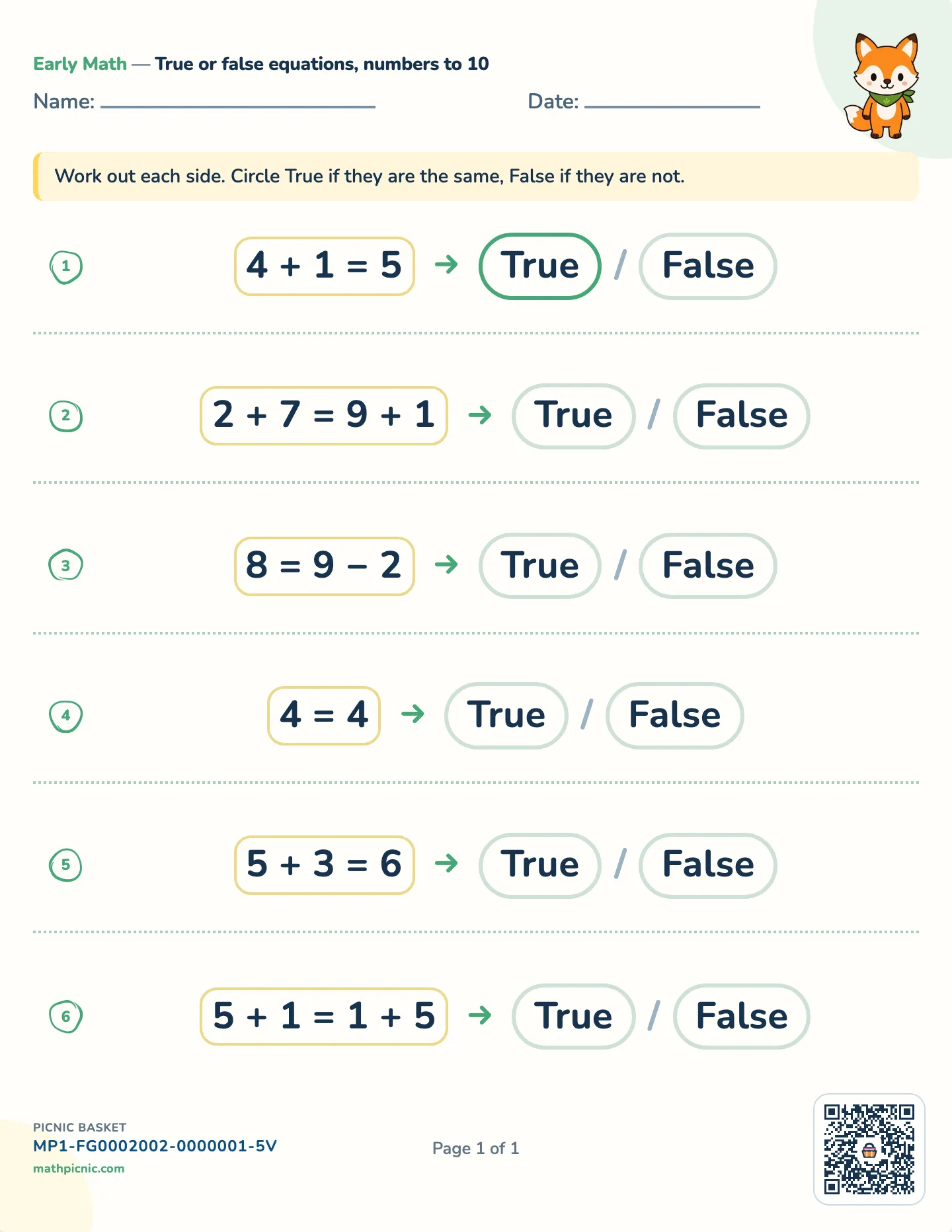
The statements come in the shapes a first grader rarely gets to see. The working can sit on the right, as in 8 = 9 − 2, and that one is false. It can sit on both sides, as in 5 + 1 = 1 + 5, and that one is true. There may be no sum at all, as in 4 = 4, which is true and looks strange the first time. A child who thinks the equal sign means "now write the answer" will stumble on all three, and that is how you find out.
Why this sheet works
Half of each sheet is true and half is false, so circling the same word all the way down does not work. The false ones are close, usually out by one or two, so a child has to work out the sides and cannot judge by eye. Some are the classic trap: in 4 + 1 = 5 + 2, the 5 looks like the answer to the first sum, but the two sides are 5 and 7.