Altitude to the hypotenuseThe altitude
Name: Date:
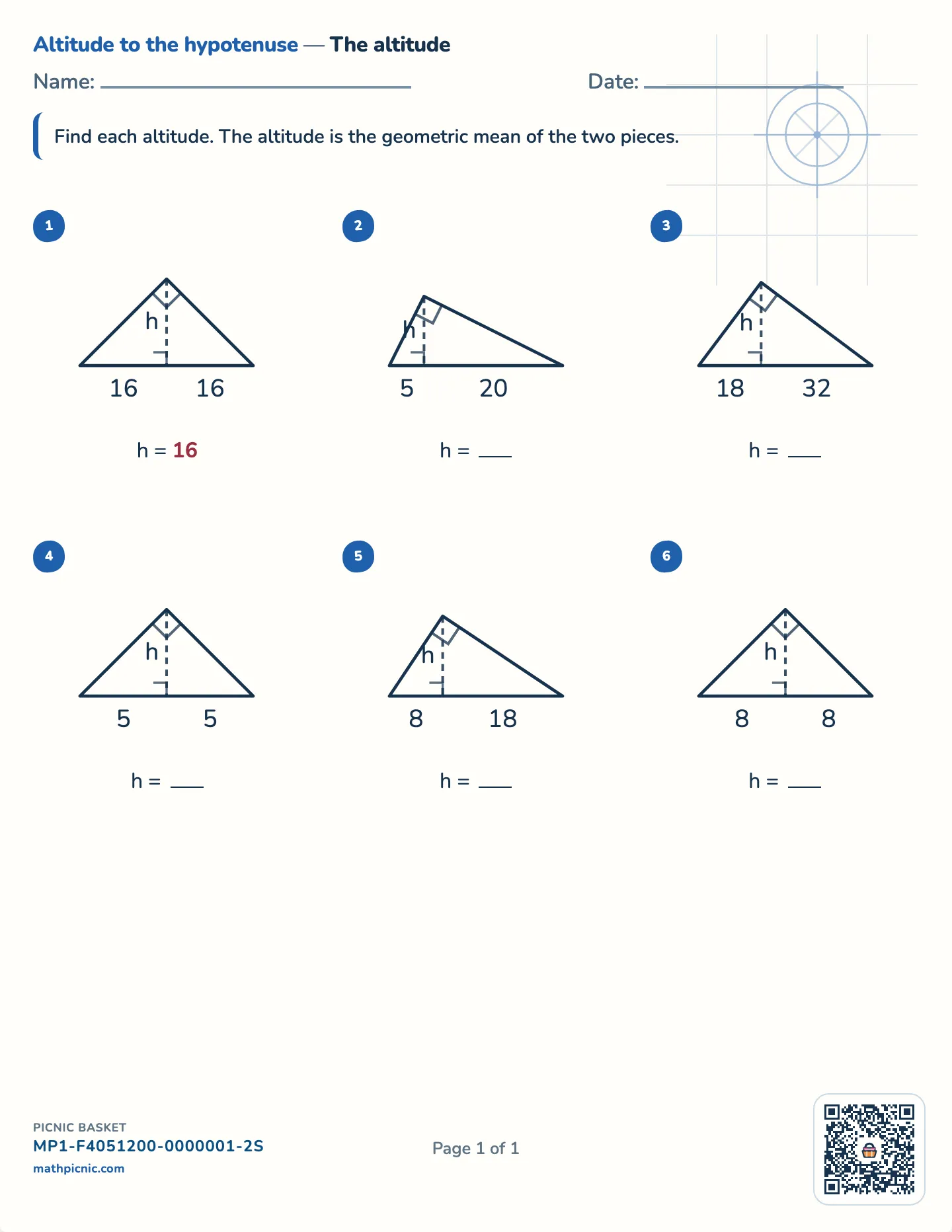
Find each altitude. The altitude is the geometric mean of the two pieces.
1h =
2h =
3h =
4h =
5h =
6h =

Drop a perpendicular from the right angle onto the hypotenuse and the triangle splits into two more, each similar to the whole and to each other. Three products fall out of that, and they turn a pair of lengths into a third without ever using Pythagoras.
If they get stuck
The answer key prints on a separate page.
The configuration is one triangle and one extra segment, and everything comes from similarity. The altitude cuts the hypotenuse into two pieces, p and q; the two small triangles it makes are each similar to the original, so their sides are in proportion, and the proportion rearranges into h squared equals p times q. The altitude is the geometric mean of the two pieces — which is exactly what a geometric mean IS, and this is the first place most students meet one that is not an average.
The second relation is the one that gets missed. Each LEG is the geometric mean of the whole hypotenuse and the piece beside it: a squared equals c times q, not p times q. A student who has just learned the altitude rule reaches for the two pieces out of habit, and the sheet separates the two relations onto their own settings so the difference can be practised rather than guessed. The Mixed setting puts them on one page once both are secure.
One question off this sheet, worked a step at a time — with a sentence saying what just happened and why.
Altitude to the hypotenuse, step by step