Similar figuresSides to 12
Name: Date:
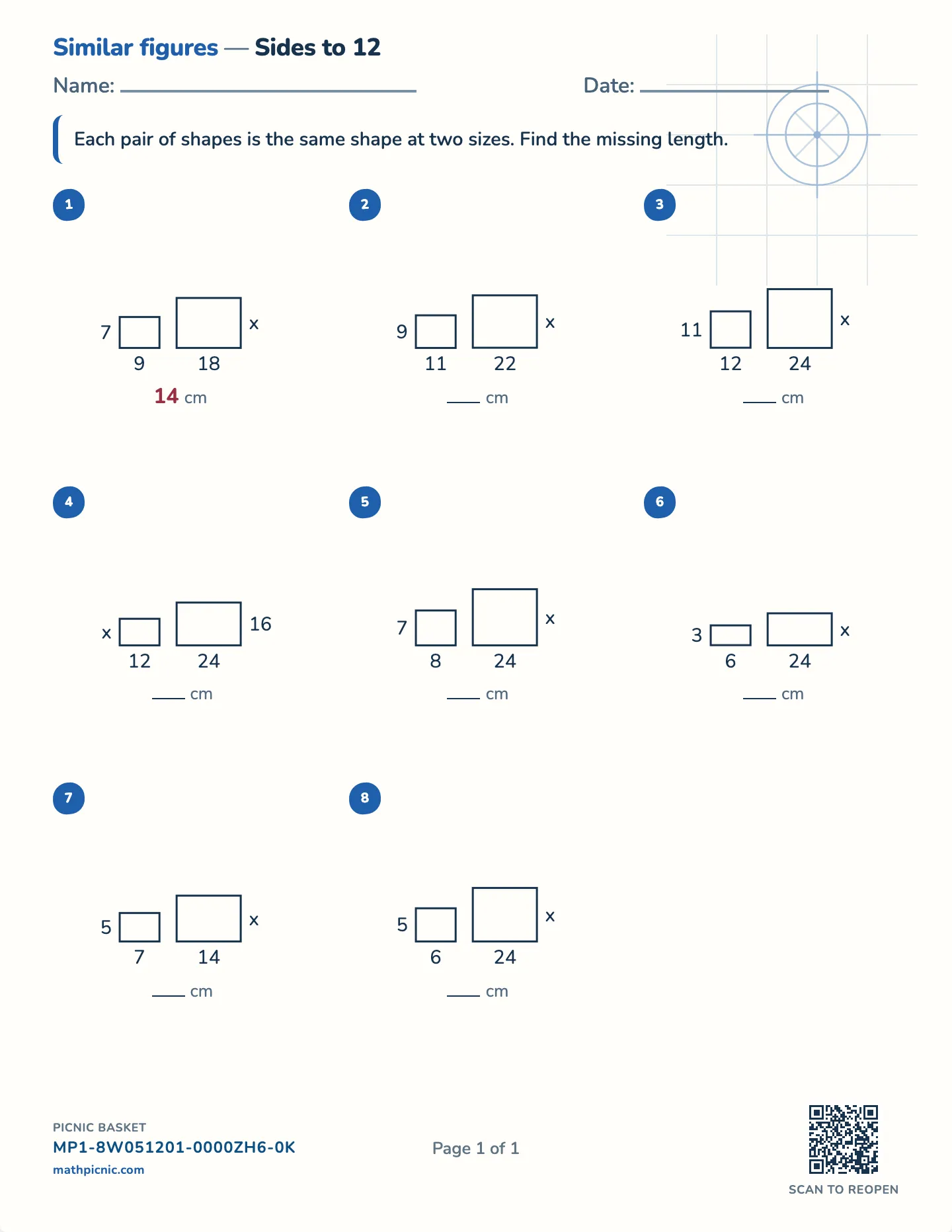
Each pair of shapes is the same shape at two sizes. Find the missing length.
1 cm
2 cm
3 cm
4 cm
5 cm
6 cm
7 cm
8 cm

Two shapes are similar when one is a scaled copy of the other: same angles, sides all multiplied by the same number. These free printable worksheets give both figures with one side missing, and finding the scale factor first is what makes the rest easy.
If they get stuck
The answer key prints on a separate page.
The whole method is two steps. Find a pair of sides that correspond and divide to get the scale factor — 18 against 9 is a factor of 2 — then apply it to the side you want. A child who does it in that order never has to set up a proportion at all, and the arithmetic stays inside the times tables.
Which sides correspond is the part that goes wrong. Shapes are drawn in the same orientation here so the pairing is readable, but it is still worth saying out loud: the long side matches the long side. Once figures start being rotated, a child who has been checking the pairing has something to fall back on.
One question from a sheet like this one, worked a step at a time — with a sentence saying what just happened and why.
Similar figures, step by step