
Trace the numbers 1 to 5
Five numbers is a first sheet. One practice row each, the start point ringed and the stroke order numbered, for a hand that is still learning what a pencil does.
- Letter & A4, portrait or landscape
- Real stroke centerlines, not outlines
- Change the size and reprint
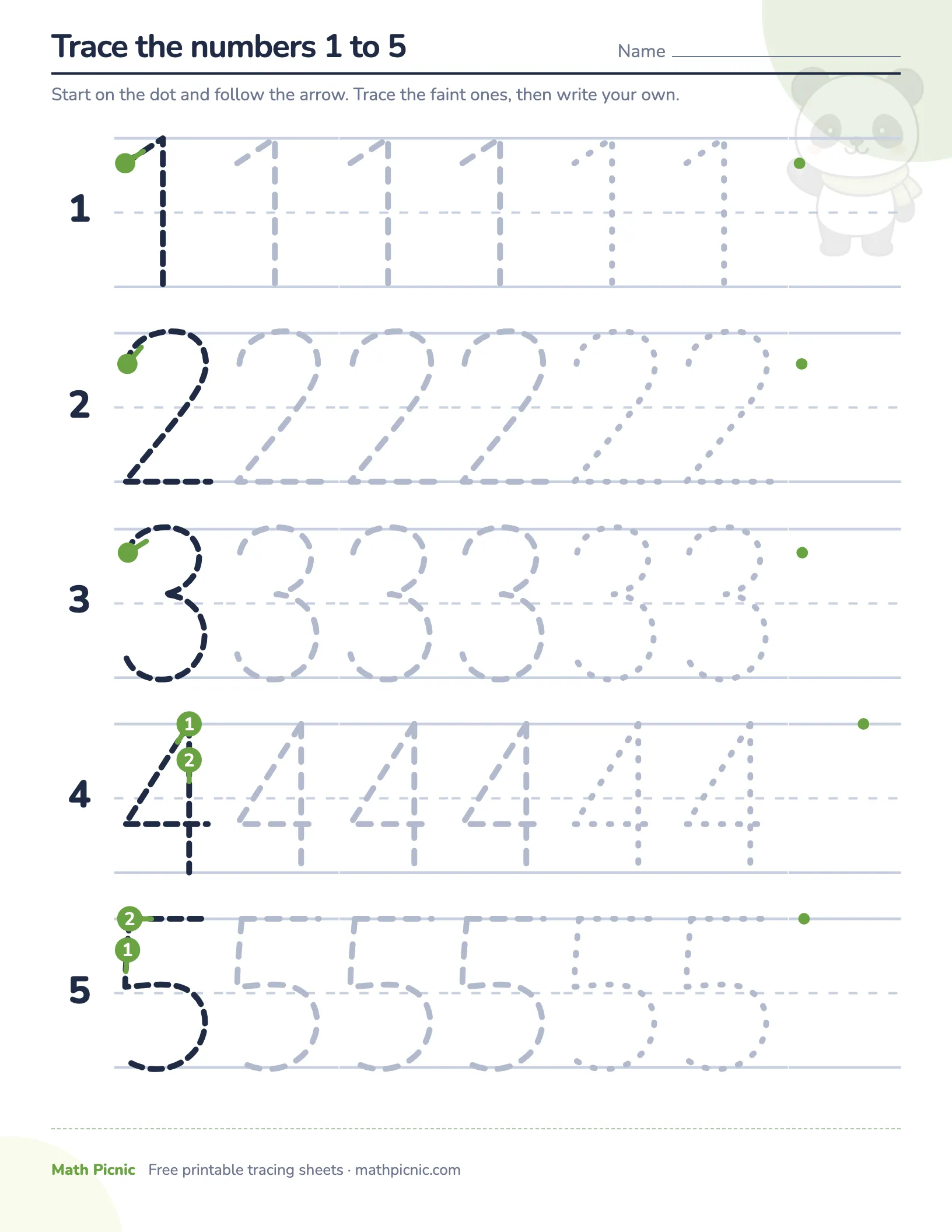

Trace the numbers 1 to 5
NameStart on the dot and follow the arrow. Trace the faint ones, then write your own.
About this sheet
One to five is the whole of early number for a while. A three-year-old who can say "one two three four five" is reciting a rhyme, and the digits on this page are the first time that rhyme has to become five separate marks that stay apart on the paper. Splitting the first ten in half is not a way of making the sheet shorter — it is that a child at this stage has about five rows of attention in them, and a page of ten spends the last five on a hand that has already stopped trying.
Why it is drawn this way
The shapes here are also the easy half, and deliberately so. 1 is a single downstroke, 2 and 3 are one continuous curve each, 5 is the only one in the range with a lift in it, and 4 is the one that goes wrong — built bottom-up it looks identical on the page and falls apart the moment it has to be written at speed. Every one of them gets a numbered start ring for that reason, on the solid example at the left of its row.