Arithmetic and geometric sequencesThe common difference
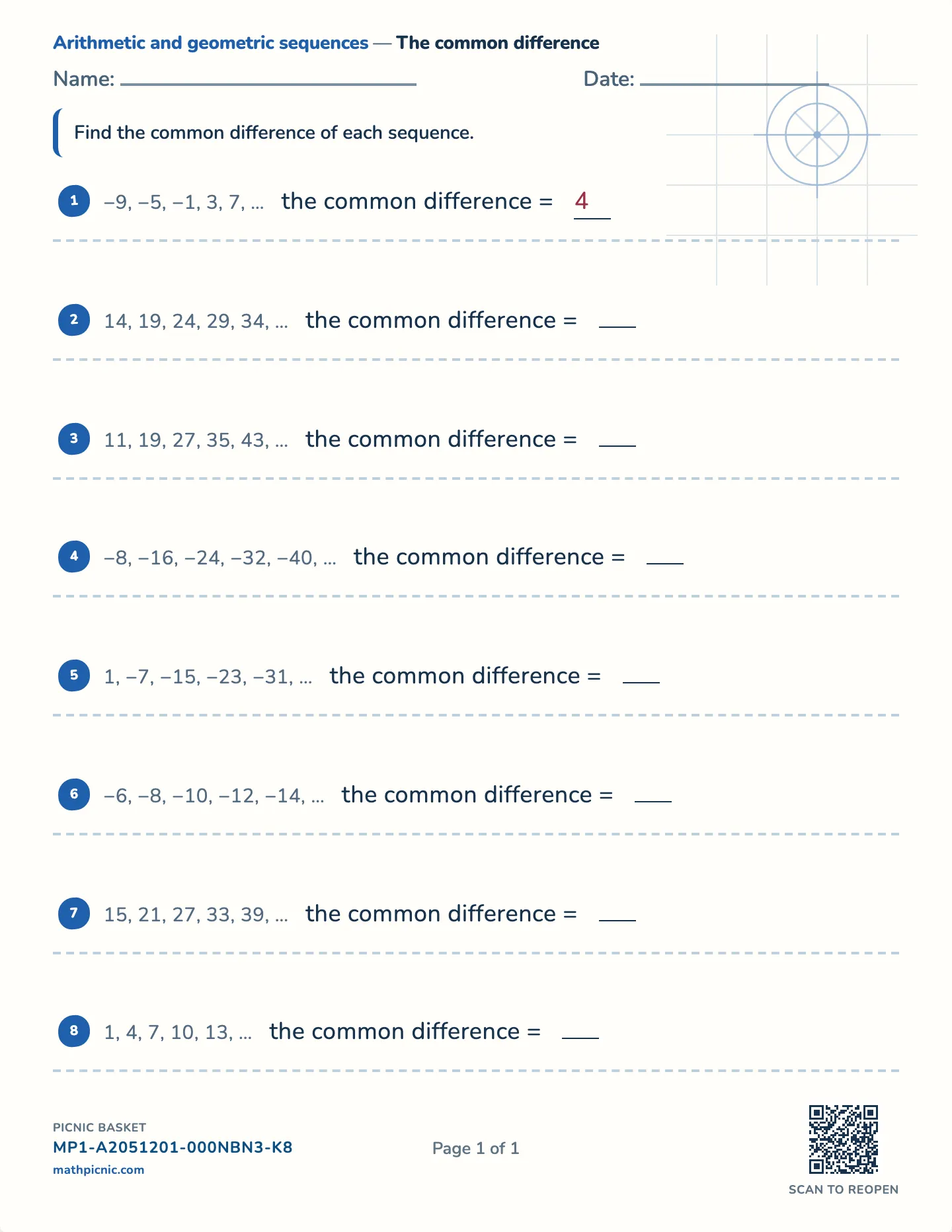
Find the common difference of each sequence.
The common difference is the step an arithmetic sequence takes every time, and finding it is where every other sequence question begins. These free printable worksheets practice that one move — subtract two neighbouring terms — and nothing else.
Kid stuck on one? You don’t just get the sheet.

The answer key prints on a separate page.
For 5, 12, 19, 26 the difference is 12 − 5 = 7, and the same 7 shows up between every other pair, which is what makes the sequence arithmetic in the first place. Doing the subtraction at two different points and checking they agree is the built-in test that the rule is real, and these sheets are short on purpose so a child can do that check every time.
The direction of the subtraction matters. A falling sequence like 20, 17, 14, 11 has a common difference of −3, not 3, and a child who subtracts the smaller from the larger loses the sign that tells the sequence which way it goes. Every step-by-step walk here subtracts later term minus earlier term, so a decreasing sequence reports a negative difference.
One question from this sheet, worked through a step at a time.
−9, −5, −1, 3, 7, … — the common difference