Decimal operationsHundredths
Name: Date:
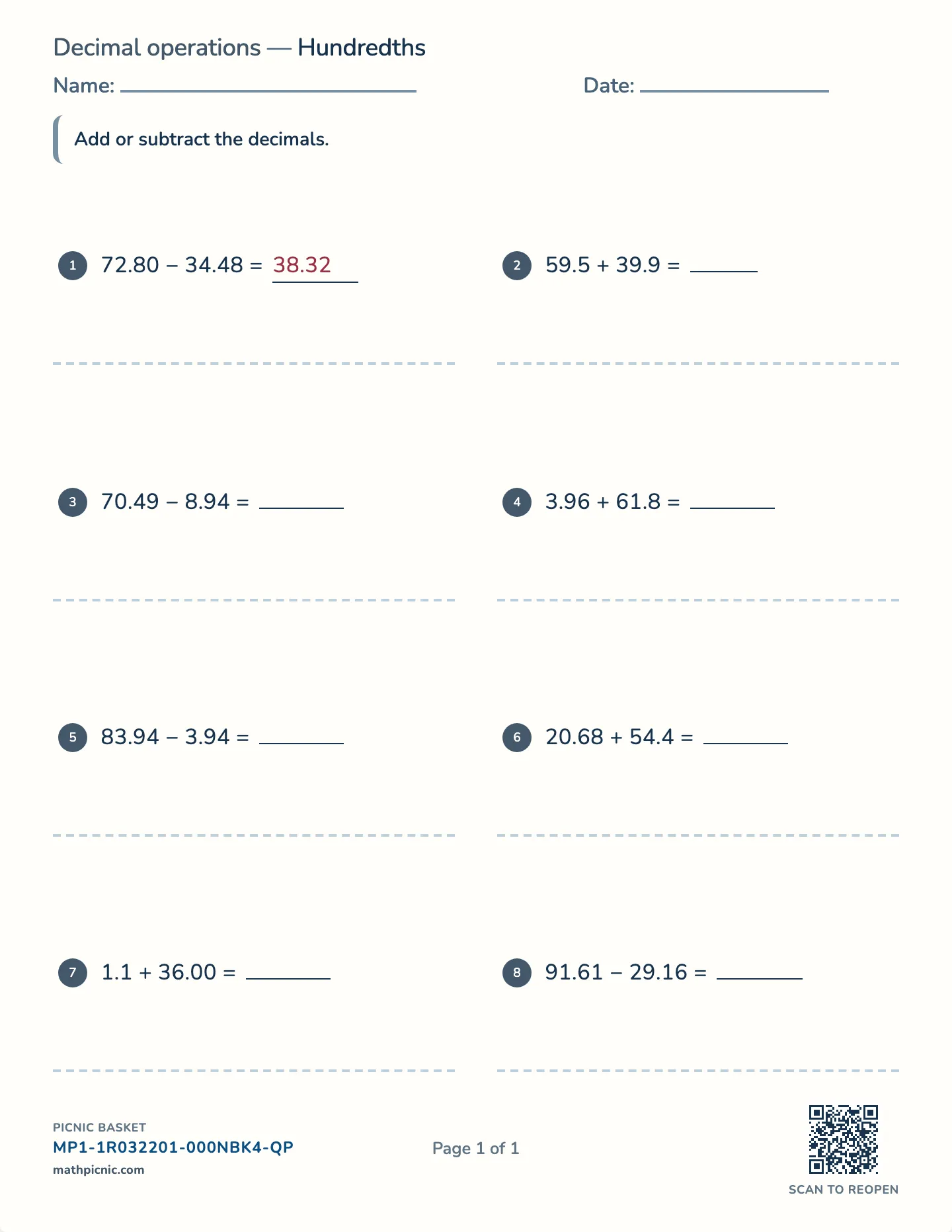
Add or subtract the decimals.
172.80 − 34.48 =
259.5 + 39.9 =
370.49 − 8.94 =
43.96 + 61.8 =
583.94 − 3.94 =
620.68 + 54.4 =
71.1 + 36.00 =
891.61 − 29.16 =

The hard decimal questions are the uneven ones: 4.5 plus 12.375, where one number runs to thousandths and the other stops at tenths. These free printable worksheets add and subtract decimals with different numbers of places, so lining up the point is the whole test.
If they get stuck
The answer key prints on a separate page.
When both numbers have the same places, lining up the point and lining up the right-hand edge look identical — and that is exactly why they hide the rule. Give the two numbers different lengths and the difference bites: 4.5 + 12.375 goes wrong the moment a child lines up the ends instead of the points, because the 5 lands under the 5 of 375 rather than in the tenths where it belongs.
Filling the gaps with zeros is the fix and the habit. Writing 4.5 as 4.500 says out loud that four and a half has no hundredths or thousandths, which is true and makes the columns honest; a blank column is where an invented digit or a dropped borrow creeps in. Subtraction is where it shows most — 17.9 − 14.913 needs 17.900 before the borrowing can even start.
One question from a sheet like this one, worked a step at a time — with a sentence saying what just happened and why.
Adding and subtracting uneven decimals, step by step