Geometry
Count squares
Name: Date:
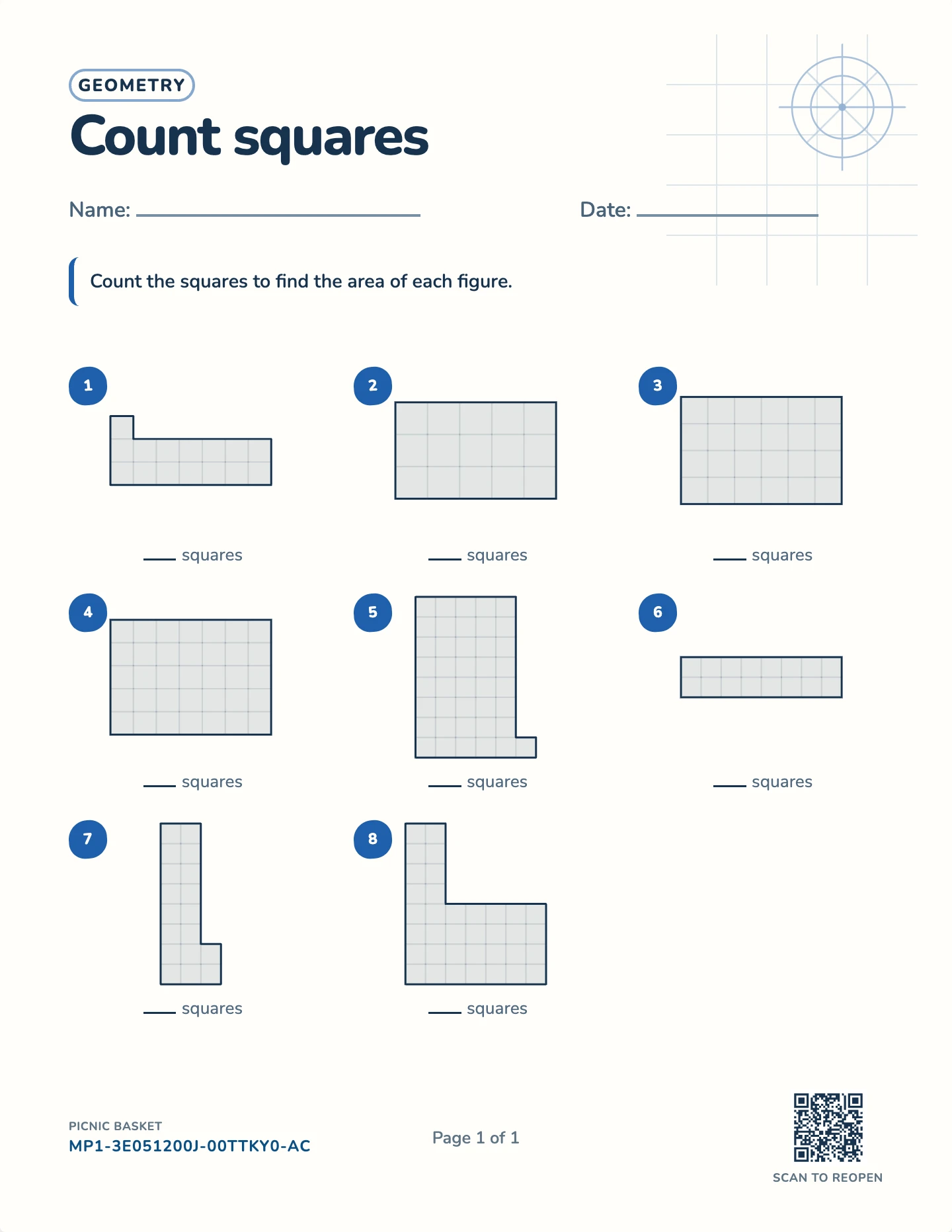
Count the squares to find the area of each figure.
1 squares
2 squares
3 squares
4 squares
5 squares
6 squares
7 squares
8 squares

Free · Grade 3 · Grids to 10 squares a side
Working on area by counting squares? Print this sheet as it is, or change the level and questions first.
The answer key prints on a separate page.
No numbers are printed beside the shapes, and that is deliberate. Labelling the sides would quietly turn the question into a multiplication, which is the next standard and a year later. Here the grid is the question: a child puts a finger on each square, counts, and discovers that area is an amount of covering rather than a rule to remember.
The irregular figures are the ones that matter most. An L-shape cannot be counted in one clean sweep, so a child has to organise the count themselves — by rows, by parts, or by finding the big rectangle and taking the bite away. Children who have only ever counted rectangles will often try to multiply the bounding box, which is the error this practice exists to surface.