Distance between two pointsPoints in the first quadrant
Name: Date:
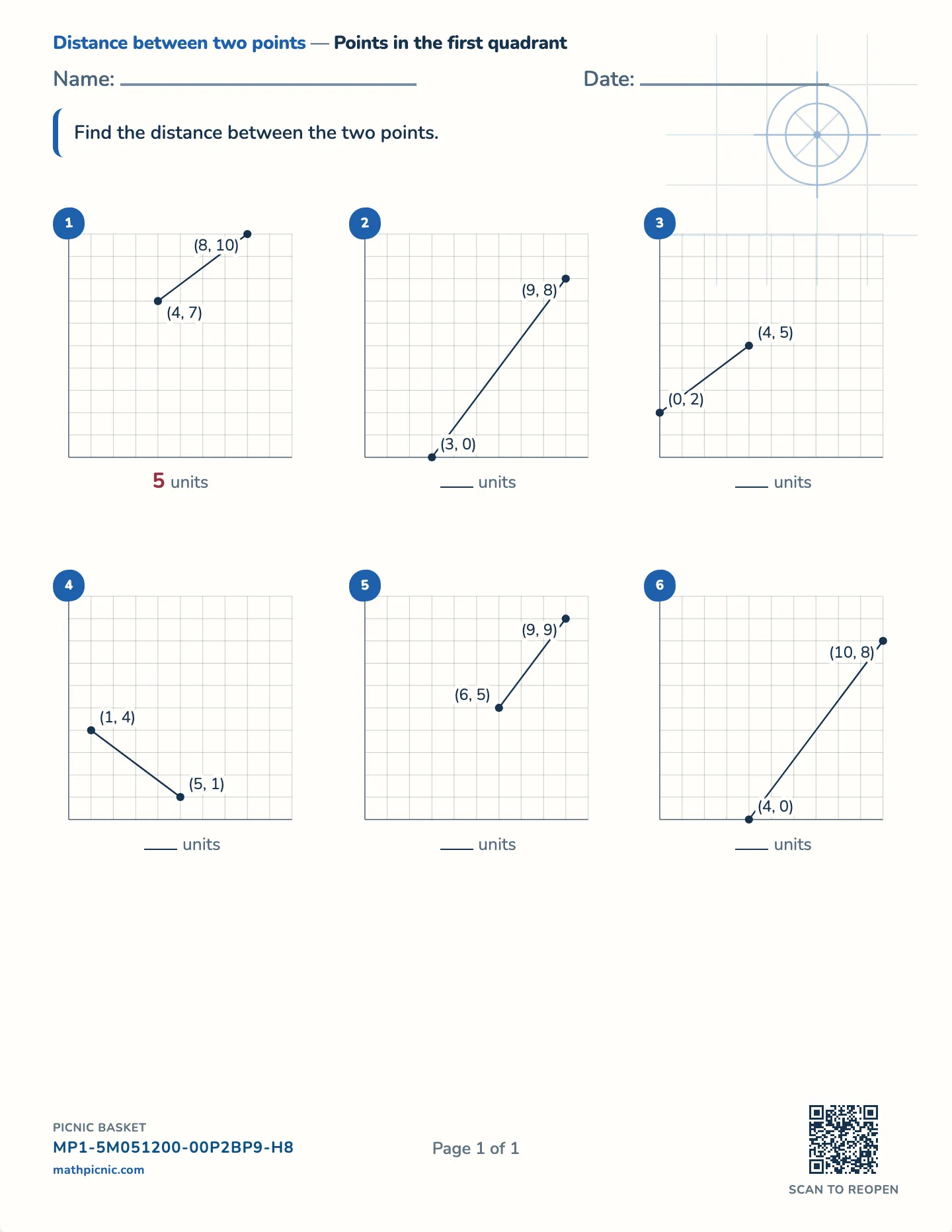
Find the distance between the two points.
1 units
2 units
3 units
4 units
5 units
6 units

There is no new theorem on these sheets — only a new place to notice the old one. Two points on a grid make a right triangle nobody has drawn yet, and the line between them is its longest side.
If they get stuck
The answer key prints on a separate page.
The figure shows the two points and the line joining them, and deliberately nothing else. Seeing that the horizontal and vertical gaps form a right triangle IS this standard; a picture that draws those two sides in has answered its own question and left an arithmetic exercise behind. The step-by-step walk adds them one at a time, which is where they belong.
That also means the distance formula does not need to be memorized as a fourth thing. It is a² + b² = c² with the two legs written as subtractions, and a child who has been taught it as its own formula has been given something extra to forget. Every walk here says the theorem out loud rather than quoting the formula.
One question from a sheet like this one, worked a step at a time — with a sentence saying what just happened and why.
Distance between two points, step by step