VolumeTwo boxes joined
Name: Date:
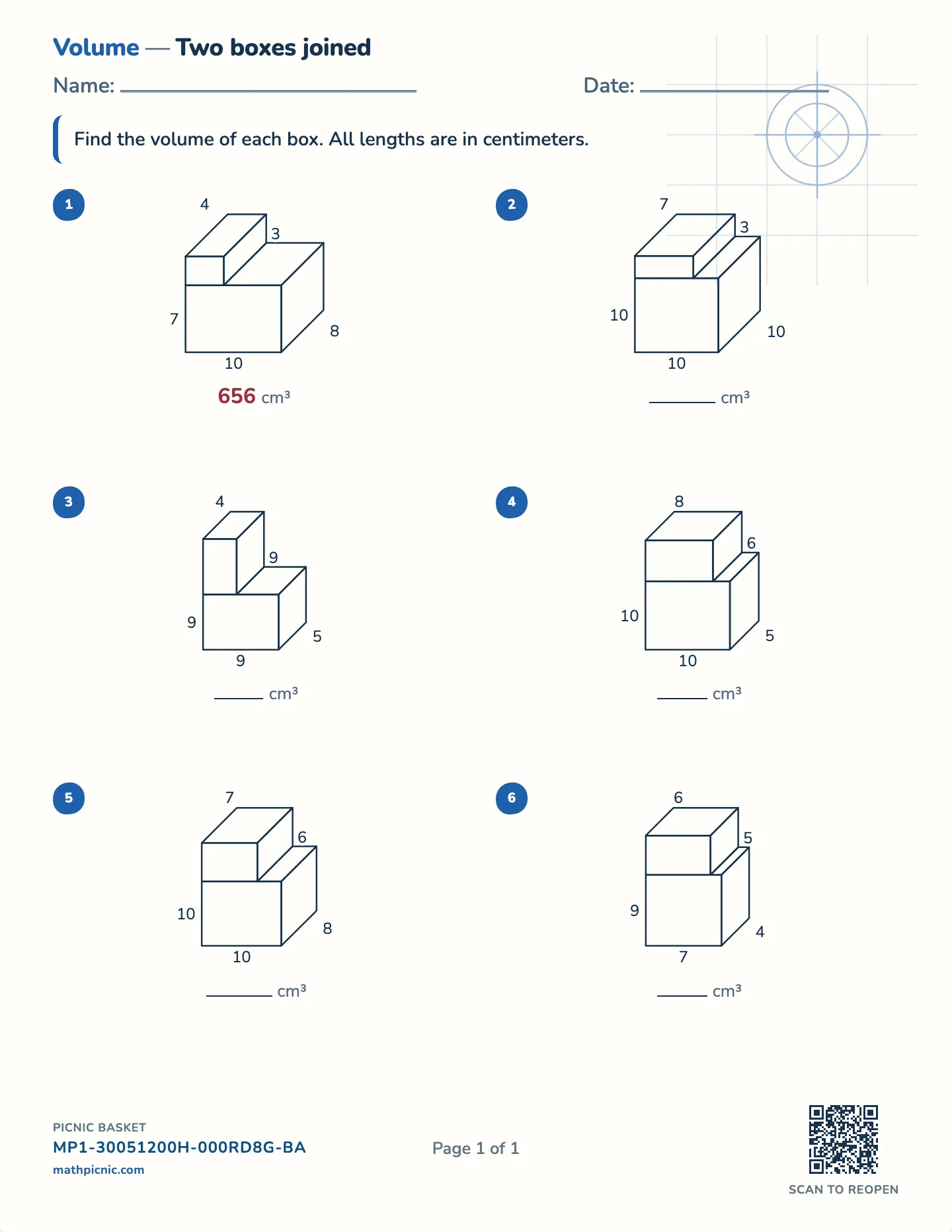
Find the volume of each box. All lengths are in centimeters.
1 cm³
2 cm³
3 cm³
4 cm³
5 cm³
6 cm³

Two boxes stuck together hold the sum of what each holds alone — and finding that sum is the step that turns a formula into a method. These free printable worksheets draw only composite solids, each an L or a step built from two prisms.
If they get stuck
The answer key prints on a separate page.
The plain-box volume sheets mix single prisms with composites; this one is composites throughout, because the addition is the skill and a page that lets a child settle into one box at a time never trains it. Every figure here is two non-overlapping prisms, so there is a second solid to find and a sum to write every single time.
The two prisms share a depth, drawn in oblique projection so the join is visible. That is not a shortcut for the picture's sake — a step that is narrower front-to-back as well as shorter changes two measurements at once, and splitting it cleanly into two boxes is exactly what the standard is asking for. Find each box on its own, then add.
One question from a sheet like this one, worked a step at a time — with a sentence saying what just happened and why.
Volume of composite solids, step by step