Math test
Name: Date:
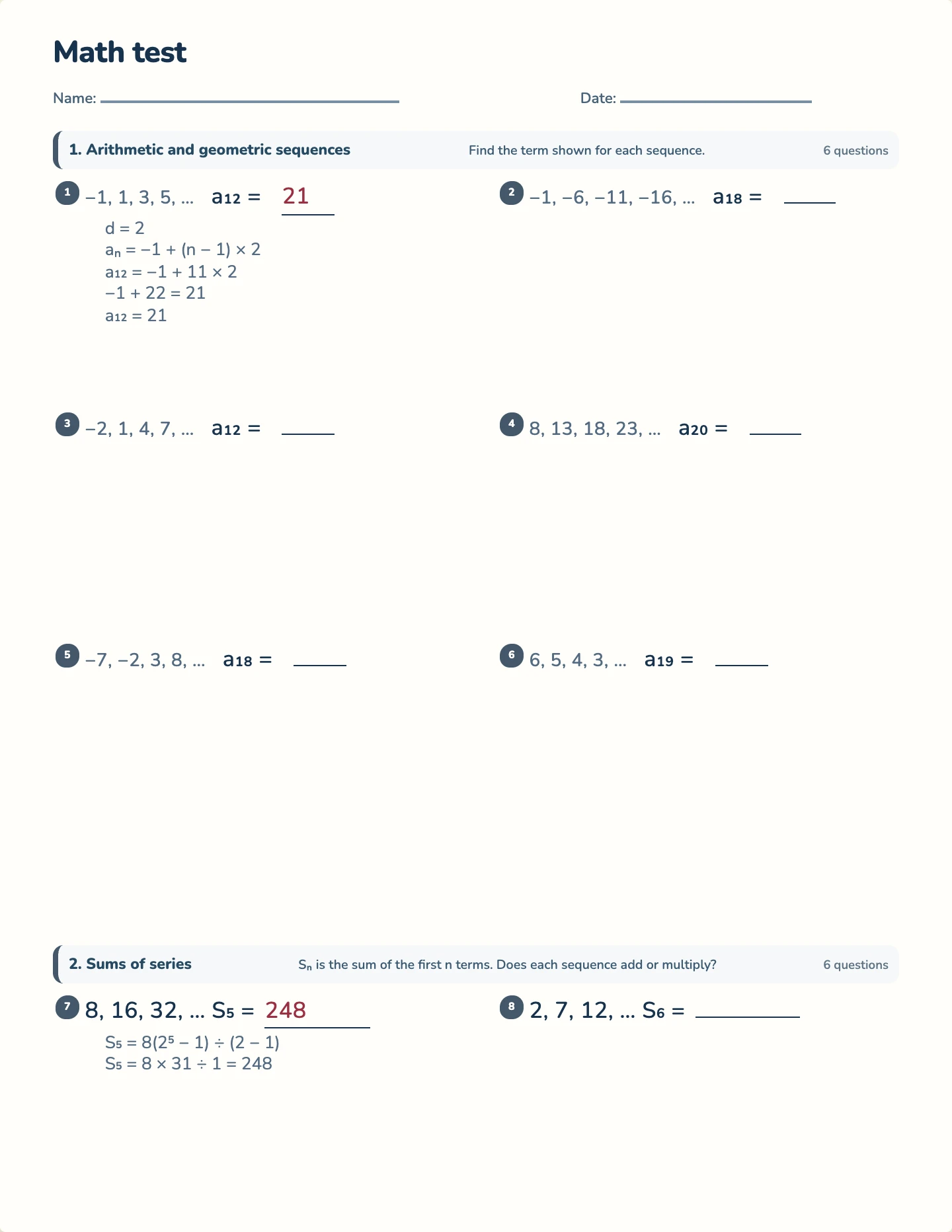
1. Arithmetic and geometric sequencesFind the term shown for each sequence.6 questions
1−1, 1, 3, 5, …a₁₂ =
2−1, −6, −11, −16, …a₁₈ =
3−2, 1, 4, 7, …a₁₂ =
48, 13, 18, 23, …a₂₀ =
5−7, −2, 3, 8, …a₁₈ =
66, 5, 4, 3, …a₁₉ =

Find the rule, then add up the first n terms without writing them all out.
The answer key prints on a separate page.
A sequence is a rule, and the first job is deciding which kind of rule it is: does it add the same amount each time or multiply by the same number. Students who reach for a difference on every sequence get 3, 9, 27 wrong in a way that looks like arithmetic, so the paper mixes the two rather than labeling them.
Summing is the second half and the point of the unit. The questions print the first three terms and ask for S₅ or more, which is deliberate — asking for S₃ would be asking a student to add up three numbers already on the page, with no sequence to continue and no formula to reach for. From five, the remaining terms have to be generated before anything can be added, which is the question the formulas exist to answer.