Column addition2-digit · 3 numbers
Name: Date:

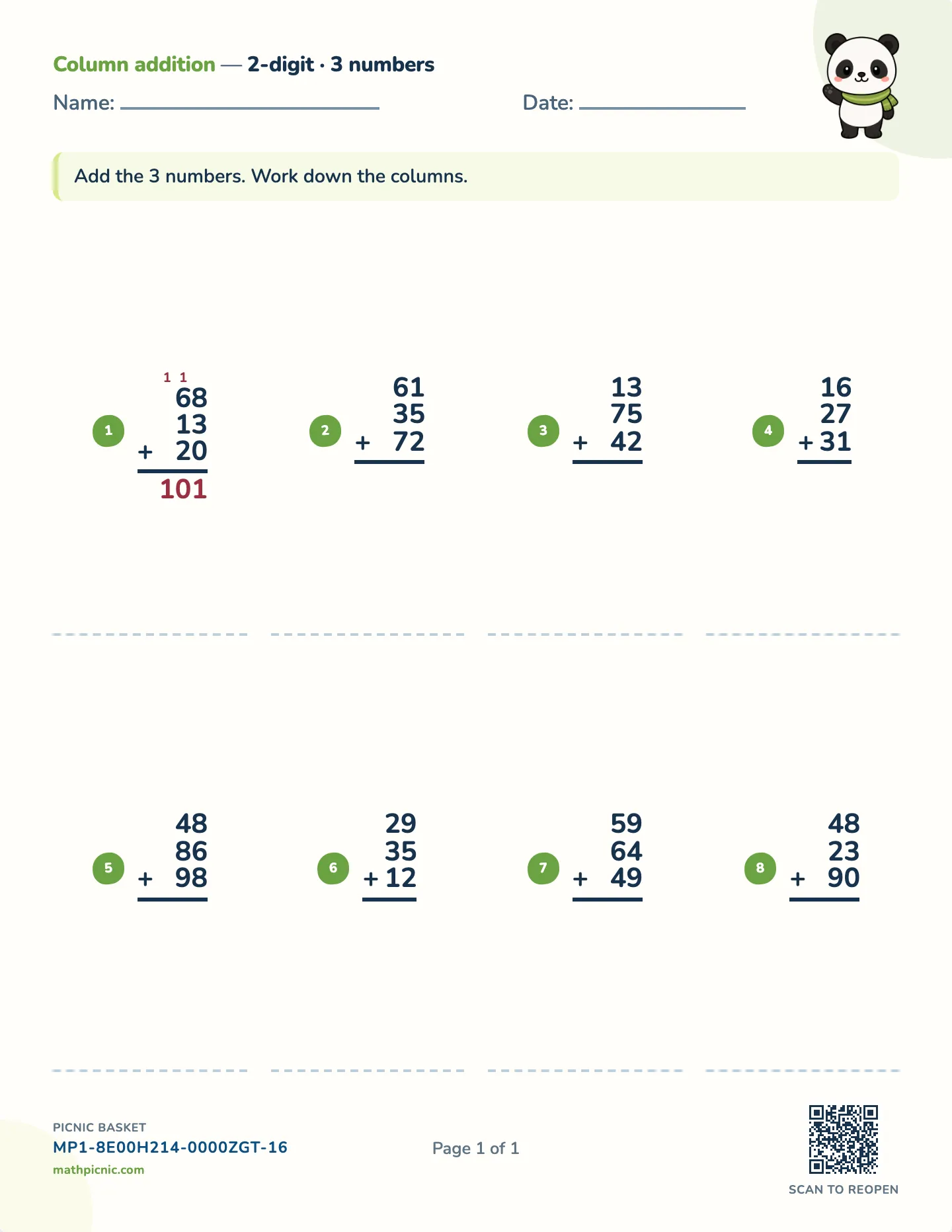
Add the 3 numbers. Work down the columns.
1681320
2613572
3137542
4162731
5488698
6293512
7596449
8482390

A column with three numbers in it is not just a longer sum — the carry can be two rather than one, and that is the step children are rarely shown. These free printable worksheets stack three two-digit numbers and leave room for the working.
If they get stuck
The answer key prints on a separate page.
Two-digit column addition carries at most one ten. Add a third row and the ones column can total twenty-something, so a 2 goes above the tens. Children who learned carrying as "write the little 1" get these wrong in a way that looks like carelessness and is really a rule half-learned.
The order the three are added in is free, and that is worth pointing out. Looking down the column for a pair that makes ten — 7, 3 and 8 is ten and eight — turns a three-step addition into a two-step one, and it is the first place where choosing an order is genuinely faster than working left to right.
One question from a sheet like this one, worked a step at a time — with a sentence saying what just happened and why.
Adding three numbers, step by step