Early MathNumber bonds to 5, 10, 20
Name: Date:

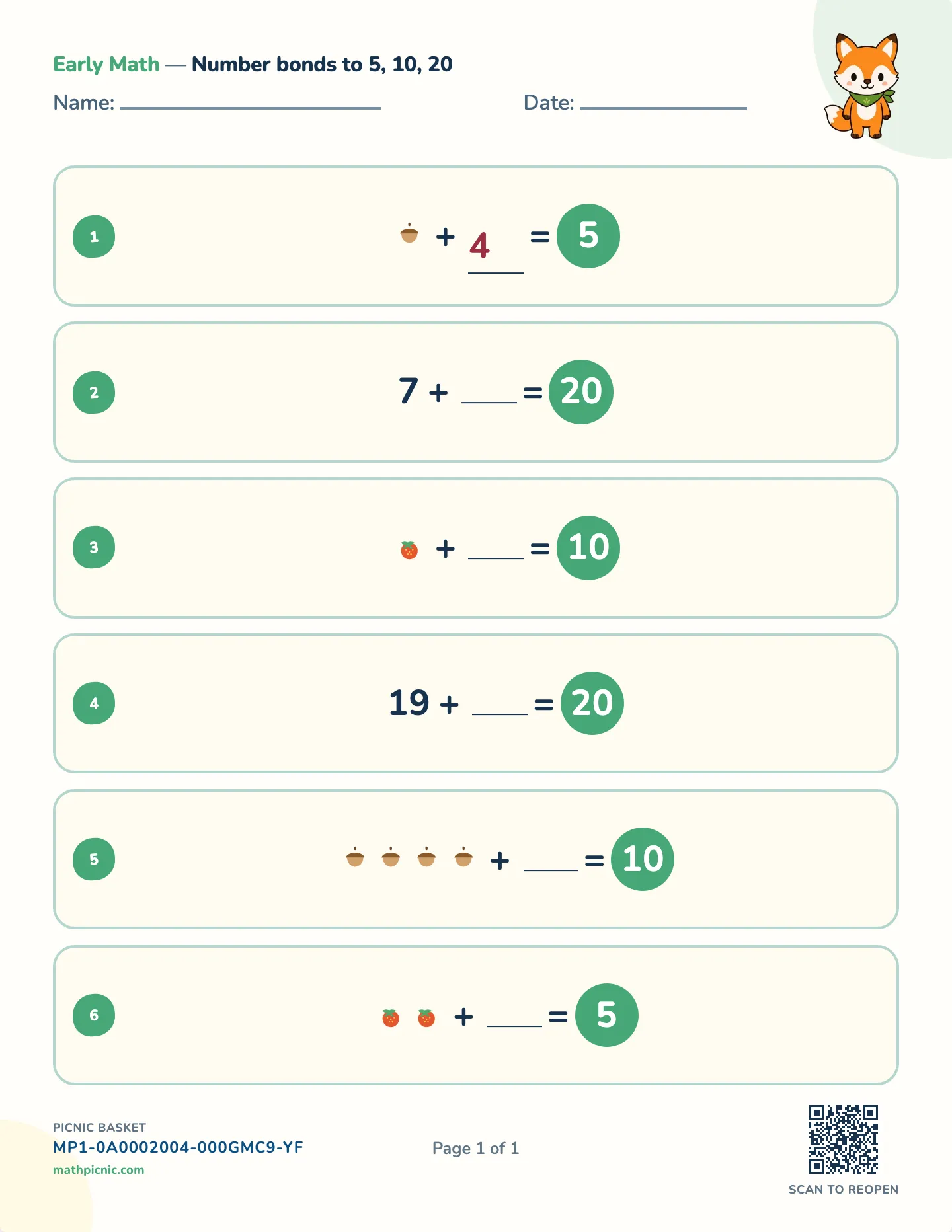
Write the number that is missing from each bond.
151
2207
3101
42019
5104
652

Number bonds teach that a whole number can be split into two parts and put back together. These free printable worksheets show one known part and ask how many more are needed to make five, ten, or twenty.
If they get stuck
The answer key prints on a separate page.
Every question is a complete part-whole relationship rather than two numbers put side by side. Every missing part is positive, every equation adds exactly to its shown target, and a six-question page is balanced across the useful landmark wholes available at the selected level. This keeps make-five and make-ten practice visible even when bonds to twenty introduce more possible combinations.
Each bond has its whole drawn beside it as a group of themed pictures that a young child can touch and count — twenty as two rows of ten. The child counts on from the part that is shown and fills the one blank to complete the whole.
One question from a sheet like this one, worked a step at a time — with a sentence saying what just happened and why.
Number bonds and make ten, step by step