Intercepts of a lineThe y-intercept
Name: Date:
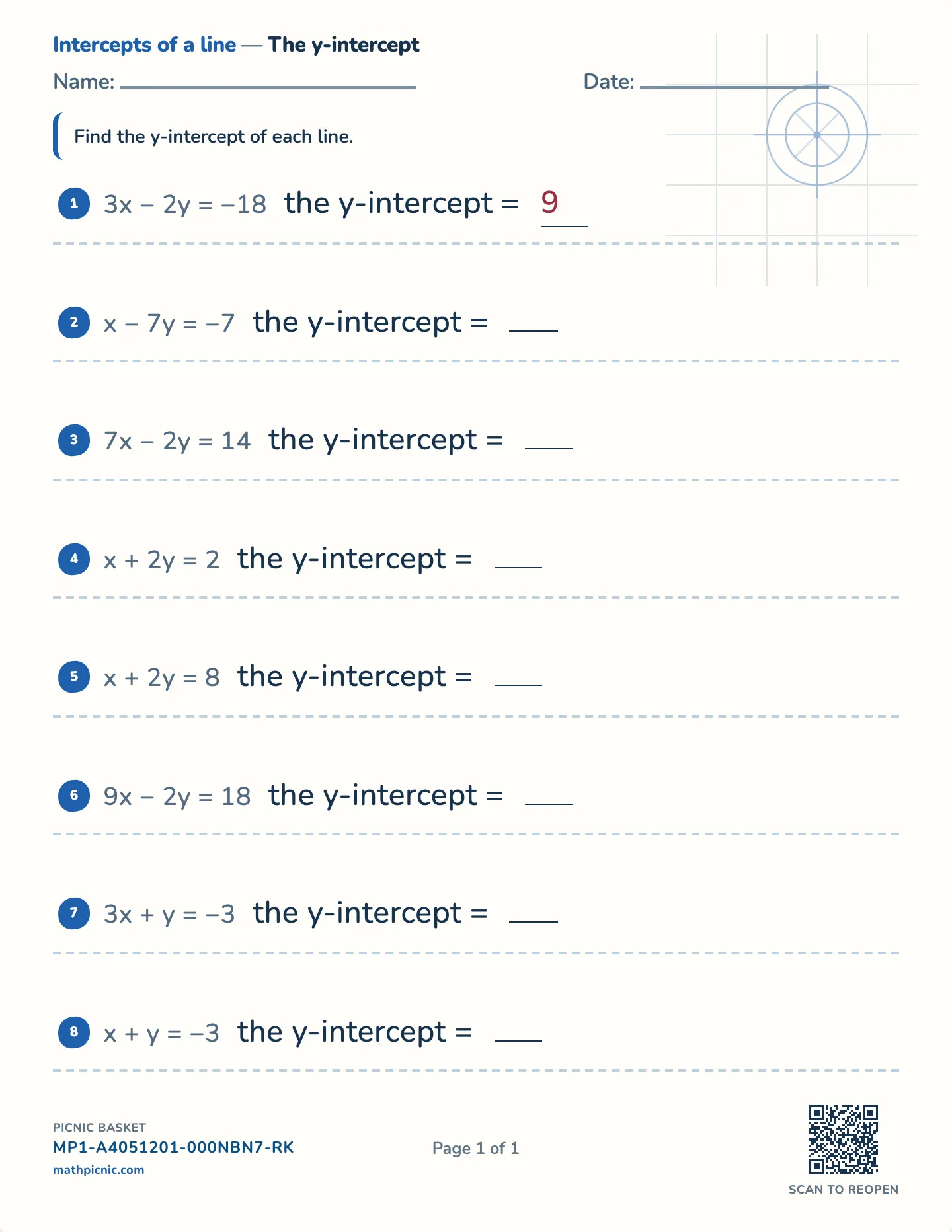
Find the y-intercept of each line.
13x − 2y = −18y =
2x − 7y = −7y =
37x − 2y = 14y =
4x + 2y = 2y =
5x + 2y = 8y =
69x − 2y = 18y =
73x + y = −3y =
8x + y = −3y =

The y-intercept is where a line crosses the y-axis, and on that axis x is zero — so it is one substitution and a one-step solve away. These free printable worksheets give a line in standard form and ask only for the y-intercept.
If they get stuck
The answer key prints on a separate page.
Setting x = 0 removes the x-term. For 3x + 4y = 24 the 3x is gone, leaving 4y = 24 and y = 6, so the line crosses at (0, 6). The one thing to keep straight is which variable to zero: the y-intercept is found by making x zero, not y, and a child who mixes the two finds the wrong crossing every time. This page holds the answer on the y-intercept so that pairing is drilled cleanly, while the combined sheet keeps both crossings in play at once.
These are standard-form lines on purpose. In y = mx + b the y-intercept is already printed as b, so reading it is copying a number; here the equation hides it behind a term that has to be cleared first, which is the difference between reading an intercept and finding one.
One question from a sheet like this one, worked a step at a time — with a sentence saying what just happened and why.
Finding the y-intercept, step by step