Early MathSharing onto plates, up to 12 in all
Name: Date:

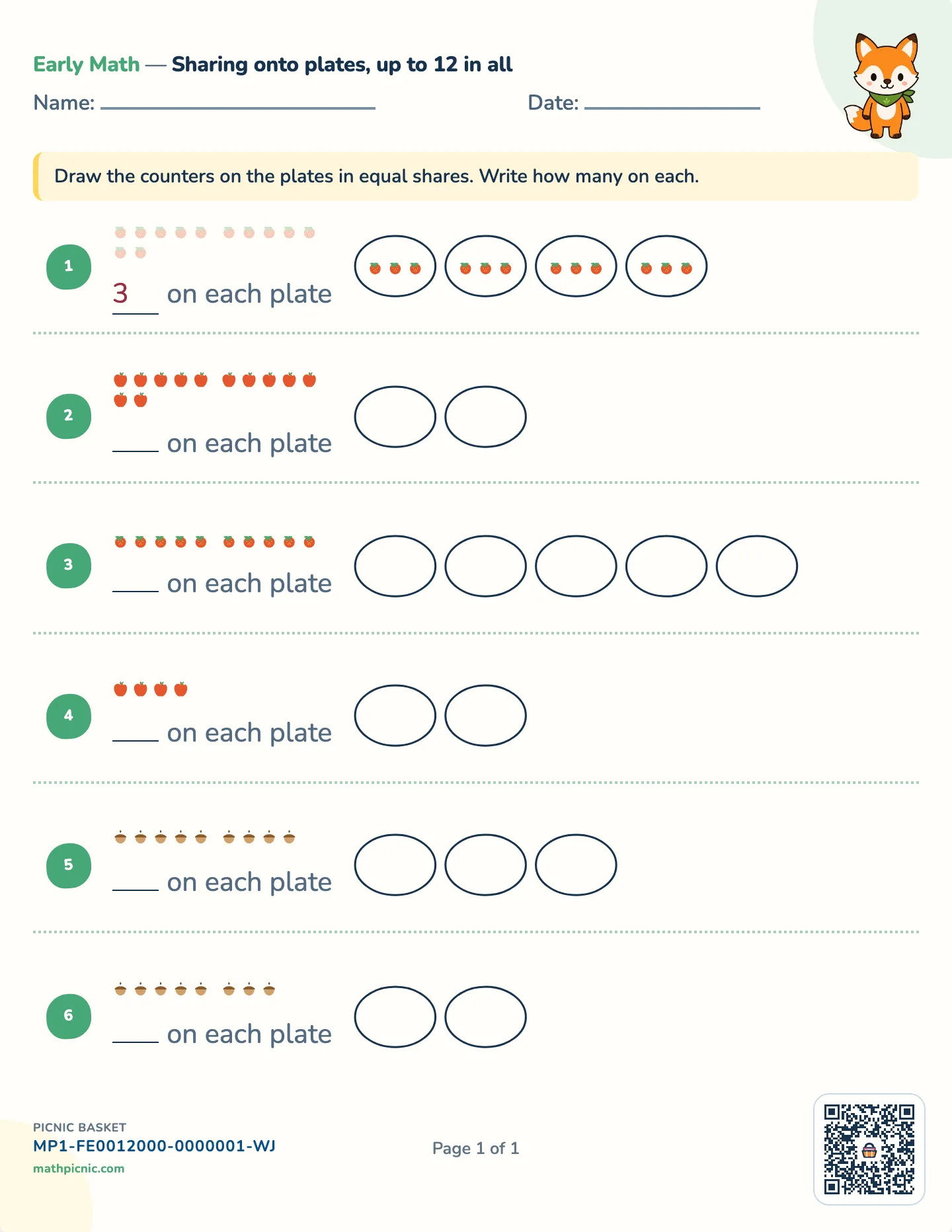
Draw the counters on the plates in equal shares. Write how many on each.
1
2
3
4
5
6

A pile of counters and a row of empty plates. The child deals the counters out, draws them where they land, and writes how many each plate got. That is division before the sign: nothing to recall, only something to share fairly.
If they get stuck
The answer key prints on a separate page.
The plates are printed empty and every one is the same size, big enough to draw six counters on. A plate drawn to fit its answer would give the answer away, and a plate too small to draw on turns the sheet back into a number to guess. The drawing is the work; the number is what the drawing shows.
The pile is set out in rows of ten with a gap after the fifth counter, so it is quick to count and says nothing about how it will divide. Twelve counters look the same whether they are going onto three plates or four, and both of those can turn up on one page — one pile, two different fair shares.