Counting squaresL-shapes
Name: Date:
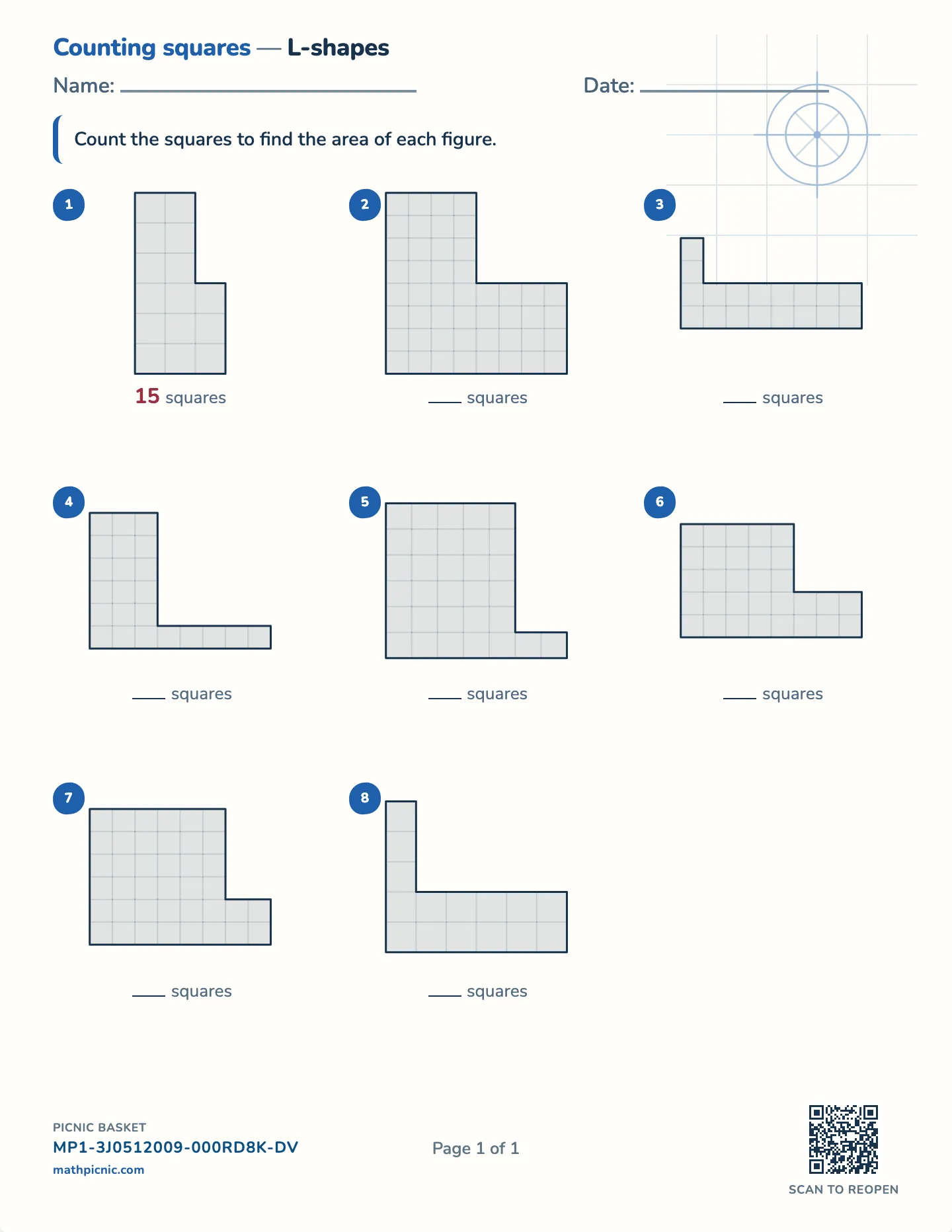
Count the squares to find the area of each figure.
1 squares
2 squares
3 squares
4 squares
5 squares
6 squares
7 squares
8 squares

Not every shape can be counted in one clean sweep, and that is exactly where organizing a count becomes a skill. These free printable worksheets cover only irregular L-shapes with unit squares and ask how many there are — the standard proper.
If they get stuck
The answer key prints on a separate page.
The mixed counting sheets start with tidy rectangles; this one skips straight to the irregular figures, because a rectangle can be counted almost without looking and an L cannot. A child has to decide how to count it — by rows, by parts, or by finding the big rectangle and taking the bite away — and that decision is the whole of the practice.
No numbers are printed beside the shapes, and that is deliberate. Labeling the sides would quietly turn the question into a multiplication, which is a later standard; here the grid is the question, and area is discovered as an amount of covering rather than a rule to apply.
One question from a sheet like this one, worked a step at a time — with a sentence saying what just happened and why.
Area of irregular shapes, step by step