TransformationsReflecting a point
Name: Date:
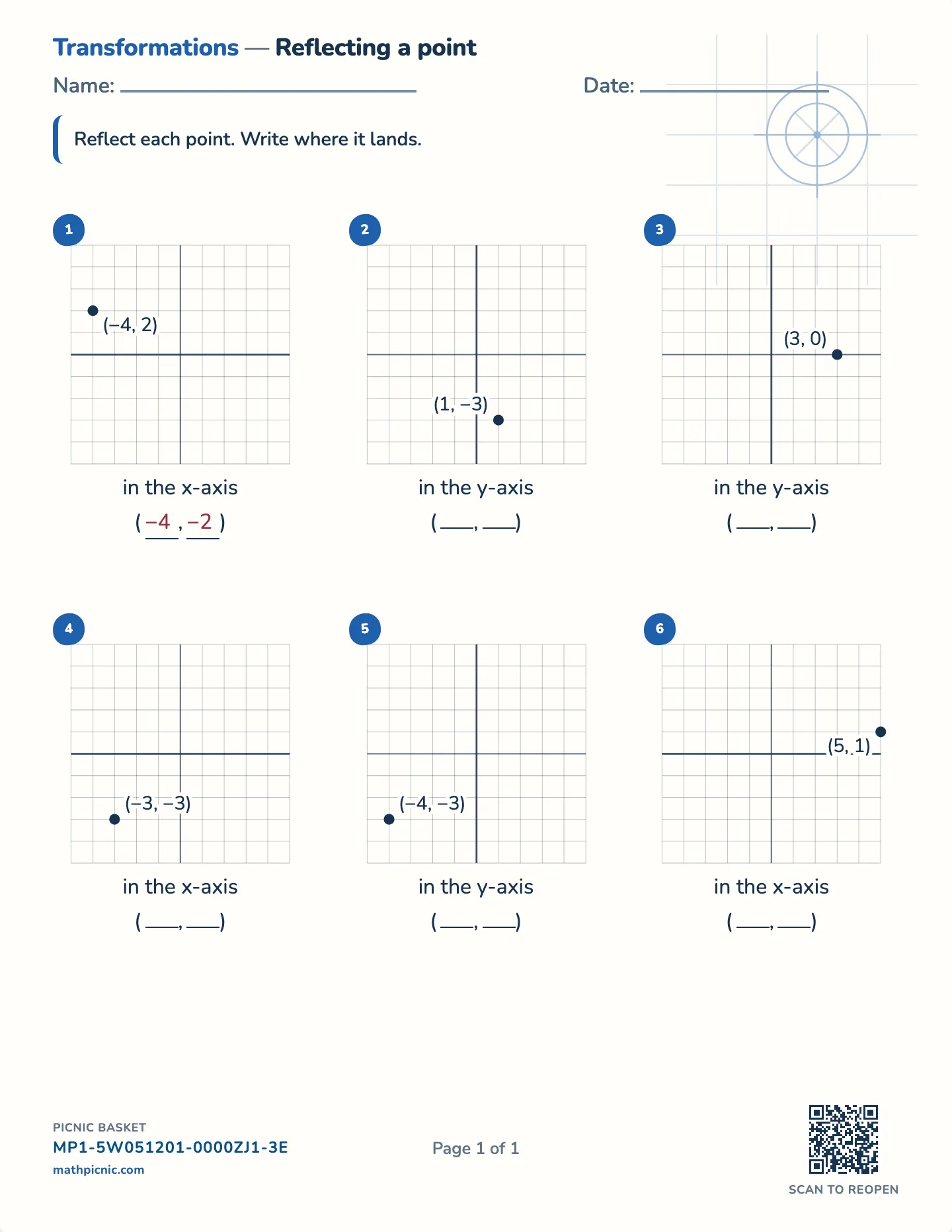
Reflect each point. Write where it lands.
1in the x-axis ()
2in the y-axis ()
3in the y-axis ()
4in the x-axis ()
5in the y-axis ()
6in the x-axis ()

A reflection keeps a point the same distance from the mirror and puts it on the other side. These free printable worksheets flip points in the x-axis and the y-axis, with the starting point drawn on the grid.
If they get stuck
The answer key prints on a separate page.
The rule sounds backwards until you see why. Reflecting in the x-axis changes the y coordinate, because the x-axis is a horizontal mirror and what changes is how far up or down you are. Told as a rule to memorize it gets misremembered constantly; worked out from the distance to the mirror, it comes back every time.
Distance is the thing to count. A point four above the mirror goes four below, so (3, 4) reflected in the x-axis is (3, −4) and the 3 never moves. Counting the squares to the mirror and then the same number past it is slower than the rule and it is what makes the rule make sense.
One question from a sheet like this one, worked a step at a time — with a sentence saying what just happened and why.
Reflections, step by step