Early MathRows and columns, up to 20 squares
Name: Date:

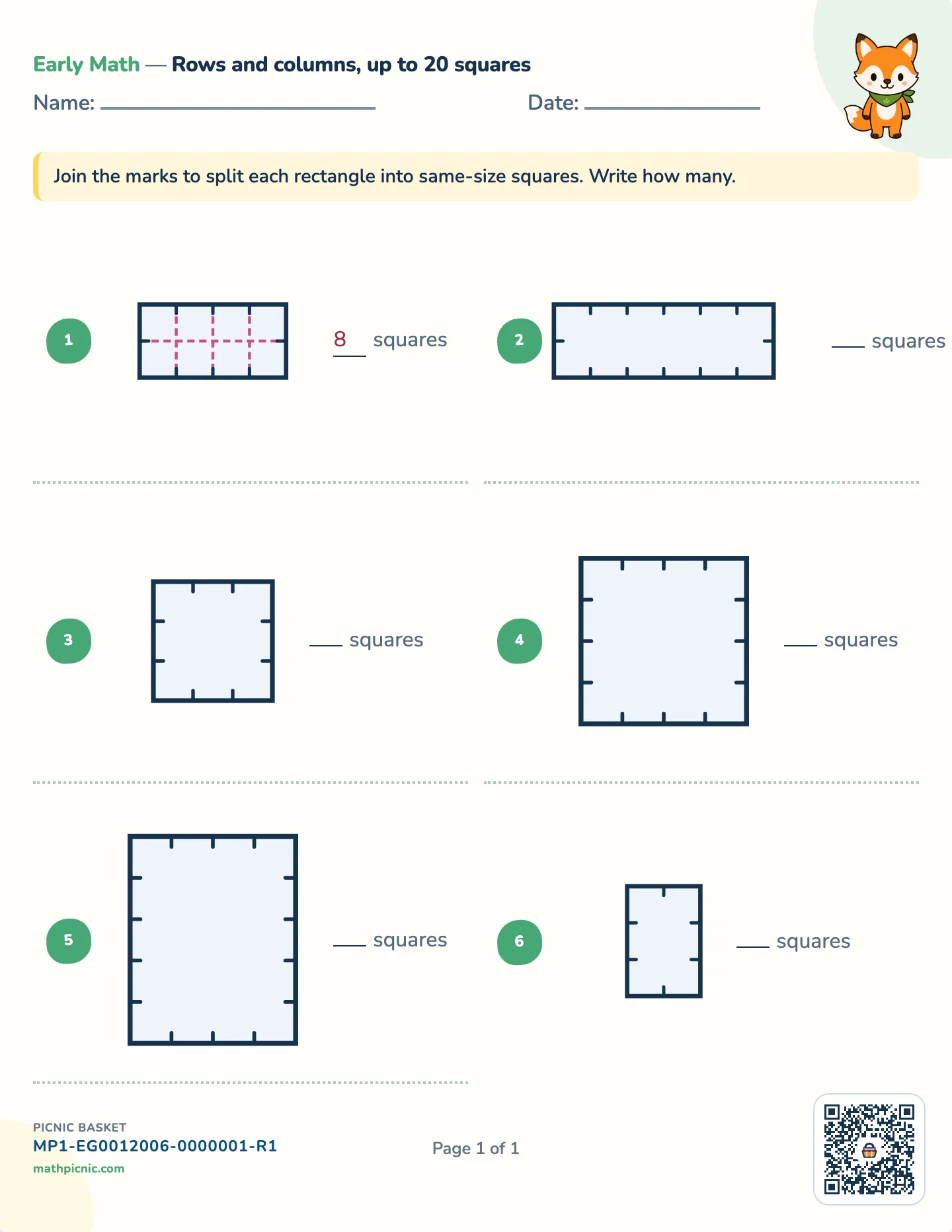
Join the marks to split each rectangle into same-size squares. Write how many.
1squares
2squares
3squares
4squares
5squares
6squares

Each rectangle has small marks along its edges. Joining them splits it into equal squares — and counting those squares is the first step towards multiplying, which is what this page is quietly for.
The answer key prints on a separate page.
The rectangle is empty on purpose. A sheet that prints the grid already drawn asks a child to count squares, which is a different and later skill; the second-grade standard asks them to make the squares. So the lines are the work, and the number in the box is what the work produces.
The marks are what make it doable. A bare rectangle asks a seven-year-old to divide a length by eye, which is a ruler exercise rather than a mathematics one. Every place a line belongs carries a short mark on both edges, so the child joins mark to mark — and because the marks are evenly spaced on both sides, what comes out is squares rather than oblongs.