Surface areaSolid boxes
Name: Date:
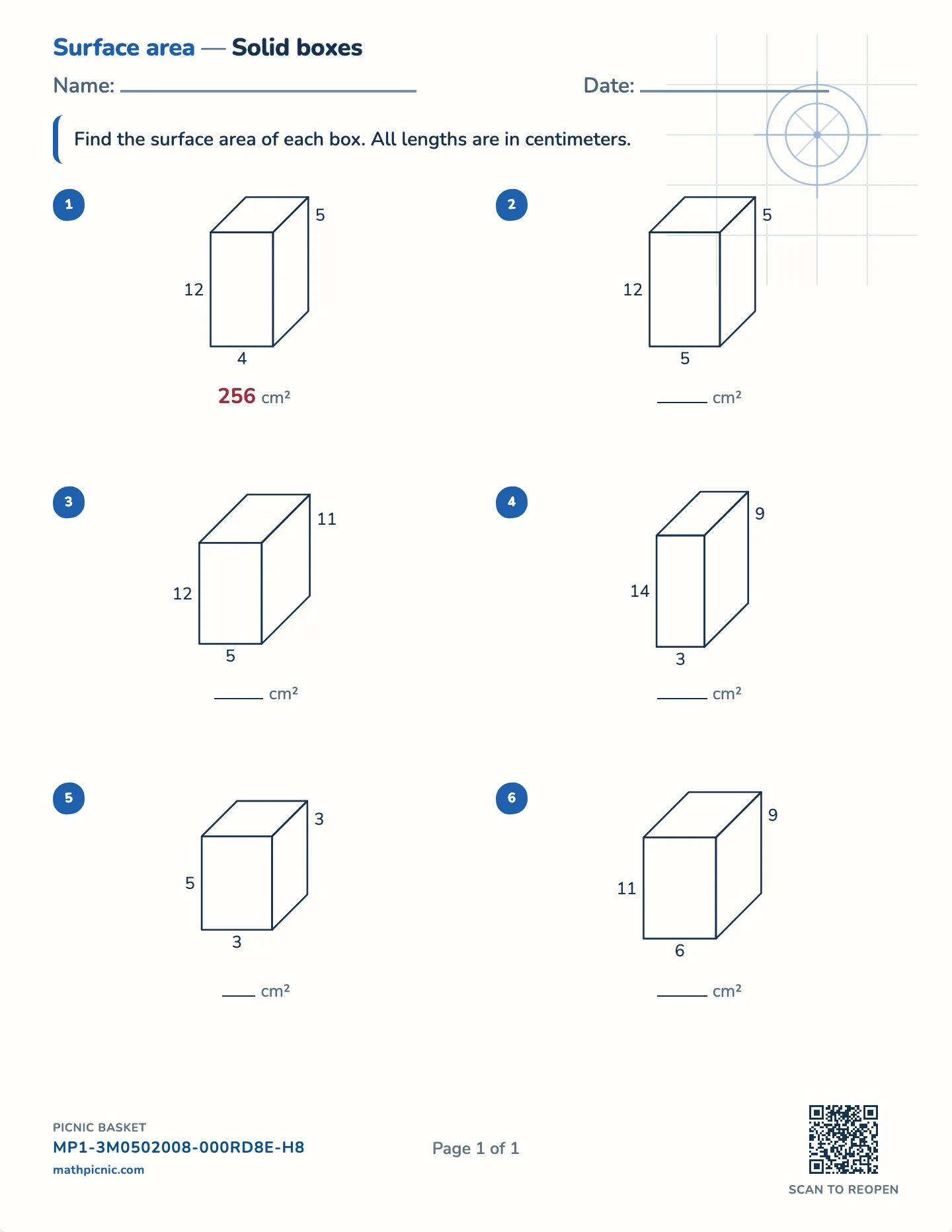
Find the surface area of each box. All lengths are in centimeters.
1 cm²
2 cm²
3 cm²
4 cm²
5 cm²
6 cm²

A box has six faces in three matching pairs, so its surface area is twice the front plus twice the side plus twice the top. These free printable worksheets ask for it straight from the solid, cut from the surface area and nets page.
If they get stuck
The answer key prints on a separate page.
The surface area and nets page shows the box, its unfolded net, or both; this sheet keeps only the closed solid, so a child practices holding the three hidden faces in mind rather than reading them off a flat cross. It is the harder half of that page, worth its own set once the net has done its teaching.
Only three numbers appear on the drawing, and that is the work: six faces come in three matching pairs, so the long addition collapses to 2(lw + lh + wh). Children who have just finished volume will often multiply all three numbers together instead — the confusion this practice exists to sort out.
One question from a sheet like this one, worked a step at a time — with a sentence saying what just happened and why.
Surface area of a rectangular prism, step by step