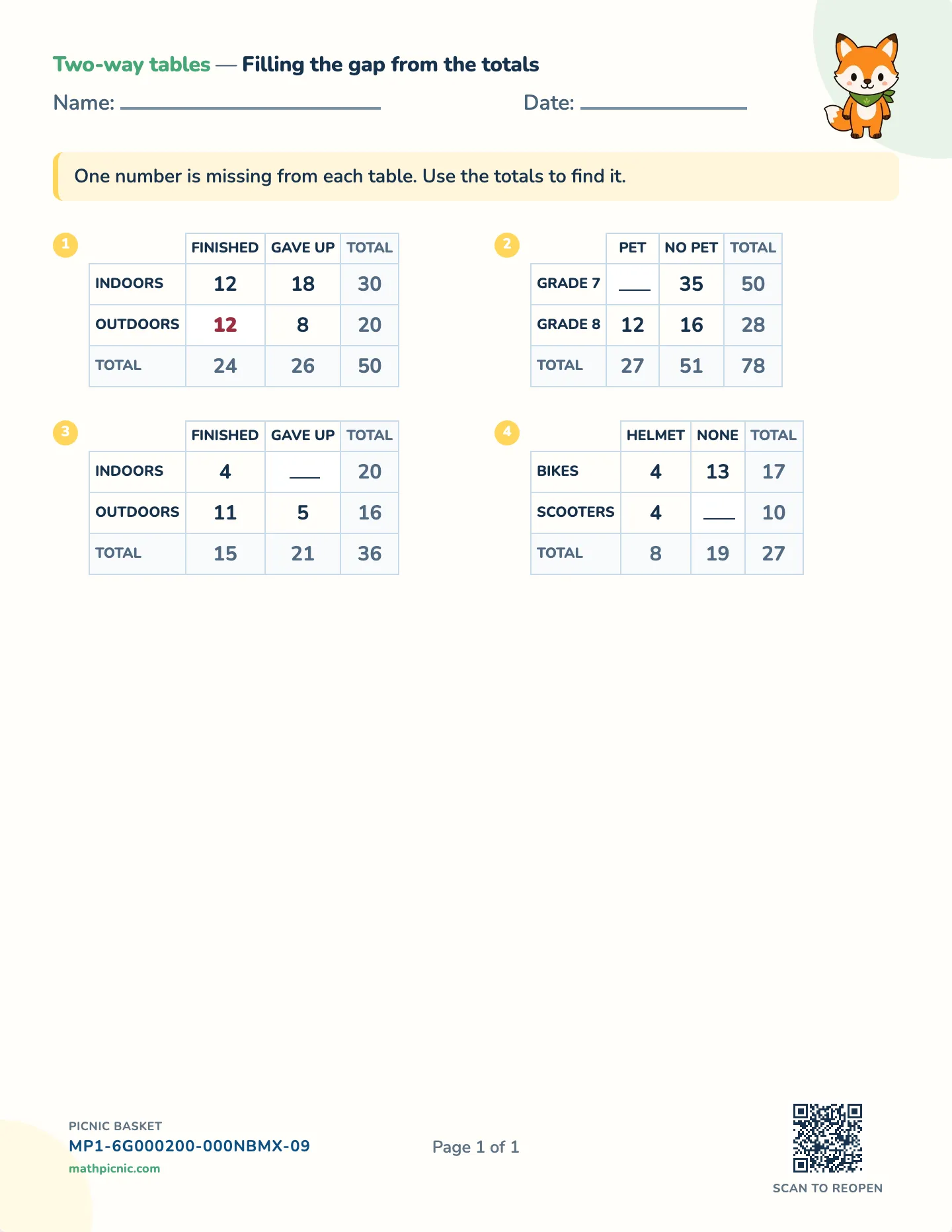
A two-way table sorts the same group two ways at once, and its margins are the totals that hold it together. These free printable worksheets blank one cell and ask the child to rebuild it from the totals, with an answer key.
Every number in the table belongs to a row and to a column at the same moment, and finding a missing cell is knowing which row and which column it sits in. The arithmetic is only a subtraction — the row total minus the cells you can see — but the point is reading the structure, not doing the take-away.
Why this sheet works
There are two routes to any gap: along its row and down its column, and they have to give the same answer. A child who fills the cell one way and checks it the other has understood the table rather than followed a rule, and because the totals are built from whole numbers the missing cell is always whole too.
How this one works
One question from a sheet like this one, worked a step at a time — with a sentence saying what just happened and why.