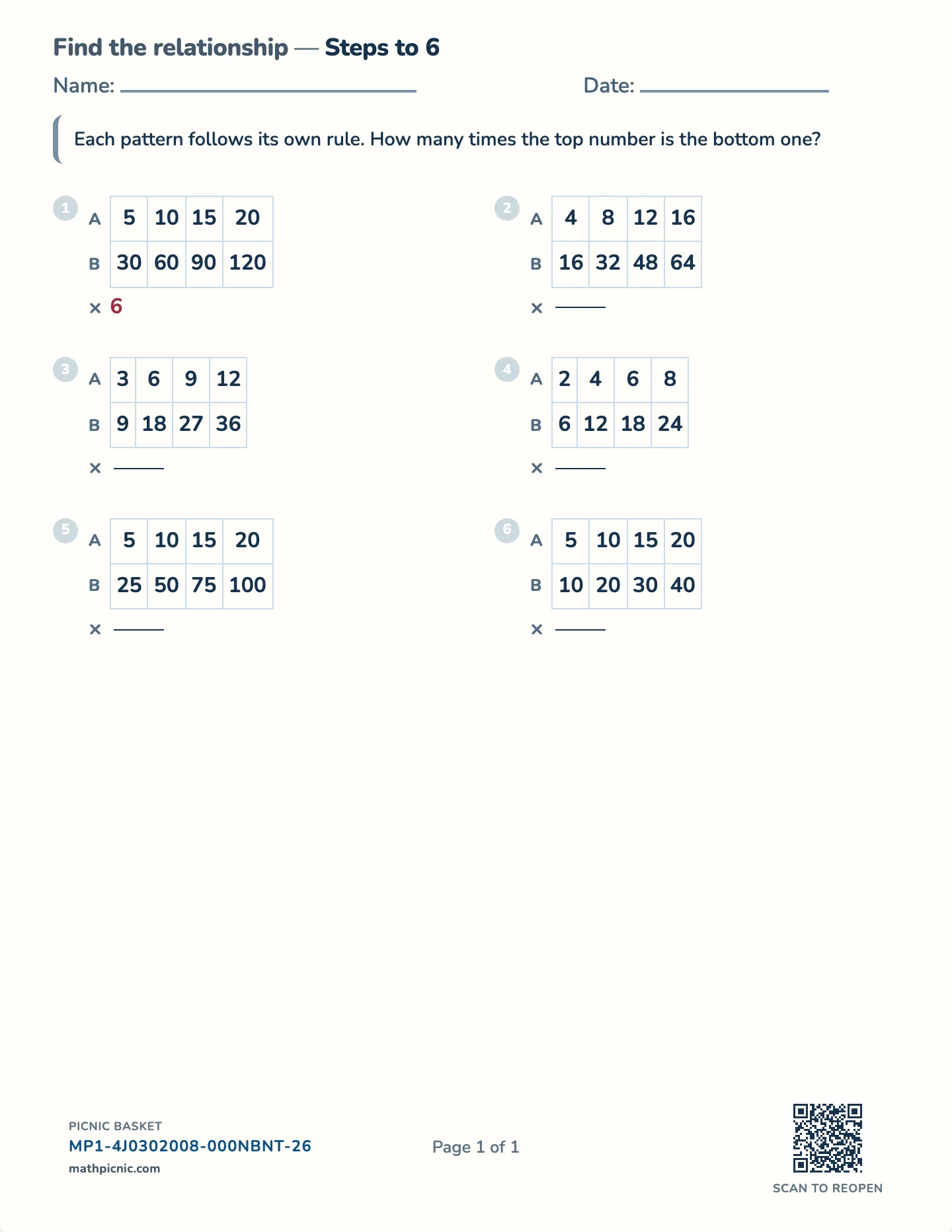
Two number patterns run side by side, each from its own rule, and the question is how the two rows relate. These free printable worksheets ask for that relationship — the bottom row as a multiple of the top.
This is the second half of the standard, and a different job from filling a gap in one pattern. Both rows are complete; the child follows each rule down its own line, then looks across and sees that the bottom term is always the same multiple of the top — add 3 along the top and add 9 along the bottom, and every lower number is three times the one above it. The relationship is written nowhere; it is the thing to find.
Why this sheet works
The second rule always counts in whole multiples of the first, which is what keeps the relationship a whole number worth writing. Two freely chosen steps would still make two valid patterns, but the tie between them would come out as something like “1.75 times” — true, and not what a fifth-grader is being asked to notice. To find the relationship, divide any bottom term by the top term above it, and check it on a second column.
How this one works
One question from a sheet like this one, worked a step at a time — with a sentence saying what just happened and why.