Early MathSharing onto plates, up to 24 in all, some with leftovers
Name: Date:

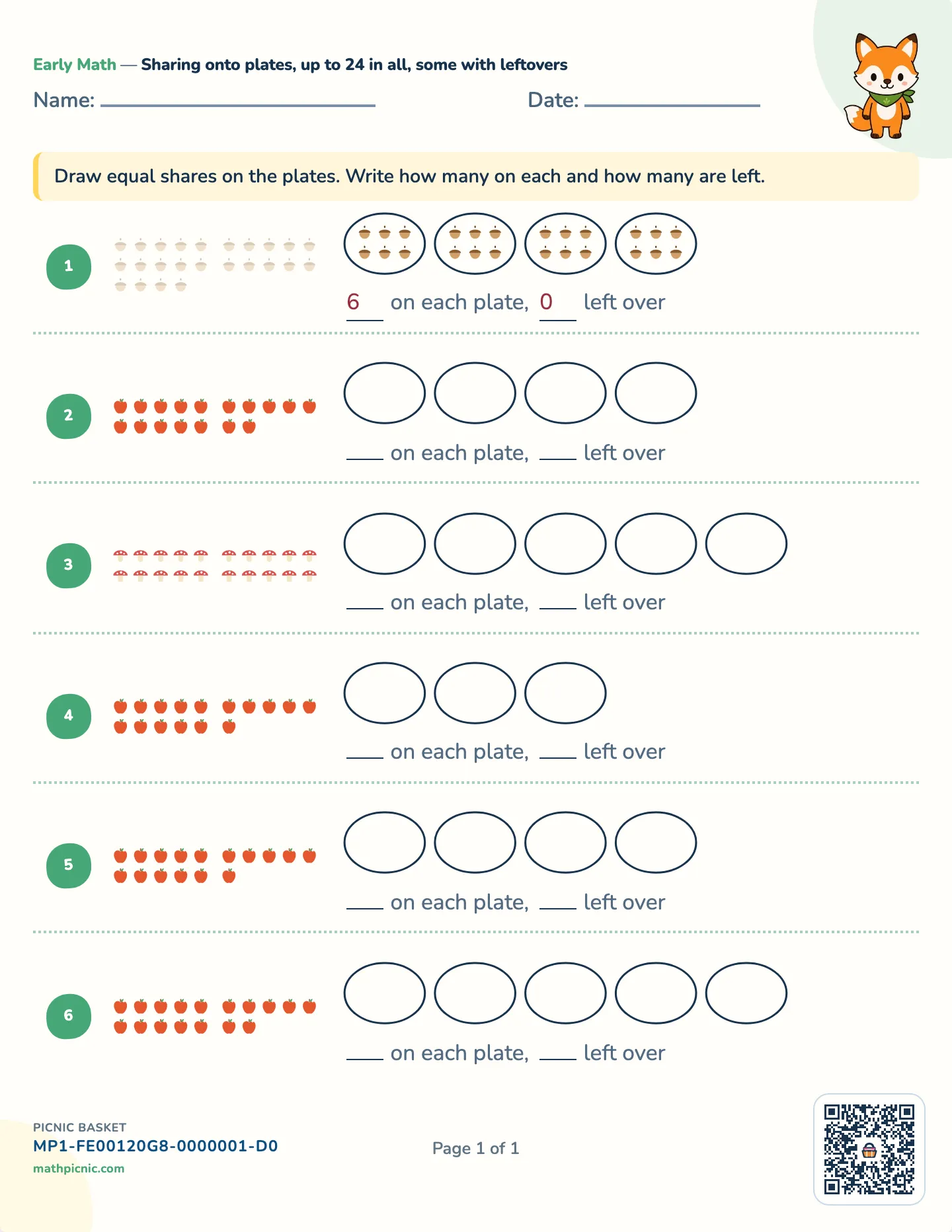
Draw equal shares on the plates. Write how many on each and how many are left.
1
2
3
4
5
6

A pile of counters that may not share out evenly. The child deals them onto the plates until there are not enough to go round again, then writes how many each plate got and how many are left. It is a remainder before anyone writes an R.
If they get stuck
The answer key prints on a separate page.
Some piles on the page come out even and some do not, and the only way to know which is to share them. Nothing on the sheet says there is a remainder: the leftovers are whatever is still in the pile when every plate has had its turn and the pile cannot go round once more. Writing 0 left over is a real answer here, and knowing when to write it is half of what the page teaches.
What is left is always fewer than the plates. A child who finishes with five left and four plates has not finished, because every plate can take one more. Seeing that on a drawing is what makes the later rule — the remainder is smaller than the divisor — obvious instead of memorised.