
Comparing numbers
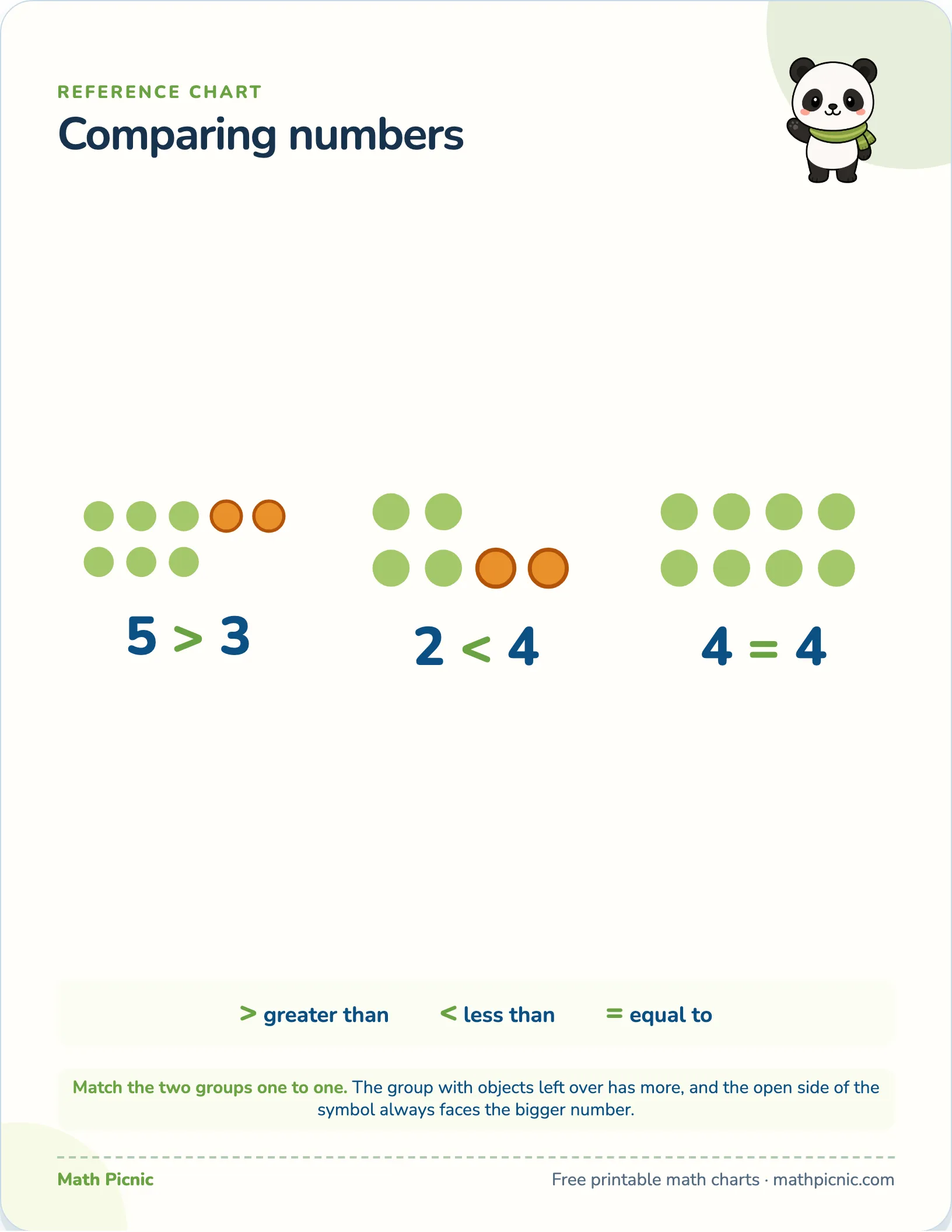
Which group has more? Line the two up one to one and look: if every object has a partner, the groups are equal; if one group has some left over after the matching, it has more. The signs >, < and = just record what the matching shows.
Reference chart
Comparing numbers

Match the two groups one to one. The group with objects left over has more, and the open side of the symbol always faces the bigger number.
What's on this chart
Comparing starts before counting is fluent, and matching is how a child does it honestly. Set the two groups out and pair them one to one — one here, one there. If they run out together, the amounts are equal. If one group still has objects when the other is used up, that group is the bigger one. This chart draws the leftover objects in a different color, so “more” is something a child sees rather than has to work out.
Why this chart helps
The sign is the second step, and it has a trick worth knowing: the open side always faces the bigger number, as if it were a mouth opening toward more. 5 > 3 opens toward the 5; 2 < 4 opens toward the 4; and when the two are the same the two little lines match up into an equals sign. Reading the sign is really just checking which way it opens.
More printable charts
- Counting to 10
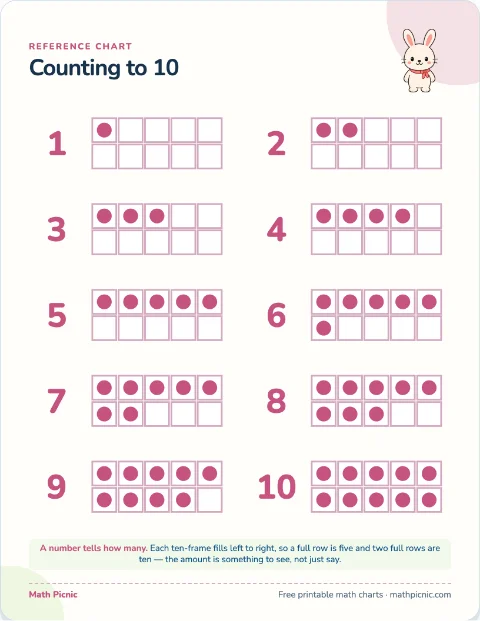 Print Count the dots in each ten-frame and read the number beside it.
 - Number bonds to 10
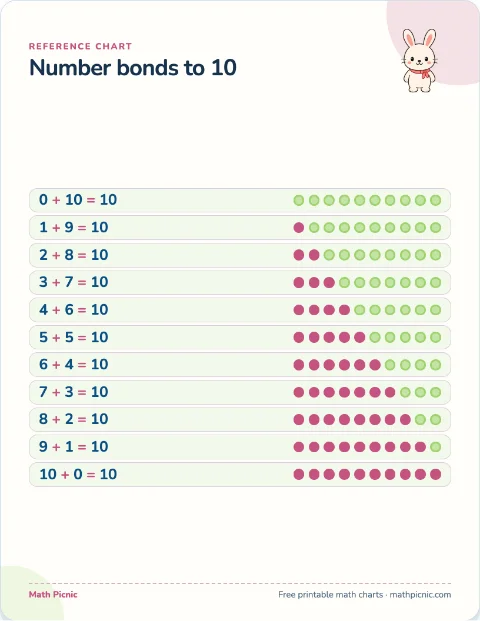 Print Read each row of counters and say the two numbers that make ten.
 - Odd and even
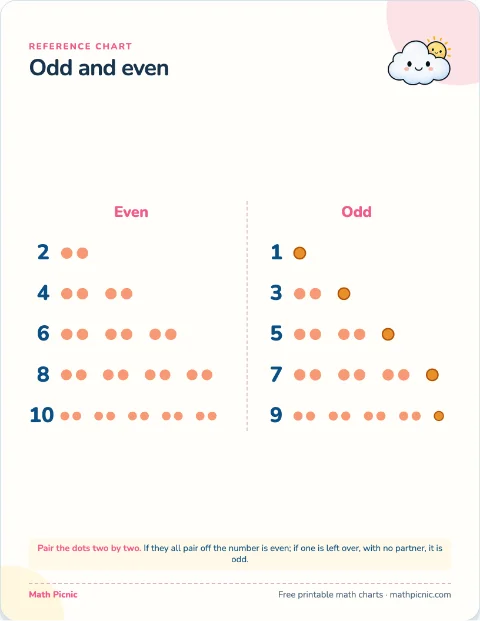 Print Pair the dots two by two; all paired is even, one left over is odd.
 - Number line 0–20
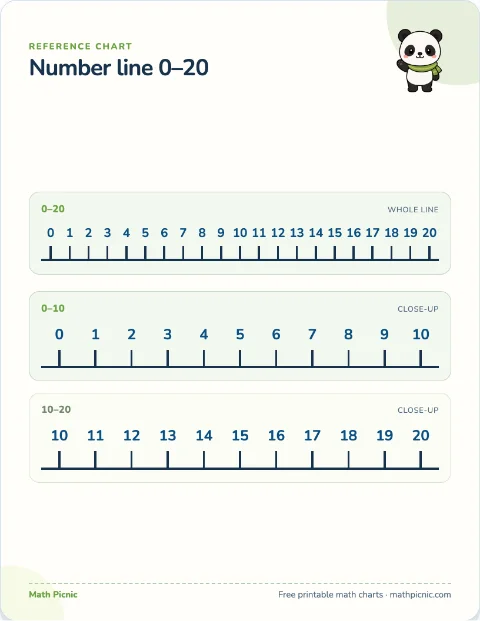 Print Count on or back by hopping along the line one number at a time.
 - Blank number line 0–20
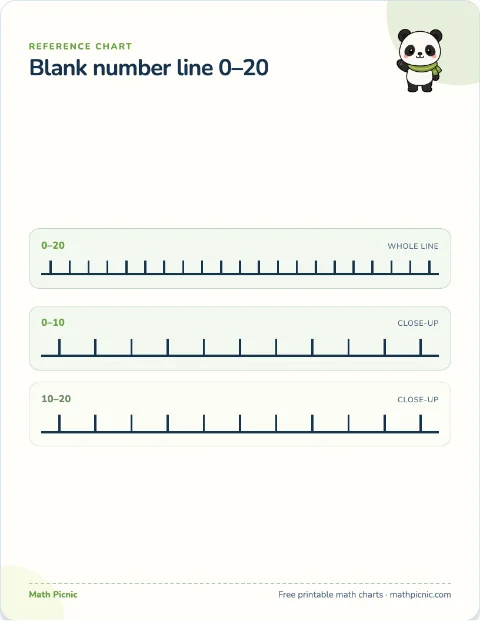 Print Label the ticks, mark a number, or draw equal jumps for an operation.
 - Number bonds to 20
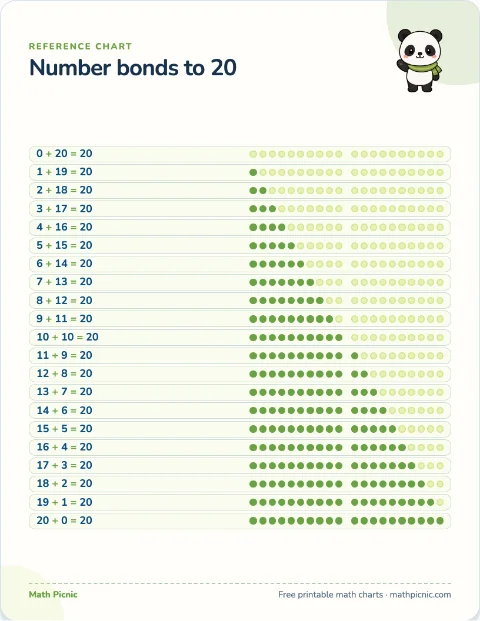 Print Count the two colors in a row and say the pair that makes twenty.
 - Telling the time
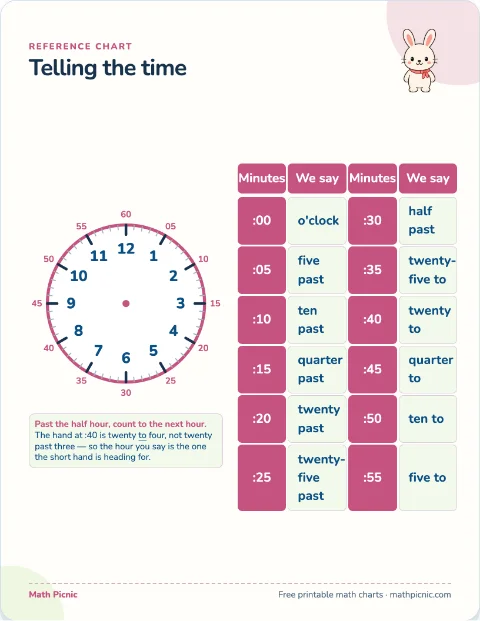 Print Read the hour inside the dial and the minutes printed outside it.
 - Place value chart
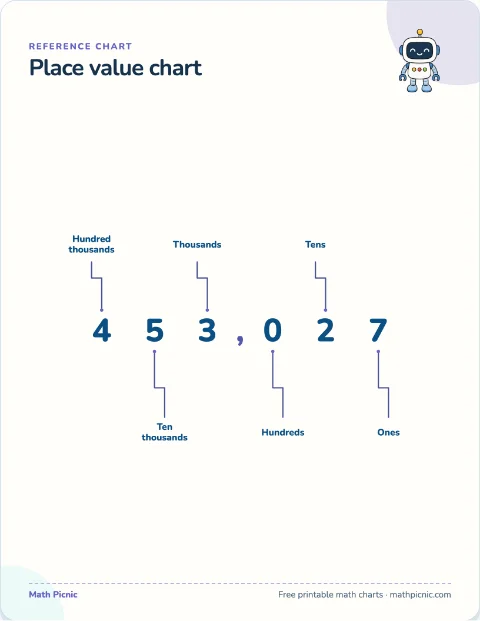 Print Put each digit in its column and read what that digit is worth.