
Telling the time
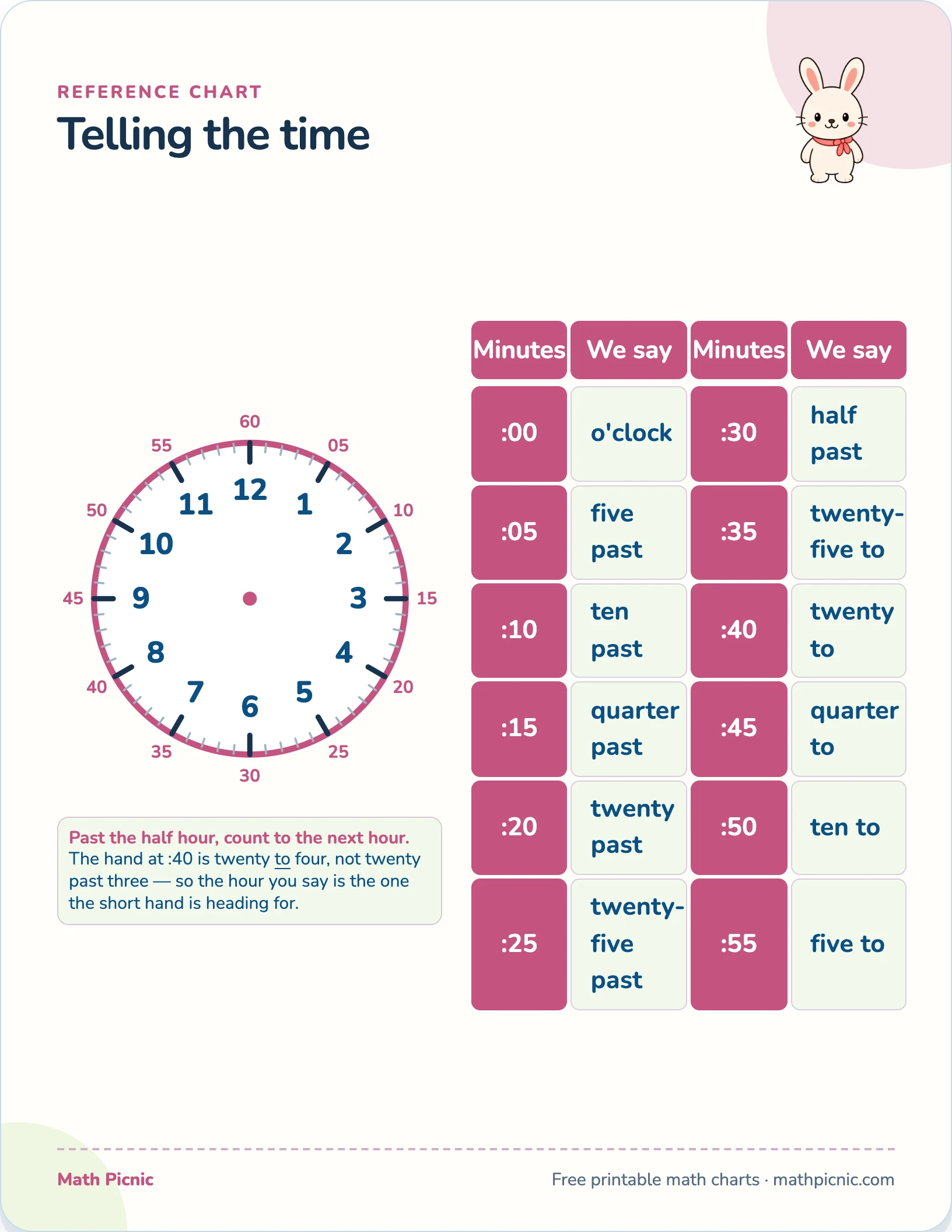
A clock face with both of its scales printed — the hours inside, the minutes outside — and a table of what each five-minute mark is actually called.
Reference chart
Telling the time

Past the half hour, count to the next hour. The hand at :40 is twenty to four, not twenty past three — so the hour you say is the one the short hand is heading for.
| Minutes | We say | Minutes | We say |
|---|---|---|---|
| :00 | o'clock | :30 | half past |
| :05 | five past | :35 | twenty-five to |
| :10 | ten past | :40 | twenty to |
| :15 | quarter past | :45 | quarter to |
| :20 | twenty past | :50 | ten to |
| :25 | twenty-five past | :55 | five to |
What's on this chart
Nearly every child who cannot tell the time can count to sixty and can read to twelve. What nobody has shown them is that an analog clock asks for both at once off the same twelve marks: the 3 means three o'clock to the short hand and fifteen minutes to the long one. One dial, two scales, and only one of them is printed on an ordinary clock.
Why this chart helps
This chart prints the other one. The minutes ring the face in fives, directly outside the hour they share a mark with, so the link a child is expected to hold in their head is sitting there on the paper instead. Once it is visible, reading the minutes stops being recall and becomes counting, which is something a five-year-old can already do.
More printable charts
- Counting to 10
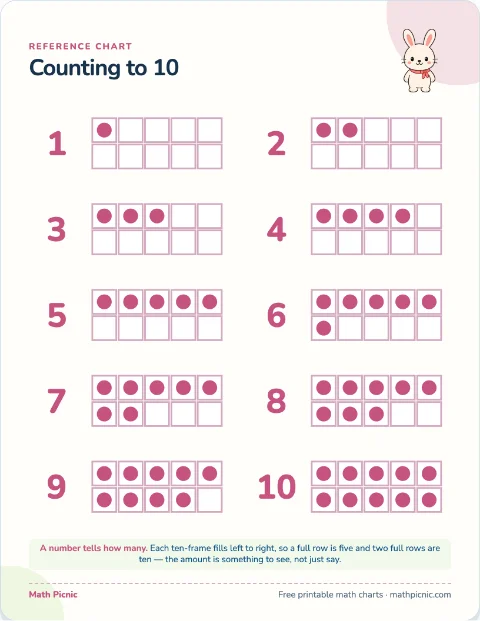 Print Count the dots in each ten-frame and read the number beside it.
 - Number bonds to 10
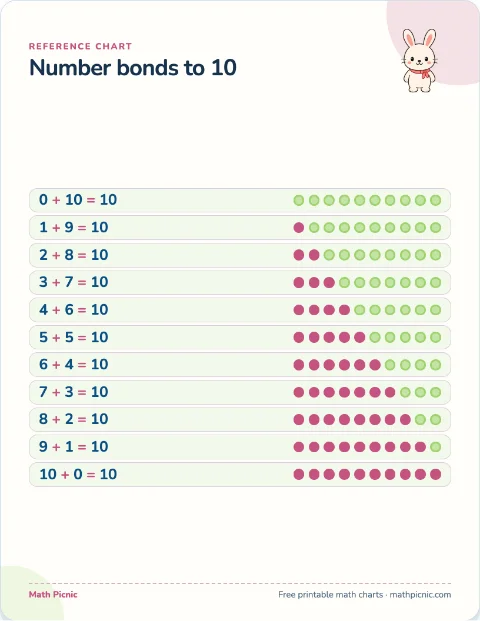 Print Read each row of counters and say the two numbers that make ten.
 - Comparing numbers
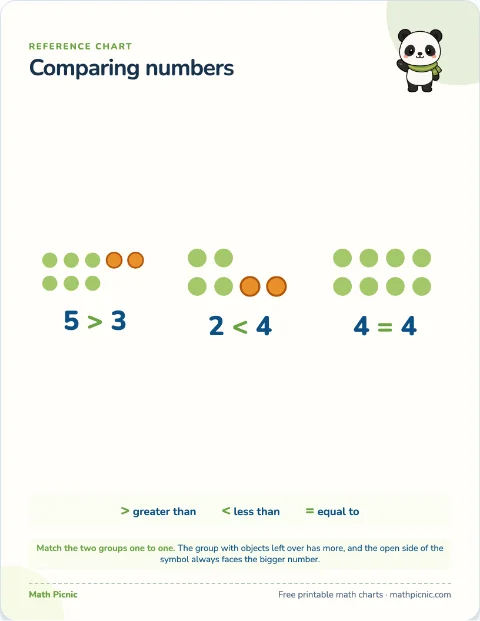 Print Line the two groups up one to one; the group with a leftover has more.
 - Odd and even
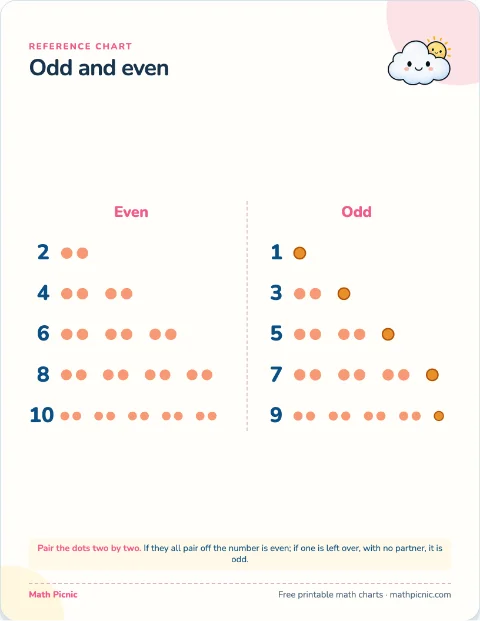 Print Pair the dots two by two; all paired is even, one left over is odd.
 - Number line 0–20
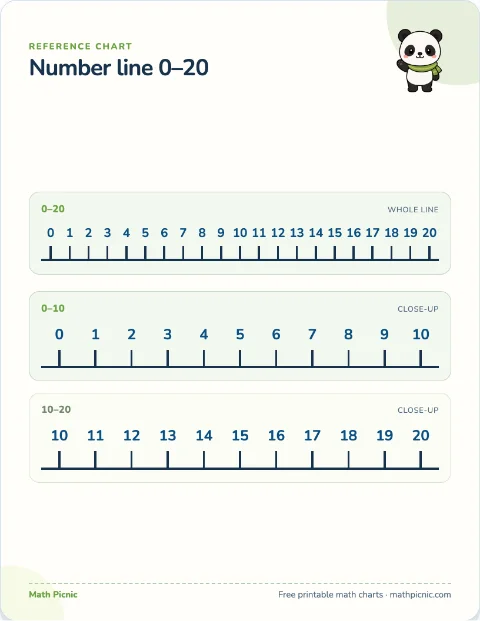 Print Count on or back by hopping along the line one number at a time.
 - Blank number line 0–20
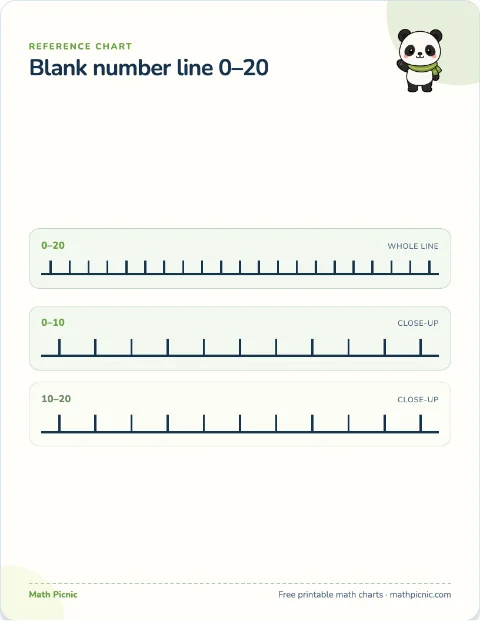 Print Label the ticks, mark a number, or draw equal jumps for an operation.
 - Number bonds to 20
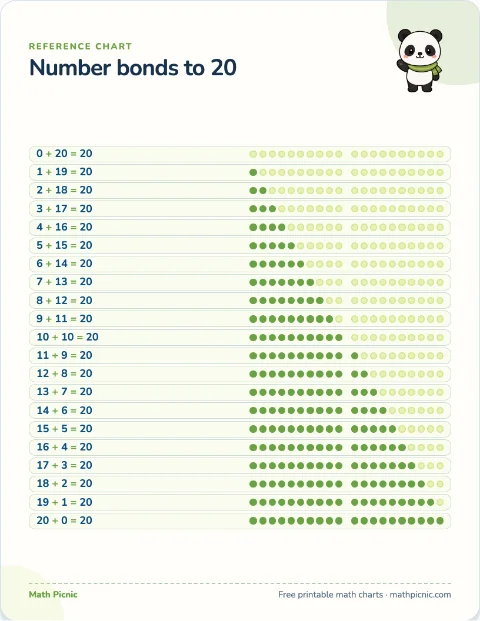 Print Count the two colors in a row and say the pair that makes twenty.
 - Place value chart
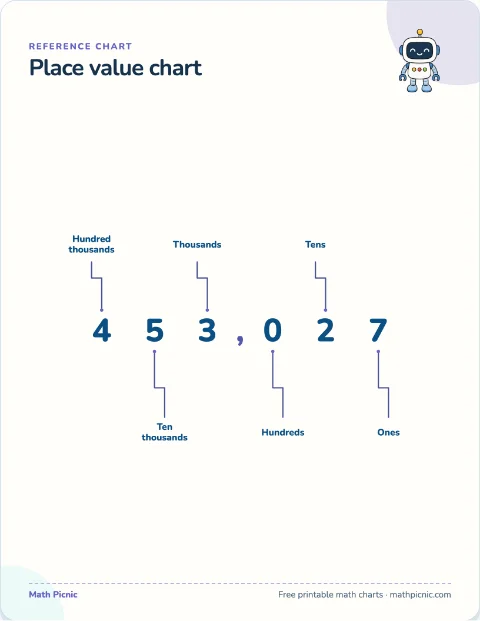 Print Put each digit in its column and read what that digit is worth.