
Counting to 10
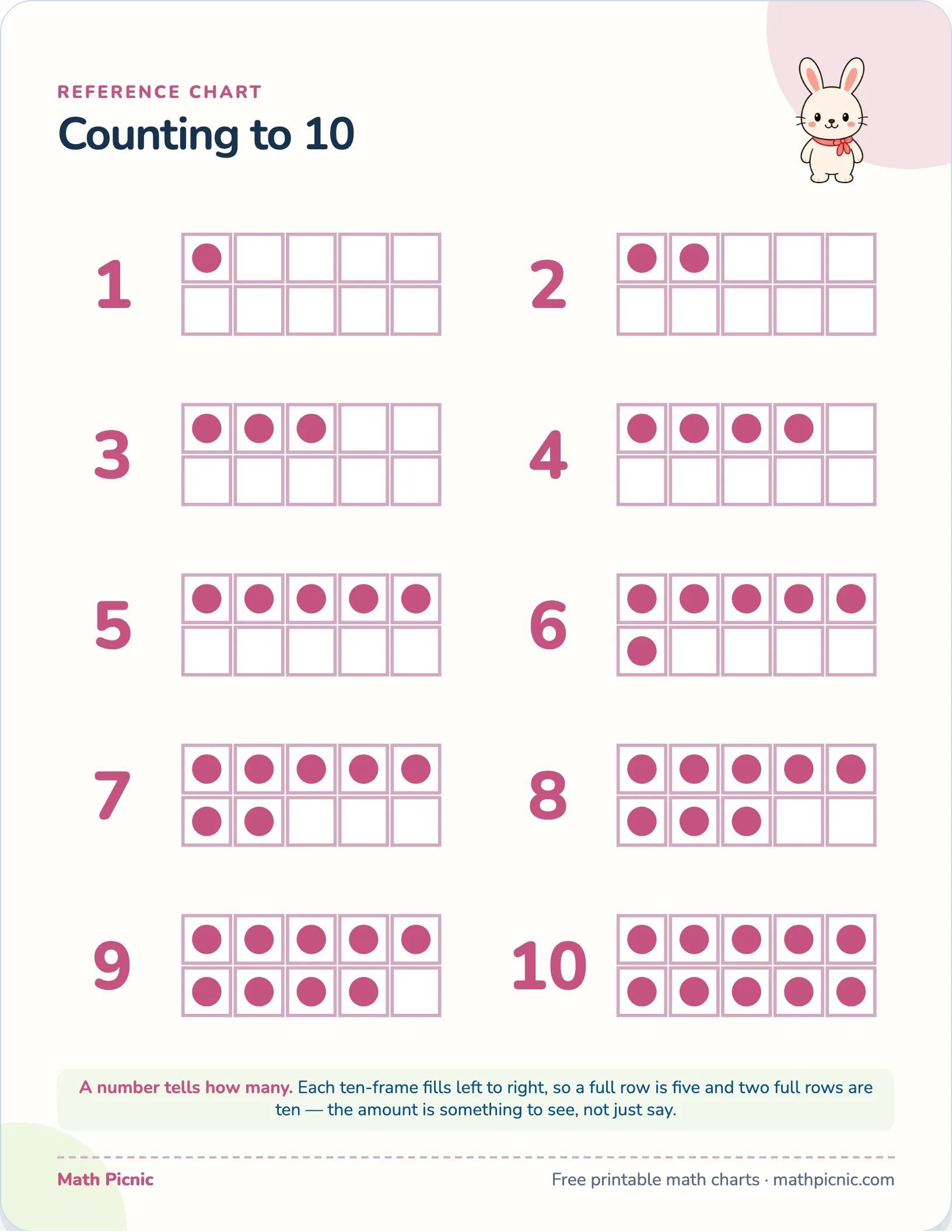
The numbers 1 to 10, each shown as a ten-frame — a row of five and a second row that counts on from it. A number is how many, and a ten-frame lets a child see the amount rather than only say the word.
Reference chart
Counting to 10

A number tells how many. Each ten-frame fills left to right, so a full row is five and two full rows are ten — the amount is something to see, not just say.
What's on this chart
Counting starts as matching: one number word to one object, and the last word you say is how many there are. A ten-frame makes that count hold still. Five cells fill the top row, five more the bottom, so a child reads 7 as “a full five and two more” without recounting from one — the pattern does the work that fingers were doing.
Why this chart helps
The frame also plants what comes next. Because ten cells make a full frame, a child sees early that 10 is the whole thing and that 6 and 4, or 7 and 3, fill it together — the number bonds the addition charts build on. Nothing here needs adding yet; the pairs are just there to be noticed, which is exactly how they should first arrive.
More printable charts
- Number bonds to 10
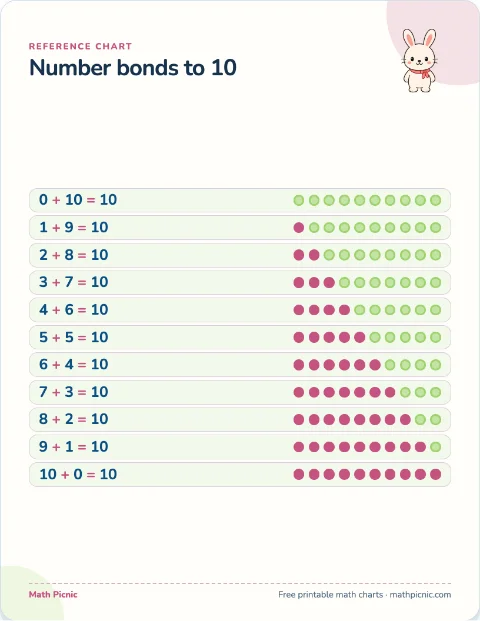 Print Read each row of counters and say the two numbers that make ten.
 - Comparing numbers
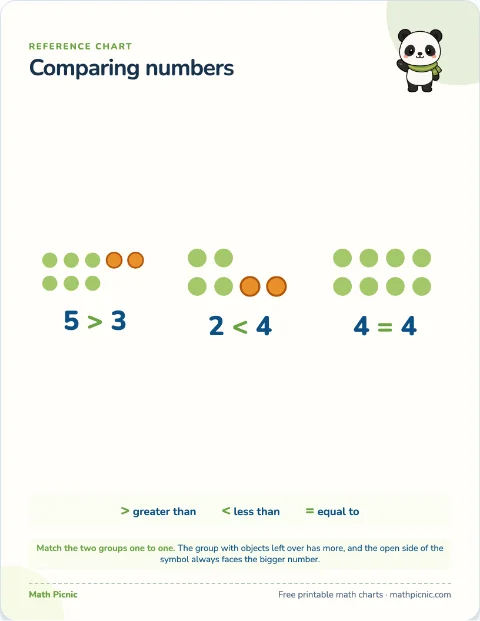 Print Line the two groups up one to one; the group with a leftover has more.
 - Odd and even
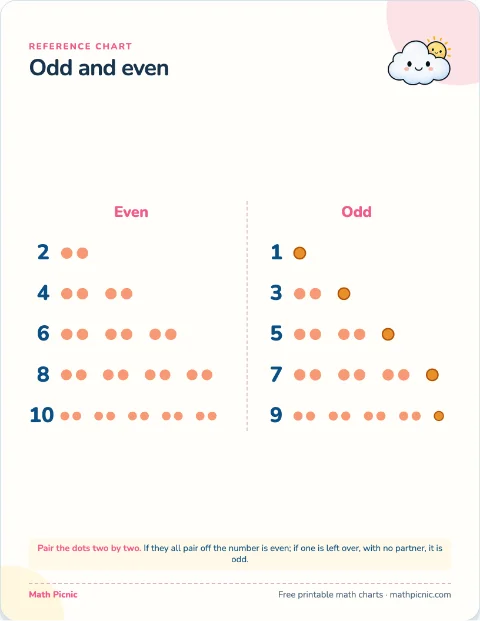 Print Pair the dots two by two; all paired is even, one left over is odd.
 - Number line 0–20
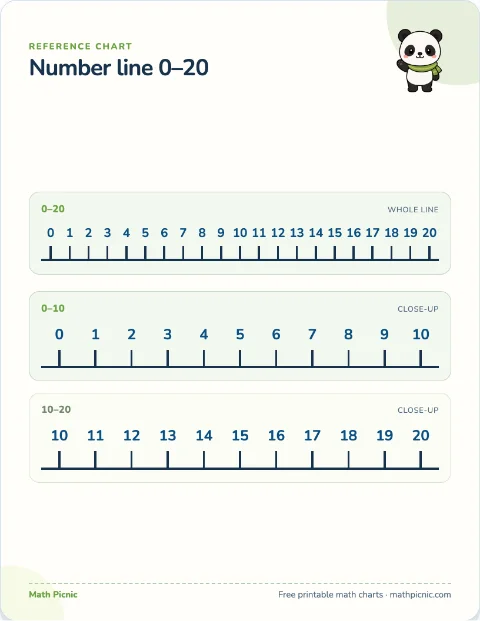 Print Count on or back by hopping along the line one number at a time.
 - Blank number line 0–20
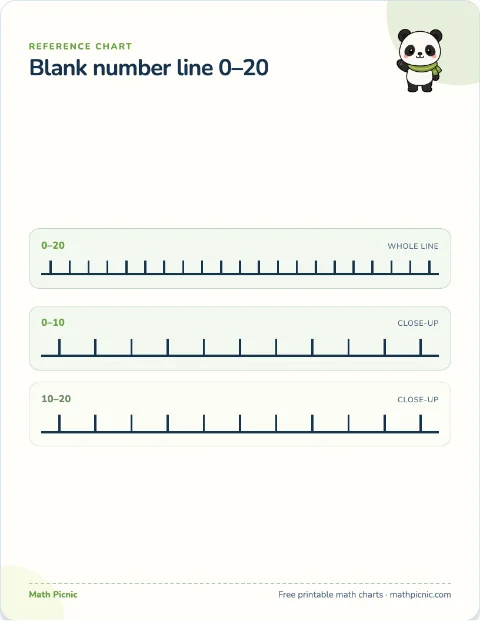 Print Label the ticks, mark a number, or draw equal jumps for an operation.
 - Number bonds to 20
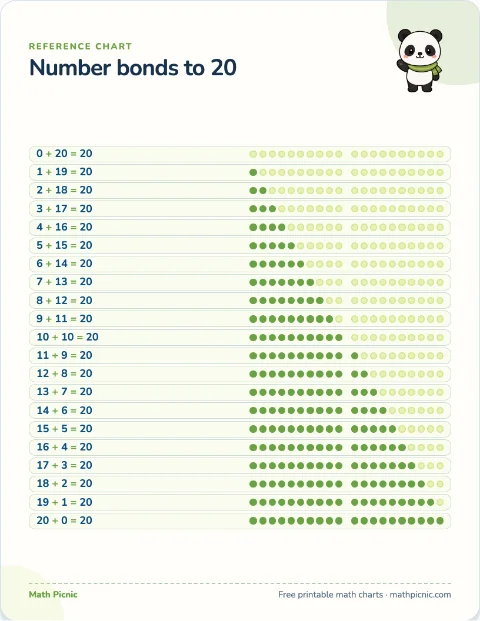 Print Count the two colors in a row and say the pair that makes twenty.
 - Telling the time
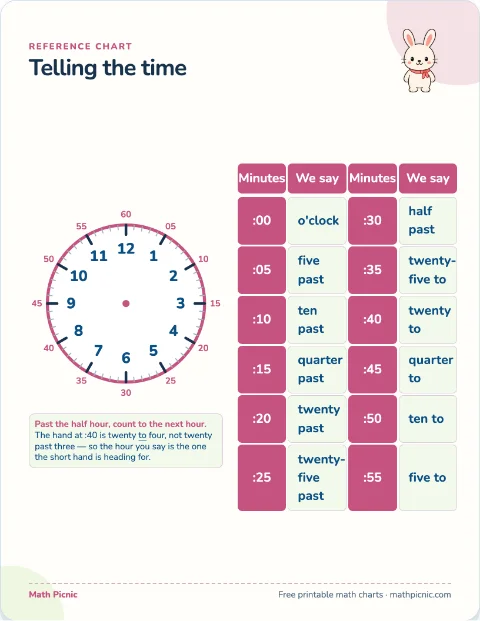 Print Read the hour inside the dial and the minutes printed outside it.
 - Place value chart
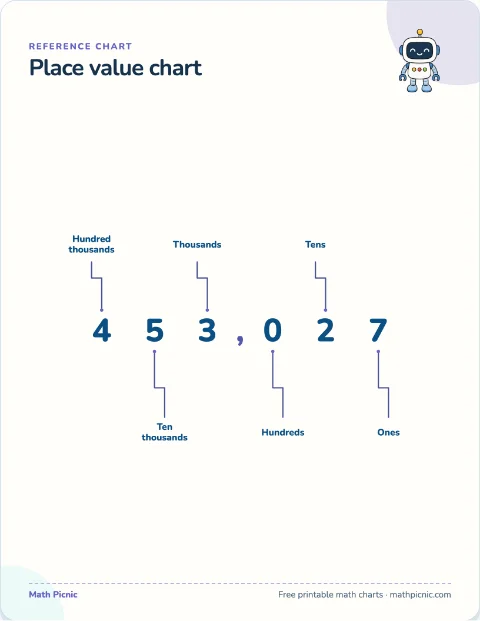 Print Put each digit in its column and read what that digit is worth.