
Number bonds to 20
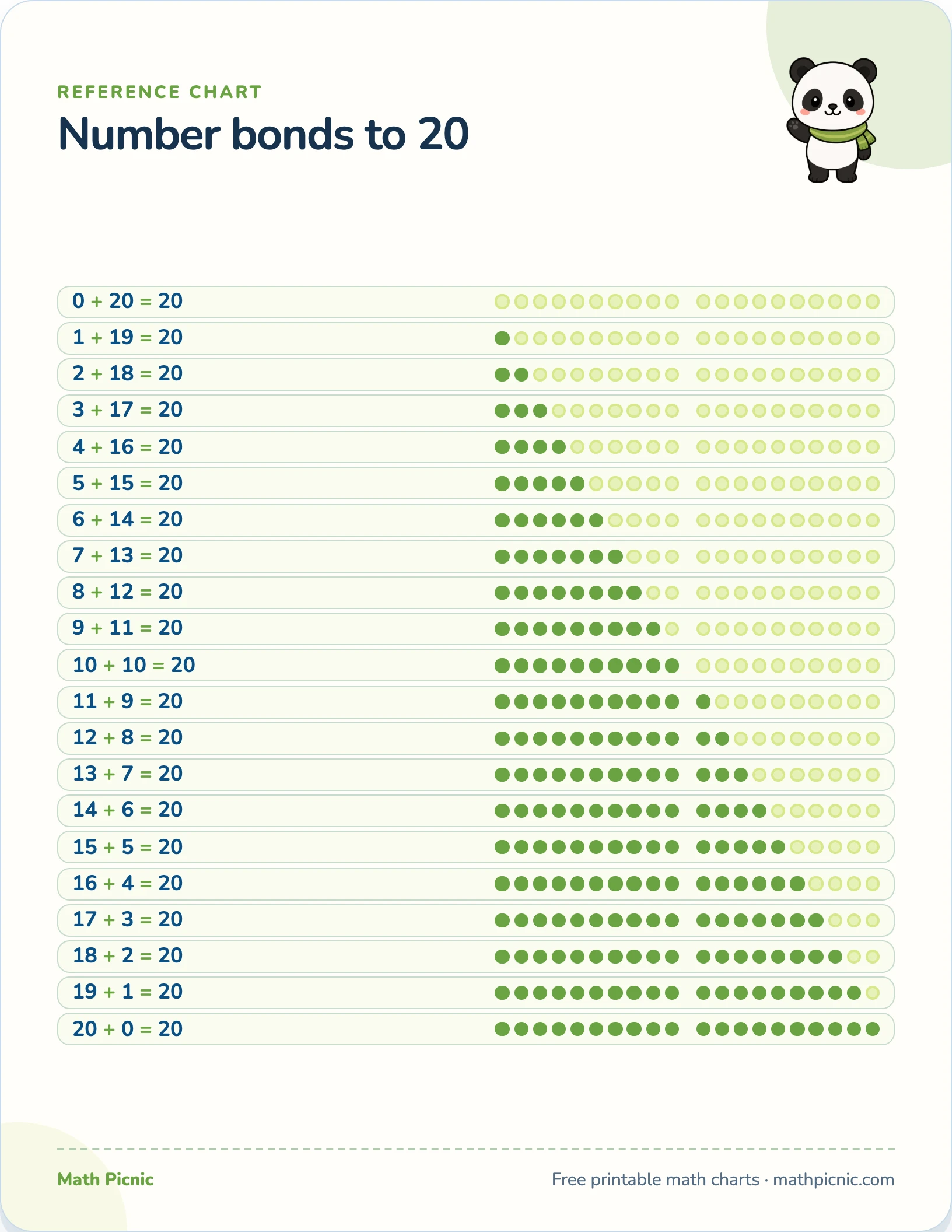
Every pair that makes twenty, drawn as counters as well as numbers. Where the bonds to ten chart finishes, this one carries the same idea into the range second grade actually works in.
Reference chart
Number bonds to 20

- 0 + 20 = 20
- 1 + 19 = 20
- 2 + 18 = 20
- 3 + 17 = 20
- 4 + 16 = 20
- 5 + 15 = 20
- 6 + 14 = 20
- 7 + 13 = 20
- 8 + 12 = 20
- 9 + 11 = 20
- 10 + 10 = 20
- 11 + 9 = 20
- 12 + 8 = 20
- 13 + 7 = 20
- 14 + 6 = 20
- 15 + 5 = 20
- 16 + 4 = 20
- 17 + 3 = 20
- 18 + 2 = 20
- 19 + 1 = 20
- 20 + 0 = 20
What's on this chart
The counters are split ten and ten on purpose. Twenty dots in an unbroken line have to be counted one at a time, which is precisely the habit this chart exists to retire; broken into two groups of ten, a child reads a row as "ten and four more" and is already doing the thing every make-ten strategy will ask of them. That gap in the middle of each row is the most useful mark on the page.
Why this chart helps
Bonds to twenty are also where the pattern starts paying for itself. A child who knows 6 and 4 make ten can find 16 and 4 make twenty without counting anything, because the ones digits are doing the same work one ten higher. Read the chart from the middle outward and the pairs from the ten chart are sitting inside these ones, which is the connection worth pointing at rather than stating.
More printable charts
- Counting to 10
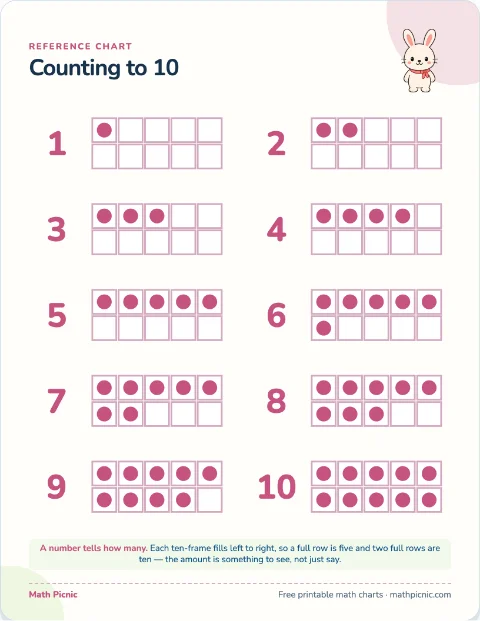 Print Count the dots in each ten-frame and read the number beside it.
 - Number bonds to 10
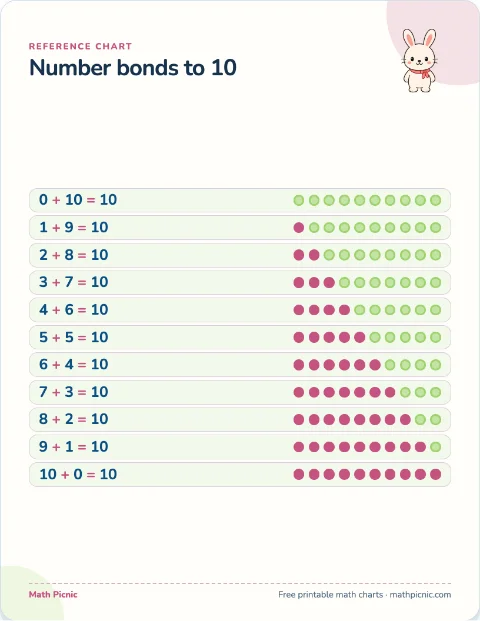 Print Read each row of counters and say the two numbers that make ten.
 - Comparing numbers
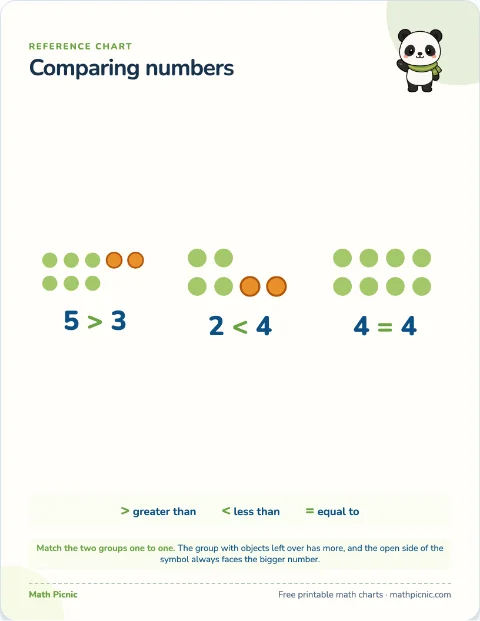 Print Line the two groups up one to one; the group with a leftover has more.
 - Odd and even
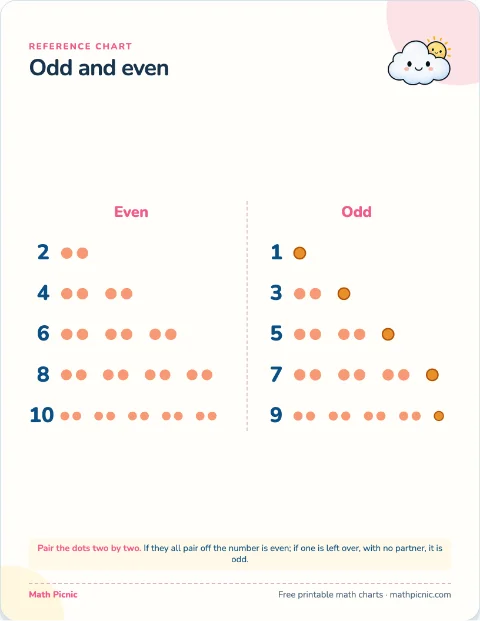 Print Pair the dots two by two; all paired is even, one left over is odd.
 - Number line 0–20
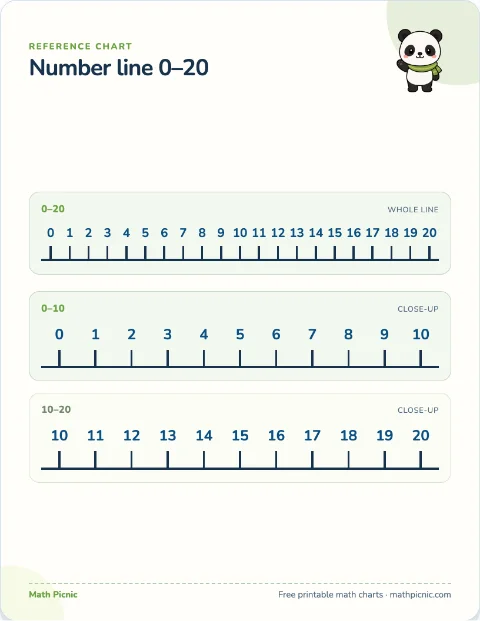 Print Count on or back by hopping along the line one number at a time.
 - Blank number line 0–20
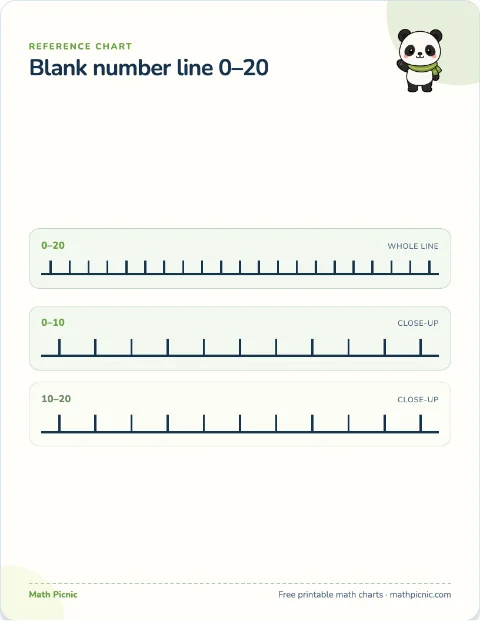 Print Label the ticks, mark a number, or draw equal jumps for an operation.
 - Telling the time
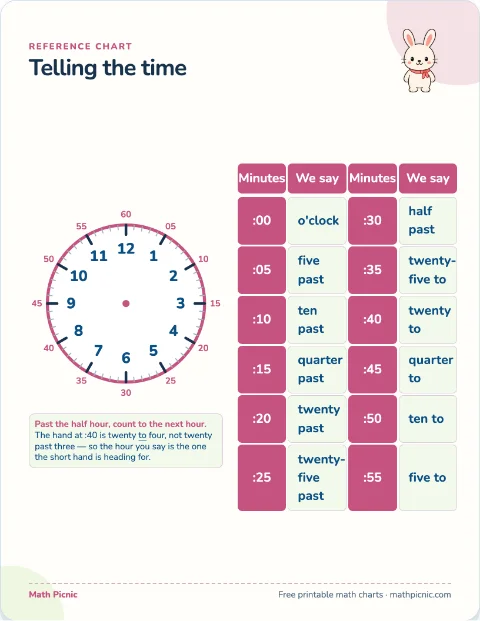 Print Read the hour inside the dial and the minutes printed outside it.
 - Place value chart
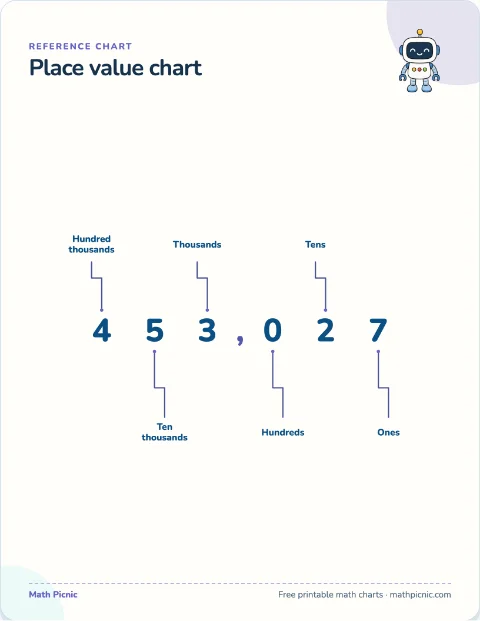 Print Put each digit in its column and read what that digit is worth.